Question: In Chapter 9 and Chapter 10, we discussed how to design an effective incentive (or pay-for- performance) system in three levels: individual, group, and organization.
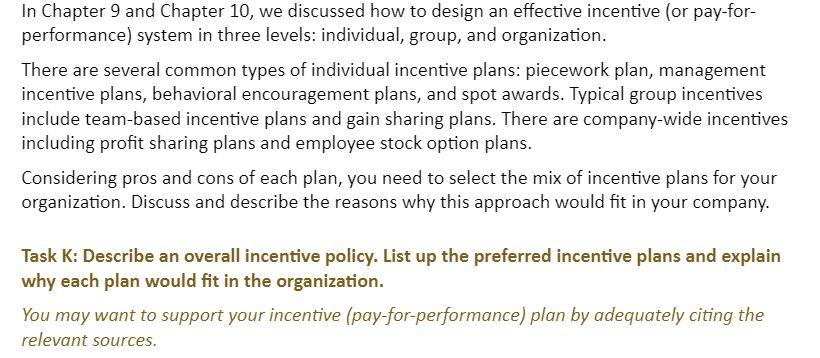
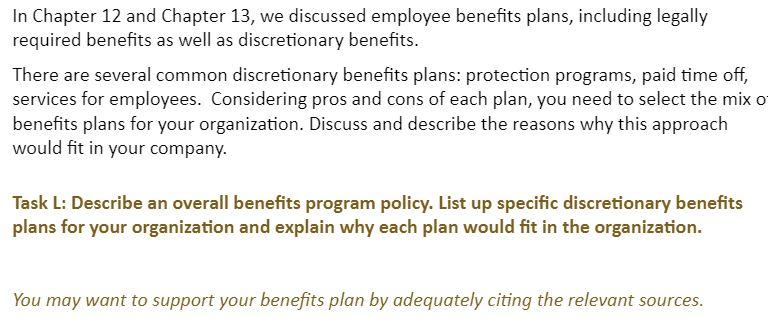
In Chapter 9 and Chapter 10, we discussed how to design an effective incentive (or pay-for- performance) system in three levels: individual, group, and organization. There are several common types of individual incentive plans: piecework plan, management incentive plans, behavioral encouragement plans, and spot awards. Typical group incentives include team-based incentive plans and gain sharing plans. There are company-wide incentives including profit sharing plans and employee stock option plans. Considering pros and cons of each plan, you need to select the mix of incentive plans for your organization. Discuss and describe the reasons why this approach would fit in your company. Task K: Describe an overall incentive policy. List up the preferred incentive plans and explain why each plan would fit in the organization. You may want to support your incentive (pay-for-performance) plan by adequately citing the relevant sources. In Chapter 12 and Chapter 13, we discussed employee benefits plans, including legally required benefits as well as discretionary benefits. There are several common discretionary benefits plans: protection programs, paid time off, services for employees. Considering pros and cons of each plan, you need to select the mix o benefits plans for your organization. Discuss and describe the reasons why this approach would fit in your company. Task L: Describe an overall benefits program policy. List up specific discretionary benefits plans for your organization and explain why each plan would fit in the organization. You may want to support your benefits plan by adequately citing the relevant sources. In Chapter 9 and Chapter 10, we discussed how to design an effective incentive (or pay-for- performance) system in three levels: individual, group, and organization. There are several common types of individual incentive plans: piecework plan, management incentive plans, behavioral encouragement plans, and spot awards. Typical group incentives include team-based incentive plans and gain sharing plans. There are company-wide incentives including profit sharing plans and employee stock option plans. Considering pros and cons of each plan, you need to select the mix of incentive plans for your organization. Discuss and describe the reasons why this approach would fit in your company. Task K: Describe an overall incentive policy. List up the preferred incentive plans and explain why each plan would fit in the organization. You may want to support your incentive (pay-for-performance) plan by adequately citing the relevant sources. In Chapter 12 and Chapter 13, we discussed employee benefits plans, including legally required benefits as well as discretionary benefits. There are several common discretionary benefits plans: protection programs, paid time off, services for employees. Considering pros and cons of each plan, you need to select the mix o benefits plans for your organization. Discuss and describe the reasons why this approach would fit in your company. Task L: Describe an overall benefits program policy. List up specific discretionary benefits plans for your organization and explain why each plan would fit in the organization. You may want to support your benefits plan by adequately citing the relevant sources









 Study Help