







Question: In class we learned to evaluate whether a consumer with well-behaved preferences is better off from a lump sum tax or a quantity tax (conditional
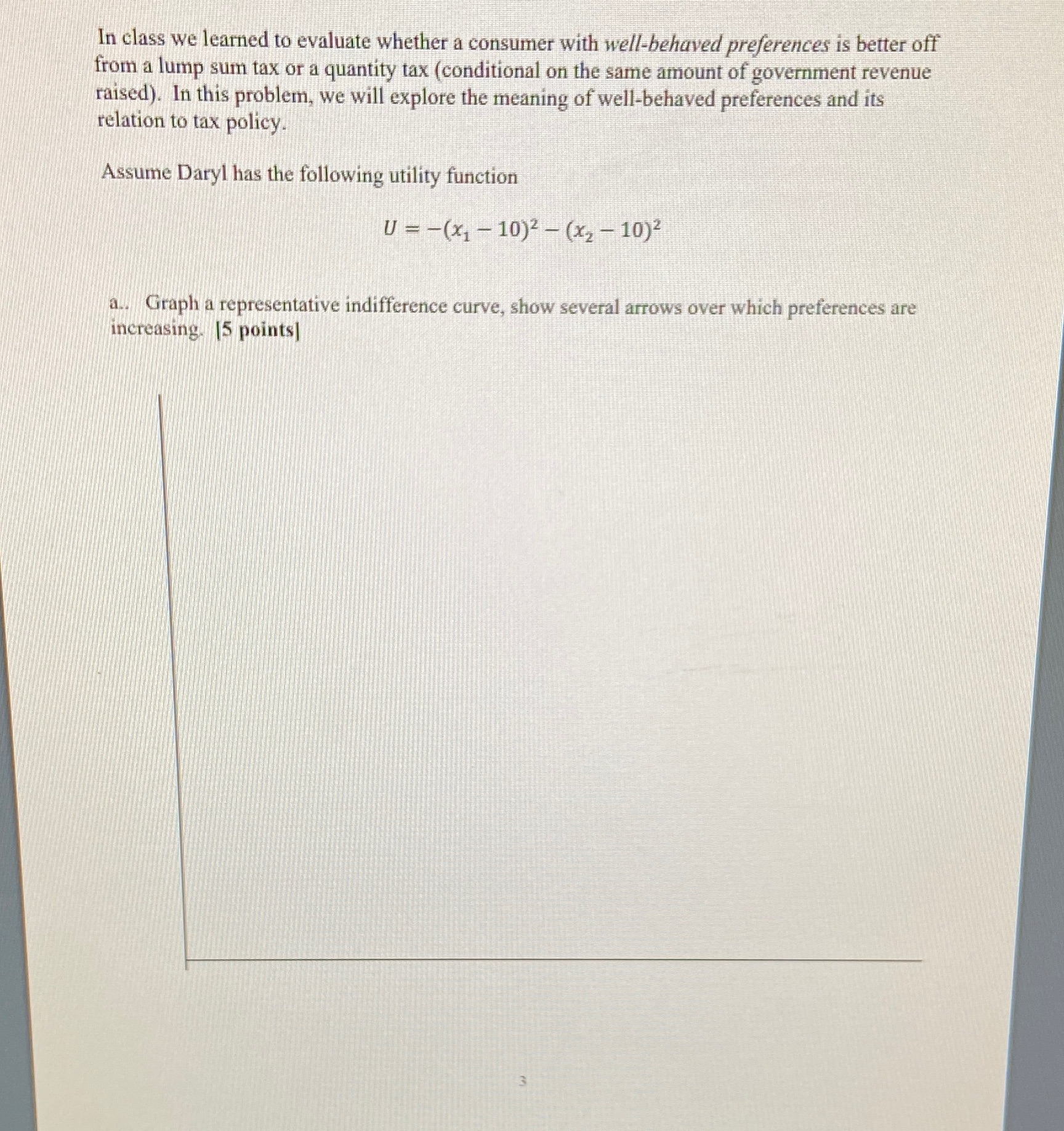
In class we learned to evaluate whether a consumer with well-behaved preferences is better off from a lump sum tax or a quantity tax (conditional on the same amount of government revenue raised). In this problem, we will explore the meaning of well-behaved preferences and its relation to tax policy. Assume Daryl has the following utility function U = -(x, -10)2 - (x2 -10)2 Graph a representative indifference curve, show several arrows over which preferences are increasing. [5 points]
Step by Step Solution
There are 3 Steps involved in it
1 Expert Approved Answer
Step: 1 Unlock

Question Has Been Solved by an Expert!
Get step-by-step solutions from verified subject matter experts
Step: 2 Unlock
Step: 3 Unlock
 Study Help