







Question: in java ! thank you also, do not use any other methods to store an array In this programming part you are asked to implement
in java ! thank you
also, do not use any other methods to store an array
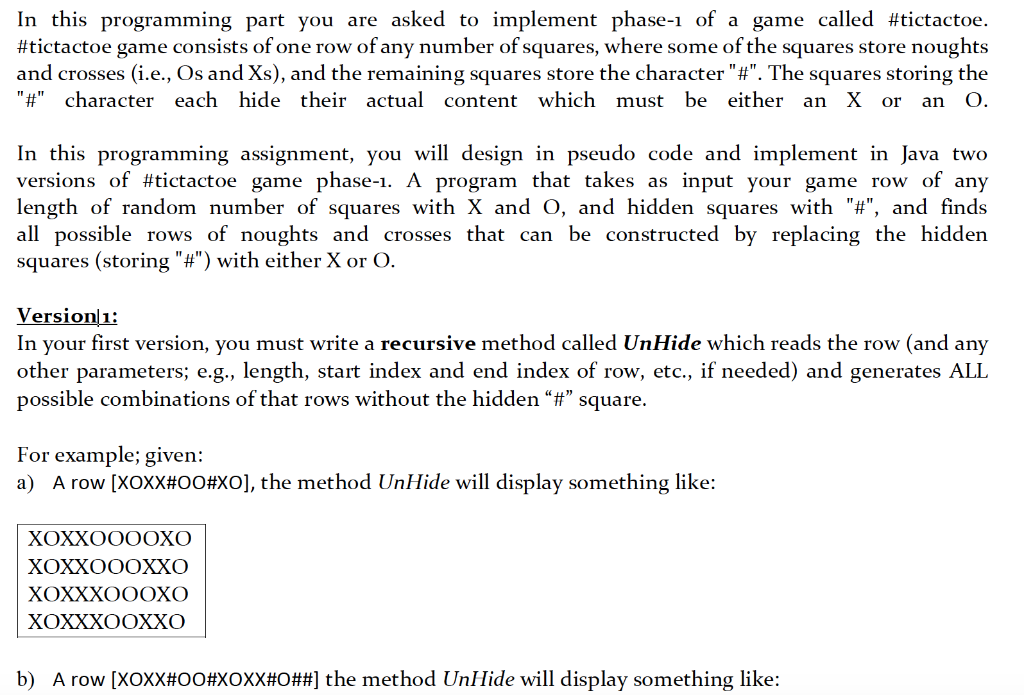
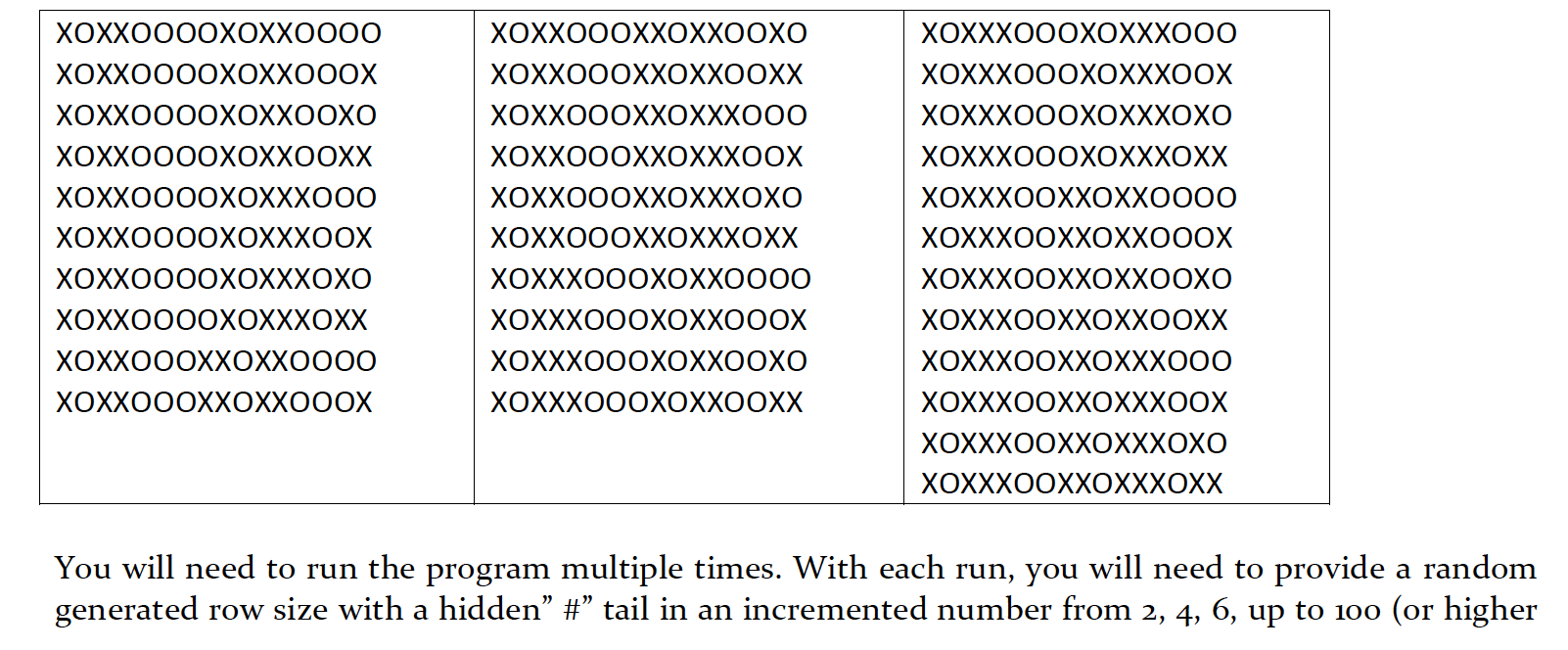
In this programming part you are asked to implement phase-i of a game called #tictactoe. #tictactoe game consists of one row of any number of squares, where some of the squares store noughts and crosses (i.e., Os and Xs), and the remaining squares store the character "#". The squares storing the "#" character each hide their actual content which must be either an X or an 0. In this programming assignment, you will design in pseudo code and implement in Java two versions of #tictactoe game phase-1. A program that takes as input your game row of any length of random number of squares with X and O, and hidden squares with "#", and finds all possible rows of noughts and crosses that can be constructed by replacing the hidden squares (storing "#") with either X or 0. Version 1: In your first version, you must write a recursive method called UnHide which reads the row (and any other parameters; e.g., length, start index and end index of row, etc., if needed) and generates ALL possible combinations of that rows without the hidden # square. For example; given: a) A row [XOXX#00#XO], the method UnHide will display something like: XOXXOO0OXO XOXXOOOXXO XOXXXOOOXO XOXXXOOXXO b) A row [XOXX#00#XOXX#O##] the method UnHide will display something like: XOXXOO0OXOXXO000 XOXXOO0OXOXXOOOX XOXXOO0OXOXXOOXO XOXXOOOOXOXXOOXX XOXXOOOOXOXXXOOO XOXXOOOOXOXXXOOX XOXXO000XOXXXOXO XOXXOOOOXOXXXOXX XOXXOOOXXOXXOO00 XOXXOOOXXOXXOOOX XOXXOOOXXOXXOOXO XOXXOOOXXOXXOOXX XOXXOOOXXOXXXOO0 XOXXOOOXXOXXXOOX XOXXOOOXXOXXXOXO XOXXOOOXXOXXXOXX XOXXXOOOXOXXOO00 XOXXXOOOXOXXOOOX XOXXXOOOXOXXOOXO XOXXXOOOXOXXOOXX XOXXXOOOXOXXXOOO XOXXXOOOXOXXXOOX XOXXXOOOXOXXXOXO XOXXXOOOXOXXXOXX XOXXXOOXXOXXOO00 XOXXXOOXXOXXOOOX XOXXXOOXXOXXOOXO XOXXXOOXXOXXOOXX XOXXXOOXXOXXXOO0 XOXXXOOXXOXXXOOX XOXXXOOXXOXXXOXO XOXXXOOXXOXXXOXX You will need to run the program multiple times. With each run, you will need to provide a random generated row size with a hidden # tail in an incremented number from 2, 4, 6, up to 100 (or higher value if required for your timing measurement) and measure the corresponding run time for each run. You can use Java's built-in time function for finding the execution time. You should redirect the output of each program to an out.txt file. You should write about your observations on timing measurements in a separate text file. You are required to submit the two fully commented Java source files, the compiled executables, and the text files. Briefly explain what is the complexity of your algorithm. More specifically, has your solution has an acceptable complexity; is it scalable enough; etc. If not, what are the reasons behind that? In this programming part you are asked to implement phase-i of a game called #tictactoe. #tictactoe game consists of one row of any number of squares, where some of the squares store noughts and crosses (i.e., Os and Xs), and the remaining squares store the character "#". The squares storing the "#" character each hide their actual content which must be either an X or an 0. In this programming assignment, you will design in pseudo code and implement in Java two versions of #tictactoe game phase-1. A program that takes as input your game row of any length of random number of squares with X and O, and hidden squares with "#", and finds all possible rows of noughts and crosses that can be constructed by replacing the hidden squares (storing "#") with either X or 0. Version 1: In your first version, you must write a recursive method called UnHide which reads the row (and any other parameters; e.g., length, start index and end index of row, etc., if needed) and generates ALL possible combinations of that rows without the hidden # square. For example; given: a) A row [XOXX#00#XO], the method UnHide will display something like: XOXXOO0OXO XOXXOOOXXO XOXXXOOOXO XOXXXOOXXO b) A row [XOXX#00#XOXX#O##] the method UnHide will display something like: XOXXOO0OXOXXO000 XOXXOO0OXOXXOOOX XOXXOO0OXOXXOOXO XOXXOOOOXOXXOOXX XOXXOOOOXOXXXOOO XOXXOOOOXOXXXOOX XOXXO000XOXXXOXO XOXXOOOOXOXXXOXX XOXXOOOXXOXXOO00 XOXXOOOXXOXXOOOX XOXXOOOXXOXXOOXO XOXXOOOXXOXXOOXX XOXXOOOXXOXXXOO0 XOXXOOOXXOXXXOOX XOXXOOOXXOXXXOXO XOXXOOOXXOXXXOXX XOXXXOOOXOXXOO00 XOXXXOOOXOXXOOOX XOXXXOOOXOXXOOXO XOXXXOOOXOXXOOXX XOXXXOOOXOXXXOOO XOXXXOOOXOXXXOOX XOXXXOOOXOXXXOXO XOXXXOOOXOXXXOXX XOXXXOOXXOXXOO00 XOXXXOOXXOXXOOOX XOXXXOOXXOXXOOXO XOXXXOOXXOXXOOXX XOXXXOOXXOXXXOO0 XOXXXOOXXOXXXOOX XOXXXOOXXOXXXOXO XOXXXOOXXOXXXOXX You will need to run the program multiple times. With each run, you will need to provide a random generated row size with a hidden # tail in an incremented number from 2, 4, 6, up to 100 (or higher value if required for your timing measurement) and measure the corresponding run time for each run. You can use Java's built-in time function for finding the execution time. You should redirect the output of each program to an out.txt file. You should write about your observations on timing measurements in a separate text file. You are required to submit the two fully commented Java source files, the compiled executables, and the text files. Briefly explain what is the complexity of your algorithm. More specifically, has your solution has an acceptable complexity; is it scalable enough; etc. If not, what are the reasons behind that
Step by Step Solution
There are 3 Steps involved in it

Get step-by-step solutions from verified subject matter experts
 Study Help