







Question: **in Matlab. please comment on code when necessary. **in Matlab, estimate using Simpson's 1/8, 3/8, and Trapezoid Methods to compare. yes in Matlab 000 20
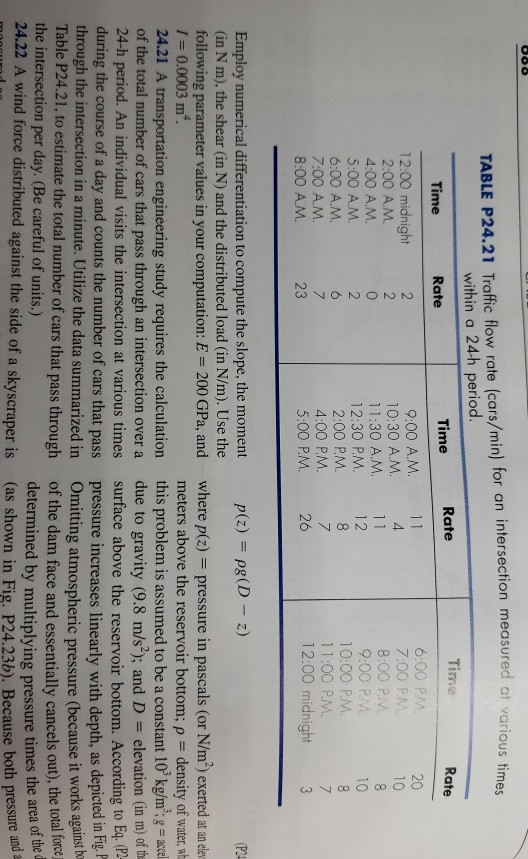
**in Matlab. please comment on code when necessary.
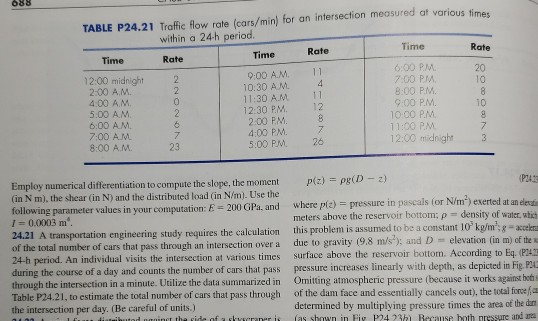
**in Matlab, estimate using Simpson's 1/8, 3/8, and Trapezoid Methods to compare.
yes in Matlab
000 20 TABLE P24.21 Traffic flow rate (cars/min) for an intersection measured at various times within a 24-h period. Time Rate Time Rate Time Rate 9:00 AM 6:00 PM 12:00 midnight 7:00 PM 4 10:30 AM 2:00 AM 4:00 AM 11:30 AM 8:00 PM 11 5:00 AM 12:30 PM 9:00 PM 6:00 AM 2:00 PM 8 10:00 PM 7:00 AM 4:00 PM 11:00 PM 8:00 AM 5:00 PM 12:00 midnight ON p(z) = pg(D - 2) P2 Employ numerical differentiation to compute the slope, the moment (in Nm), the shear (in N) and the distributed load (in N/m). Use the following parameter values in your computation: E = 200 GPa, and I = 0.0003 m. 24.21 A transportation engineering study requires the calculation of the total number of cars that pass through an intersection over a 24-h period. An individual visits the intersection at various times during the course of a day and counts the number of cars that pass through the intersection in a minute. Utilize the data summarized in Table P24.21, to estimate the total number of cars that pass through the intersection per day. (Be careful of units.) 24.22 A wind force distributed against the side of a skyscraper is where p(z) = pressure in pascals (or N/m) exerted at an elev meters above the reservoir bottom; p = density of water, wh. this problem is assumed to be a constant 10 kg/m': 8 = accel due to gravity (9.8 m/s2); and D = elevation (in m) of the surface above the reservoir bottom. According to Eq. (P- pressure increases linearly with depth, as depicted in Fig. Omitting atmospheric pressure (because it works against of the dam face and essentially cancels out), the way determined by multiplying pressure times the area of the (as shown in Fig. P24.23b). Because both pressu Rate TABLE P24.21 Traffic flow rate (cars/min) for an intersection measured of various times within a 24-h period. Time Rate Time Rate Time 12:00 midnight 0:00 AM 11 6:00 PM 2:00 AM 10:30 AM 4 7:00 PM 4:00 AM 11:30 AM 11 8:00 PM 5.00 AM 12:30 PM 9:00 PM 6:00 AM 2.00 PM 8 10:00 PM 7:00 AM 4:00 PM 11:00 PM 8:00 AM 5:00 PM 26 12:00 midnight NONONN p(x) = pg(D - 2) P34 Employ numerical differentiation to compute the slope, the moment (in Nm), the shear (in N) and the distributed load (in N/m). Use the following parameter values in your computation: 200 G Pa, and 1 = 0.0003 m. 24.21 A transportation engineering study requires the calculation of the total number of cars that pass through an intersection over a 24-h period. An individual visits the intersection at various times during the course of a day and counts the number of cars that pass through the intersection in a minute. Utilize the data summarized in Table P24.21, to estimate the total number of cars that pass through the intersection per day. (Be careful of units.) . . .th i s where :) pressure in pascals for Nm) exerted at an ein meters above the reservoir bottom; p = density of water, whic this problem is assumed to be a constant 10 kam a due to gravity (9.8 m/s' and D = elevation in m) of the surface above the reservoir bottom. According to Eq. 34 pressure increases linearly with depth, as depicted in Fig. PL Omitting atmospheric pressure (because it works against bon of the dam face and essentially cancels out), the total force determined by multiplying pressure times the area of the din shown in the bath 000 20 TABLE P24.21 Traffic flow rate (cars/min) for an intersection measured at various times within a 24-h period. Time Rate Time Rate Time Rate 9:00 AM 6:00 PM 12:00 midnight 7:00 PM 4 10:30 AM 2:00 AM 4:00 AM 11:30 AM 8:00 PM 11 5:00 AM 12:30 PM 9:00 PM 6:00 AM 2:00 PM 8 10:00 PM 7:00 AM 4:00 PM 11:00 PM 8:00 AM 5:00 PM 12:00 midnight ON p(z) = pg(D - 2) P2 Employ numerical differentiation to compute the slope, the moment (in Nm), the shear (in N) and the distributed load (in N/m). Use the following parameter values in your computation: E = 200 GPa, and I = 0.0003 m. 24.21 A transportation engineering study requires the calculation of the total number of cars that pass through an intersection over a 24-h period. An individual visits the intersection at various times during the course of a day and counts the number of cars that pass through the intersection in a minute. Utilize the data summarized in Table P24.21, to estimate the total number of cars that pass through the intersection per day. (Be careful of units.) 24.22 A wind force distributed against the side of a skyscraper is where p(z) = pressure in pascals (or N/m) exerted at an elev meters above the reservoir bottom; p = density of water, wh. this problem is assumed to be a constant 10 kg/m': 8 = accel due to gravity (9.8 m/s2); and D = elevation (in m) of the surface above the reservoir bottom. According to Eq. (P- pressure increases linearly with depth, as depicted in Fig. Omitting atmospheric pressure (because it works against of the dam face and essentially cancels out), the way determined by multiplying pressure times the area of the (as shown in Fig. P24.23b). Because both pressu Rate TABLE P24.21 Traffic flow rate (cars/min) for an intersection measured of various times within a 24-h period. Time Rate Time Rate Time 12:00 midnight 0:00 AM 11 6:00 PM 2:00 AM 10:30 AM 4 7:00 PM 4:00 AM 11:30 AM 11 8:00 PM 5.00 AM 12:30 PM 9:00 PM 6:00 AM 2.00 PM 8 10:00 PM 7:00 AM 4:00 PM 11:00 PM 8:00 AM 5:00 PM 26 12:00 midnight NONONN p(x) = pg(D - 2) P34 Employ numerical differentiation to compute the slope, the moment (in Nm), the shear (in N) and the distributed load (in N/m). Use the following parameter values in your computation: 200 G Pa, and 1 = 0.0003 m. 24.21 A transportation engineering study requires the calculation of the total number of cars that pass through an intersection over a 24-h period. An individual visits the intersection at various times during the course of a day and counts the number of cars that pass through the intersection in a minute. Utilize the data summarized in Table P24.21, to estimate the total number of cars that pass through the intersection per day. (Be careful of units.) . . .th i s where :) pressure in pascals for Nm) exerted at an ein meters above the reservoir bottom; p = density of water, whic this problem is assumed to be a constant 10 kam a due to gravity (9.8 m/s' and D = elevation in m) of the surface above the reservoir bottom. According to Eq. 34 pressure increases linearly with depth, as depicted in Fig. PL Omitting atmospheric pressure (because it works against bon of the dam face and essentially cancels out), the total force determined by multiplying pressure times the area of the din shown in the bath
Step by Step Solution
There are 3 Steps involved in it

Get step-by-step solutions from verified subject matter experts
 Study Help