







Question: In the Solow model, output (Y) is a function of capital (K), labor (L), and a productivity parameter A; that is, Y=F(A,K,L). A proportion
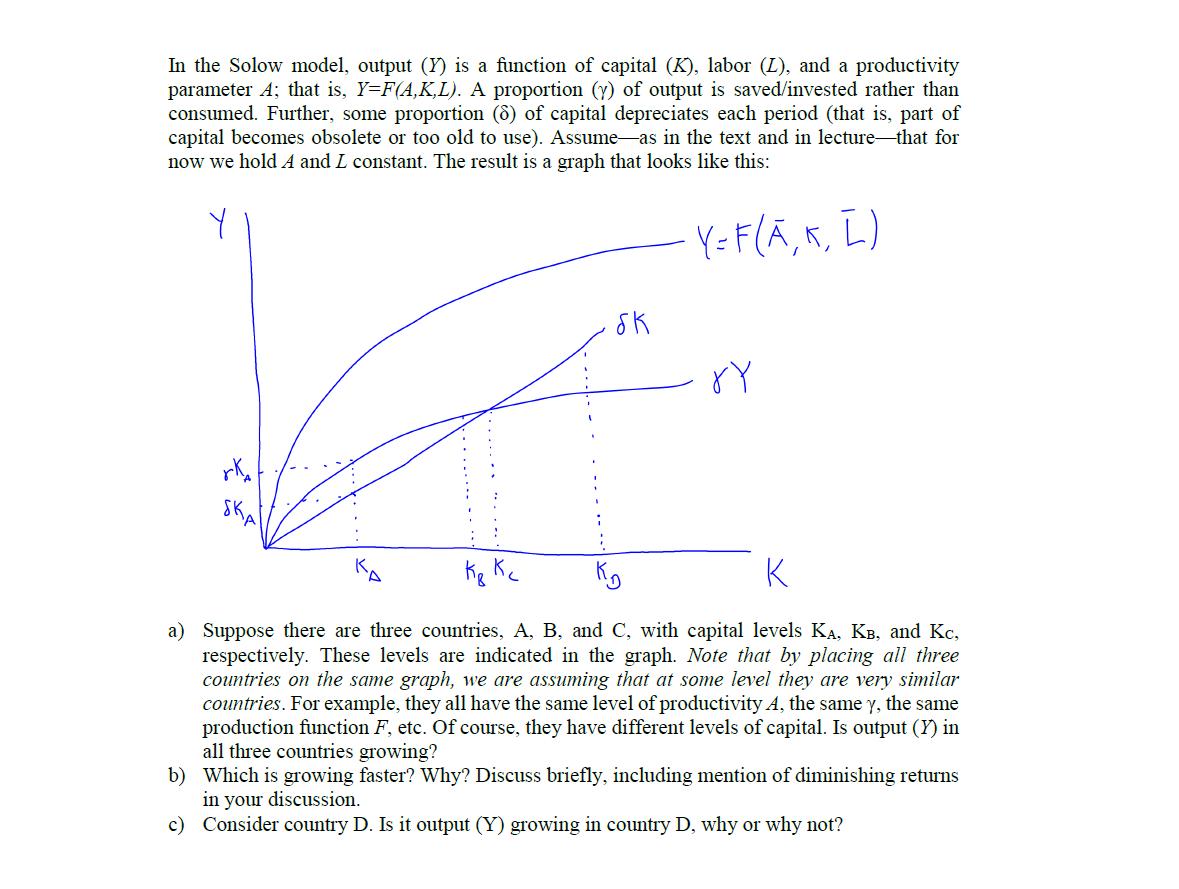
In the Solow model, output (Y) is a function of capital (K), labor (L), and a productivity parameter A; that is, Y=F(A,K,L). A proportion (y) of output is saved/invested rather than consumed. Further, some proportion (8) of capital depreciates each period (that is, part of capital becomes obsolete or too old to use). Assume-as in the text and in lecture-that for now we hold A and L constant. The result is a graph that looks like this: Y Y=F(A, K, L) rka SKA K a) Suppose there are three countries, A, B, and C, with capital levels KA, KB, and Kc, respectively. These levels are indicated in the graph. Note that by placing all three countries on the same graph, we are assuming that at some level they are very similar countries. For example, they all have the same level of productivity A, the same y, the same production function F, etc. Of course, they have different levels of capital. Is output (Y) in all three countries growing? b) Which is growing faster? Why? Discuss briefly, including mention of diminishing returns in your discussion. c) Consider country D. Is it output (Y) growing in country D, why or why not?
Step by Step Solution
3.44 Rating (160 Votes )
There are 3 Steps involved in it
a Yes output in all three countries is growing This is because all ... View full answer

Get step-by-step solutions from verified subject matter experts
 Study Help