



Question: In virtual memory systems, addresses are divided into two parts: A virtual page number ( VPN ) used to look up the physical page location
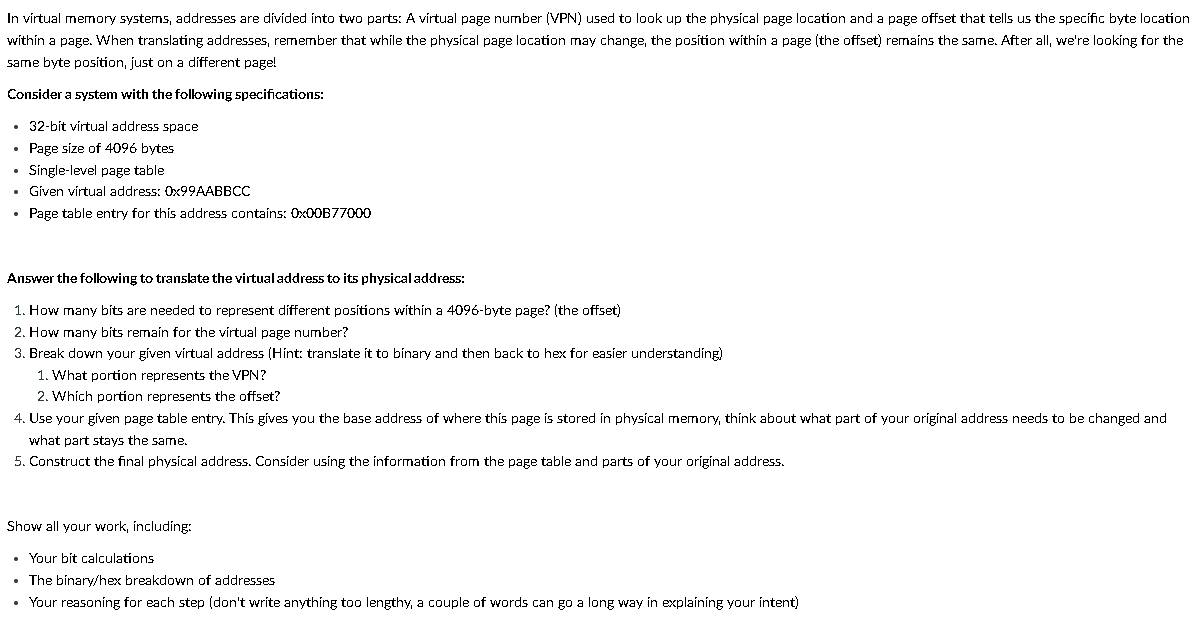
In virtual memory systems, addresses are divided into two parts: A virtual page number VPN used to look up the physical page location and a page offset that tells us the specific byte location within a page. When translating addresses, remember that while the physical page location may change, the position within a page the offset remains the same. After all, we're looking for the same byte position, just on a different page!
Consider a system with the following specifications:
bit virtual address space
Page size of bytes
Singlelevel page table
Given virtual address: xAABBCC
Page table entry for this address contains: xB
Answer the following to transkate the virtual address to its physical address:
How many bits are needed to represent different positions within a byte page? the offset
How many bits remain for the virtual page number?
Break down your given virtual address Hint: translate it to binary and then back to hex for easier understanding
What portion represents the VPN
Which portion represents the offset?
Use your given page table entry. This gives you the base address of where this page is stored in physical memory, think about what part of your original address needs to be changed and what part stays the same.
Construct the final physical address. Consider using the information from the page table and parts of your original address.
Show all your work, including:
Your bit calculations
The binaryhex breakdown of addresses
Step by Step Solution
There are 3 Steps involved in it
1 Expert Approved Answer
Step: 1 Unlock

Question Has Been Solved by an Expert!
Get step-by-step solutions from verified subject matter experts
Step: 2 Unlock
Step: 3 Unlock