





Question: #include #include #include extern char **environ; void printenv () 1 int i = 0; while (environ[i] != NULL) { printf(%s , environ[i]); i++; } }
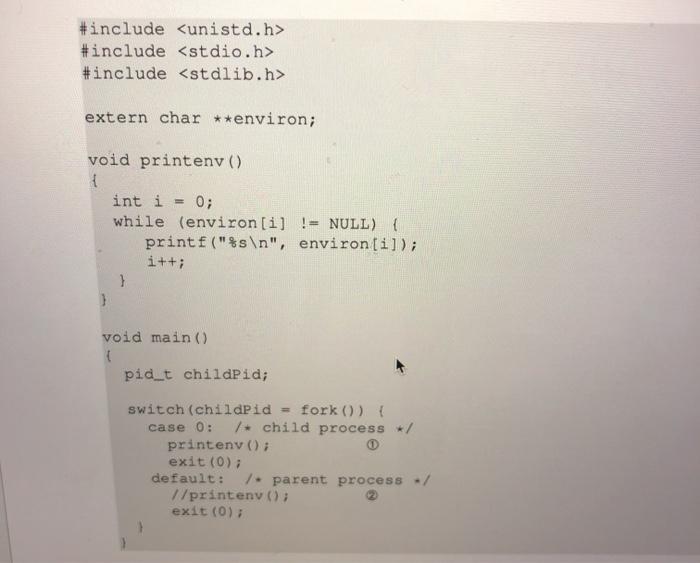
 #include #include #include extern char **environ; void printenv () 1 int
i = 0; while (environ[i] != NULL) { printf("%s ", environ[i]); i++;
} } void main() pid_t childPid; switch (childid = fork ()) {

#include #include #include extern char **environ; void printenv () 1 int i = 0; while (environ[i] != NULL) { printf("%s ", environ[i]); i++; } } void main() pid_t childPid; switch (childid = fork ()) { case 0: /+ child process */ printenv (); exit(0); default: /. parent process / //printenv (); exit(0); Step 1. Please compile and run the following program, and describe your observation. Because the output contains many strings, you should save the output into a file, such as using a .out > child (assuming that a.out is your executable file name). #include #include #include extern char * environ; void printenv () int i = 0; while (environ [1] != NULL) printf(" ", environ[1]); i++; 3 void main() pidut childPid; switch (childid - fork()) case 0: child process / printenv (); exit (0) default: parent process */ //printenv () exit (0) Stay connect Application Home Workout Step 2. Now comment out the printenv () statement in the child process case (Line O), and uncomment the printenv () statement in the parent press case (Line ). Compile and run the code again, and

Step by Step Solution

There are 3 Steps involved in it

1 Expert Approved Answer
Step: 1 Unlock blur-text-image
Question Has Been Solved by an Expert!

Get step-by-step solutions from verified subject matter experts

Step: 2 Unlock
Step: 3 Unlock

Students Have Also Explored These Related Databases Questions!
