







Question: #include using namespace std; class Dog { public: Dog(); void Read(); void Print(); ~Dog(); private: int age; int weight; }; Dog::Dog() { age = 0;
#include
class Dog { public: Dog(); void Read(); void Print(); ~Dog(); private: int age; int weight; }; Dog::Dog() { age = 0; weight = 0; } void Dog::Read() { cin >> age; cin >> weight; } void Dog::Print() { cout
int main() { Dog* myDogs = nullptr; int count; int i; /* Your code goes here */ delete[] myDogs; return 0; }
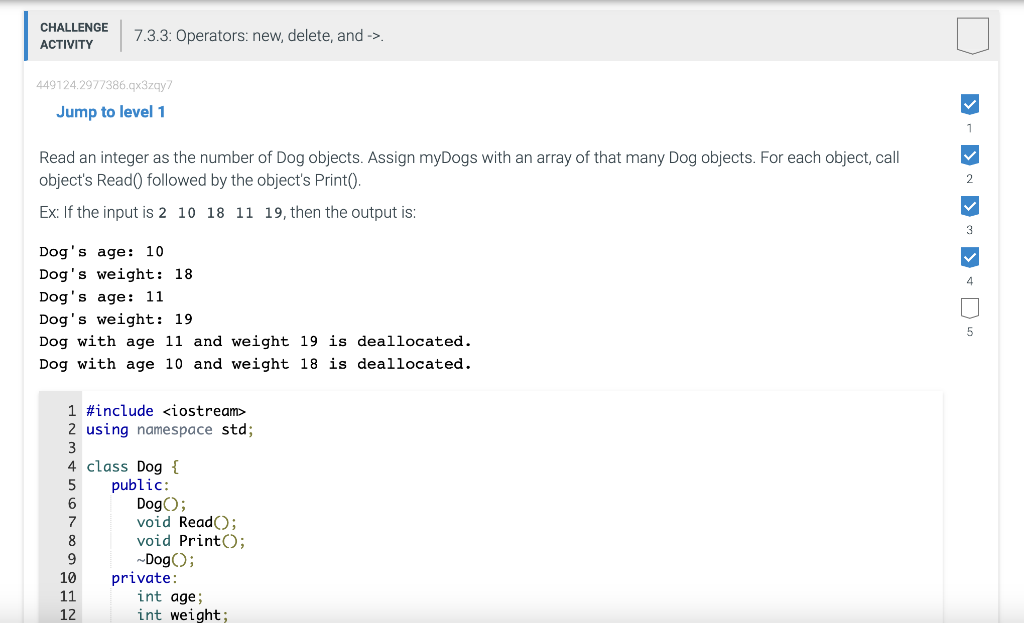
Jump to level 1 Read an integer as the number of Dog objects. Assign myDogs with an array of that many Dog objects. For each object, call object's Read() followed by the object's Print(). Ex: If the input is 210181119, then the output is: Dog 's age: 10 Dog's weight: 18 Dog's age: 11 Dog's weight: 19 Dog with age 11 and weight 19 is deallocated. Dog with age 10 and weight 18 is deallocated. 123456789101112#include
Step by Step Solution
There are 3 Steps involved in it

Get step-by-step solutions from verified subject matter experts
 Study Help