







Question: indices biggest: This function returns a list containing the indices of the largest value in its sole argument, a nonempty matrix, i.e. [row index, col
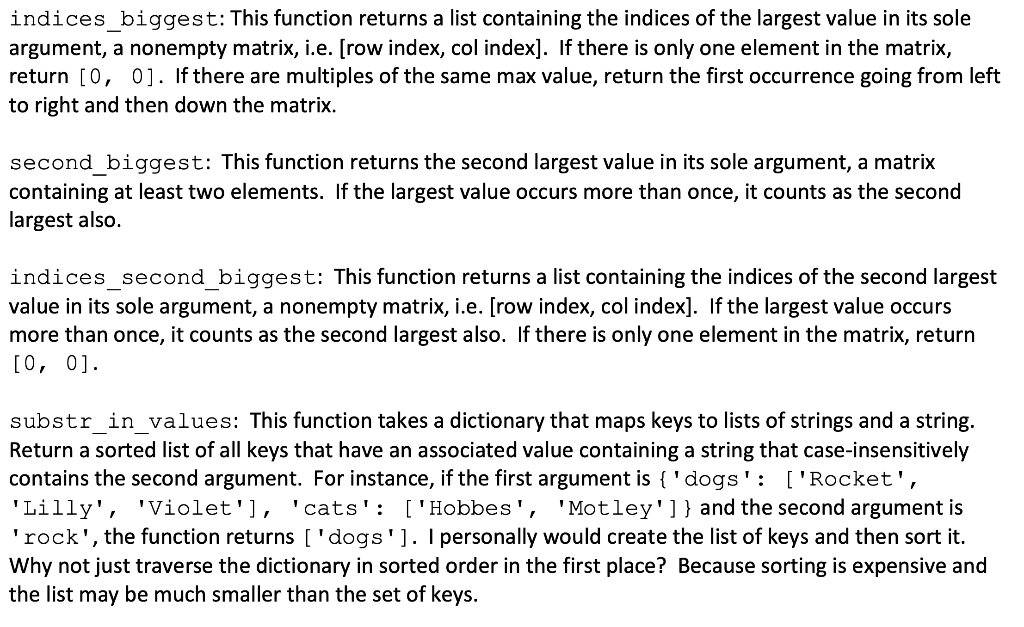
indices biggest: This function returns a list containing the indices of the largest value in its sole argument, a nonempty matrix, i.e. [row index, col index]. If there is only one element in the matrix, return [0, 0]. If there are multiples of the same max value, return the first occurrence going from left to right and then down the matrix. second biggest: This function returns the second largest value in its sole argument, a matrix containing at least two elements. If the largest value occurs more than once, it counts as the second largest also. indices second biggest: This function returns a list containing the indices of the second largest value in its sole argument, a nonempty matrix, i.e. [row index, col index]. If the largest value occurs more than once, it counts as the second largest also. If there is only one element in the matrix, return [0, 0]. substr in values: This function takes a dictionary that maps keys to lists of strings and a string. Return a sorted list of all keys that have an associated value containing a string that case-insensitively contains the second argument. For instance, if the first argument is {'dogs': [ 'Rocket', 'Lilly', 'Violet'], 'cats': [ 'Hobbes', 'Motley'] } and the second argument is 'rock', the function returns ['dogs']. I personally would create the list of keys and then sort it. Why not just traverse the dictionary in sorted order in the first place? Because sorting is expensive and the list may be much smaller than the set of keys
Step by Step Solution
There are 3 Steps involved in it

Get step-by-step solutions from verified subject matter experts
 Study Help