







Question: Indirect Addressing & Loops Using the Irvine library, for Assembly Language x86 processors Create an empty string (null terminated array of characters) that will hold
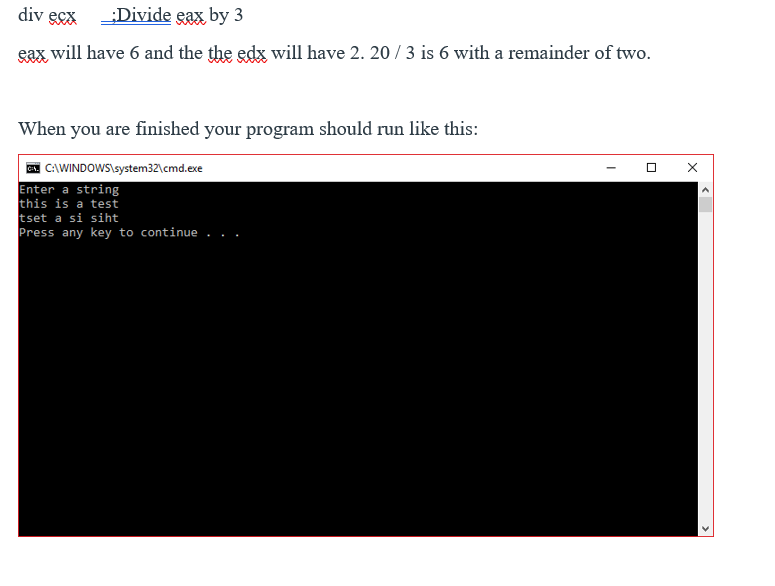
Indirect Addressing & Loops Using the Irvine library, for Assembly Language x86 processors Create an empty string (null terminated array of characters) that will hold up to 50 BYTES. Prompt the user to input a string and store their input into the empty string you created. Use a loop and indirect addressing to reverse the elements of the string in place. Do not copy the elements to any other array. Use the Strlength procedure found in the Irvine library to make the program as flexible as possible. This will allow for the size of the string to be easily changed in the future. In other words do NOT simply hard code a value of 50. You must compute the size of the string. To use the strlength procedure you place the offset of the string in the edx register as you would with the WriteString procedure. After calling the StrLength procedure the size of the string will be in the eax register. Once you have reversed the string inline output it to the screen using the WxiteSting procedure
Step by Step Solution
There are 3 Steps involved in it

Get step-by-step solutions from verified subject matter experts
 Study Help