







Question: Individual Problems 1 5 - 2 Mr . and Mrs . Ward typically vote oppositely in elections and so their votes cancel each other out.
Individual Problems
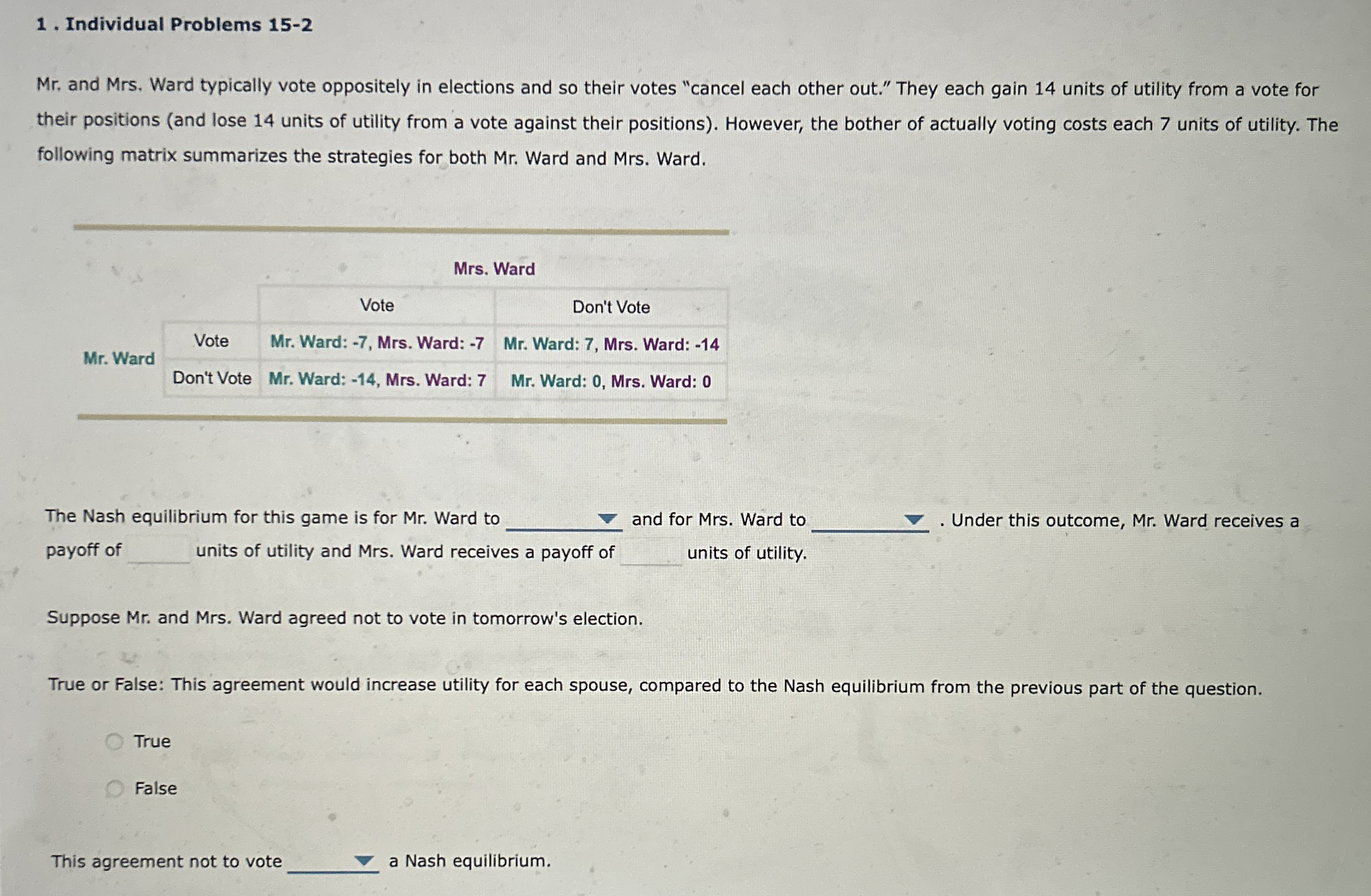
Mr and Mrs Ward typically vote oppositely in elections and so their votes "cancel each other out." They each gain units of utility from a vote for their positions and lose units of utility from a vote against their positions However, the bother of actually voting costs each units of utility. The following matrix summarizes the strategies for both Mr Ward and Mrs Ward.
tableMrs Ward,Mr Ward,Vote,Mr Ward: Mrs Ward: Mr Ward: Mrs Ward: Dont Vote,Mr Ward: Mrs Ward: Mr Ward: Mrs Ward:
The Nash equilibrium for this game is for Mr Ward to and for Mrs Ward to Under this outcome, Mr Ward receives a payoff of units of utility and Mrs Ward receives a payoff of units of utility.
Suppose Mr and Mrs Ward agreed not to vote in tomorrow's election.
True or False: This agreement would increase utility for each spouse, compared to the Nash equilibrium from the previous part of the question.
True
False
This agreement not to vote a Nash equilibrium.
Step by Step Solution
There are 3 Steps involved in it
1 Expert Approved Answer
Step: 1 Unlock

Question Has Been Solved by an Expert!
Get step-by-step solutions from verified subject matter experts
Step: 2 Unlock
Step: 3 Unlock
 Study Help