







Question: Problems: Chapters 15 and 16 Back to Assignment Attempts 2.5 Average 2.5 / 3 1 . Individual Problems 15-2 Mr. and Mrs. Ward typically vote
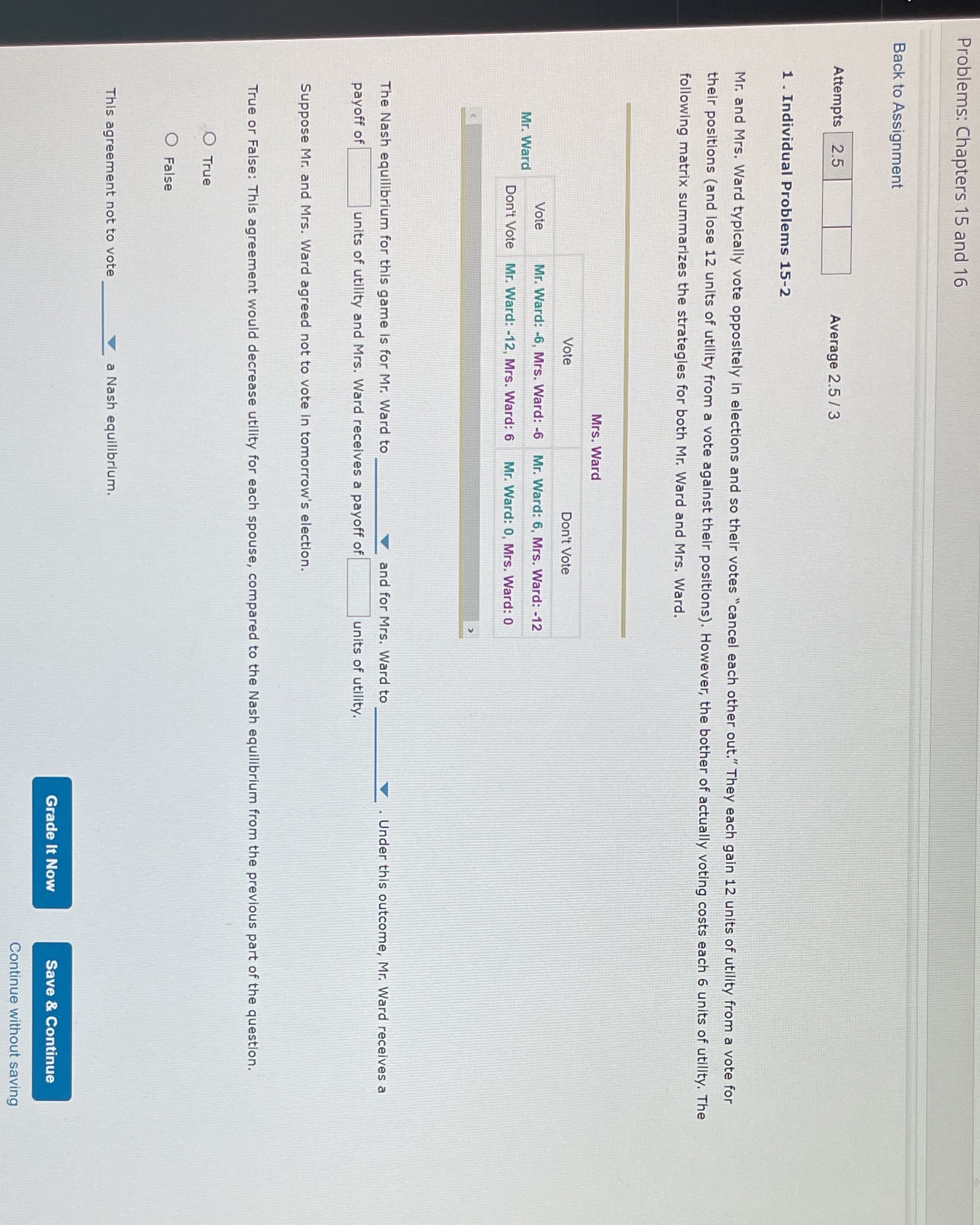
Problems: Chapters 15 and 16 Back to Assignment Attempts 2.5 Average 2.5 / 3 1 . Individual Problems 15-2 Mr. and Mrs. Ward typically vote oppositely in elections and so their votes "cancel each other out." They each gain 12 units of utility from a vote for their positions (and lose 12 units of utility from a vote against their positions). However, the bother of actually voting costs each 6 units of utility. The following matrix summarizes the strategies for both Mr. Ward and Mrs. Ward. Mrs. Ward Vote Don't Vote Vote Mr. Ward: -6, Mrs. Ward: -6 Mr. Ward: 6, Mrs. Ward: -12 Mr. Ward Don't Vote Mr. Ward: -12, Mrs. Ward: 6 Mr. Ward: 0, Mrs. Ward: 0 The Nash equilibrium for this game is for Mr. Ward to and for Mrs. Ward to Under this outcome, Mr. Ward receives a payoff of units of utility and Mrs. Ward receives a payoff of units of utility . Suppose Mr. and Mrs. Ward agreed not to vote in tomorrow's election. True or False: This agreement would decrease utility for each spouse, compared to the Nash equilibrium from the previous part of the question. O True O False This agreement not to vote a Nash equilibrium. Grade It Now Save & Continue Continue without saving
Step by Step Solution
There are 3 Steps involved in it

Get step-by-step solutions from verified subject matter experts
 Study Help