







Question: Info for question: Function, solve_neq(X, y) implements Algorithm 1. It should return a Numpy vector containing the model parameter estimates. Steps of the algorithm as
Info for question:
Function, solve_neq(X, y) implements Algorithm 1. It should return a Numpy vector containing the model parameter estimates.
Steps of the algorithm as previously outlined:
- Form the Gramian of X, CXTXC
- Form bXTy.
- Solve C=b for
The algorithm should carry out these steps. For the third step, use Scipy's routine, scipy.linalg.solve(). It has an option that allows you to indicate that CC is symmetric and positive definite, which will be true of CC for our synthetic problem.
The code cell will run your function to compute a set of parameter estimates. It will store these in a variable named theta_neq, which we will refer to later.
Question
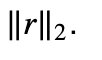
Write a function to calculate the residual norm,
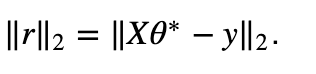
Although we are minimizing

your function should return
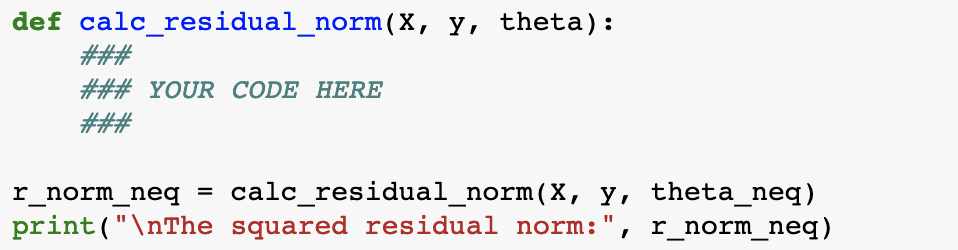
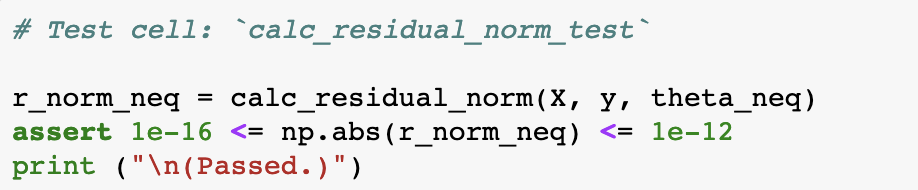
llril2 = 11X0"-ylla. def calc residual norm(X, y, theta): ### YOUR CODE HERE r norm neg -calc residual norm(X, y, theta neg) print("nThe squared residual norm: ", r norm neg) # Test cell: calc residual norm test r norm neg = calc residual norm(X, assert 1e-16
Step by Step Solution
There are 3 Steps involved in it

Get step-by-step solutions from verified subject matter experts
 Study Help