







Question: Initially, 40 bacteria are placed in a Petri dish. It is observed that the bacteria triple in population every 11 hours. How can this information
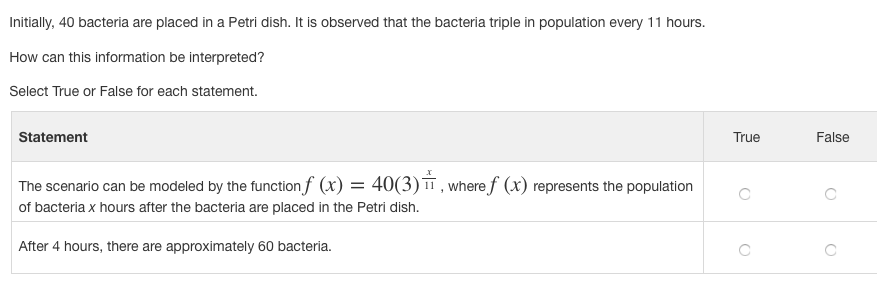
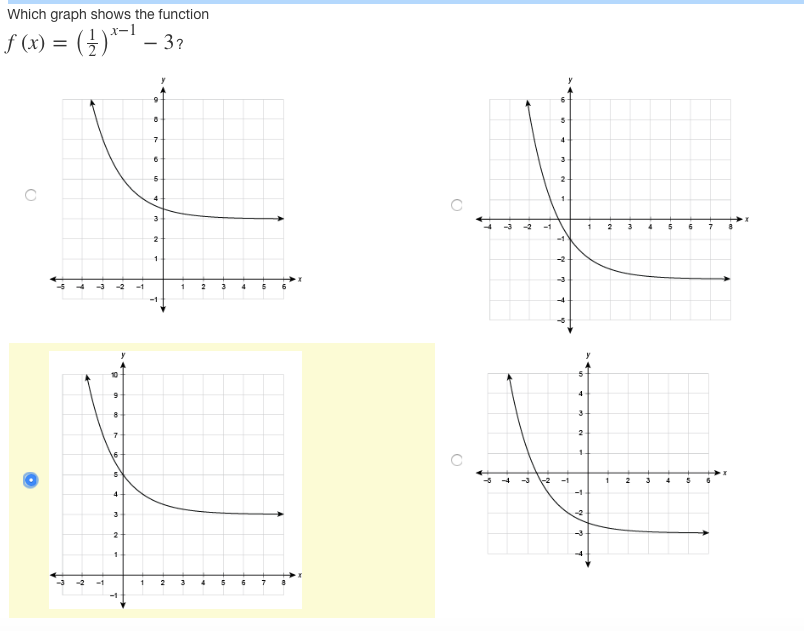
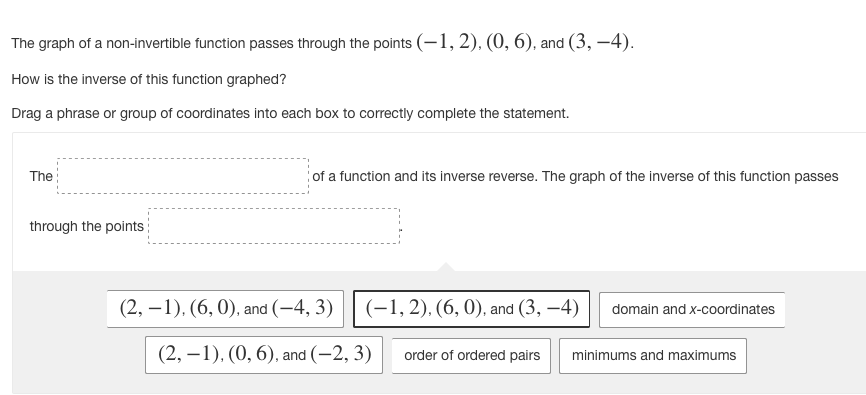
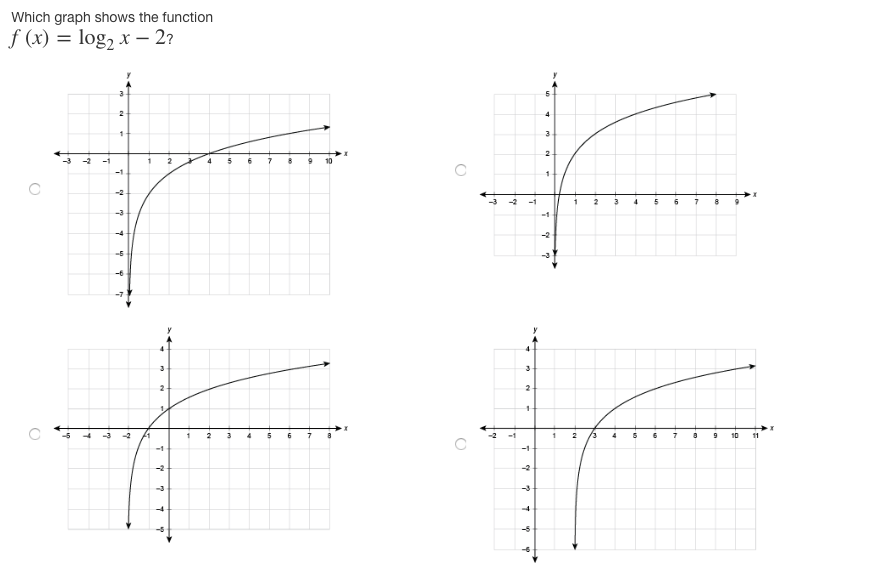
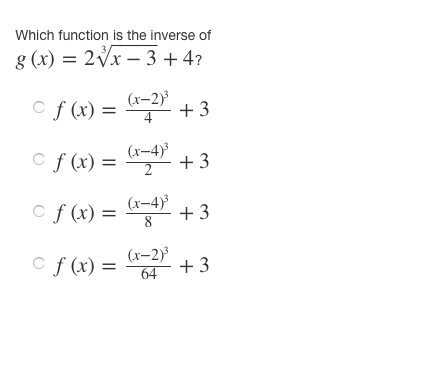
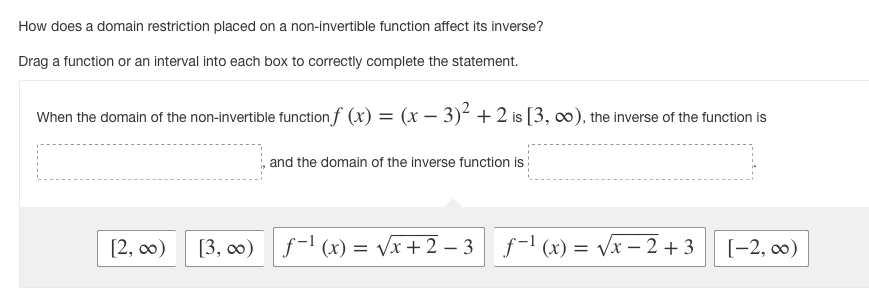
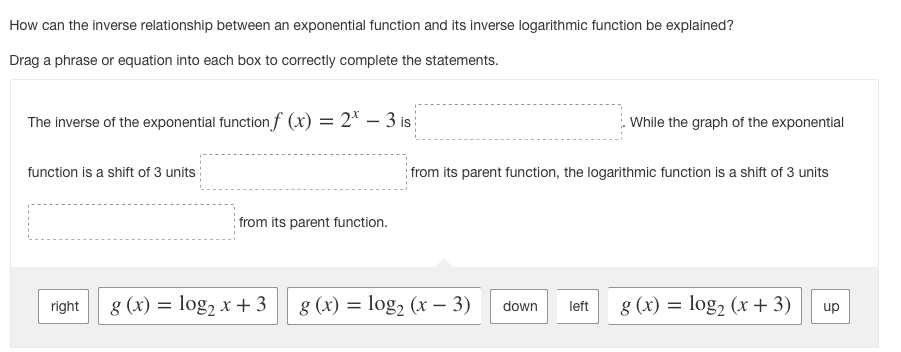
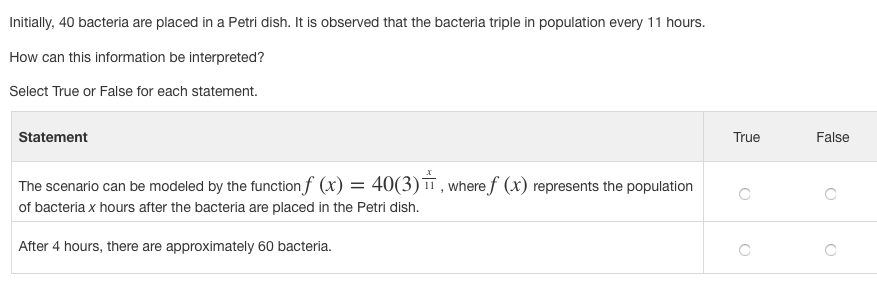
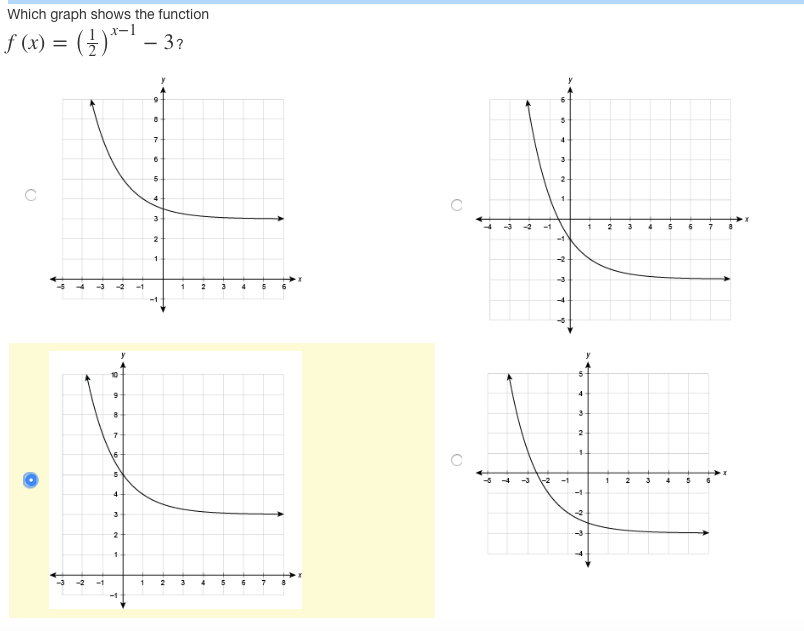
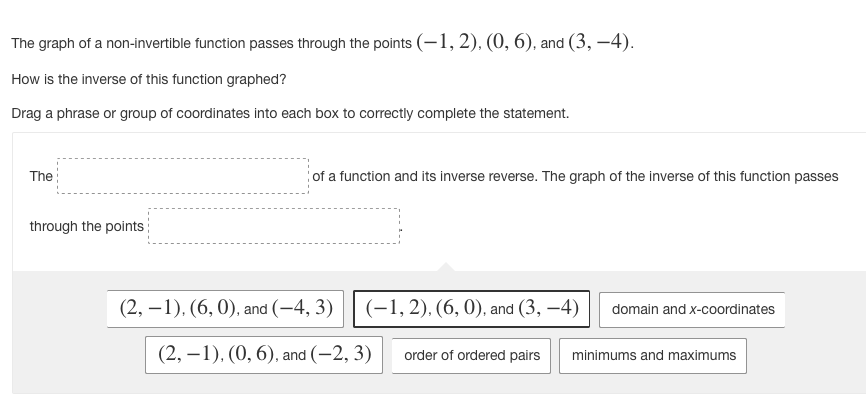
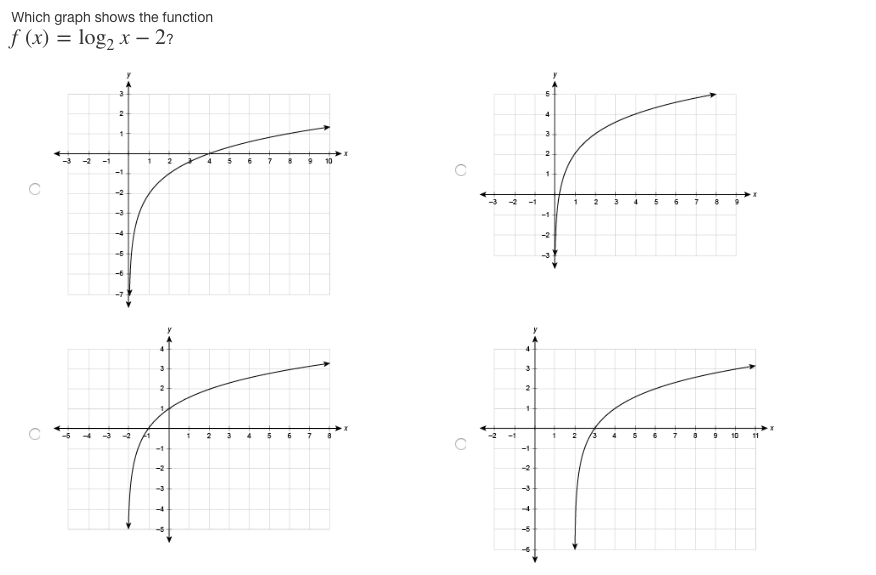
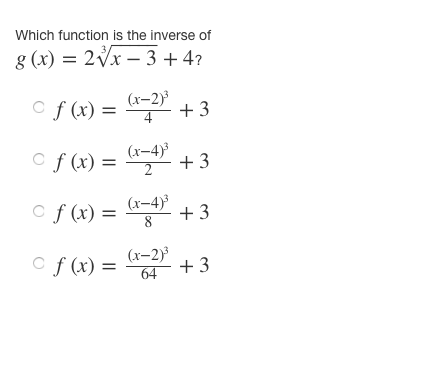
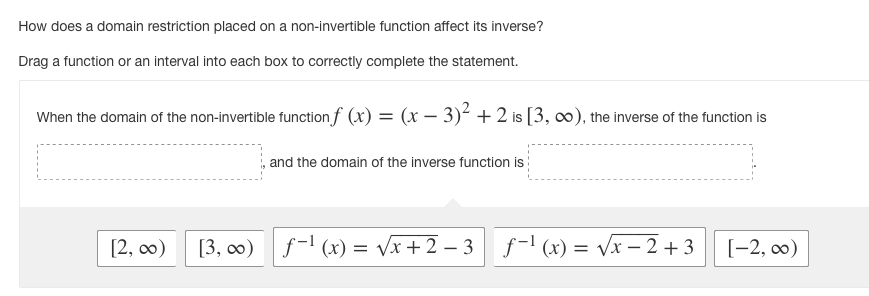
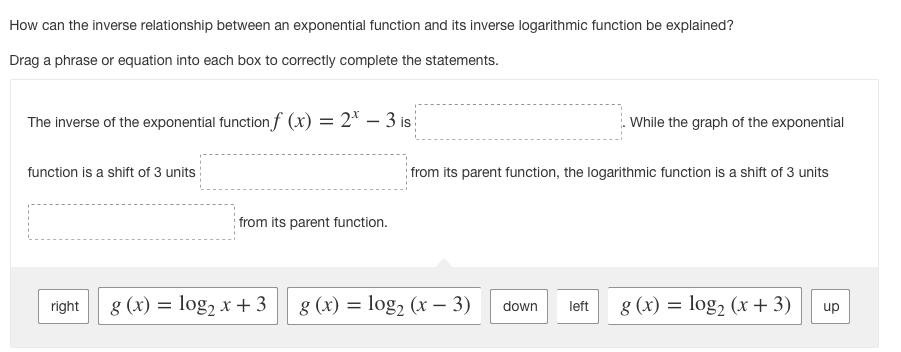
Initially, 40 bacteria are placed in a Petri dish. It is observed that the bacteria triple in population every 11 hours. How can this information be interpreted? Select True or False for each statement. Statement True False The scenario can be modeled by the function f (x) = 40(3) T1 , where f (x) represents the population C C of bacteria x hours after the bacteria are placed in the Petri dish. After 4 hours, there are approximately 60 bacteria. C C\fThe graph of a non-invertible function passes through the points (-1, 2), (0, 6), and (3, -4). How is the inverse of this function graphed? Drag a phrase or group of coordinates into each box to correctly complete the statement. The of a function and its inverse reverse. The graph of the inverse of this function passes through the points (2, -1). (6, 0), and (-4, 3) (-1, 2), (6, 0), and (3, -4) domain and x-coordinates (2, -1), (0, 6), and (-2, 3) order of ordered pairs minimums and maximums\fWhich function is the inverse of g (x) = 2vx -3+47 of ( x ) = (x-2)3 4 + 3 of ( x ) = (x-4) 2 + 3 of ( x) = (x-4) 8 + 3 of (x) = (-2) 64 + 3How does a domain restriction placed on a non-invertible function affect its inverse? Drag a function or an interval into each box to correctly complete the statement. When the domain of the non-invertible function / (x) = (x - 3)~ + 2 is [3, co), the inverse of the function is and the domain of the inverse function is [2, 00) [3, 00) f- (x) = Vx+2-3 f -1 ( x ) = Vx-2+3 [-2, 00)How can the inverse relationship between an exponential function and its inverse logarithmic function be explained? Drag a phrase or equation into each box to correctly complete the statements. The inverse of the exponential function f (x) = 2* - 3 is While the graph of the exponential function is a shift of 3 units from its parent function, the logarithmic function is a shift of 3 units from its parent function. right g (x) = log2 x + 3 g (x) = log2 (x - 3) down left g (x) = log2 (x + 3) up
Step by Step Solution
There are 3 Steps involved in it

Get step-by-step solutions from verified subject matter experts
 Study Help