







Question: Instructions Read the article uploaded in teams, and analyze from the below perspective: 1. What are the reason for high turnover? 2. What are the
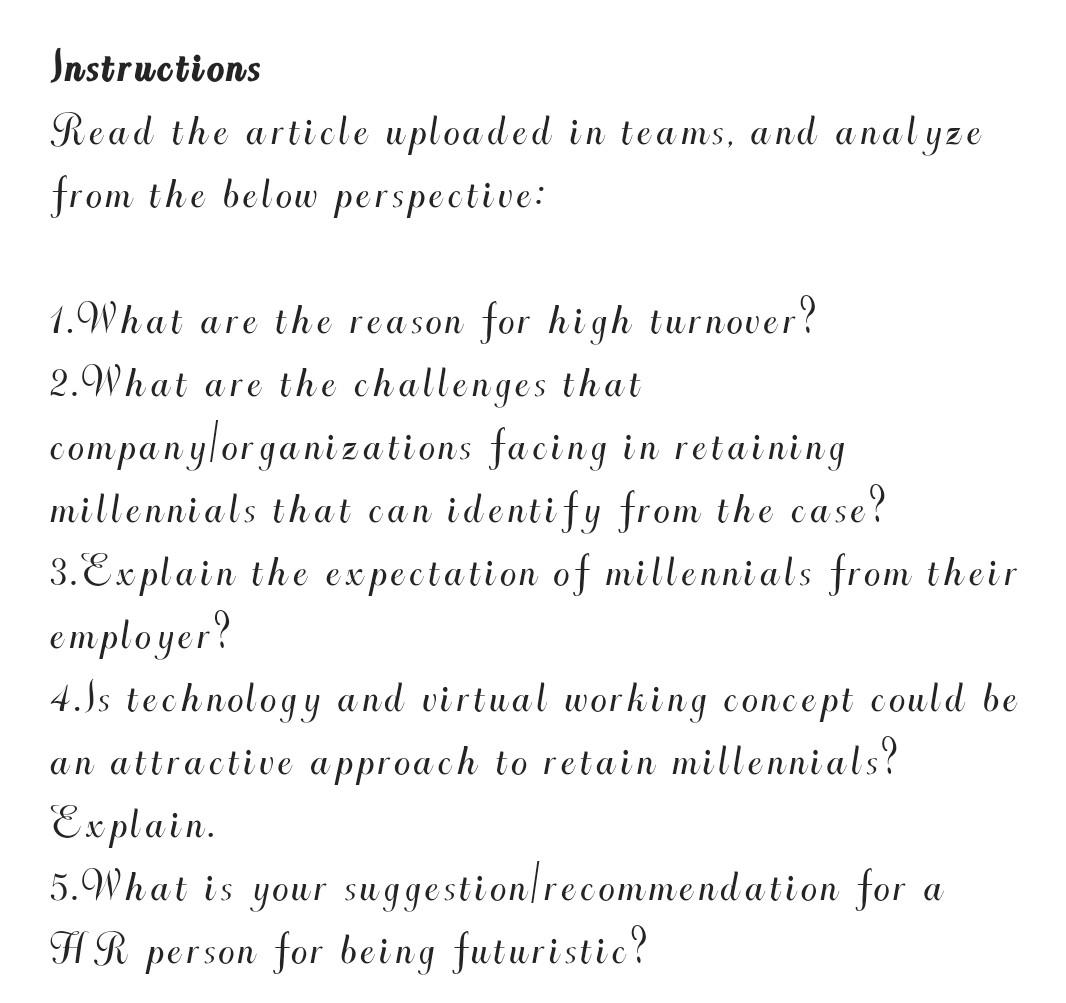
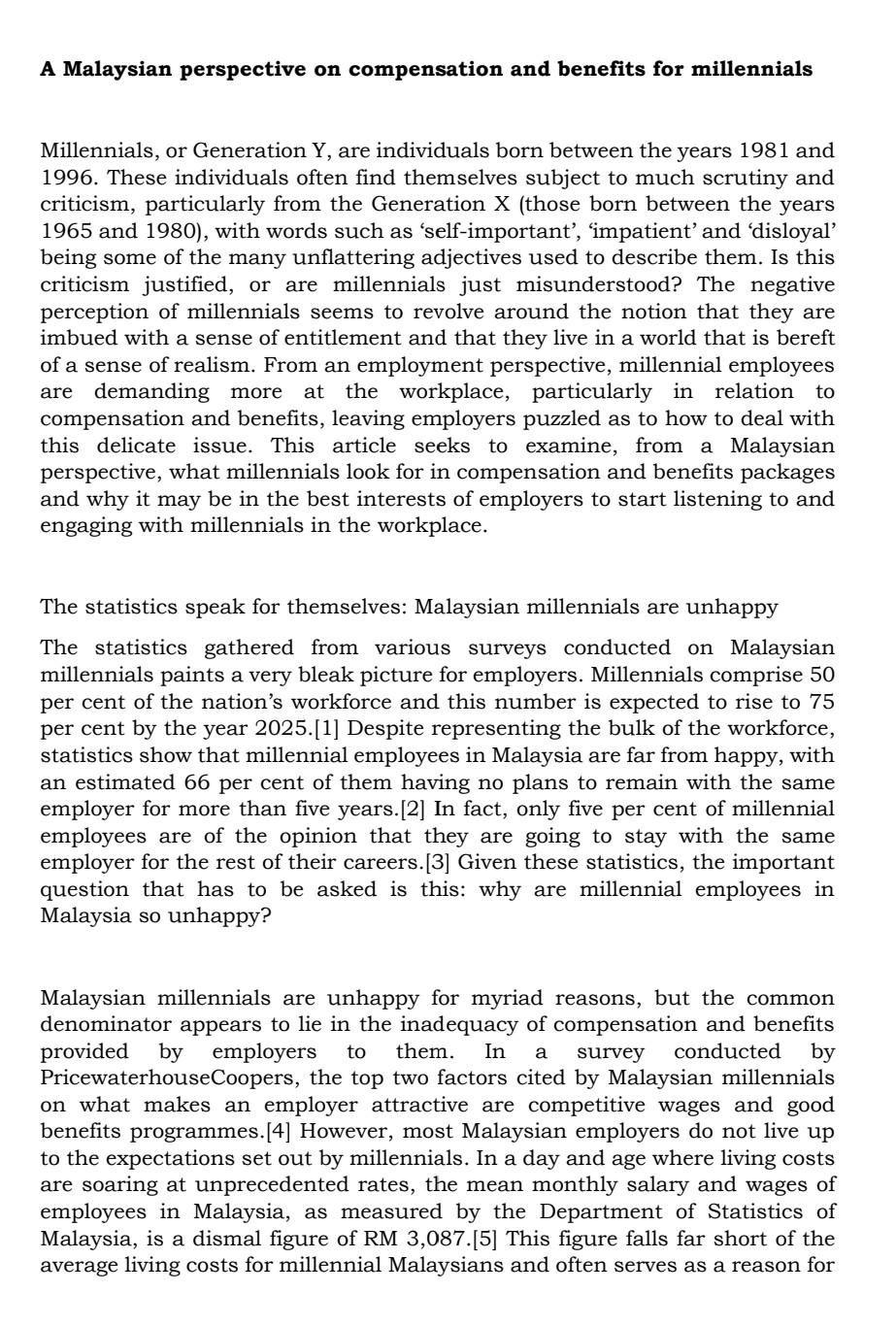
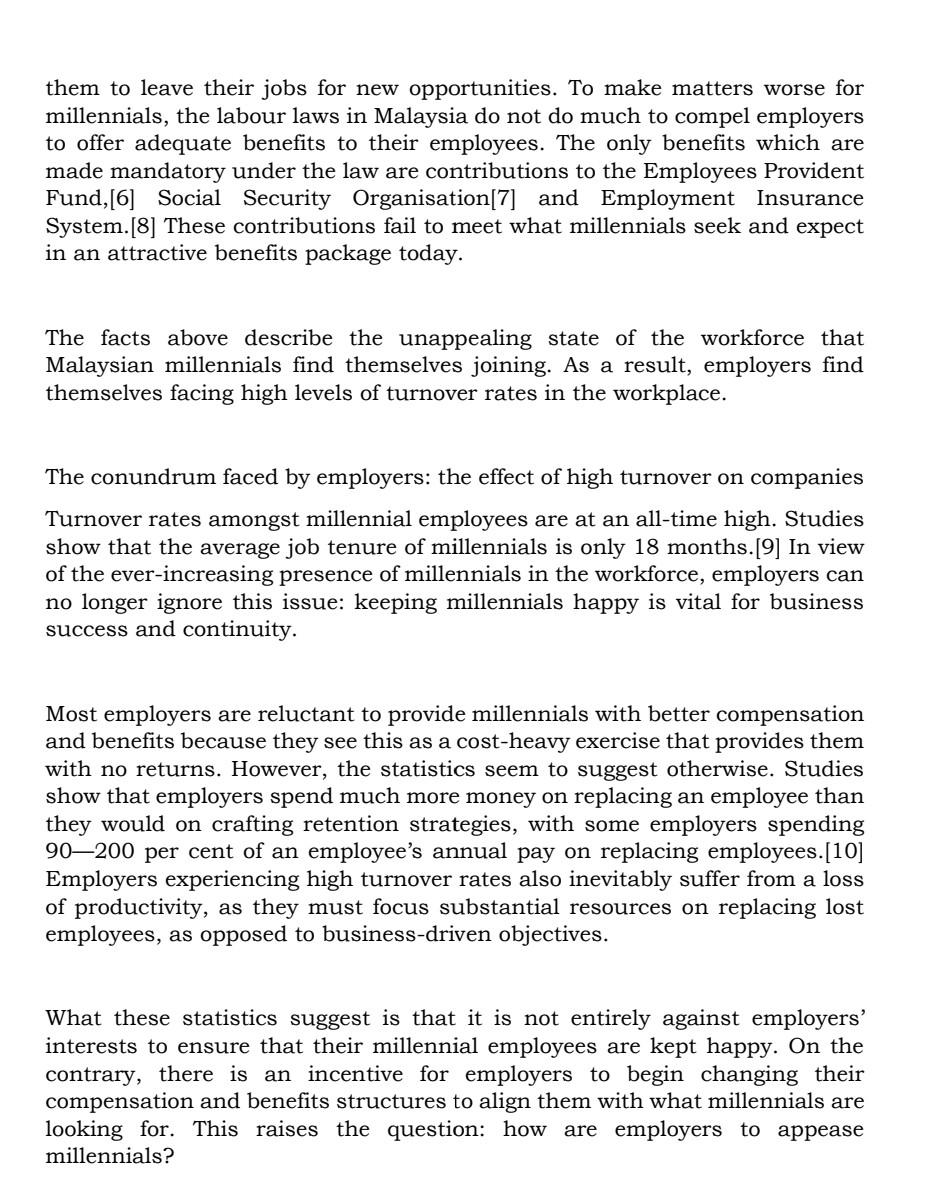
Instructions Read the article uploaded in teams, and analyze from the below perspective: 1. What are the reason for high turnover? 2. What are the challenges that companylorganizations facing in retaining millennials that can identify from the case? 3. Explain the expectation of millennials from their employer? 4.Js technology and virtual working concept could be an attractive approach to retain millennials? Explain. 5.What is your suggestion/recommendation for a FI R person for being futuristic? A Malaysian perspective on compensation and benefits for millennials Millennials, or Generation Y, are individuals born between the years 1981 and 1996. These individuals often find themselves subject to much scrutiny and criticism, particularly from the Generation X (those born between the years 1965 and 1980), with words such as 'self-important, 'impatient' and 'disloyal' being some of the many unflattering adjectives used to describe them. Is this criticism justified, or are millennials just misunderstood? The negative perception of millennials seems to revolve around the notion that they are imbued with a sense of entitlement and that they live in a world that is bereft of a sense of realism. From an employment perspective, millennial employees are demanding more at the workplace, particularly in relation to compensation and benefits, leaving employers puzzled as to how to deal with this delicate issue. This article seeks to examine, from a Malaysian perspective, what millennials look for in compensation and benefits packages and why it may be in the best interests of employers to start listening to and engaging with millennials in the workplace. The statistics speak for themselves: Malaysian millennials are unhappy The statistics gathered from various surveys conducted on Malaysian millennials paints a very bleak picture for employers. Millennials comprise 50 per cent of the nation's workforce and this number is expected to rise to 75 per cent by the year 2025.[1] Despite representing the bulk of the workforce, statistics show that millennial employees in Malaysia are far from happy, with an estimated 66 per cent of them having no plans to remain with the same employer for more than five years.[2] In fact, only five per cent of millennial employees are of the opinion that they are going to stay with the same employer for the rest of their careers.[3] Given these statistics, the important question that has to be asked is this: why are millennial employees in Malaysia so unhappy? to Malaysian millennials are unhappy for myriad reasons, but the common denominator appears to lie in the inadequacy of compensation and benefits provided by employers them. In a survey conducted by PricewaterhouseCoopers, the top two factors cited by Malaysian millennials on what makes an employer attractive are competitive wages and good benefits programmes.[4] However, most Malaysian employers do not live up to the expectations set out by millennials. In a day and age where living costs are soaring at unprecedented rates, the mean monthly salary and wages of employees in Malaysia, as measured by the Department of Statistics of Malaysia, is a dismal figure of RM 3,087.[5] This figure falls far short of the average living costs for millennial Malaysians and often serves as a reason for them to leave their jobs for new opportunities. To make matters worse for millennials, the labour laws in Malaysia do not do much to compel employers to offer adequate benefits to their employees. The only benefits which are made mandatory under the law are contributions to the Employees Provident Fund,[6] Social Security Organisation[7] and Employment Insurance System.[8] These contributions fail to meet what millennials seek and expect in an attractive benefits package today. The facts above describe the unappealing state of the workforce that Malaysian millennials find themselves joining. As a result, employers find themselves facing high levels of turnover rates in the workplace. The conundrum faced by employers: the effect of high turnover on companies Turnover rates amongst millennial employees are at an all-time high. Studies show that the average job tenure of millennials is only 18 months. [9] In view of the ever-increasing presence of millennials in the workforce, employers can no longer ignore this issue: keeping millennials happy is vital for business success and continuity. Most employers are reluctant to provide millennials with better compensation and benefits because they see this as a cost-heavy exercise that provides them with no returns. However, the statistics seem to suggest otherwise. Studies show that employers spend much more money on replacing an employee than they would on crafting retention strategies, with some employers spending 90200 per cent of an employee's annual pay on replacing employees.[10] Employers experiencing high turnover rates also inevitably suffer from a loss of productivity, as they must focus substantial resources on replacing lost employees, as opposed to business-driven objectives. What these statistics suggest is that it is not entirely against employers' interests to ensure that their millennial employees are kept happy. On the contrary, there is an incentive for employers to begin changing their compensation and benefits structures to align them with what millennials are looking for. This raises the question: how are employers to appease millennials
Step by Step Solution
There are 3 Steps involved in it
1 Expert Approved Answer
Step: 1 Unlock

Question Has Been Solved by an Expert!
Get step-by-step solutions from verified subject matter experts
Step: 2 Unlock
Step: 3 Unlock
 Study Help