



Question: Instructions The beginning inventory at Midnight Supplies and data on purchases and sales for a three month period ending March 31 are as follows: Date
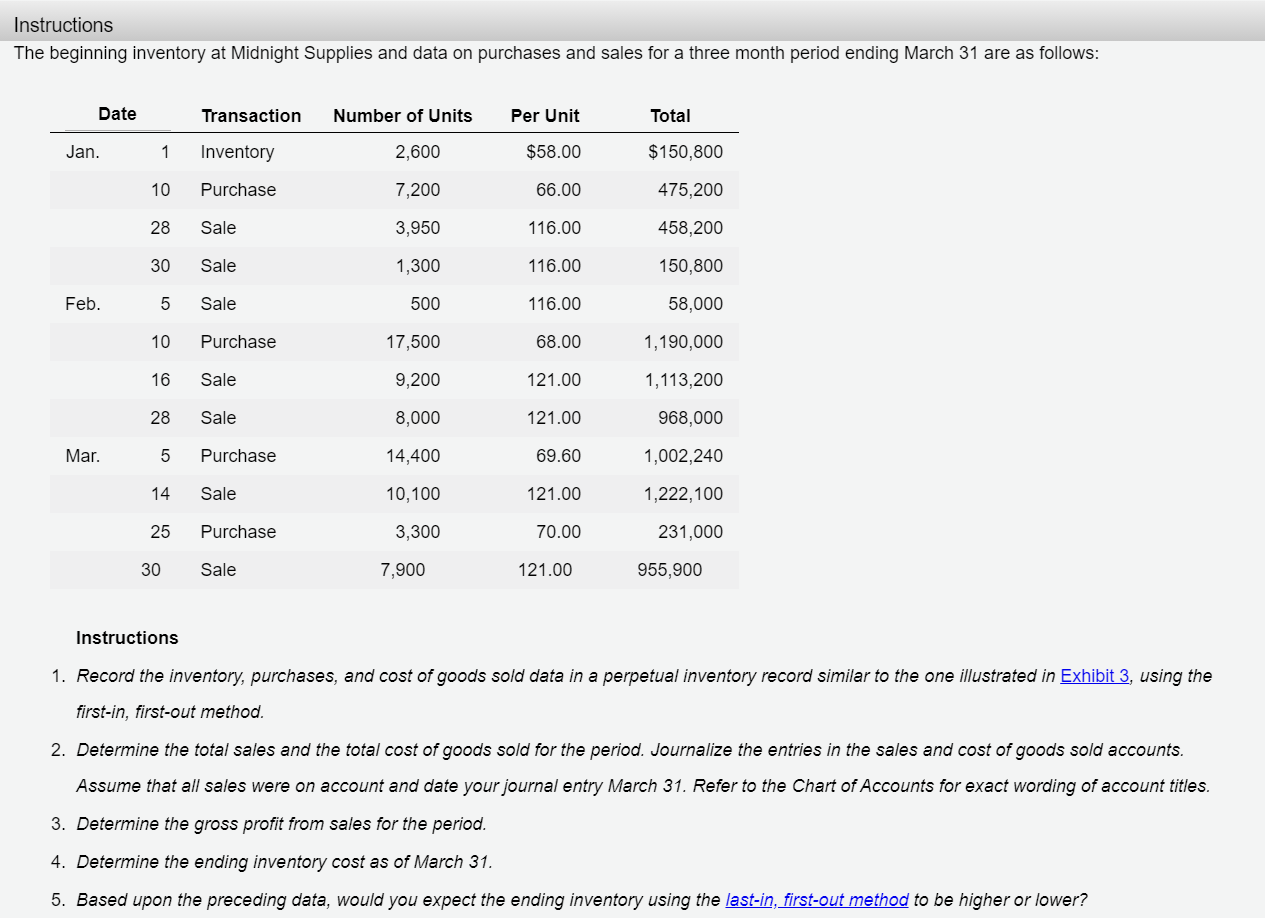
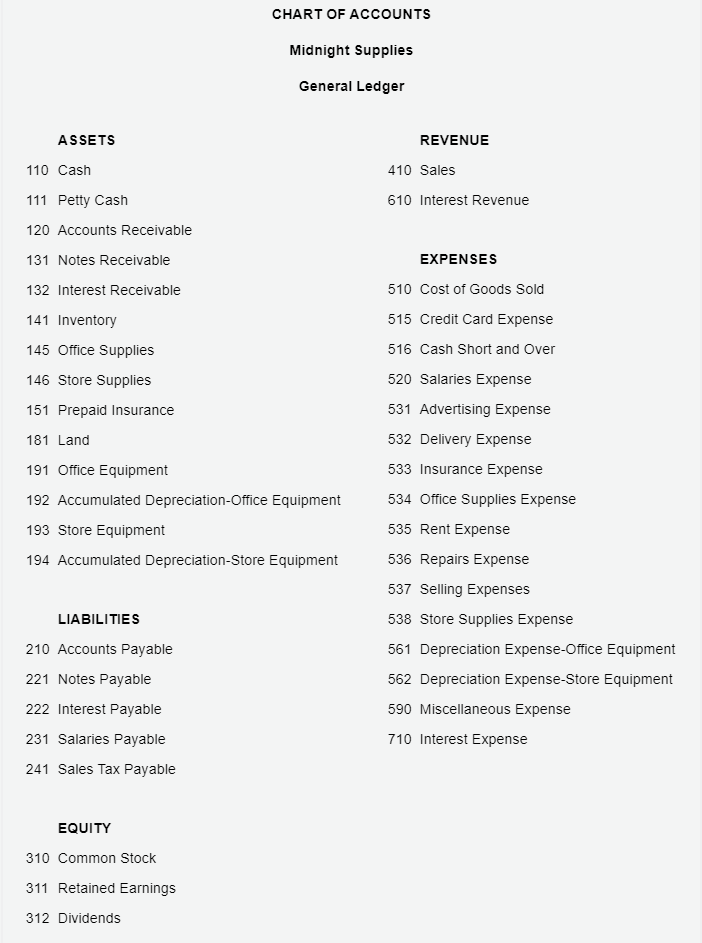
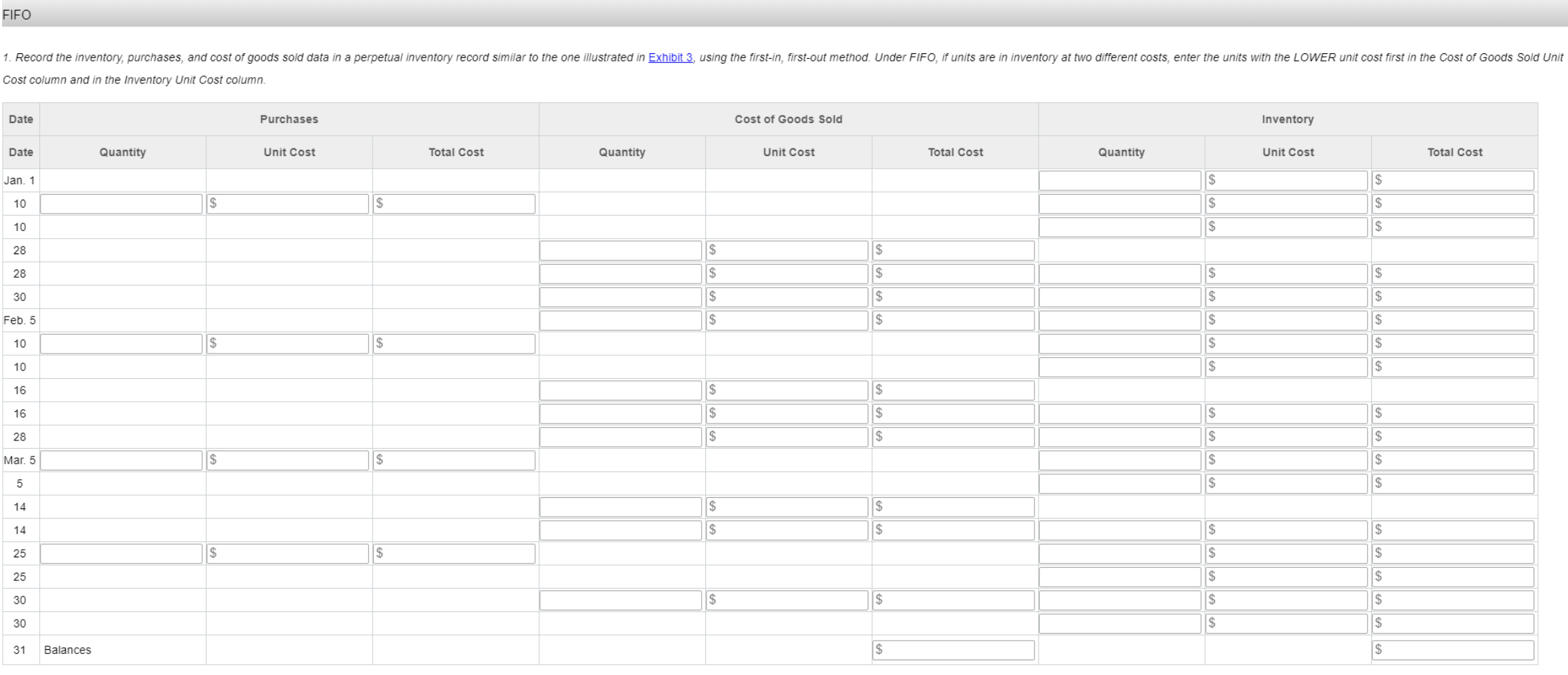
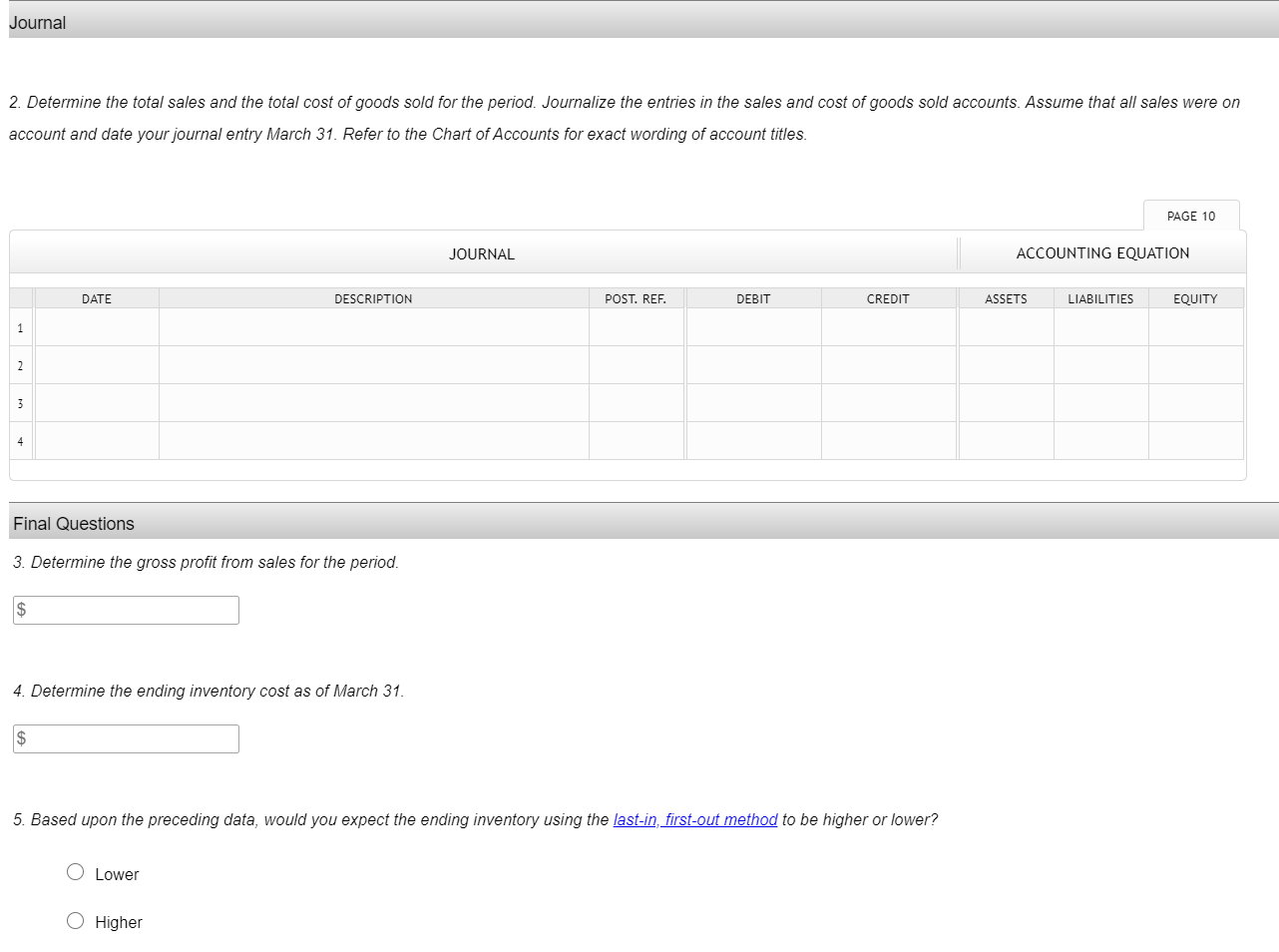
Instructions The beginning inventory at Midnight Supplies and data on purchases and sales for a three month period ending March 31 are as follows: Date Transaction Number of Units Per Unit Total Jan. 1 Inventory 2,600 $58.00 $150,800 10 Purchase 7,200 66.00 475,200 28 Sale 3,950 116.00 458,200 30 Sale 1,300 116.00 150,800 Feb. 5 Sale 500 116.00 58,000 10 Purchase 17,500 68.00 1,190,000 16 Sale 9,200 121.00 1,113,200 28 Sale 8,000 121.00 968,000 Mar. 5 Purchase 14,400 69.60 1,002,240 14 Sale 10,100 121.00 1,222,100 25 Purchase 3,300 70.00 231,000 30 Sale 7,900 121.00 955,900 Instructions 1. Record the inventory, purchases, and cost of goods sold data in a perpetual inventory record similar to the one illustrated in Exhibit 3, using the first-in, first-out method. 2. Determine the total sales and the total cost of goods sold for the period. Journalize the entries in the sales and cost of goods sold accounts. Assume that all sales were on account and date your journal entry March 31. Refer to the Chart of Accounts for exact wording of account titles. 3. Determine the gross profit from sales for the period. 4. Determine the ending inventory cost as of March 31. 5. Based upon the preceding data, would you expect the ending inventory using the last-in, first-out method to be higher or lower? CHART OF ACCOUNTS Midnight Supplies General Ledger ASSETS REVENUE 110 Cash 410 Sales 111 Petty Cash 610 Interest Revenue 120 Accounts Receivable 131 Notes Receivable 132 Interest Receivable 141 Inventory 145 Office Supplies 146 Store Supplies 151 Prepaid Insurance 181 Land 191 Office Equipment 192 Accumulated Depreciation Office Equipment 193 Store Equipment 194 Accumulated Depreciation Store Equipment EXPENSES 510 Cost of Goods Sold 515 Credit Card Expense 516 Cash Short and Over 520 Salaries Expense 531 Advertising Expense 532 Delivery Expense 533 Insurance Expense 534 Office Supplies Expense 535 Rent Expense 536 Repairs Expense 537 Selling Expenses 538 Store Supplies Expense 561 Depreciation Expense-Office Equipment 562 Depreciation Expense-Store Equipment 590 Miscellaneous Expense 710 Interest Expense LIABILITIES 210 Accounts Payable 221 Notes Payable 222 Interest Payable 231 Salaries Payable 241 Sales Tax Payable EQUITY 310 Common Stock 311 Retained Earnings 312 Dividends FIFO 1. Record the inventory, purchases, and cost of goods sold data in a perpetual inventory record similar to the one illustrated in Exhibit 3, using the first-in, first-out method. Under FIFO, if units are in inventory at two different costs, enter the units with the LOWER unit cost first in the Cost of Goods Sold Unit Cost column and in the Inventory Unit Cost column. Date Purchases Cost of Goods Sold Inventory Date Quantity Unit Cost Total Cost Quantity Unit Cost Total Cost Quantity Unit Cost Total Cost Jan. 1 $ $ $ I 10 $ $ 10 $ $ 28 $ $ 28 $ $ $ $ 30 $ $ $ $ Feb. 5 $ $ $ $ 10 $ $ $ $ 10 $ $ 16 $ $ 16 $ $ $ $ 28 $ $ $ $ Mar. 5 $ $ $ $ 5 $ $ 14 $ $ 14 $ $ $ $ 25 $ $ $ 25 $ $ 30 $ $ $ $ 30 $ 31 Balances $ $ Journal 2. Determine the total sales and the total cost of goods sold for the period. Journalize the entries in the sales and cost of goods sold accounts. Assume that all sales were on account and date your journal entry March 31. Refer to the Chart of Accounts for exact wording of account titles. PAGE 10 JOURNAL ACCOUNTING EQUATION DATE DESCRIPTION POST. REF. DEBIT CREDIT ASSETS LIABILITIES EQUITY 1 2 3 4 Final Questions 3. Determine the gross profit from sales for the period. $ 4. Determine the ending inventory cost as of March 31. 5. Based upon the preceding data, would you expect the ending inventory using the last-in, first-out method to be higher or lower? Lower O Higher
Step by Step Solution
There are 3 Steps involved in it

Get step-by-step solutions from verified subject matter experts