Question: Instructions The beginning inventory at Midnight Supplies and data on purchases and sales for a three month period ending March 31 are as follows: Date
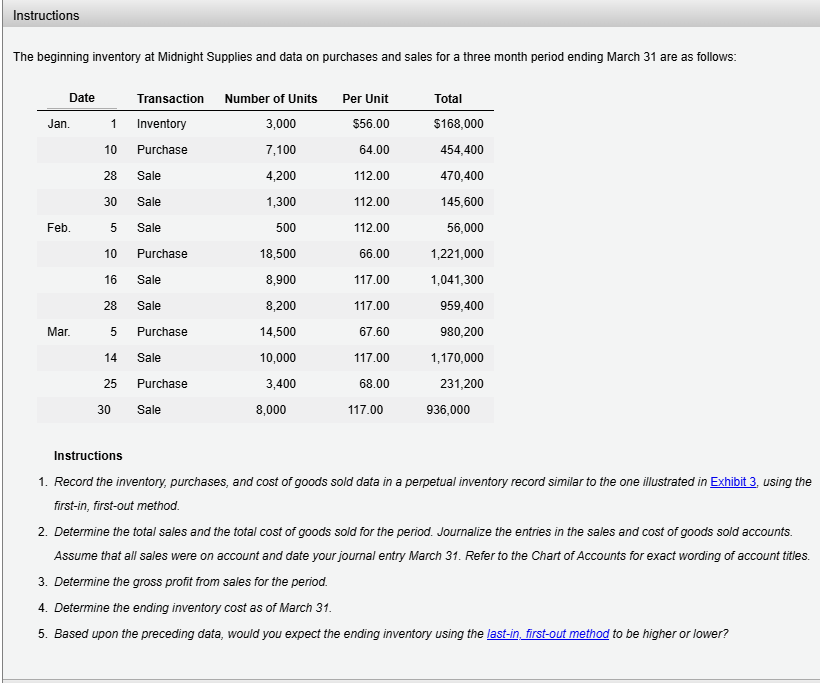
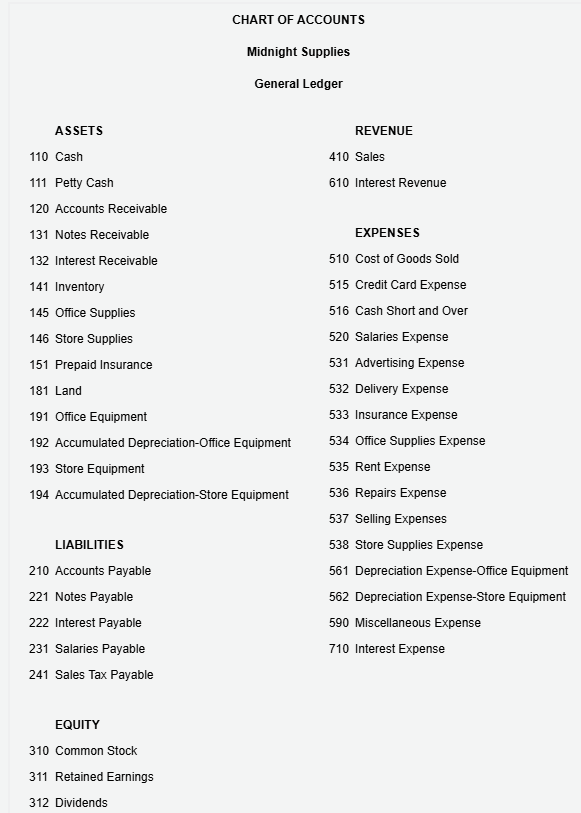
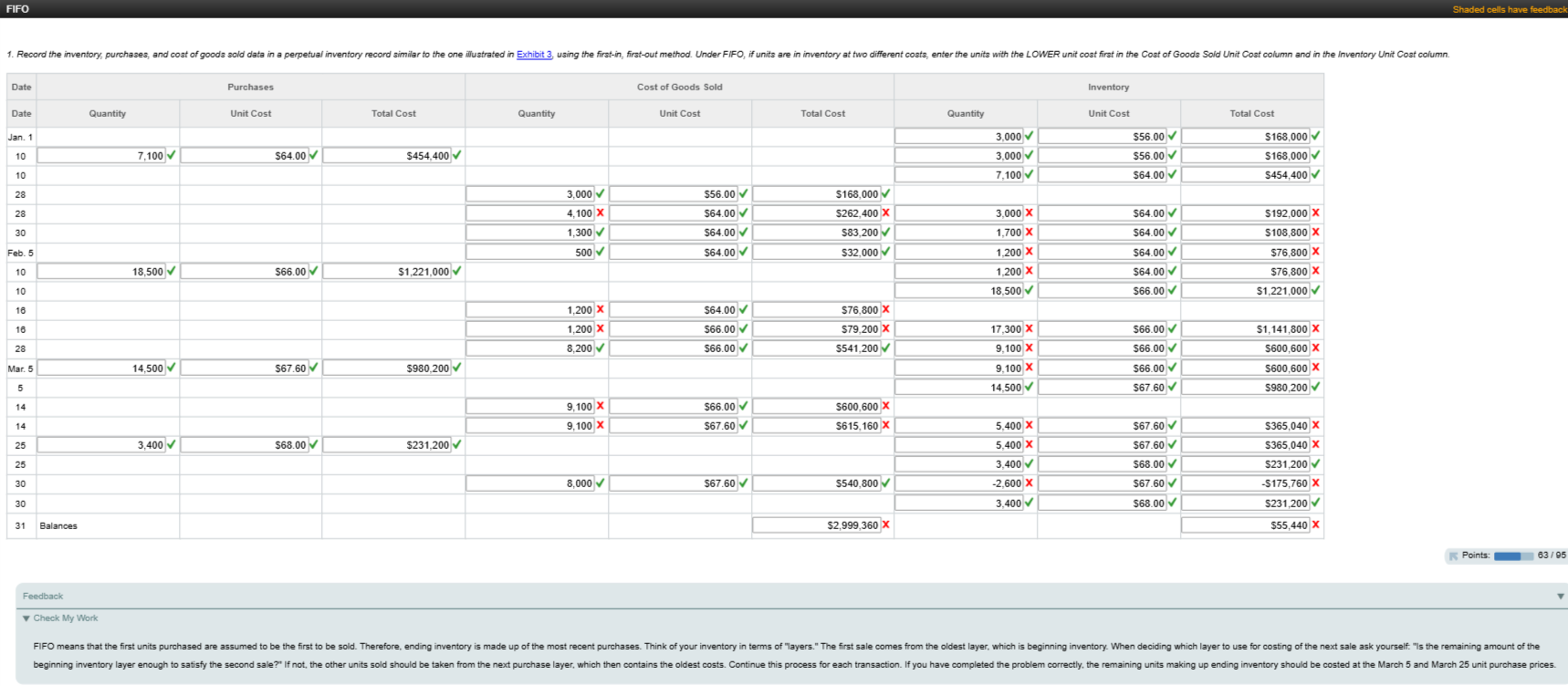
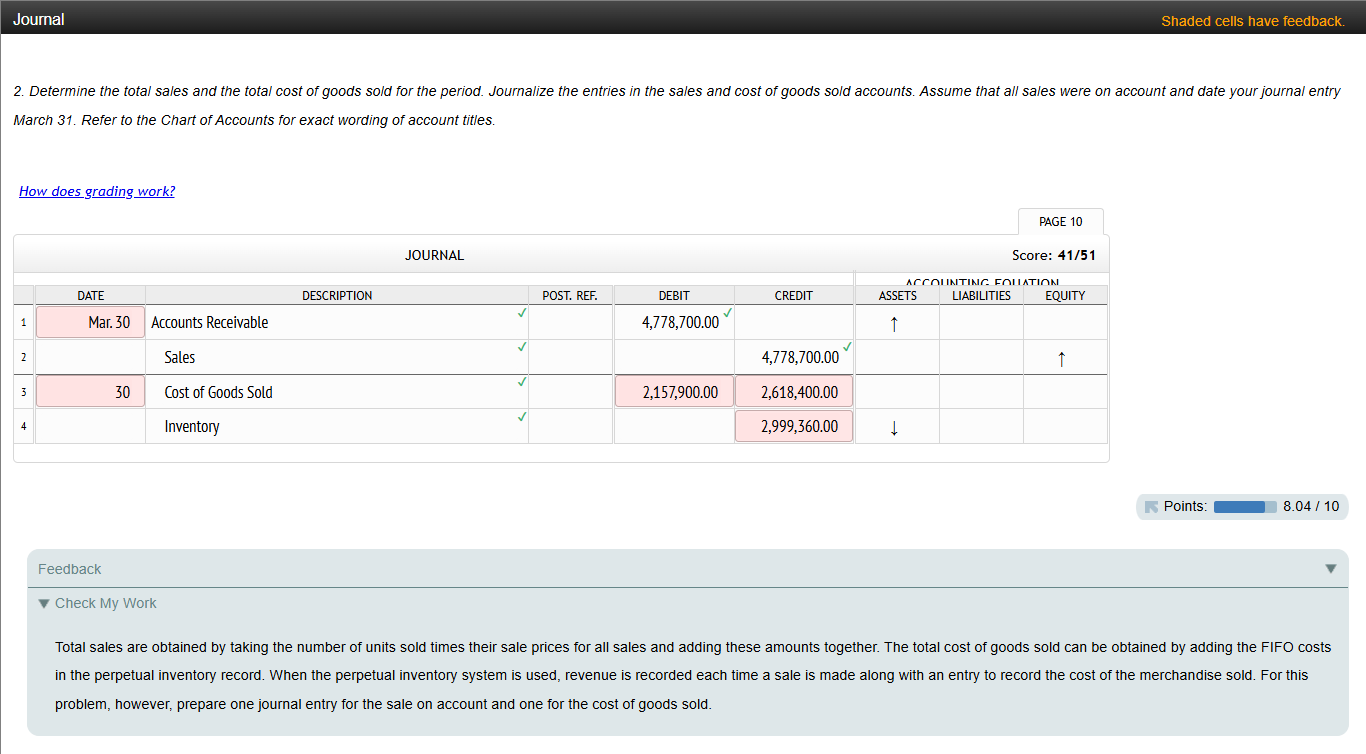
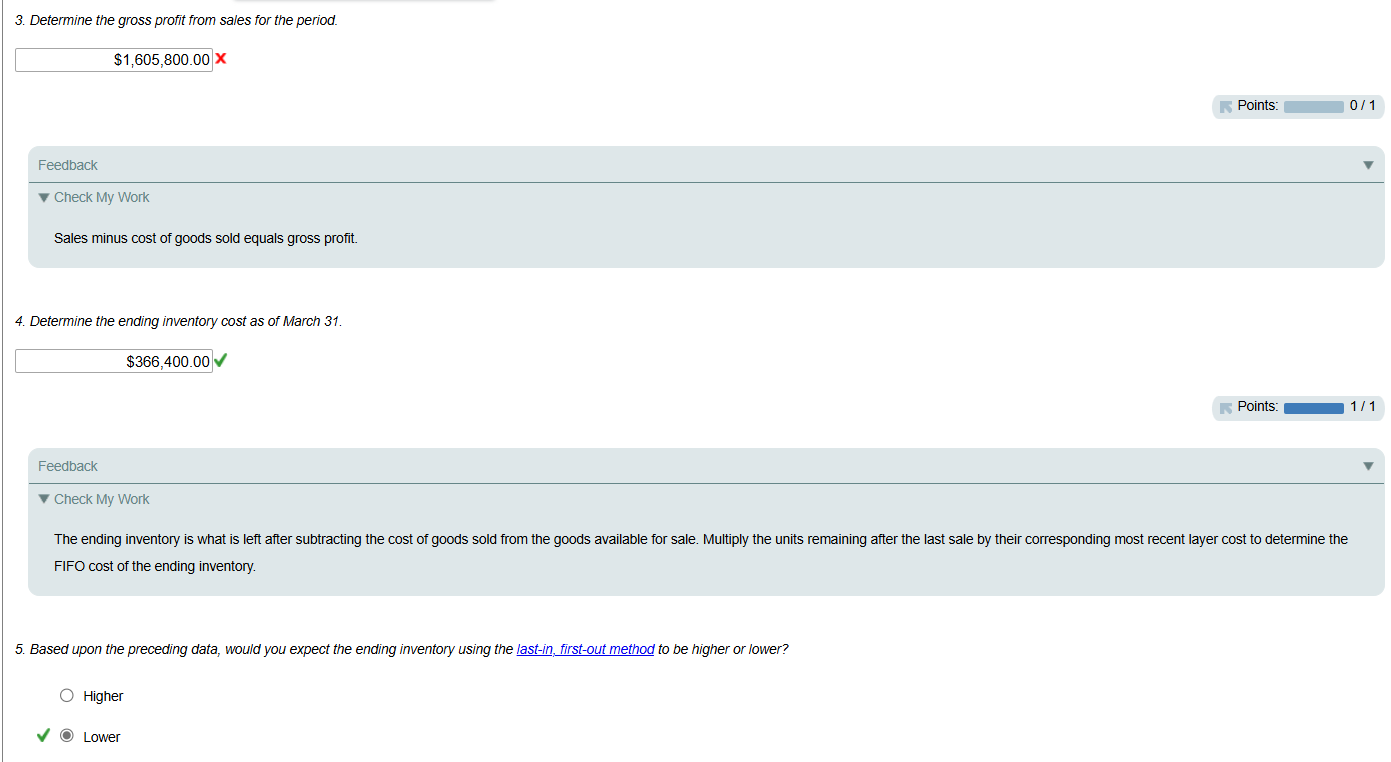
Instructions The beginning inventory at Midnight Supplies and data on purchases and sales for a three month period ending March 31 are as follows: Date Transaction Number of Units Per Unit Total Jan. 1 Inventory 3,000 $56.00 $168,000 10 Purchase 7,100 64.00 454,400 28 Sale 4,200 112.00 470,400 30 Sale 1,300 112.00 145,600 Feb 5 Sale 500 112.00 56,000 0 Purchase 18,500 66.00 1,221,000 16 Sale 8,900 117.00 1,041,300 28 Sale 8,200 117.00 959,400 Mar. 5 Purchase 14,500 67.60 980,200 14 Sale 10,000 117.00 1,170,000 25 Purchase 3,400 68.00 231,200 30 Sale 8,000 117.00 936,000 Instructions 1. Record the inventory, purchases, and cost of goods sold data in a perpetual inventory record similar to the one illustrated in Exhibit 3, using the first-in, first-out method. 2. Determine the total sales and the total cost of goods sold for the period. Journalize the entries in the sales and cost of goods sold accounts. Assume that all sales were on account and date your journal entry March 31. Refer to the Chart of Accounts for exact wording of account titles. 3. Determine the gross profit from sales for the period. 4. Determine the ending inventory cost as of March 31. 5. Based upon the preceding data, would you expect the ending inventory using the last-in, first-out method to be higher or lower?CHART OF ACCOUNTS Midnight Supplies General Ledger ASSETS REVENUE 110 Cash 410 Sales 111 Petty Cash 610 Interest Revenue 120 Accounts Receivable 131 Notes Receivable EXPENSES 132 Interest Receivable 510 Cost of Goods Sold 141 Inventory 515 Credit Card Expense 145 Office Supplies 516 Cash Short and Over 146 Store Supplies 520 Salaries Expense 151 Prepaid Insurance 531 Advertising Expense 181 Land 532 Delivery Expense 191 Office Equipment 533 Insurance Expense 192 Accumulated Depreciation-Office Equipment 534 Office Supplies Expense 193 Store Equipment 535 Rent Expense 194 Accumulated Depreciation-Store Equipment 536 Repairs Expense 537 Selling Expenses LIABILITIES 538 Store Supplies Expense 210 Accounts Payable 561 Depreciation Expense-Office Equipment 221 Notes Payable 562 Depreciation Expense-Store Equipment 222 Interest Payable 590 Miscellaneous Expense 231 Salaries Payable 710 Interest Expense 241 Sales Tax Payable EQUITY 310 Common Stock 311 Retained Earnings 312 DividendsFIFO 1. Record the inventory, purchases, and cost of goods sold data in a perpetual inventory record similar to the one illustrated in Exhibit 3, using the first-in, first-out method. Under FIFO, if units are in inventory at two different costs, enter the units with the LOWER unit cost first in the Cost of Goods Sold Unit Cost column and in the inventory Unit Cost column. Date Purchases Cost of Goods Sold Date Quantity Inventory Unit Cost Total Cost Quantity Unit Cost Total Cost Jan. 1 Quantity Unit Cost Total Cost 10 7,100 $64.00 $454,400 3,000 V $56.00 V $168,000 10 3,000 $56.00 $ 168,000 28 7,100 $64.00 $56.00 $454,400 28 3,000 $168,000 4,100 X 30 $64.00 $262, 400 X 3,000 X $64.00 1,300 $192,000 X Feb. 5 $64.00 $83,200 1,700 X $64.00 500 $108,800 X 10 $64.00 V 18,500 V $66.00 $32,000 $1,221,000 1,200 X $64.00 $76,800 X 10 1,200 X $64.00 $76,800 X 16 18,500 V 1,200 X $66.00 $64.00 $1,221,000 $76,800 X 28 1,200 X $66.00 $79,200 X 17,300 X 8,200 $66.00 $66.00 $1, 141,800 X Mar. 5 14,500 $541,200 $67.60 9,100 X $980,200 $66.00 $600,600 X 9,100 X $66.00 $600,600 X 14,500 V $67.60 9,100 X $66.00 5980,200 14 $600,600 X 9,100 X 25 $67.60 3,400 V $68.00 $615, 160 X $231,200 5,400 X $67.60 $365,040 X 25 5,400 X $67.60 $365,040 X 30 3,400 8,000 $68.00 $67.60 $231,200 30 $540,800 2,600 X $67.60 $175,760 X 21 Balances 3,400 V $68.00 $231,200 $2,999,360 X $55,440 X K Points: 63/95 Feedback Check My Work FIFO means that the first units purchased are assumed to be the first to be sold. Therefore, ending inventory is made up of the most recent purchases. Think of your inventory in terms of "layers." The first sale comes from the oldest layer, which is beginning inventory. When deciding which layer to use for costing of the next sale ask yourself. "Is the remaining amount of the beginning inventory layer enough to satisfy the second sale?' If not, the other units sold should be taken from the next purchase layer, which then contains the oldest costs. Continue this process for each transaction. If you have completed the problem correctly, the remaining units making up ending inventory should be costed at the March 5 and March 25 unit purchase prices.Journal Shaded cells have feedback. 2. Determine the total sales and the total cost of goods sold for the period. Journalize the entries in the sales and cost of goods sold accounts. Assume that all sales were on account and date your journal entry March 31. Refer to the Chart of Accounts for exact wording of account titles. How does grading work? PAGE 10 JOURNAL Score: 41/51 ACCOUNTING FALLATION DATE DESCRIPTION POST. REF. DEBIT CREDIT ASSETS LIABILITIES EQUITY 1 Mar. 30 Accounts Receivable 4,778,700.00 T 7 Sales 4,778,700.00 3 30 Cost of Goods Sold 2,157,900.00 2,618,400.00 Inventory 2,999,360.00 Points: 8.04 / 10 Feedback Check My Work Total sales are obtained by taking the number of units sold times their sale prices for all sales and adding these amounts together. The total cost of goods sold can be obtained by adding the FIFO costs in the perpetual inventory record. When the perpetual inventory system is used, revenue is recorded each time a sale is made along with an entry to record the cost of the merchandise sold. For this problem, however, prepare one journal entry for the sale on account and one for the cost of goods sold.3. Determine the gross profit from sales for the period. $1,605,800.00 X Points: 01 Feedback v w Check My Work Sales minus cost of goods sold equals gross profit. 4. Determine the ending inventory cost as of March 31 $366,400.00 v Points: s 1/1 Feedback v Check My Work The ending inventory is what is left after subtracting the cost of goods sold from the goods available for sale. Multiply the units remaining after the last sale by their corresponding most recent layer cost to determine the FIFO cost of the ending inventory. 5. Based upon the preceding data, would you expect the ending inventory using the last-in, first-out method to be higher or lower? Higher O v Lower
Step by Step Solution
There are 3 Steps involved in it
1 Expert Approved Answer
Step: 1 Unlock
Question Has Been Solved by an Expert!
Get step-by-step solutions from verified subject matter experts
Step: 2 Unlock
Step: 3 Unlock
Students Have Also Explored These Related Accounting Questions!