







Question: Instructions: This assignment is situation-based questions. Students are required to answer all questions. Situation 1 Sharpie For two decades marketers in a variety of industries
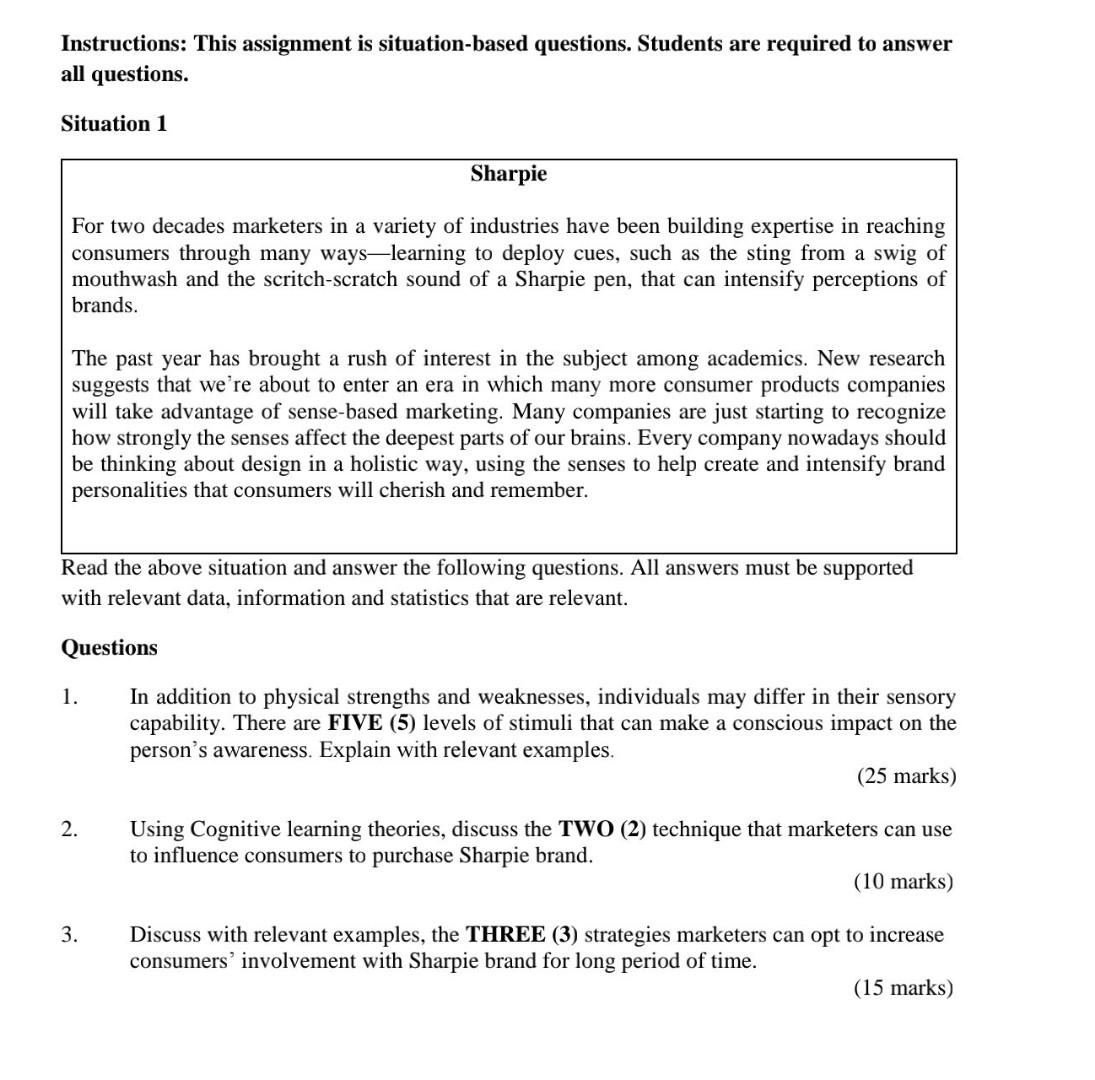
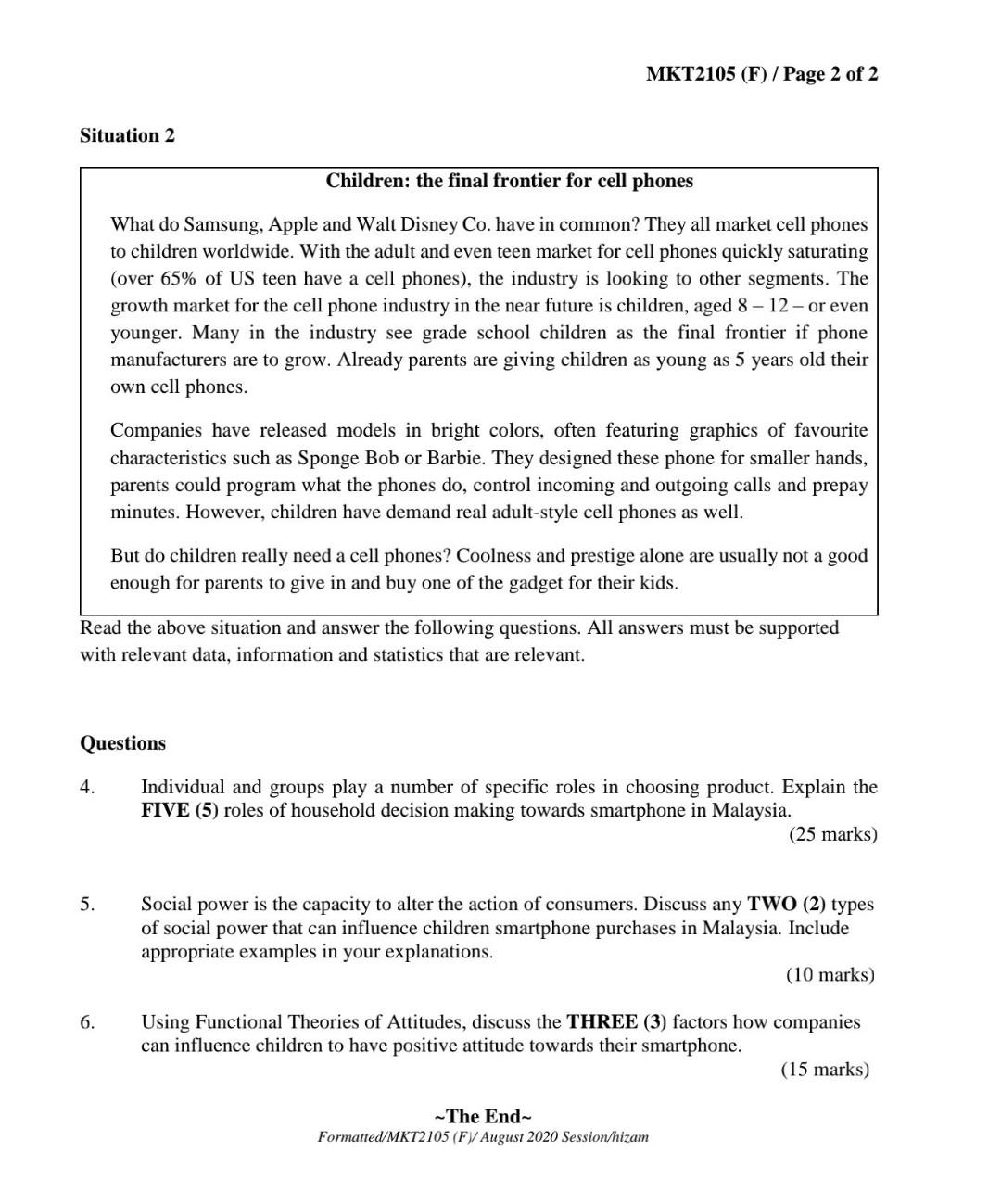
Instructions: This assignment is situation-based questions. Students are required to answer all questions. Situation 1 Sharpie For two decades marketers in a variety of industries have been building expertise in reaching consumers through many ways-learning to deploy cues, such as the sting from a swig of mouthwash and the scritch-scratch sound of a Sharpie pen, that can intensify perceptions of brands. The past year has brought a rush of interest in the subject among academics. New research suggests that we're about to enter an era in which many more consumer products companies will take advantage of sense-based marketing. Many companies are just starting to recognize how strongly the senses affect the deepest parts of our brains. Every company nowadays should be thinking about design in a holistic way, using the senses to help create and intensify brand personalities that consumers will cherish and remember. Read the above situation and answer the following questions. All answers must be supported with relevant data, information and statistics that are relevant. Questions 1. In addition to physical strengths and weaknesses, individuals may differ in their sensory capability. There are FIVE (5) levels of stimuli that can make a conscious impact on the person's awareness. Explain with relevant examples, (25 marks) 2. Using Cognitive learning theories, discuss the TWO (2) technique that marketers can use to influence consumers to purchase Sharpie brand. (10 marks) 3. Discuss with relevant examples, the THREE (3) strategies marketers can opt to increase consumers' involvement with Sharpie brand for long period of time. (15 marks) MKT2105 (F) / Page 2 of 2 Situation 2 Children: the final frontier for cell phones What do Samsung, Apple and Walt Disney Co. have in common? They all market cell phones to children worldwide. With the adult and even teen market for cell phones quickly saturating (over 65% of US teen have a cell phones), the industry is looking to other segments. The growth market for the cell phone industry in the near future is children, aged 8 - 12 - or even younger. Many in the industry see grade school children as the final frontier if phone manufacturers are to grow. Already parents are giving children as young as 5 years old their own cell phones. Companies have released models in bright colors, often featuring graphics of favourite characteristics such as Sponge Bob or Barbie. They designed these phone for smaller hands, parents could program what the phones do, control incoming and outgoing calls and prepay minutes. However, children have demand real adult-style cell phones as well. But do children really need a cell phones? Coolness and prestige alone are usually not a good enough for parents to give in and buy one of the gadget for their kids. Read the above situation and answer the following questions. All answers must be supported with relevant data, information and statistics that are relevant. Questions 4. Individual and groups play a number of specific roles in choosing product. Explain the FIVE (5) roles of household decision making towards smartphone in Malaysia. (25 marks) 5. Social power is the capacity to alter the action of consumers. Discuss any TWO (2) types of social power that can influence children smartphone purchases in Malaysia. Include appropriate examples in your explanations. (10 marks) 6. Using Functional Theories of Attitudes, discuss the THREE (3) factors how companies can influence children to have positive attitude towards their smartphone. (15 marks) - The End Formatted/MKT2105 (F) August 2020 Session/hizam
Step by Step Solution
There are 3 Steps involved in it
1 Expert Approved Answer
Step: 1 Unlock

Question Has Been Solved by an Expert!
Get step-by-step solutions from verified subject matter experts
Step: 2 Unlock
Step: 3 Unlock
 Study Help