







Question: int i = 0; void foo (void *) { int n = i; i = i + 1; printf(foo: %d , n); } void boo(void
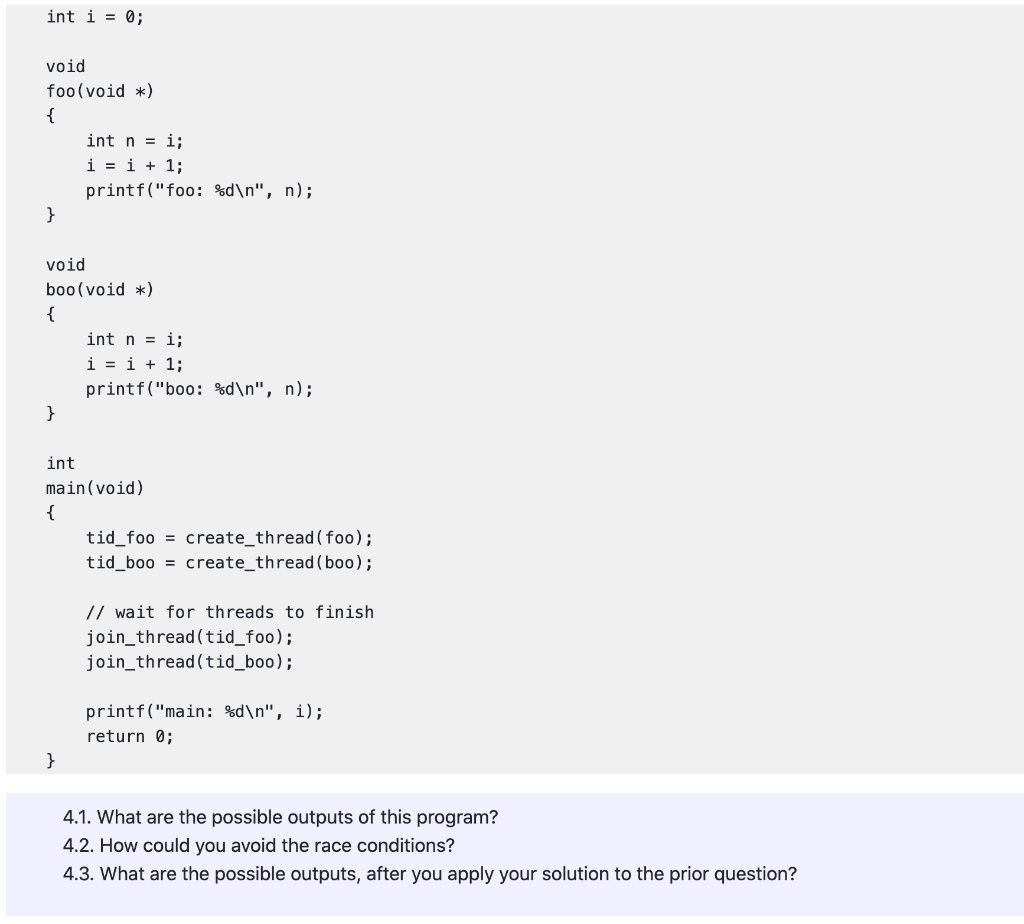
int i = 0; void foo (void *) { int n = i; i = i + 1; printf("foo: %d ", n); } void boo(void *) { int n = i; i = i + 1; printf("boo: %d ", n); } int main(void) { tid_foo = create_thread(foo); tid_boo = create_thread(boo); // wait for threads to finish join_thread(tid_foo); join_thread(tid_boo); printf("main: %d ", i); return 0; } 4.1. What are the possible outputs of this program? 4.2. How could you avoid the race conditions? 4.3. What are the possible outputs, after you apply your solution to the prior question? int i = 0; void foo (void *) { int n = i; i = i + 1; printf("foo: %d ", n); } void boo(void *) { int n = i; i = i + 1; printf("boo: %d ", n); } int main(void) { tid_foo = create_thread(foo); tid_boo = create_thread(boo); // wait for threads to finish join_thread(tid_foo); join_thread(tid_boo); printf("main: %d ", i); return 0; } 4.1. What are the possible outputs of this program? 4.2. How could you avoid the race conditions? 4.3. What are the possible outputs, after you apply your solution to the prior
Step by Step Solution
There are 3 Steps involved in it

Get step-by-step solutions from verified subject matter experts
 Study Help