







Question: Intervals of Increase and Decrease and Local Extrema Answer the following questions using the function f(x) = 12x4 + 64x - 600x2 - 4800x +
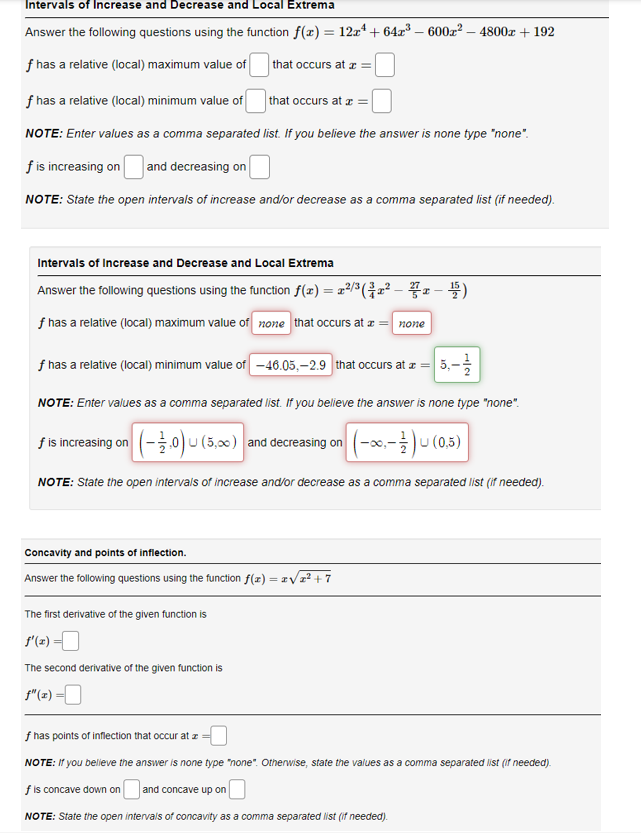
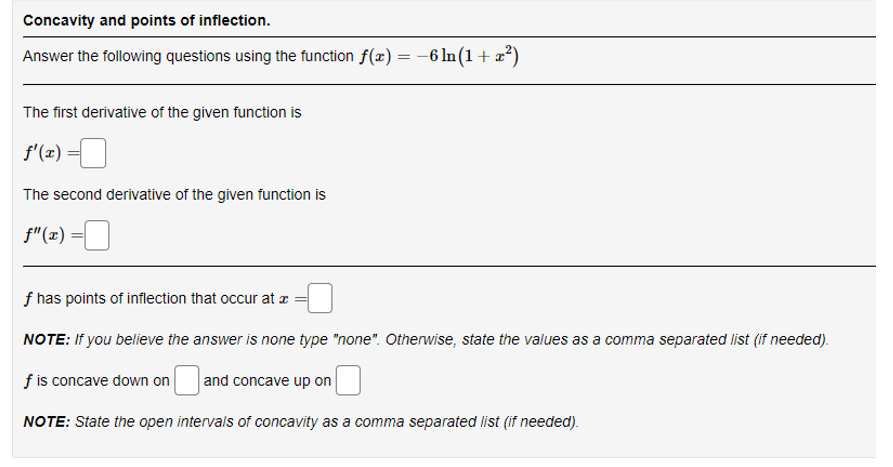
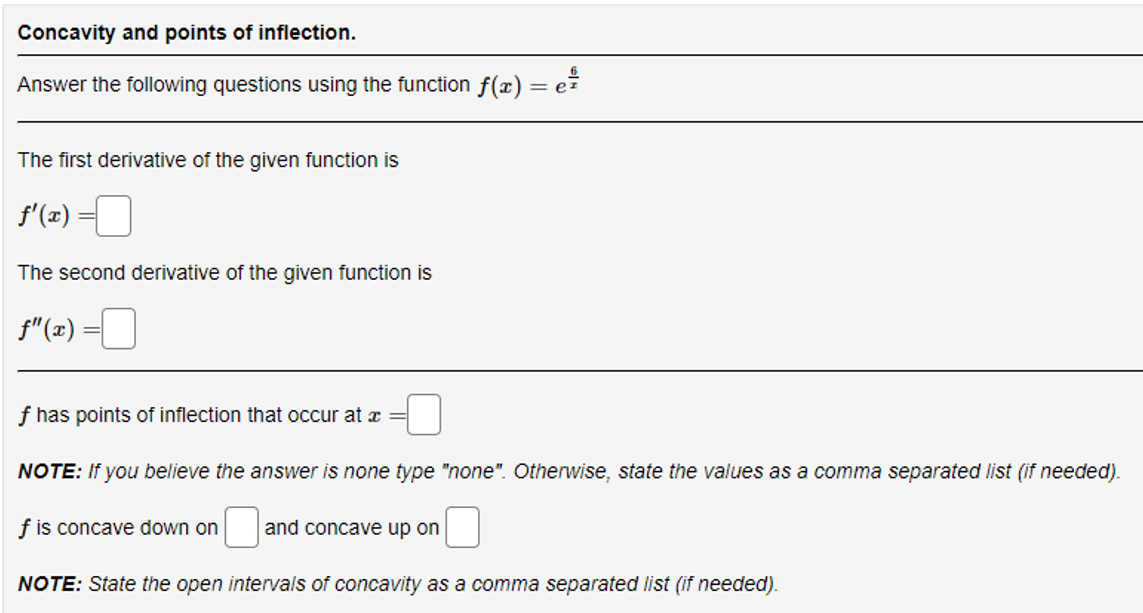
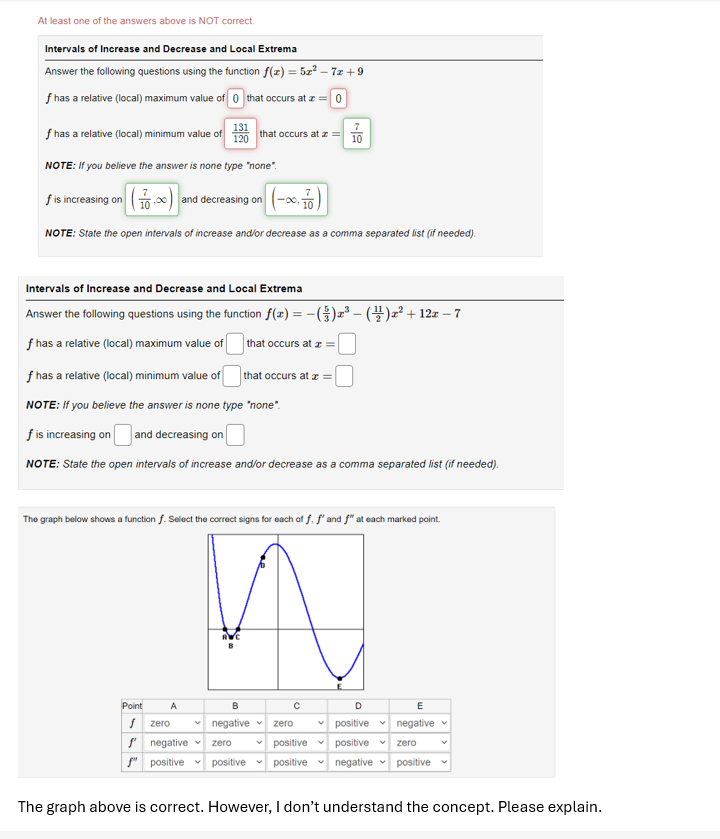
Intervals of Increase and Decrease and Local Extrema Answer the following questions using the function f(x) = 12x4 + 64x - 600x2 - 4800x + 192 f has a relative (local) maximum value of that occurs at r = f has a relative (local) minimum value of that occurs at = = NOTE: Enter values as a comma separated list. If you believe the answer is none type "none". f is increasing on and decreasing on NOTE: State the open intervals of increase and/or decrease as a comma separated list (if needed). Intervals of Increase and Decrease and Local Extrema Answer the following questions using the function f(x) = a3/3 ( 3x] - 3x - 15) f has a relative (local) maximum value of none that occurs at = = none f has a relative (local) minimum value of -46.05,-2.9 that occurs at = = 5,-1 NOTE: Enter values as a comma separated list. If you believe the answer is none type "none". f is increasing on (-2.0) W (5,20) and decreasing on (-20, - ) (0.5) NOTE: State the open intervals of increase and/or decrease as a comma separated list (if needed). Concavity and points of inflection. Answer the following questions using the function f(x) = =v x3 + 7 The first derivative of the given function is f'(=) =0 The second derivative of the given function is f has points of inflection that occur at = =] NOTE: If you believe the answer is none type "none". Otherwise, state the values as a comma separated list (if needed). f is concave down on and concave up on NOTE: State the open intervals of concavity as a comma separated list (if needed).Concavity and points of inflection. Answer the following questions using the function f(z) = 6In(1 + ::2) The first derivative of the given function is (=)= | The second derivative of the given function is @) = f has points of inflection that occur at = =| : NOTE: If you believe the answer is none type \"none\". Otherwise, state the values as a comima separated list (If needed). f is concave down on I[_I and concave up on l ' NOTE: Siate the open intervals of concavily as a comma separated list (If needed). Concavity and points of inflection. = Answer the following questions using the function f(z) = e The first derivative of the given function is f=) | The second derivative of the given function is =)
Step by Step Solution
There are 3 Steps involved in it

Get step-by-step solutions from verified subject matter experts
 Study Help