







Question: Is Apple's explanation for how it implemented the new rules clear (Exhibit 2)? Is the new revenue recognition/deferral method reasonable? Note 1-Summary of Significant Accounting
Is Apple's explanation for how it implemented the new rules clear (Exhibit 2)? Is the new revenue recognition/deferral method reasonable?
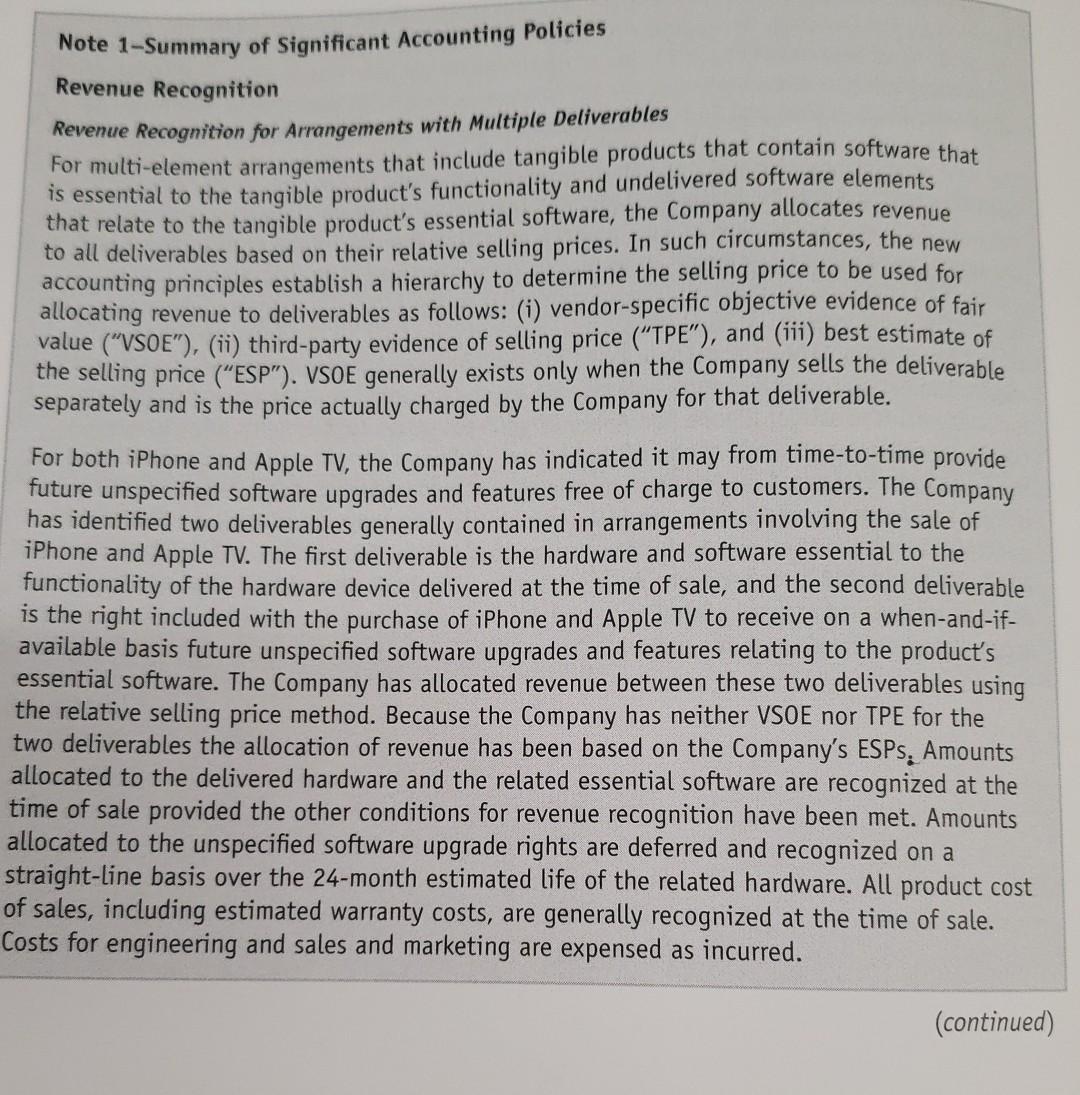
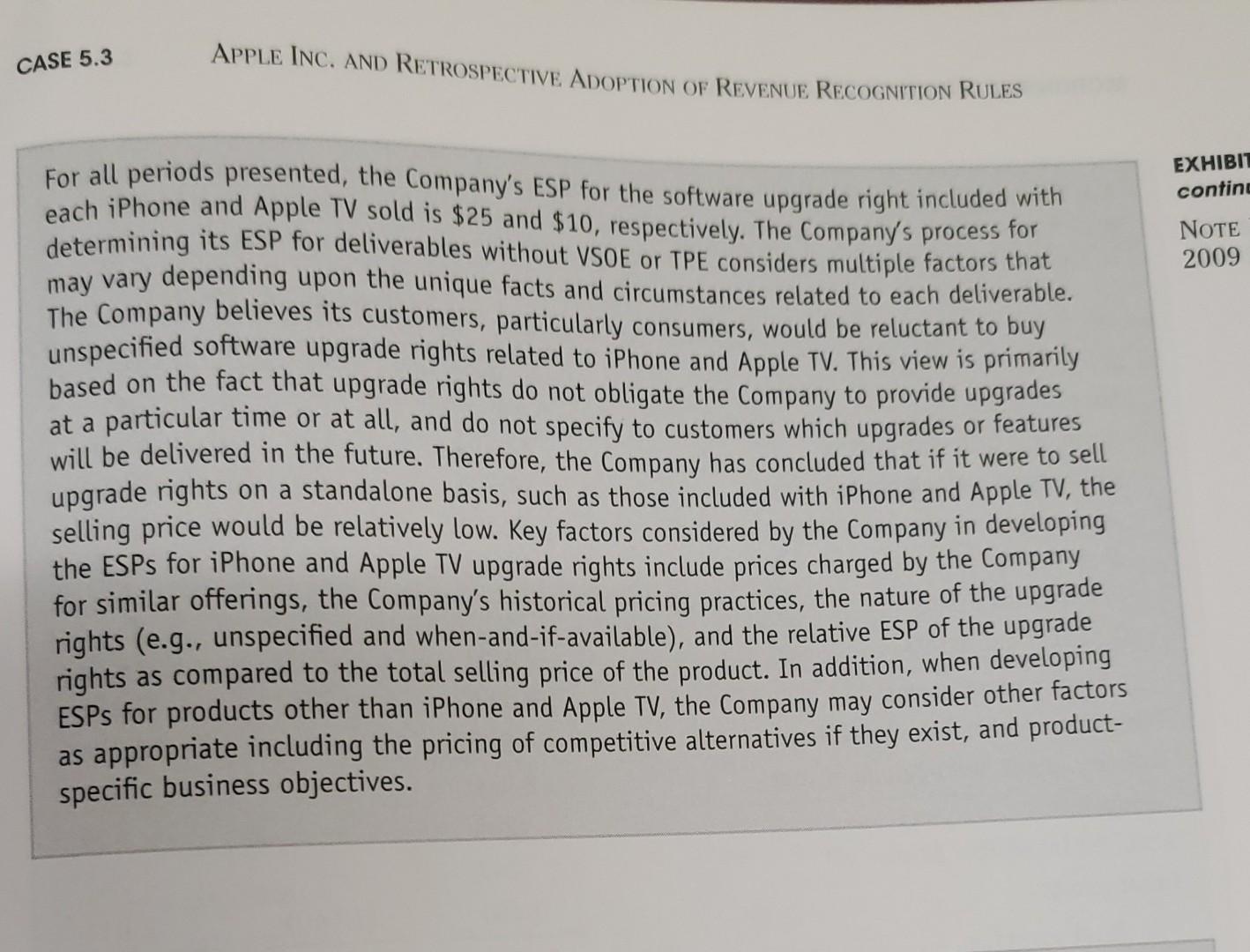
Note 1-Summary of Significant Accounting Policies Revenue Recognition Revenue Recognition for Arrangements with Multiple Deliverables For multi-element arrangements that include tangible products that contain software that is essential to the tangible product's functionality and undelivered software elements that relate to the tangible product's essential software, the Company allocates revenue to all deliverables based on their relative selling prices. In such circumstances, the new accounting principles establish a hierarchy to determine the selling price to be used for allocating revenue to deliverables as follows: (i) vendor-specific objective evidence of fair value ("VSOE"), (ii) third-party evidence of selling price ("TPE"), and (iii) best estimate of the selling price ("ESP). VSOE generally exists only when the Company sells the deliverable separately and is the price actually charged by the Company for that deliverable. For both iPhone and Apple TV, the Company has indicated it may from time-to-time provide future unspecified software upgrades and features free of charge to customers. The Company has identified two deliverables generally contained in arrangements involving the sale of iPhone and Apple TV. The first deliverable is the hardware and software essential to the functionality of the hardware device delivered at the time of sale, and the second deliverable is the right included with the purchase of iPhone and Apple TV to receive on a when-and-if- available basis future unspecified software upgrades and features relating to the product's essential software. The Company has allocated revenue between these two deliverables using the relative selling price method. Because the Company has neither VSOE nor TPE for the two deliverables the allocation of revenue has been based on the Company's ESPs. Amounts allocated to the delivered hardware and the related essential software are recognized at the time of sale provided the other conditions for revenue recognition have been met. Amounts allocated to the unspecified software upgrade rights are deferred and recognized on a straight-line basis over the 24-month estimated life of the related hardware. All product cost of sales, including estimated warranty costs, are generally recognized at the time of sale. Costs for engineering and sales and marketing are expensed as incurred. (continued) APPLE INC. AND RETROSPECTIVE ADOPTION OF REVENUE RECOGNITION RULES CASE 5.3 EXHIBIT conting NOTE 2009 For all periods presented, the Company's ESP for the software upgrade right included with each iPhone and Apple TV sold is $25 and $10, respectively. The Company's process for determining its ESP for deliverables without vsoE or TPE considers multiple factors that may vary depending upon the unique facts and circumstances related to each deliverable. The Company believes its customers, particularly consumers, would be reluctant to buy unspecified software upgrade rights related to iPhone and Apple TV. This view is primarily based on the fact that upgrade rights do not obligate the company to provide upgrades at a particular time or at all, and do not specify to customers which upgrades or features will be delivered in the future. Therefore, the Company has concluded that if it were to sell upgrade rights on a standalone basis, such as those included with iPhone and Apple TV, the selling price would be relatively low. Key factors considered by the Company in developing the ESPs for iPhone and Apple TV upgrade rights include prices charged by the Company for similar offerings, the Company's historical pricing practices, the nature of the upgrade rights (e.g., unspecified and when-and-if-available), and the relative ESP of the upgrade rights as compared to the total selling price of the product. In addition, when developing ESPs for products other than iPhone and Apple TV, the Company may consider other factors as appropriate including the pricing of competitive alternatives if they exist, and product- specific business objectives
Step by Step Solution
There are 3 Steps involved in it
1 Expert Approved Answer
Step: 1 Unlock

Question Has Been Solved by an Expert!
Get step-by-step solutions from verified subject matter experts
Step: 2 Unlock
Step: 3 Unlock
 Study Help