



Question: Issue identified in the case. You should consider organizing your report as follows: introduction (Brief summary of the case not more than 150 words) company
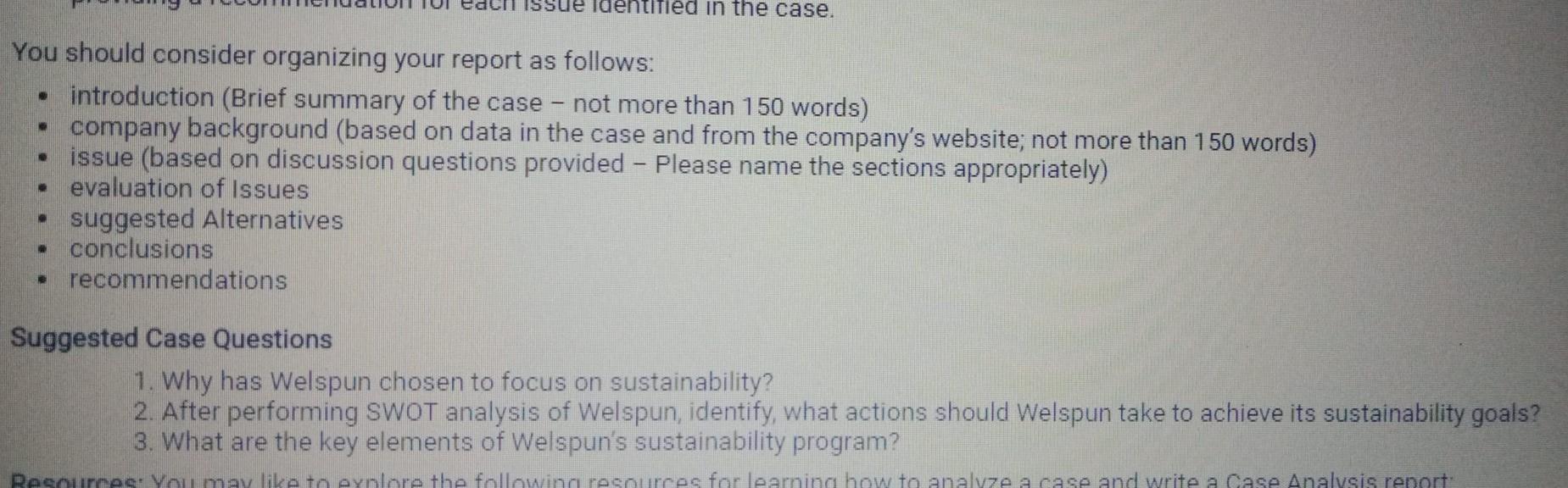
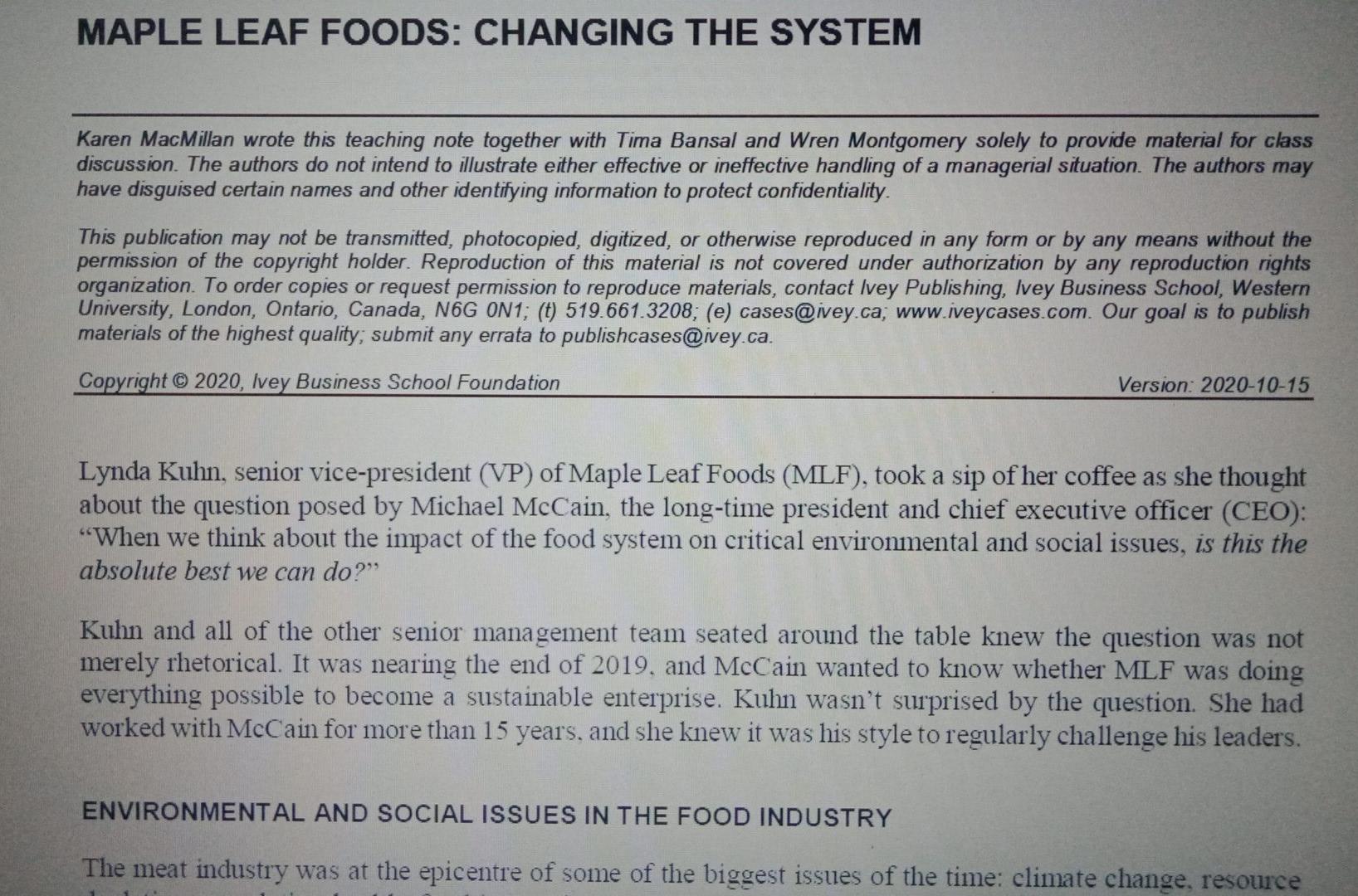
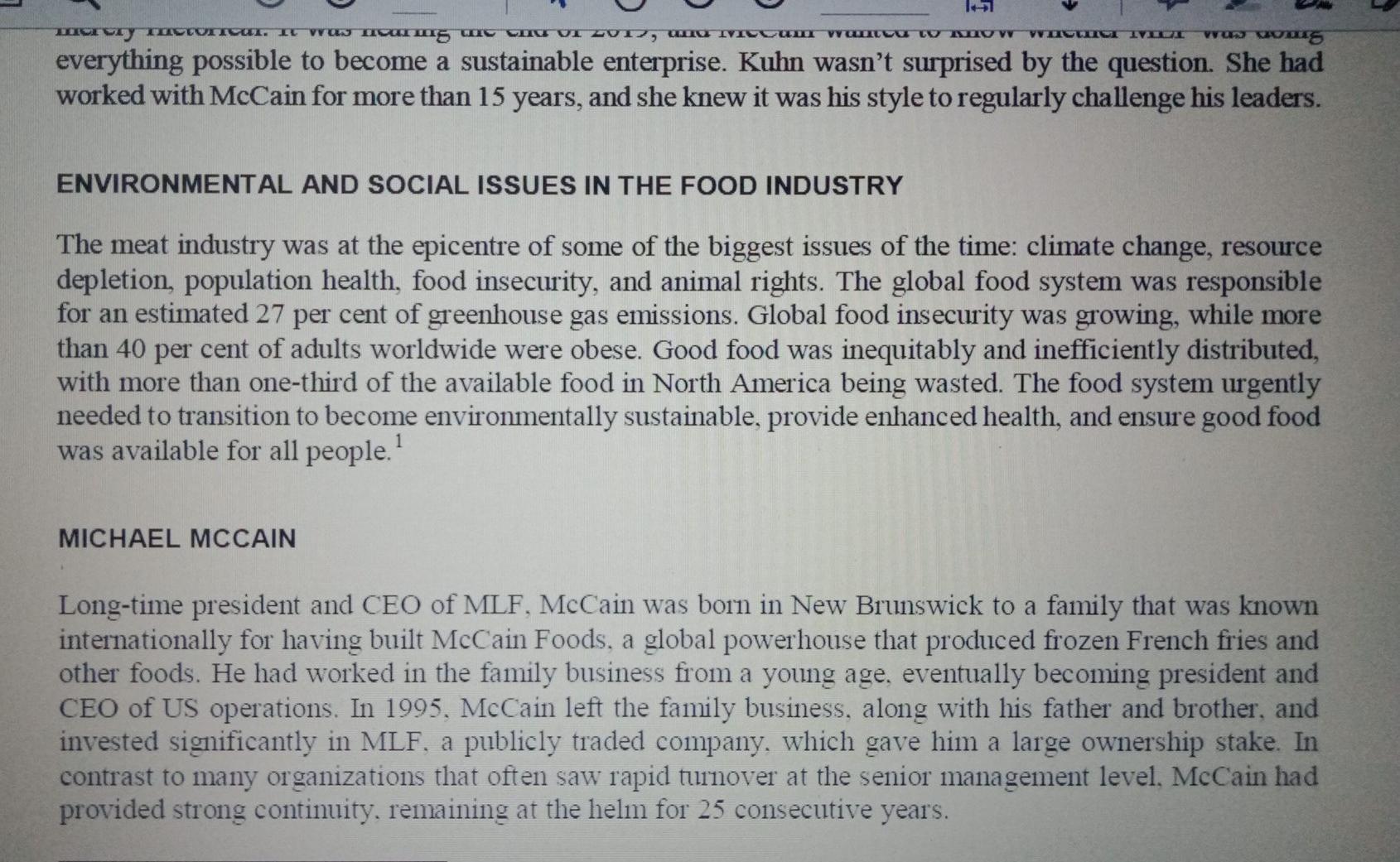
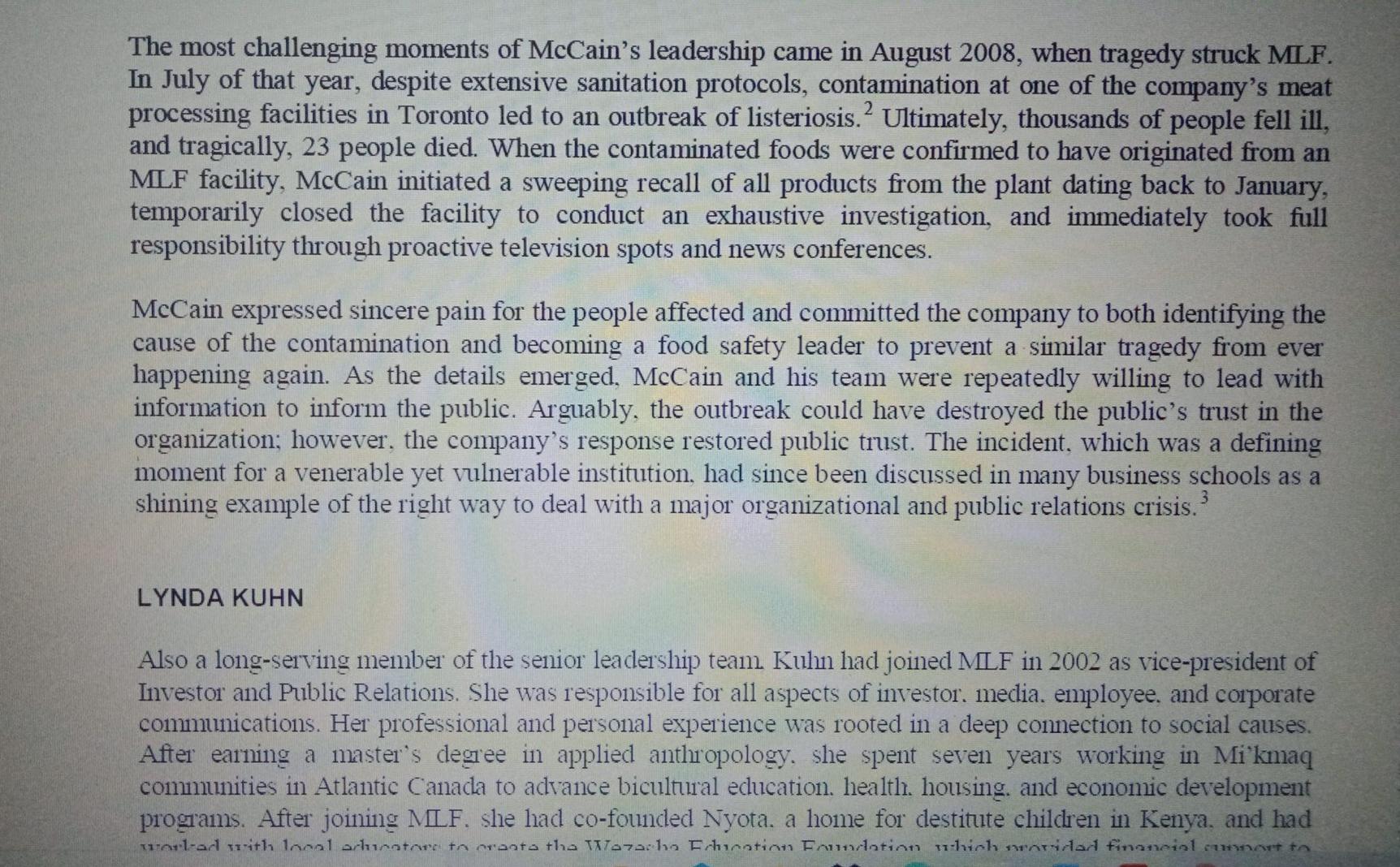
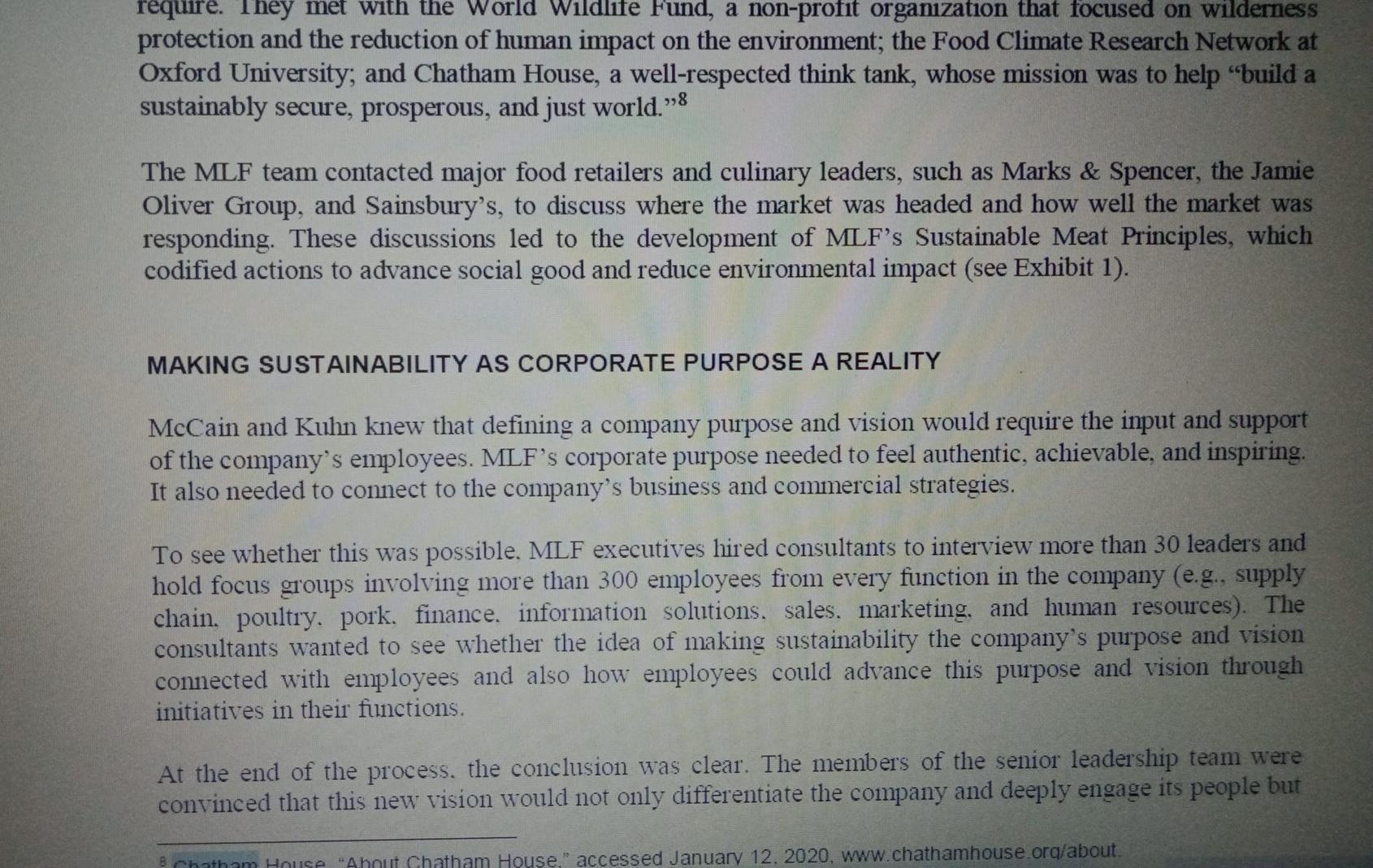
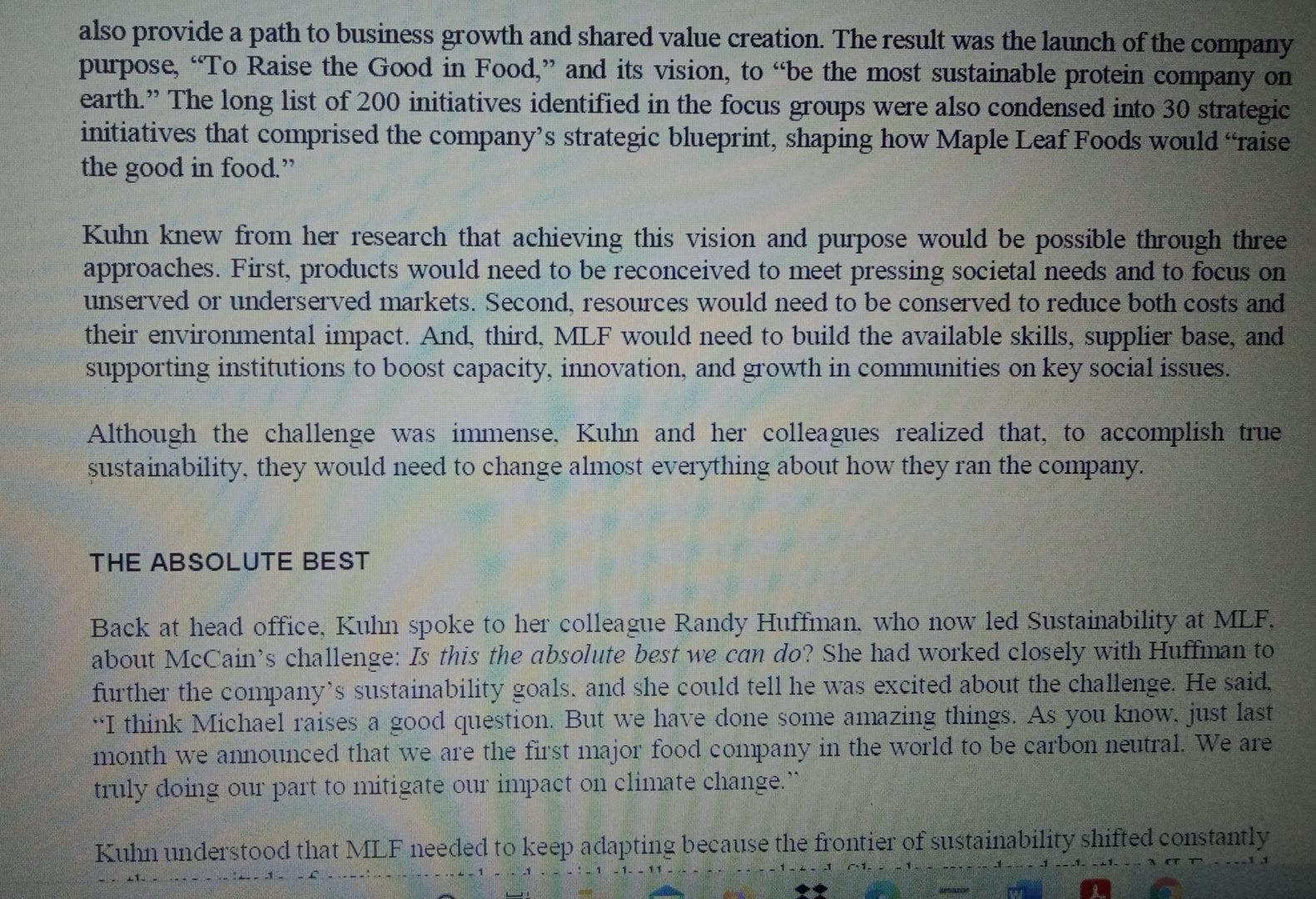
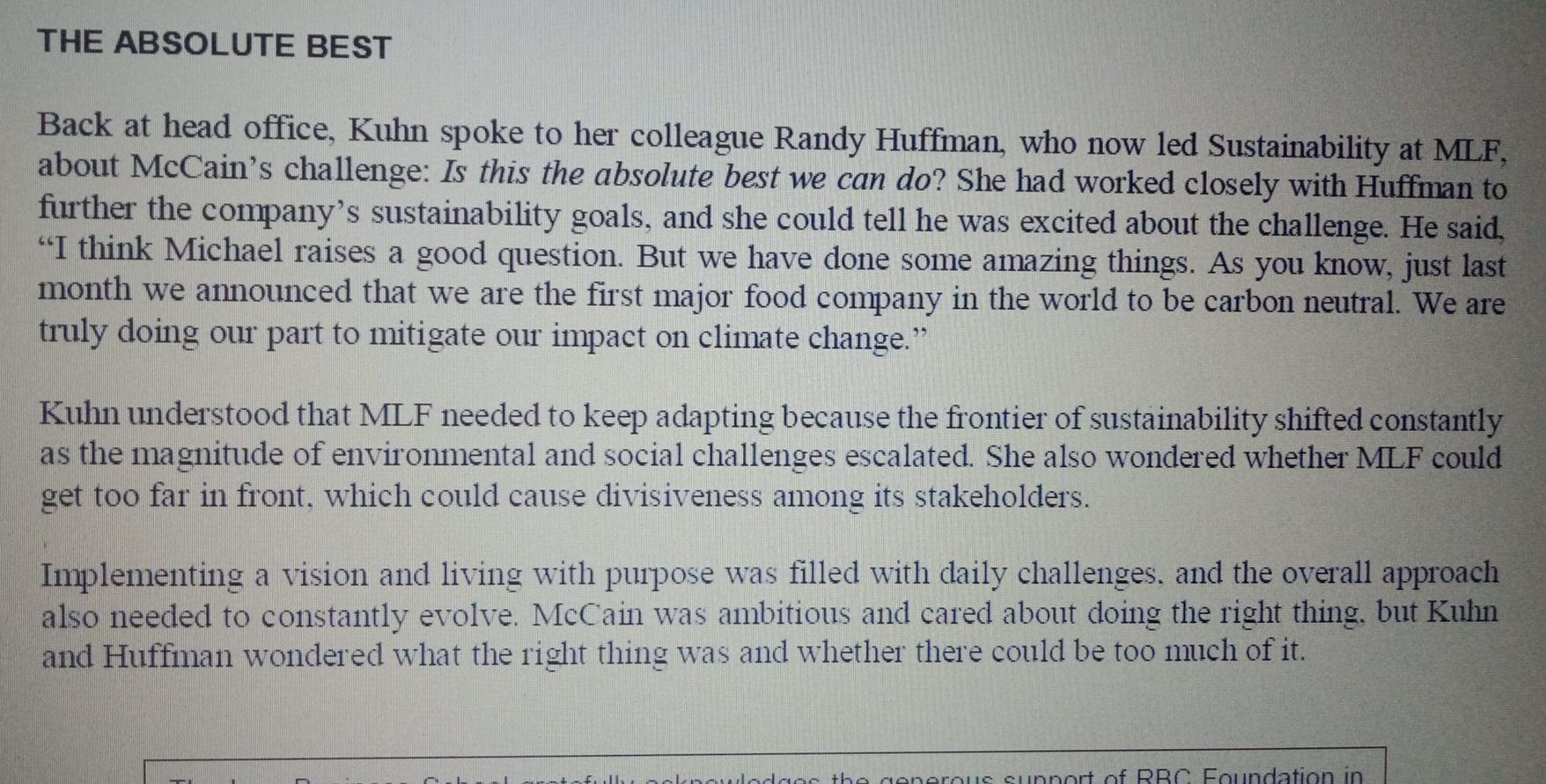
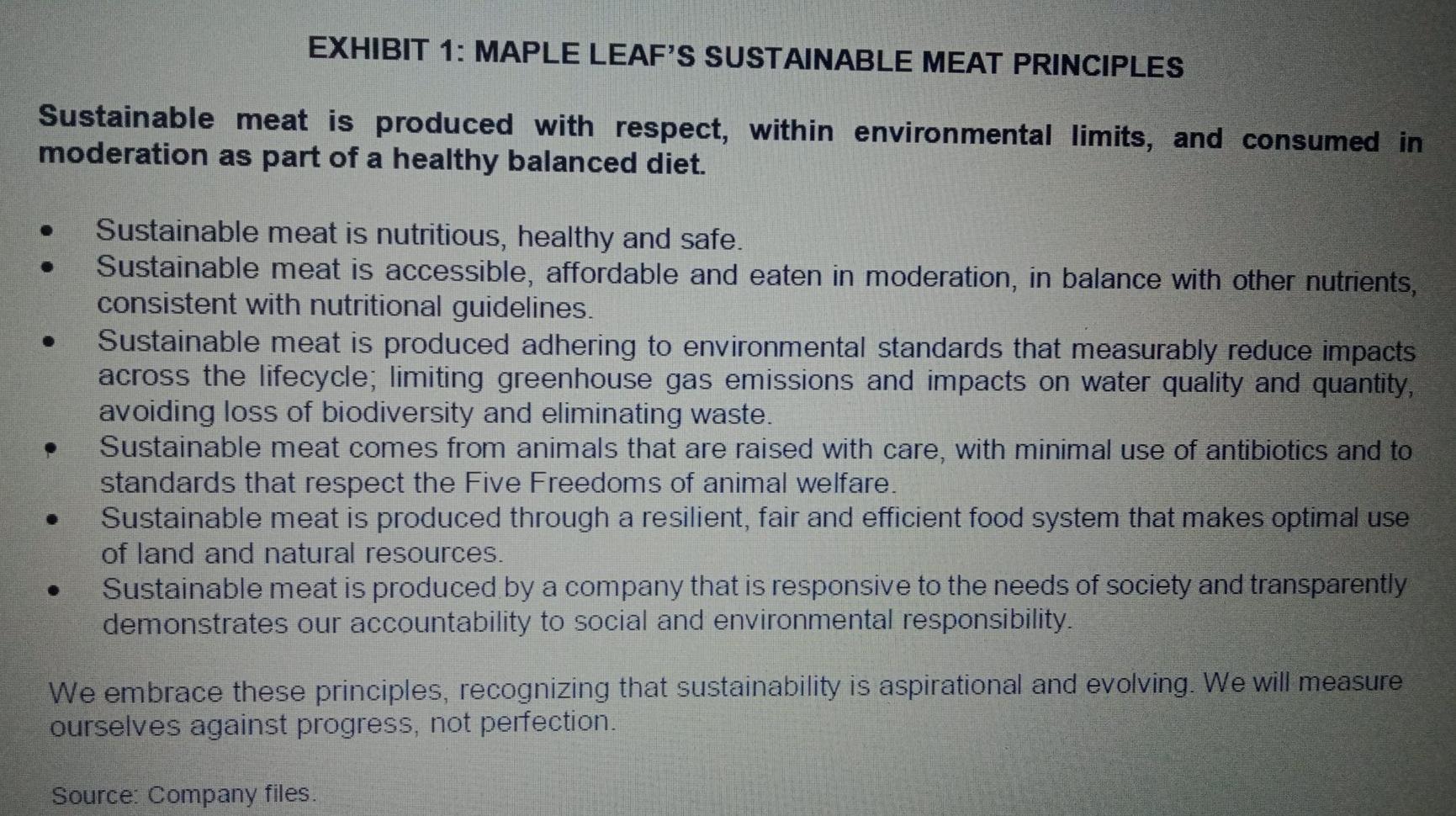
Issue identified in the case. You should consider organizing your report as follows: introduction (Brief summary of the case not more than 150 words) company background (based on data in the case and from the company's website; not more than 150 words) issue (based on discussion questions provided - Please name the sections appropriately) evaluation of issues suggested Alternatives conclusions recommendations Suggested Case Questions 1. Why has Welspun chosen to focus on sustainability? 2. After performing SWOT analysis of Welspun, identify, what actions should Welspun take to achieve its sustainability goals? 3. What are the key elements of Welspun's sustainability program? Resources. Vou may like to eylore the following resources for learning how to analyze a case and write a Case Analysis report MAPLE LEAF FOODS: CHANGING THE SYSTEM Karen MacMillan wrote this teaching note together with Tima Bansal and Wren Montgomery solely to provide material for class discussion. The authors do not intend to illustrate either effective or ineffective handling of a managerial situation. The authors may have disguised certain names and other identifying information to protect confidentiality. This publication may not be transmitted, photocopied, digitized, or otherwise reproduced in any form or by any means without the permission of the copyright holder. Reproduction of this material is not covered under authorization by any reproduction rights organization. To order copies or request permission to reproduce materials, contact Ivey Publishing, Ivey Business School, Western University, London, Ontario, Canada, NOG ON1; (t) 519.661.3208; (e) cases@ivey.ca, www.iveycases.com. Our goal is to publish materials of the highest quality, submit any errata to publishcases@ivey.ca. Copyright 2020, Ivey Business School Foundation Version: 2020-10-15 Lynda Kuhn, senior vice-president (VP) of Maple Leaf Foods (MLF), took a sip of her coffee as she thought about the question posed by Michael McCain, the long-time president and chief executive officer (CEO): "When we think about the impact of the food system on critical environmental and social issues, is this the absolute best we can do?" Kuhn and all of the other senior management team seated around the table knew the question was not merely rhetorical. It was nearing the end of 2019, and McCain wanted to know whether MLF was doing everything possible to become a sustainable enterprise. Kuhn wasn't surprised by the question. She had worked with McCain for more than 15 years, and she knew it was his style to regularly challenge his leaders. ENVIRONMENTAL AND SOCIAL ISSUES IN THE FOOD INDUSTRY The meat industry was at the epicentre of some of the biggest issues of the time: climate change, resource wu wu5 , , everything possible to become a sustainable enterprise. Kuhn wasn't surprised by the question. She had worked with McCain for more than 15 years, and she knew it was his style to regularly challenge his leaders. ENVIRONMENTAL AND SOCIAL ISSUES IN THE FOOD INDUSTRY The meat industry was at the epicentre of some of the biggest issues of the time: climate change, resource depletion, population health, food insecurity, and animal rights. The global food system was responsible for an estimated 27 per cent of greenhouse gas emissions. Global food insecurity was growing, while more than 40 per cent of adults worldwide were obese. Good food was inequitably and inefficiently distributed, with more than one-third of the available food in North America being wasted. The fo system urgently needed to transition to become environmentally sustainable, provide enhanced health, and ensure good food was available for all people. MICHAEL MCCAIN Long-time president and CEO of MLF, McCain was born in New Brunswick to a family that was known internationally for having built McCain Foods, a global powerhouse that produced frozen French fries and other foods. He had worked in the family business from a young age, eventually becoming president and CEO of US operations. In 1995, McCain left the family business, along with his father and brother, and invested significantly in MLF. a publicly traded company, which gave him a large ownership stake. In contrast to many organizations that often saw rapid turnover at the senior management level, McCain had provided strong continuity, remaining at the helm for 25 consecutive years. The most challenging moments of McCain's leadership came in August 2008, when tragedy struck MLF. In July of that year, despite extensive sanitation protocols, contamination at one of the company's meat processing facilities in Toronto led to an outbreak of listeriosis. Ultimately, thousands of people fell ill, and tragically, 23 people died. When the contaminated foods were confirmed to have originated from an MLF facility, McCain initiated a sweeping recall of all products from the plant dating back to January, temporarily closed the facility to conduct an exhaustive investigation, and immediately took full responsibility through proactive television spots and news conferences. McCain expressed sincere pain for the people affected and committed the company to both identifying the cause of the contamination and becoming a food safety leader to prevent a similar tragedy from ever happening again. As the details emerged, McCain and his team were repeatedly willing to lead with information to inform the public. Arguably, the outbreak could have destroyed the public's trust in the organization; however, the company's response restored public trust. The incident, which was a defining moment for a venerable yet vulnerable institution, had since been discussed in many business schools as a shining example of the right way to deal with a major organizational and public relations crisis. LYNDA KUHN Also a long-serving member of the senior leadership team Kuhn had joined MLF in 2002 as vice-president of Investor and Public Relations. She was responsible for all aspects of investor, media, employee, and corporate communications. Her professional and personal experience was rooted in a deep connection to social causes. After earning a master's degree in applied anthropology, she spent seven years working in Mi'kmaq communities in Atlantic Canada to advance bicultural education, healthy housing, and economic development programs. After joining MLF. she had co-founded Nyota, a home for destitute children in Kenya, and had 10l-art with local arhiatere to create the Wazala notion Emotion which madad financial mart to Investor and Public Relations. She was responsible for all aspects of investor, media, employee, and corporate communications. Her professional and personal experience was rooted in a deep connection to social causes. After earning a master's degree in applied anthropology, she spent seven years working in Mi'kmaq communities in Atlantic Canada to advance bicultural education, health, housing, and economic development programs. After joining MLF, she had co-founded Nyota, a home for destitute children in Kenya, and had worked with local educators to create the Wezesha Education Foundation, which provided financial support to further the education of young people who exhibited high academic potential and leadership capabilities. In her earlier days at MLF, along with leading communications, she had led the development of philanthropy, sustainability, and diversity and inclusion strategies. In 2013, McCain asked Kuhn to take the lead on developing a strategic framework and action plan to embed sustainability into the company's culture and business practices. In late 2016, she also became the chair of the Maple Leaf Centre for Action on Food Insecurity. The centre's goal was to reduce food insecurity in Canada by 50 per cent by 2030 through three main platforms: (1) advocating for required changes to public policy, (2) funding and co-creating innovative projects that advanced sustainable food security, and (3) supporting capacity building and knowledge transfer to increase collaboration among groups focused on advancing food security. MAPLE LEAF FOODS (MLF) MLF could trace its lineage back more than 100 years. It had been created through the combination of the Maple Leaf Milling Company, Purity Flour Mills, and Toronto Elevators. When it joined forces with Canada Packers in 1991. it became Canada's largest food processor. Historically, MLF had been a diversified and integrated agri-farms, meat, and bakery business. Its operations included feed production, hog and poultry production, primary and secondary meat processing, rendering, global trading, and fresh and frozen bakery and pasta products. It ran 12 prepared meat facilities, two plant protein facilities, two further processed poultry facilities, three hatcheries, six fresh poultry processing facilities, more than 180 pig barns, two fresh pork processing facilities, and two distribution centres, and it contracted with more than 500 chicken farmers. * MLF's leading brands included Maple Leaf, Maple Leaf Prime, Maple Leaf Natural Selections, Schneiders, Country Naturals, Mina, Greenfield Natural Meat Company, Lightlife, and Field Roast Grain Meat Company As of 2019, the company had approximately 12,500 employees and conducted business in Canada, the United States, and Asia. It was a publicly owned company, with shares trading on the Toronto Stock Exchange (TSX: MFI). Sales in 2018 were almost CA$3.5 billion with net earnings of $101.3 million. Its 2018 adjusted earnings before interest, income taxes, depreciation, amortization, restructuring and other related costs (EBITDA) margin was 9.9 per cent. With the structural rise in the Canadian dollar, which significantly threatened the long-term profitability of MLF's currency-exposed businesses, the company divested its non-core meat businesses. Commencing in 2007 and completed in 2014. one of MLF's major divestments was its stake in the Canada Bread Company Limited. MLF also invested more than $1 billion in its supply chain and operating systems to consolidate aging inefficient plants and created a highly cost-competitive prepared-meats manufacturing network. The result was a significant expansion in MLF'S EBITDA margin and structural profitability, but on a lower revenue base and a largely Canadian geographic footprint. It had been many years of exhausting change, but the company now had the resources and focus to implement a comprehensive approach to sustainability, which McCain believed was deeply important. With holf+ bolanin 7711 ****loracho 111 11-18+ ha and fresh inefficient plants and created a highly cost-competitive prepared-meats manufacturing network. The result was a significant expansion in MLF's EBITDA margin and structural profitability, but on a lower revenue base and a largely Canadian geographic footprint. It had been many years of exhausting change, but the company now had the resources and focus to implement a comprehensive approach to sustainability, which McCain believed was deeply important. With the sale of the bakery business in 2014, employees had been asking what the company stood for and where it was going as a "pure-play" meat company. MLF'S SUSTAINABILITY STRATEGY In 2013. Kuhn was charged with developing and leading the implementation of a sustainability strategy that would go well beyond conventional corporate social responsibility to become a core part of the company's culture. This strategy included advancing nutrition and health, providing leadership in animal care and environmental sustainability, and making a social impact on the chronic issue of food insecurity across Canada. MLF embraced sustainability, and from 2014 through 2017, sustainability increasingly evolved from a separate strategy to become a core component of the way the company operated its business, invested capital and marketed its products. For example, the company became a market leader in raising hogs and chickens without antibiotics, and this became a key competitive advantage. broadening its sales in the United States. Reductions in energy, water usage, and waste led to tangible bottom-line savings. Product reformulations to use only all-natural ingredients had bolstered the company's flagship Maple Leaf brand. With the acquisition of US-based Lightlife Foods and the Field Roast Grain Meat Company, MLF became a key player in the rapidly growing North American plant protein market. The establishment, in late 2016, of the Maple Leaf Centre for Action on Food Security as a registered charity engaged civil society on advancing sustainable food security. MOVING SUSTAINABILITY FROM STRATEGY TO PURPOSE McCain believed that if sustainability was core to the future of the company, it should be elevated from a company strategy to the company's central purpose and vision. The questions took almost two years to consider. Consultants were hired to analyze the financials of the protein market. The conventional meat segment was growing at low single digits, although significantly higher levels of growth were being achieved in market niches such as "sustainable meat," value-added chicken, and artisanal products. The plant protein market was just emerging, but all of the signs suggested that consumers were looking for more protein options and that the market was ripe for innovation and expansion. Further cost savings were also possible through advancing MLF's commitment to reduce its environmental footprint by 50 per cent by 2025. As part of this research, Kuhn, Ratan Swami (VP of Strategy and Transformation), and Tim Faveri (VP Sustainability and Shared Value) travelled to the United Kingdom to meet with experts in sustainable food systems to discuss whether it was possible to make a meat company sustainable and what doing so would require. They met with the World Wildlife Fund, a non-profit organization that focused on wilderness protection and the reduction of human impact on the environment: the Food Climate Research Network at Oxford University: and Chatham House, a well-respected think tank, whose mission was to help "build a sustainably secure, prosperous, and just world.8 require. They met with the World Wildlife Fund, a non-profit organization that focused on wilderness protection and the reduction of human impact on the environment; the Food Climate Research Network at Oxford University, and Chatham House, a well-respected think tank, whose mission was to help build a sustainably secure, prosperous, and just world."8 The MLF team contacted major food retailers and culinary leaders, such as Marks & Spencer, the Jamie Oliver Group, and Sainsbury's, to discuss where the market was headed and how well the market was responding. These discussions led to the development of MLF's Sustainable Meat Principles, which codified actions to advance social good and reduce environmental impact (see Exhibit 1). MAKING SUSTAINABILITY AS CORPORATE PURPOSE A REALITY McCain and Kuhn knew that defining a company purpose and vision would require the input and support of the company's employees. MLF's corporate purpose needed to feel authentic, achievable, and inspiring. It also needed to connect to the company's business and commercial strategies. To see whether this was possible. MLF executives hired consultants to interview more than 30 leaders and hold focus groups involving more than 300 employees from every function in the company (e.g., supply chain, poultry. pork, finance, information solutions, sales, marketing, and human resources). The consultants wanted to see whether the idea of making sustainability the company's purpose and vision connected with employees and also how employees could advance this purpose and vision through initiatives in their functions. At the end of the process, the conclusion was clear. The members of the senior leadership team were convinced that this new vision would not only differentiate the company and deeply engage its people but 8 Chatham House "About Chatham House," accessed January 12. 2020. www.chathamhouse.org/about. also provide a path to business growth and shared value creation. The result was the launch of the company purpose, To Raise the Good in Food," and its vision, to "be the most sustainable protein company on earth. The long list of 200 initiatives identified in the focus groups were also condensed into 30 strategic initiatives that comprised the company's strategic blueprint, shaping how Maple Leaf Foods would "raise the good in food." Kuhn knew from her research that achieving this vision and purpose would be possible through three approaches. First, products would need to be reconceived to meet pressing societal needs and to focus on unserved or underserved markets. Second, resources would need to be conserved to reduce both costs and their environmental impact. And, third, MLF would need to build the available skills, supplier base, and supporting institutions to boost capacity, innovation, and growth in communities on key social issues. Although the challenge was immense. Kuhn and her colleagues realized that, to accomplish true sustainability, they would need to change almost everything about how they ran the company. THE ABSOLUTE BEST Back at head office, Kuhn spoke to her colleague Randy Huffman, who now led Sustainability at MLF. about McCain's challenge: Is this the absolute best we can do? She had worked closely with Huffman to further the company's sustainability goals, and she could tell he was excited about the challenge. He said. "I think Michael raises a good question. But we have done some amazing things. As you know, just last month we announced that we are the first major food company in the world to be carbon neutral. We are truly doing our part to mitigate our impact on climate change." Kuhn understood that MLF needed to keep adapting because the frontier of sustainability shifted constantly -.1. 11. -1-1-1 01. THE ABSOLUTE BEST Back at head office, Kuhn spoke to her colleague Randy Huffman, who now led Sustainability at MLF, about McCain's challenge: Is this the absolute best we can do? She had worked closely with Huffman to further the company's sustainability goals, and she could tell he was excited about the challenge. He said, "I think Michael raises a good question. But we have done some amazing things. As you know, just last month we announced that we are the first major food company in the world to be carbon neutral. We are truly doing our part to mitigate our impact on climate change." Kuhn understood that MLF needed to keep adapting because the frontier of sustainability shifted constantly as the magnitude of environmental and social challenges escalated. She also wondered whether MLF could get too far in front, which could cause divisiveness among its stakeholders. Implementing a vision and living with purpose was filled with daily challenges, and the overall approach also needed to constantly evolve. McCain was ambitious and cared about doing the right thing, but Kuhn and Huffman wondered what the right thing was and whether there could be too much of it. door the enerous sunnort of RBC Foundation in EXHIBIT 1: MAPLE LEAF'S SUSTAINABLE MEAT PRINCIPLES Sustainable meat is produced with respect, within environmental limits, and consumed in moderation as part of a healthy balanced diet. . Sustainable meat is nutritious, healthy and safe. Sustainable meat is accessible, affordable and eaten in moderation, in balance with other nutrients, consistent with nutritional guidelines. Sustainable meat is produced adhering to environmental standards that measurably reduce impacts across the lifecycle; limiting greenhouse gas emissions and impacts on water quality and quantity, avoiding loss of biodiversity and eliminating waste. Sustainable meat comes from animals that are raised with care, with minimal use of antibiotics and to standards that respect the Five Freedoms of animal welfare. Sustainable meat is produced through a resilient, fair and efficient food system that makes optimal use of land and natural resources. Sustainable meat is produced by a company that is responsive to the needs of society and transparently demonstrates our accountability to social and environmental responsibility. We embrace these principles, recognizing that sustainability is aspirational and evolving. We will measure ourselves against progress, not perfection. Source: Company files
Step by Step Solution
There are 3 Steps involved in it
1 Expert Approved Answer
Step: 1 Unlock

Question Has Been Solved by an Expert!
Get step-by-step solutions from verified subject matter experts
Step: 2 Unlock
Step: 3 Unlock