Question: it is based on the Dirty pools case study and the requirement is give. in the first picture subject is training and development . i
it is based on the Dirty pools case study and the requirement is give. in the first picture
subject is training and development . i hope you would answer this as soon as possible
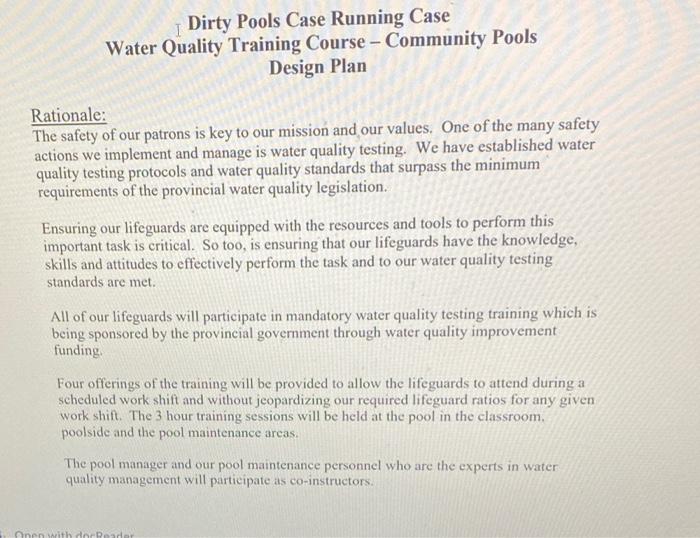
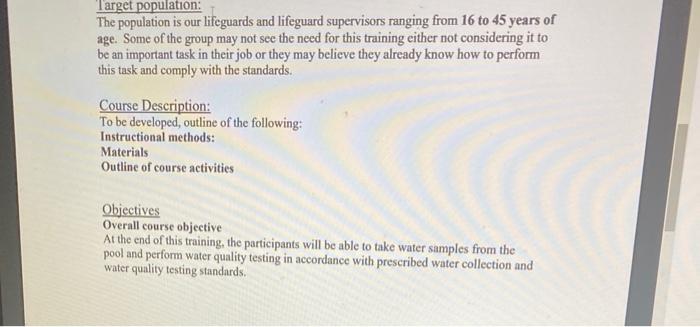
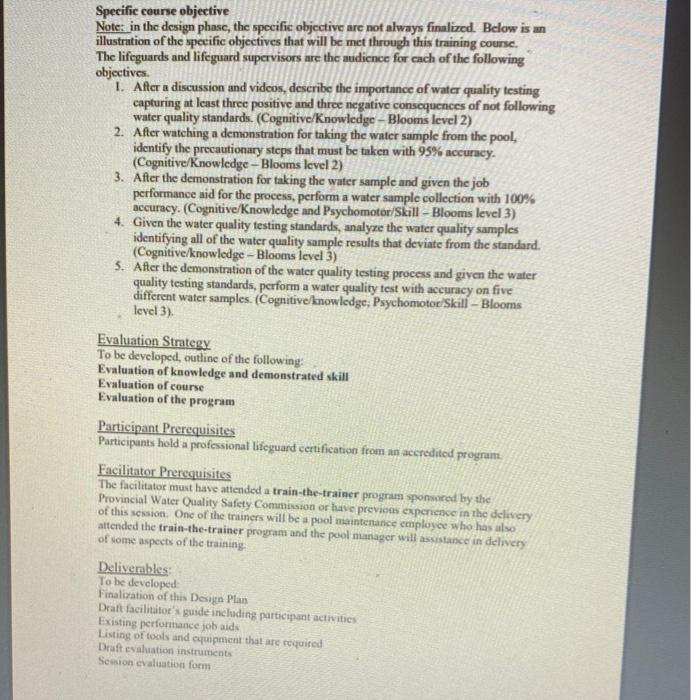
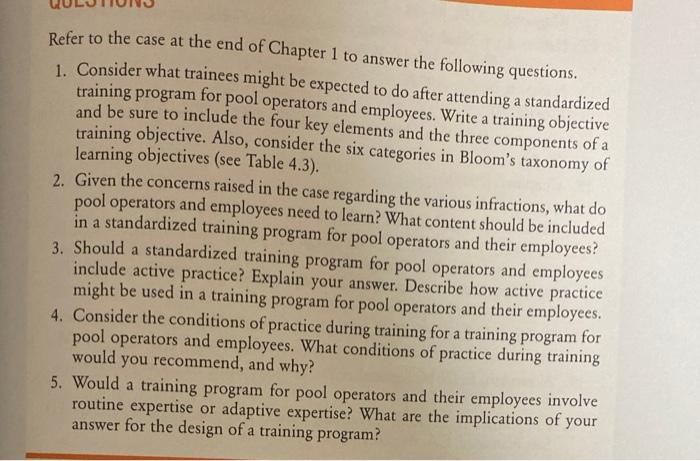
Instructions You will find it beneficial to reflect on the design plan to support your work Click on the pool doors to start the Dirty Pools Case Study Dirty Pools Case Study Review the case study Dirty Pools at the end of chapter 1. Prepare a Microsoft WORD document to be prepared to respond to this request from management. Your instructor will inform you if you need to submit your response. Be sure to refer back to design plan provided in the introductory page of this case, You have been asked to develop a plan to evaluate the training program. Before you can begin to develop the plan, you first need to consider what to include in your training evaluation plan 1. Suppose management is interested in knowing if the training course has achieved its purpose - would you suggest a summative or a formative evaluation? Which evaluation model would you likely use and why? 2. Now consider that management is interested in knowing if the training course should be improved - would you suggest a summative or a formative evaluation? Which evaluation model would you likely use and why? Be sure to integrate course content (referencing sources as required) and integrate the case facts. Load your response to the Assignment Dropbox under the Assessments" tab. Dirty Pools Case Running Case Water Quality Training Course - Community Pools Design Plan Rationale: The safety of our patrons is key to our mission and our values. One of the many safety actions we implement and manage is water quality testing. We have established water quality testing protocols and water quality standards that surpass the minimum requirements of the provincial water quality legislation. Ensuring our lifeguards are equipped with the resources and tools to perform this important task is critical. So too, is ensuring that our lifeguards have the knowledge, skills and attitudes to effectively perform the task and to our water quality testing standards are met. All of our lifeguards will participate in mandatory water quality testing training which is being sponsored by the provincial government through water quality improvement funding, Four offerings of the training will be provided to allow the lifeguards to attend during a scheduled work shift and without jeopardizing our required lifeguard ratios for any given work shift. The 3 hour training sessions will be held at the pool in the classroom poolside and the pool maintenance areas. The pool manager and our pool maintenance personnel who are the experts in water quality management will participate as co-instructors. Onen with dor Reader Target population: The population is our lifeguards and lifeguard supervisors ranging from 16 to 45 years of age. Some of the group may not see the need for this training either not considering it to be an important task in their job or they may believe they already know how to perform this task and comply with the standards. Course Description: To be developed, outline of the following: Instructional methods: Materials Outline of course activities Objectives Overall course objective At the end of this training, the participants will be able to take water samples from the pool and perform water quality testing in accordance with prescribed water collection and water quality testing standards. Specific course objective Note: in the design phase, the specific objective are not always finalized Below is an illustration of the specific objectives that will be met through this training course. The lifeguards and lifeguard supervisors are the audience for each of the following objectives 1. After a discussion and videos, describe the importance of water quality testing capturing at least three positive and three negative consequences of not following water quality standards. (Cognitive/Knowledge - Blooms level 2) 2. After watching a demonstration for taking the water sample from the pool, identify the precautionary steps that must be taken with 95% accuracy. (Cognitive/Knowledge - Blooms level 2) 3. After the demonstration for taking the water sample and given the job performance aid for the process, perform a water sample collection with 100% accuracy. (Cognitive/Knowledge and Psychomotor/Skill - Blooms level 3) 4. Given the water quality testing standards, analyze the water quality samples identifying all of the water quality sample results that deviate from the standard. (Cognitive/knowledge - Blooms level 3) 3. After the demonstration of the water quality testing process and given the water quality testing standards, perform a water quality test with accuracy on five different water samples. (Cognitive knowledge, Psychomotor Skill - Blooms level 3). Evaluation Strategy To be developed, outline of the following: Evaluation of knowledge and demonstrated skill Evaluation of course Evaluation of the program Participant Prerequisites Participants hold a professional lifeguard certification from an accredited program, Facilitator Prerequisites The facilitator must have attended a train-the-trainer program sponsored by the Provincial Water Quality Safety Commission or have previous experience in the delivery of this session. One of the trainers will be a pool maintenance employce who has also attended the train-the-trainer program and the pool manager will assistance in delivery of some aspects of the training, Deliverables To be developed Finalization of this Design Plan Draft facilitator's guide including participant activities Existing performance job aids Listing of tools and equipment that are required Draft evaluation instruments Session evaluation form a Refer to the case at the end of Chapter 1 to answer the following questions. 1. Consider what trainees might be expected to do after attending a standardized training program for pool operators and employees. Write a training objective and be sure to include the four key elements and the three components of a training objective. Also, consider the six categories in Bloom's taxonomy of learning objectives (see Table 4.3). 2. Given the concerns raised in the case regarding the various infractions, what do pool operators and employees need to learn? What content should be included in a standardized training program for pool operators and their employees? 3. Should a standardized training program for pool operators and employees include active practice? Explain your answer. Describe how active practice might be used in a training program for pool operators and their employees. 4. Consider the conditions of practice during training for a training program for pool operators and employees. What conditions of practice during training would you recommend, and why? 5. Would a training program for pool operators and their employees involve routine expertise or adaptive expertise? What are the implications of your answer for the design of a training program? a









 Study Help