







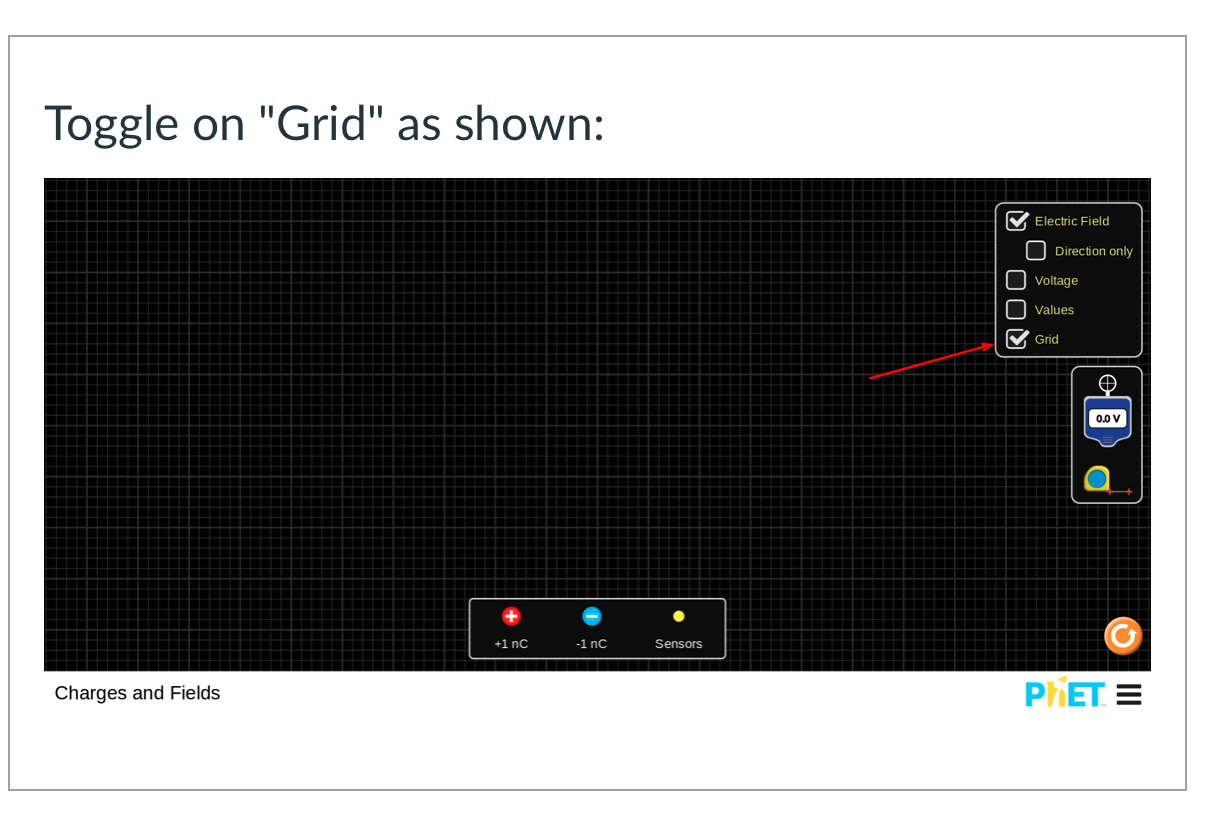
Question: Its a Electric Potential Lab, I put these in order step by step.Thank you Open the simulation [f>_in a separate tab. The screen should look


Its a Electric Potential Lab, I put these in order step by step.Thank you
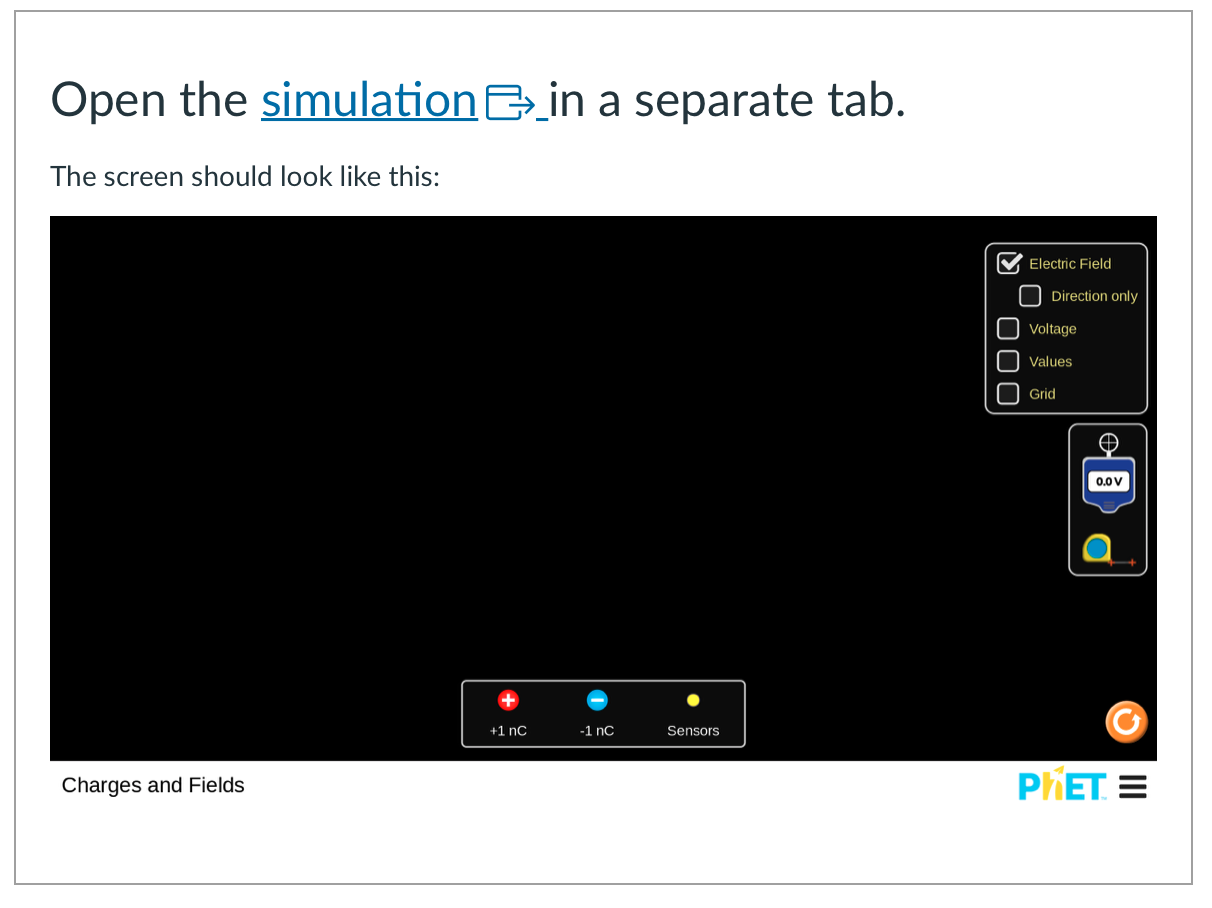
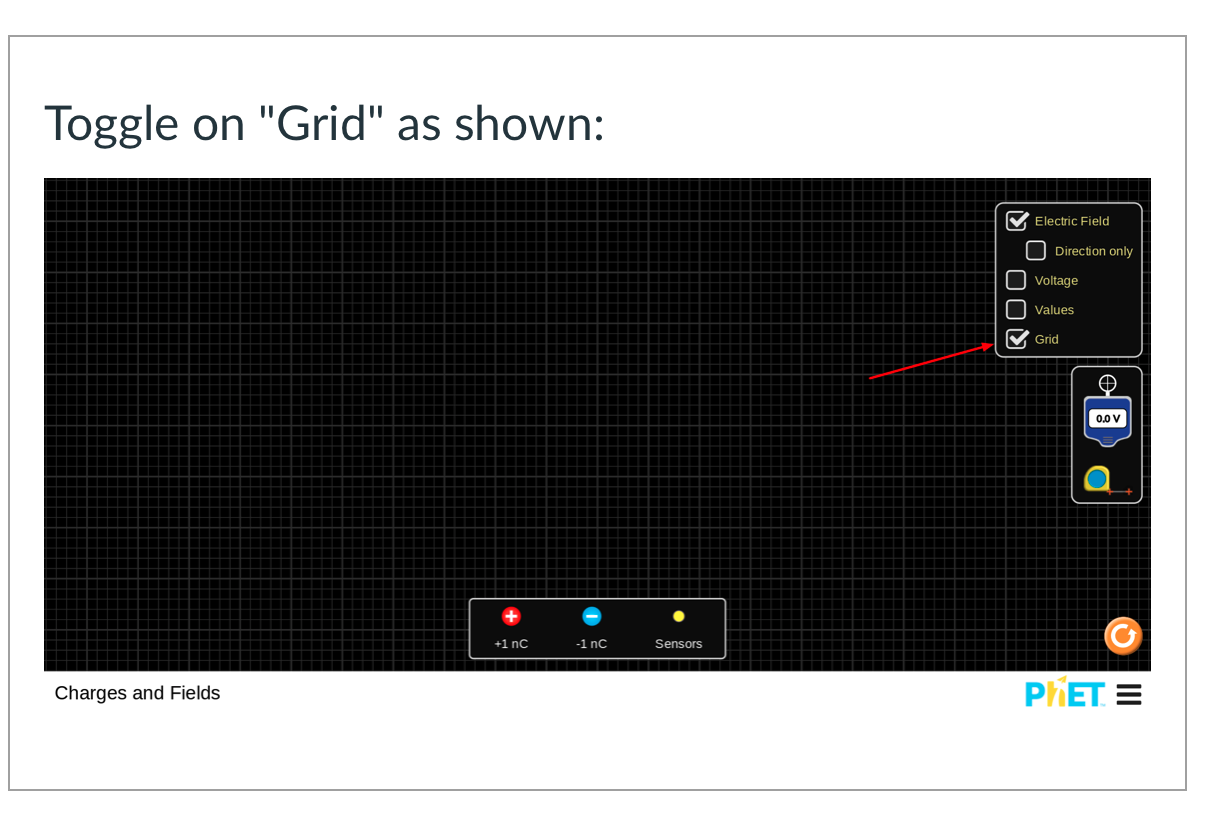
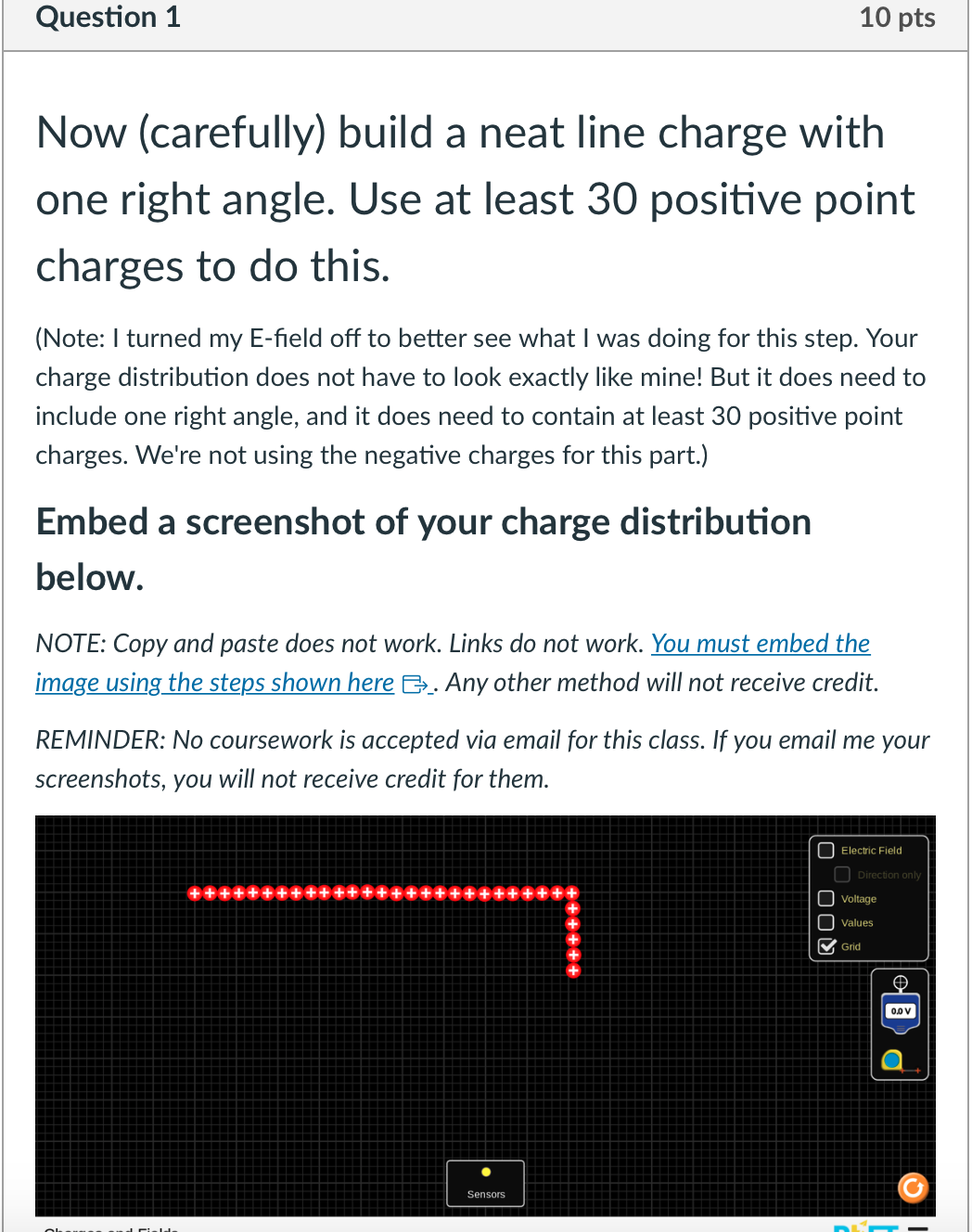
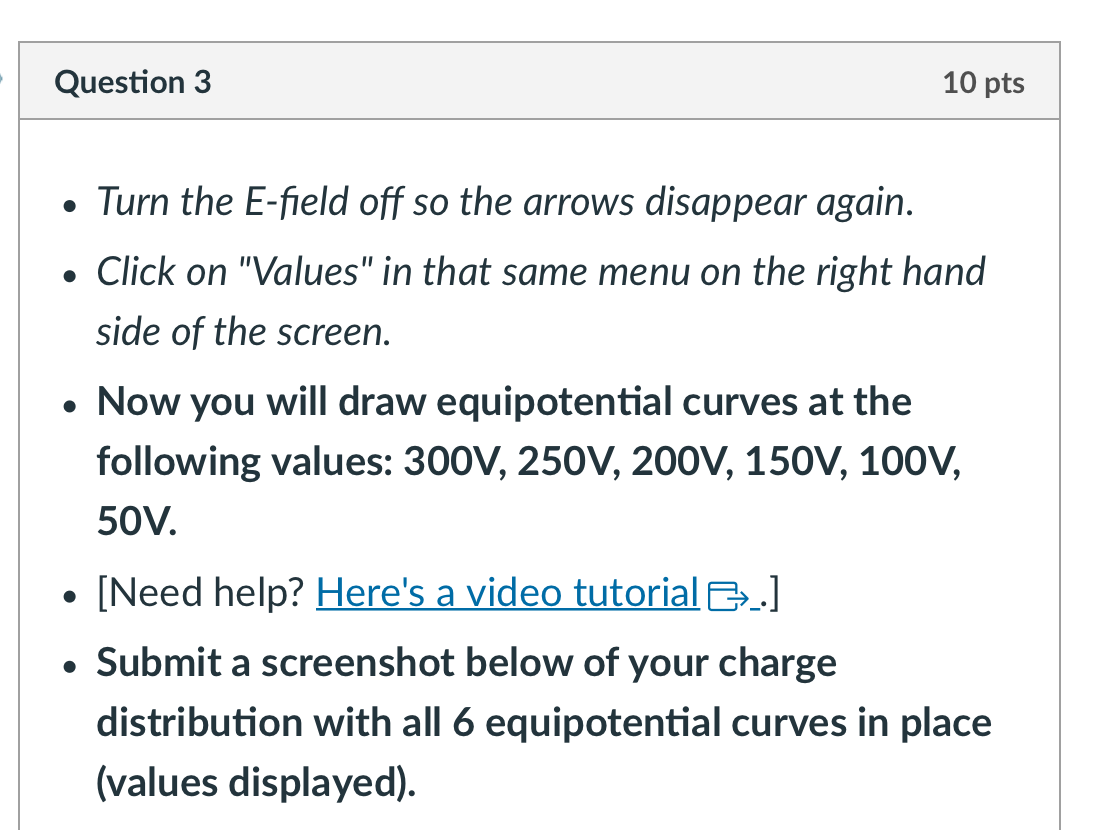

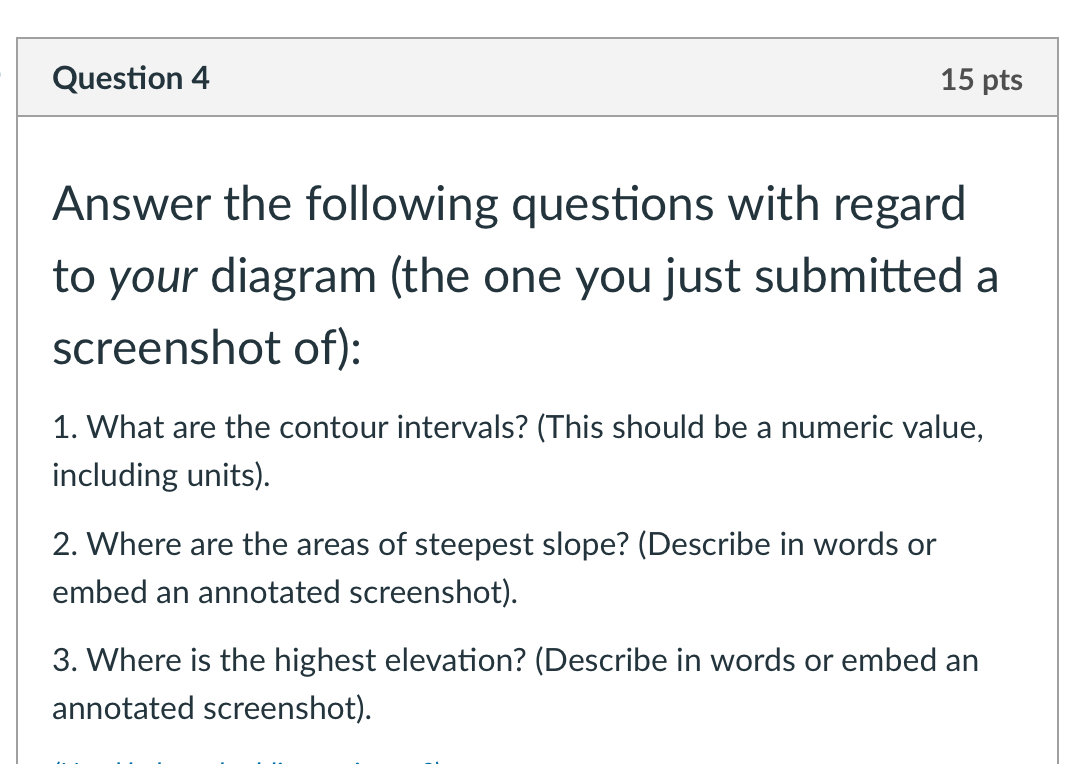
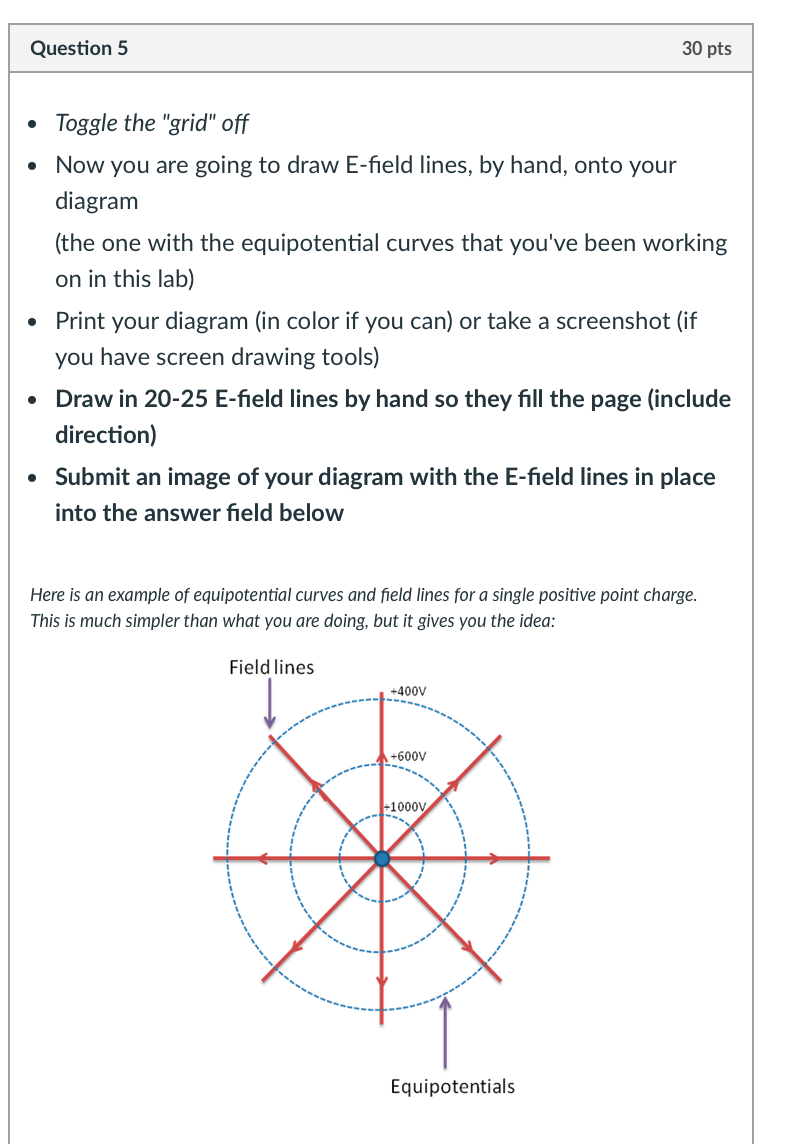

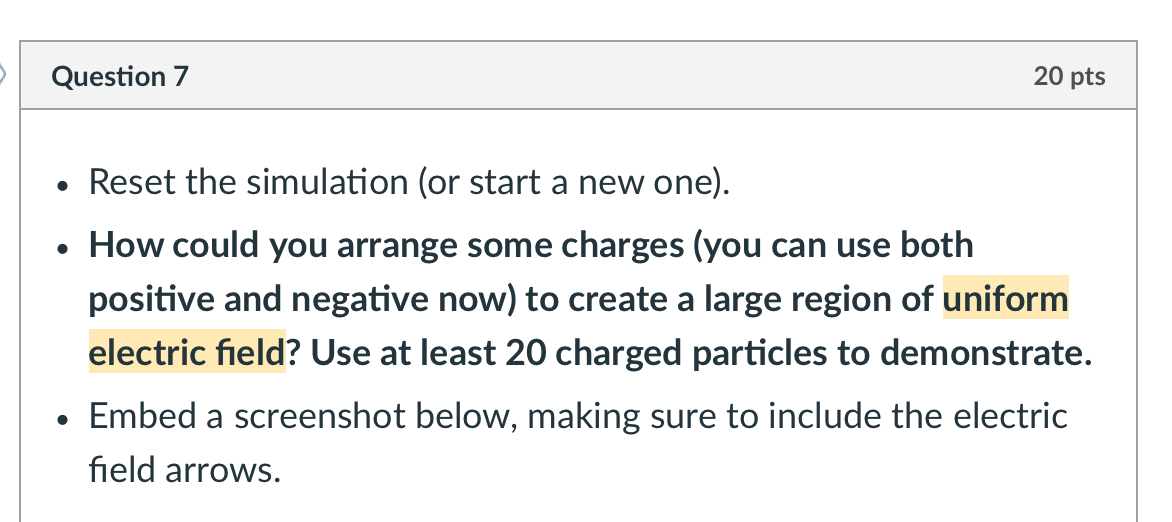
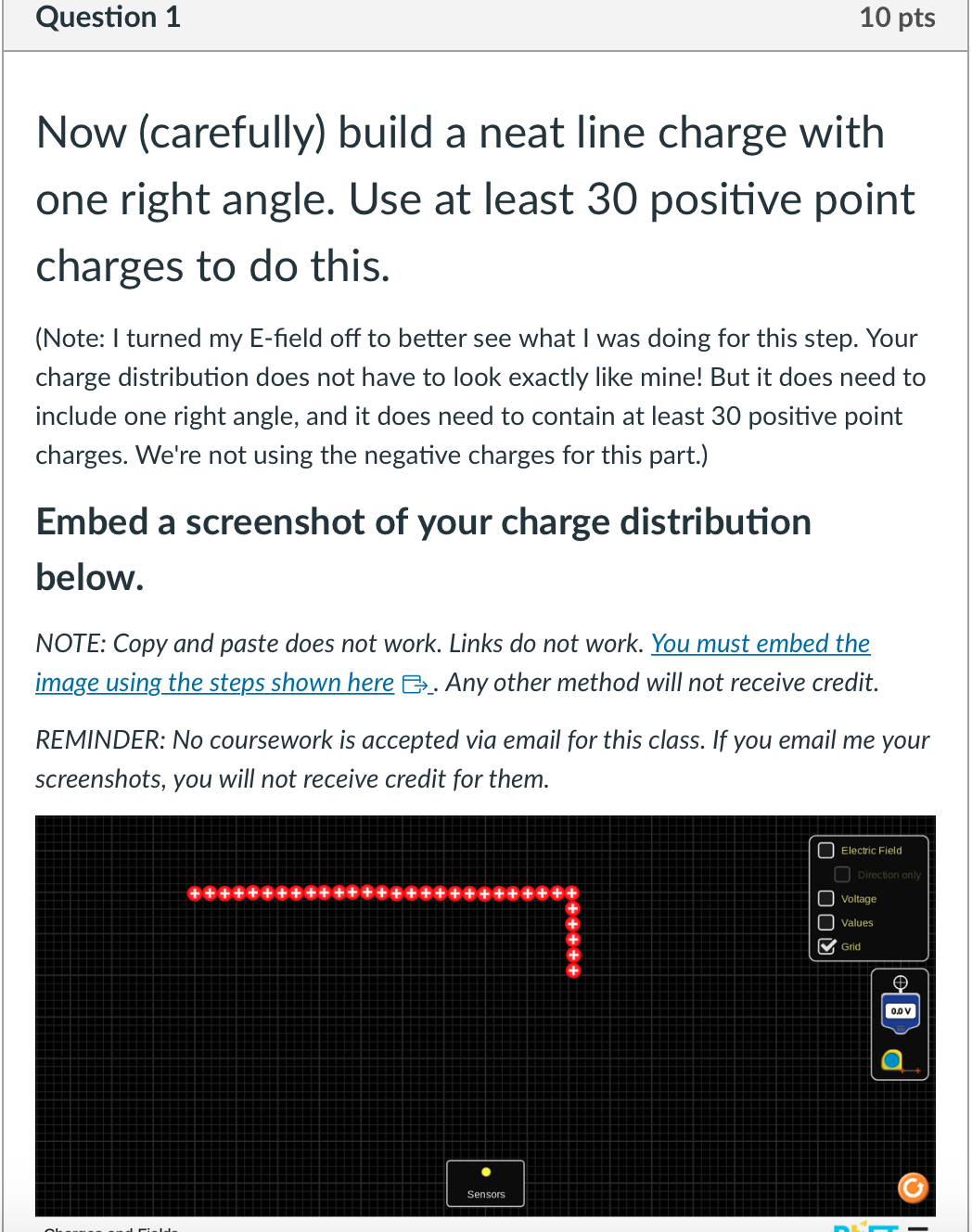
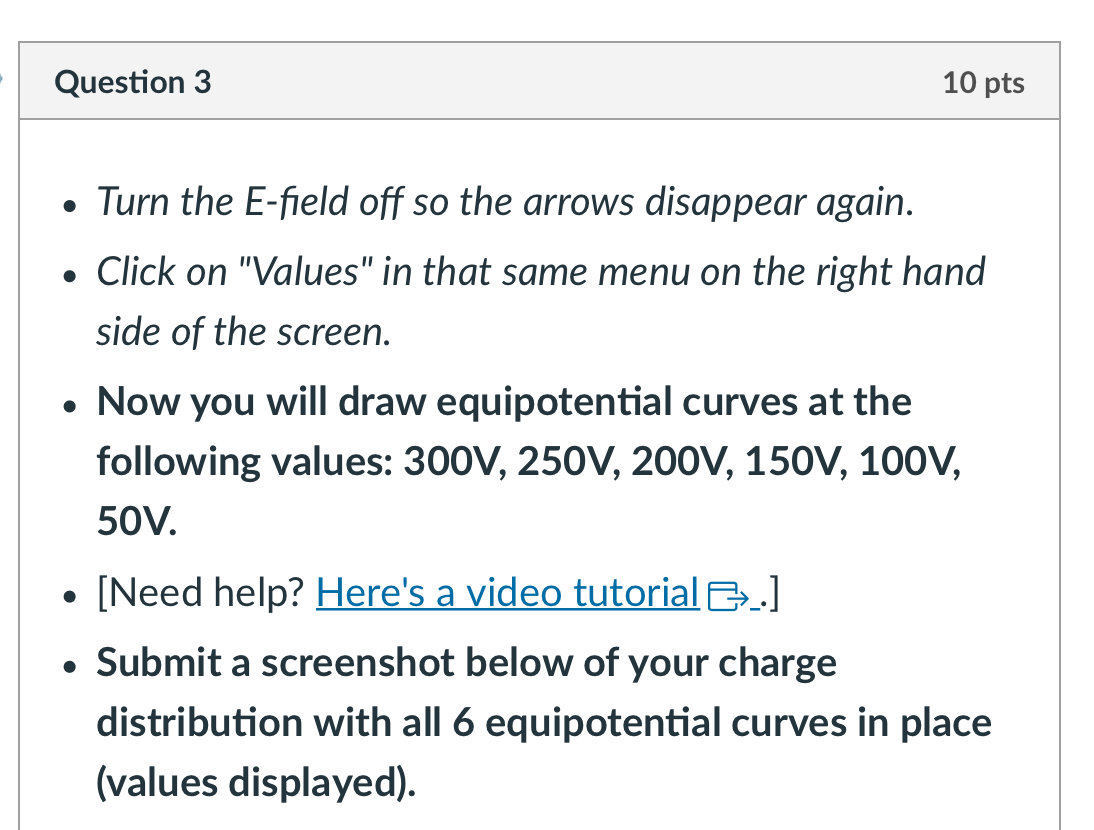
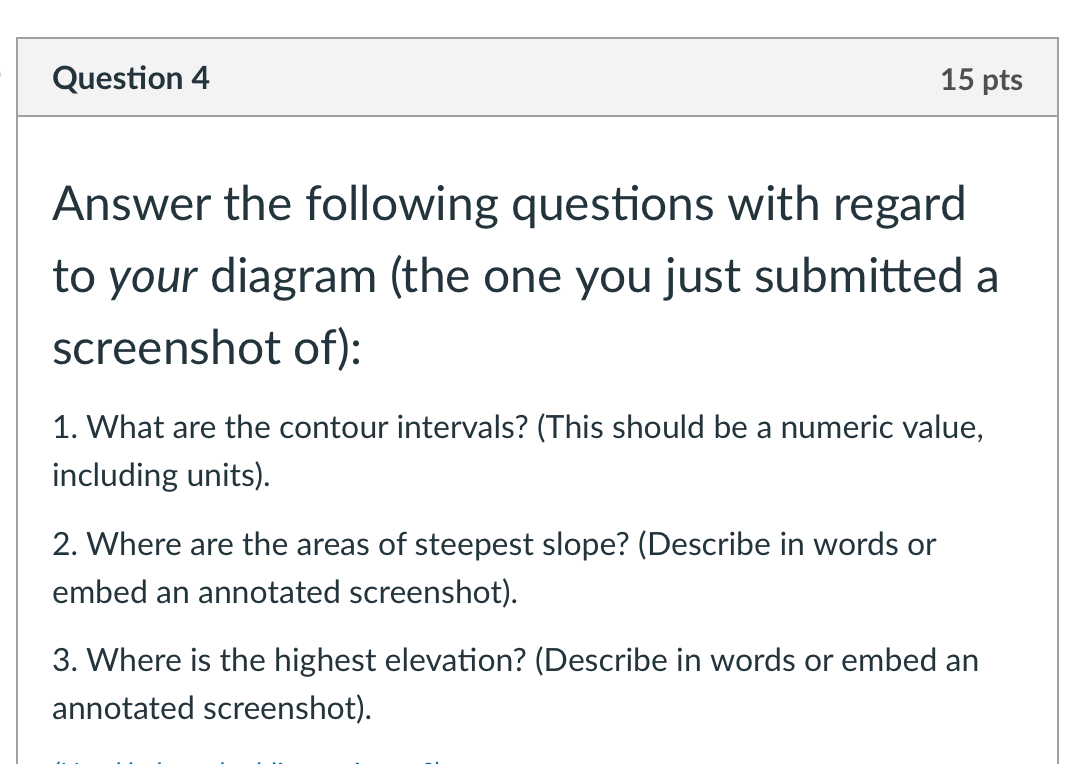
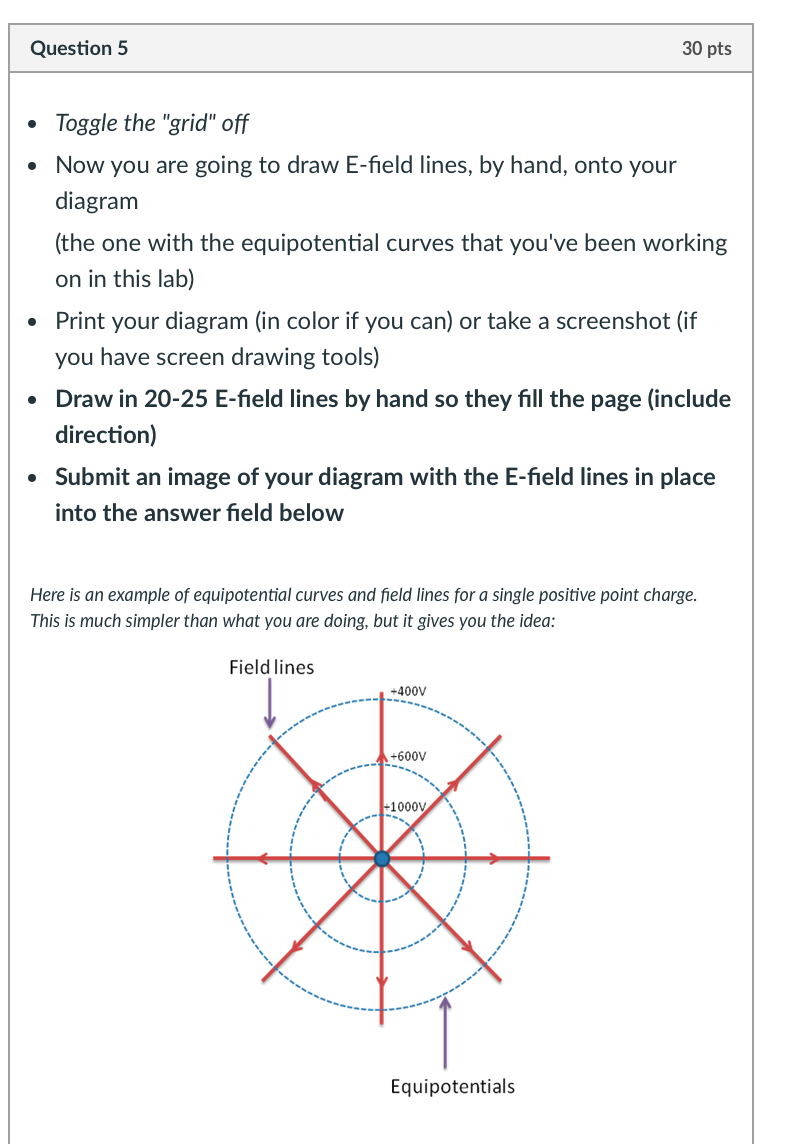
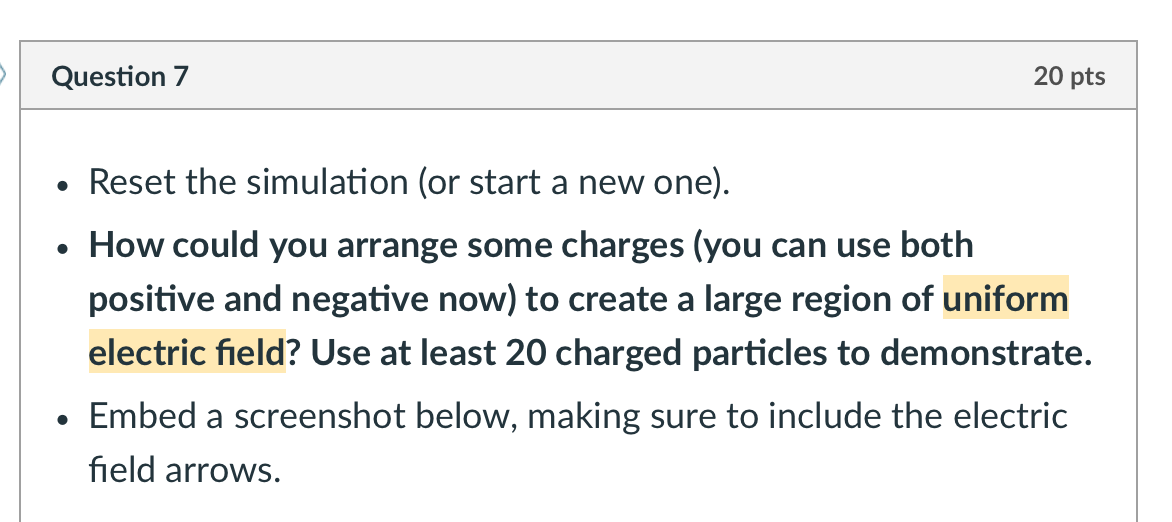
Open the simulation [f>_in a separate tab. The screen should look like this: Charges and Fields \fQuestion 1 10 pts Now (carefully) build a neat line charge with one right angle. Use at least 30 positive point charges to do this. (Note: I turned my Eeld off to better see what I was doing for this step. Your charge distribution does not have to look exactly like mine! But it does need to include one right angle, and it does need to contain at least 30 positive point charges. We're not using the negative charges for this part.) Embed a screenshot of your charge distribution below. NOTE: Copy and paste does not work. Links do not work. You must embed the m1_age using the steps shown here Ea: Any other method will not receive credit. REMlN DER: No coursework is accepted via email for this class. if you email me your screenshots, you will not receive credit for them. +++++++++++++++++++++++++++ Question 2 5 pts Now turn the E-field back on. 1. Where is the electric field most uniform? 2. Where is the electric field least uniform? Submit your answers below. You may either answer this in essay form, or use annotated screenshots to answer the questions. Your responses will be graded on logic, clarity, accuracy, and completeness.' Question 3 10 pts . Turn the E-eld off so the arrows disappear again. . Click on "Values" in that same menu on the right hand side of the screen. . Now you will draw equipotential curves at the following values: 300V, 250V, 200V, 150V, 100V, 50V. . [Need help? Here's a video tutorial [3)_.] . Submit a screenshot below of your charge distribution with all 6 equipotential curves in place (values displayed). Now it's time to learn about topographic maps! In this class, we will be using this concept for the rest of the quarter, so it's important to really engage now. We will even apply this concept to circuits. Do not skip over this! Go to this great resource Ex_(courtesy of REI) to learn how to use a topographic map. Be sure to watch the video, then scroll down to view their diagrams.Question 4 15 pts Answer the following questions with regard to your diagram (the one you just submitted a screenshot of): 1. What are the contour intervals? (This should be a numeric value, including units). 2. Where are the areas of steepest slope? (Describe in words or embed an annotated screenshot). 3. Where is the highest elevation? (Describe in words or embed an annotated screenshot). Now let's talk for a moment and make sure we understand the conceptual relationship between electric field and electric potential... https://youtu.be/czCBCCUUQEQ EQuestion 5 30 pts . Toggle the "grid" off . Now you are going to draw E-field lines, by hand, onto your diagram (the one with the equipotential curves that you've been working on in this lab) . Print your diagram (in color if you can) or take a screenshot (if you have screen drawing tools) . Draw in 20-25 E-field lines by hand so they fill the page (include direction) . Submit an image of your diagram with the E-field lines in place into the answer field below Here is an example of equipotential curves and field lines for a single positive point charge. This is much simpler than what you are doing, but it gives you the idea: Field lines +400V +600V -1000V EquipotentialsQuestion 6 10 pts Consider the diagram you submitted above, and answer the following questions. Use complete sentences and appropriate terminology for full points. Your responses will be graded on logic, clarity, accuracy, and completeness. 1. How does E-field line density change as slope changes? Be specific. 2. Where is the field most uniform? Does your answer match with the answer you gave at the beginning of the lab?Question 7 20 pts . Reset the simulation (or start a new one). . How could you arrange some charges (you can use both positive and negative now) to create a large region of uniform electric field? Use at least 20 charged particles to demonstrate. . Embed a screenshot below, making sure to include the electric field arrows
Step by Step Solution
There are 3 Steps involved in it
Certainly Lets go through each question with the detailed calculations and explanations related to electric fields and equipotential lines Please note that some aspects like drawing or visual observat... View full answer

Get step-by-step solutions from verified subject matter experts
 Study Help