







Question: Java Class>> Sales People firstName: String a lastName: String oppsNumber: String sales: double commission: double type: String SalesPeople) Salespeople(String, String, String) setFirstName(String):void setLastName(String):void SetPPS(String) void
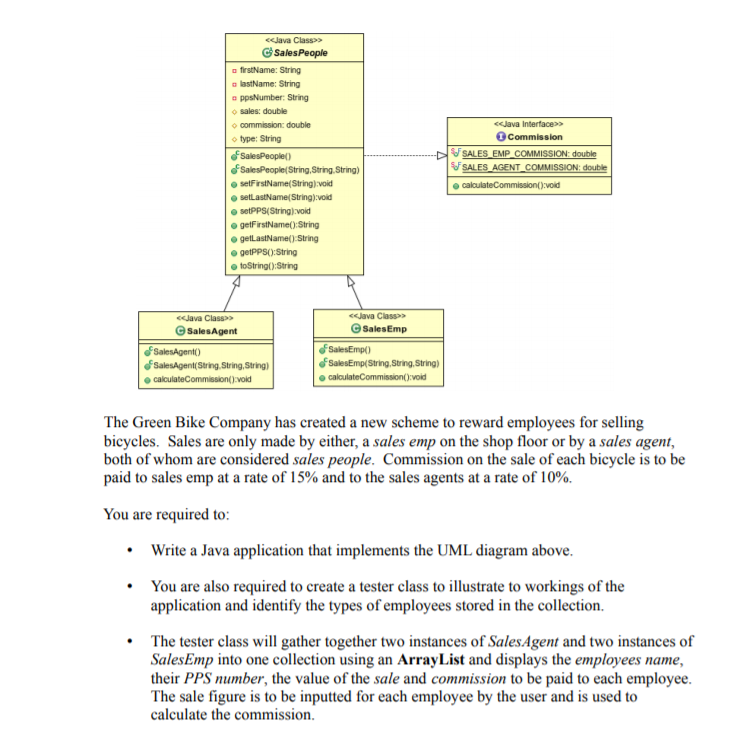
Java Class>> Sales People firstName: String a lastName: String oppsNumber: String sales: double commission: double type: String SalesPeople) Salespeople(String, String, String) setFirstName(String):void setLastName(String):void SetPPS(String) void getFirstName(): String getLastName() String getPPSC):String .toString():String > Commission SALES_EMP_COMMISSION: double SALES AGENT COMMISSION: double calculateCommission():void > Sales Agent SalesAgent) SalesAgent(String, String, String) calculateCommission() vold > SalesEmp Sales Empl) SalesEmp(String, String, String) calculateCommission():void The Green Bike Company has created a new scheme to reward employees for selling bicycles. Sales are only made by either, a sales emp on the shop floor or by a sales agent, both of whom are considered sales people. Commission on the sale of each bicycle is to be paid to sales emp at a rate of 15% and to the sales agents at a rate of 10%. You are required to: Write a Java application that implements the UML diagram above. You are also required to create a tester class to illustrate to workings of the application and identify the types of employees stored in the collection. The tester class will gather together two instances of Sales Agent and two instances of Sales Emp into one collection using an ArrayList and displays the employees name, their PPS number, the value of the sale and commission to be paid to each employee. The sale figure is to be inputted for each employee by the user and is used to calculate the commission
Step by Step Solution
There are 3 Steps involved in it

Get step-by-step solutions from verified subject matter experts
 Study Help