







Question: Journal entry worksheet Note: Enter debits before credits. Required information [The following information applies to the questions displayed below.] The Shirt Shop had the following
![following information applies to the questions displayed below.] The Shirt Shop had](https://dsd5zvtm8ll6.cloudfront.net/si.experts.images/questions/2024/09/66fa2ddfce141_77566fa2ddf527eb.jpg)
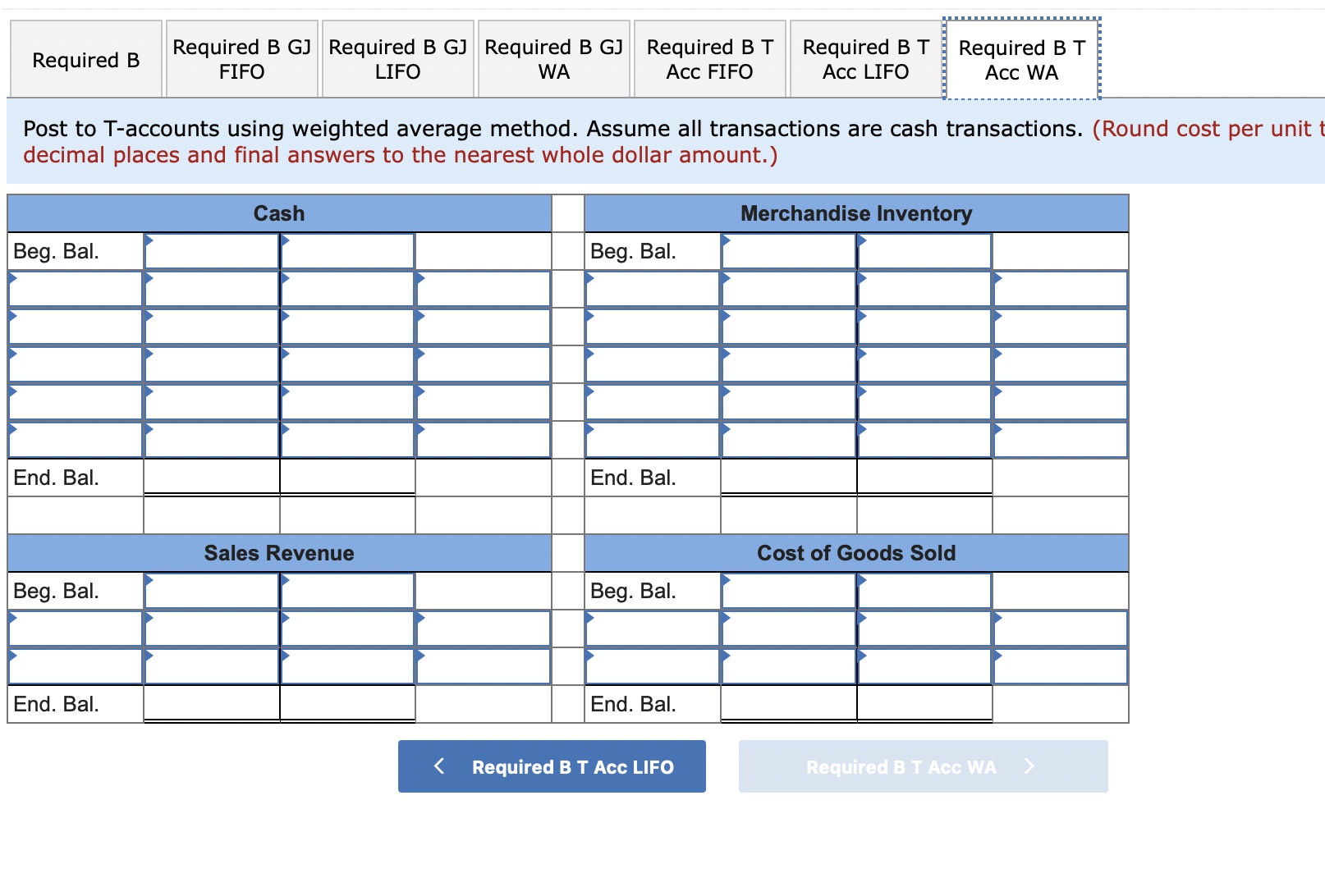
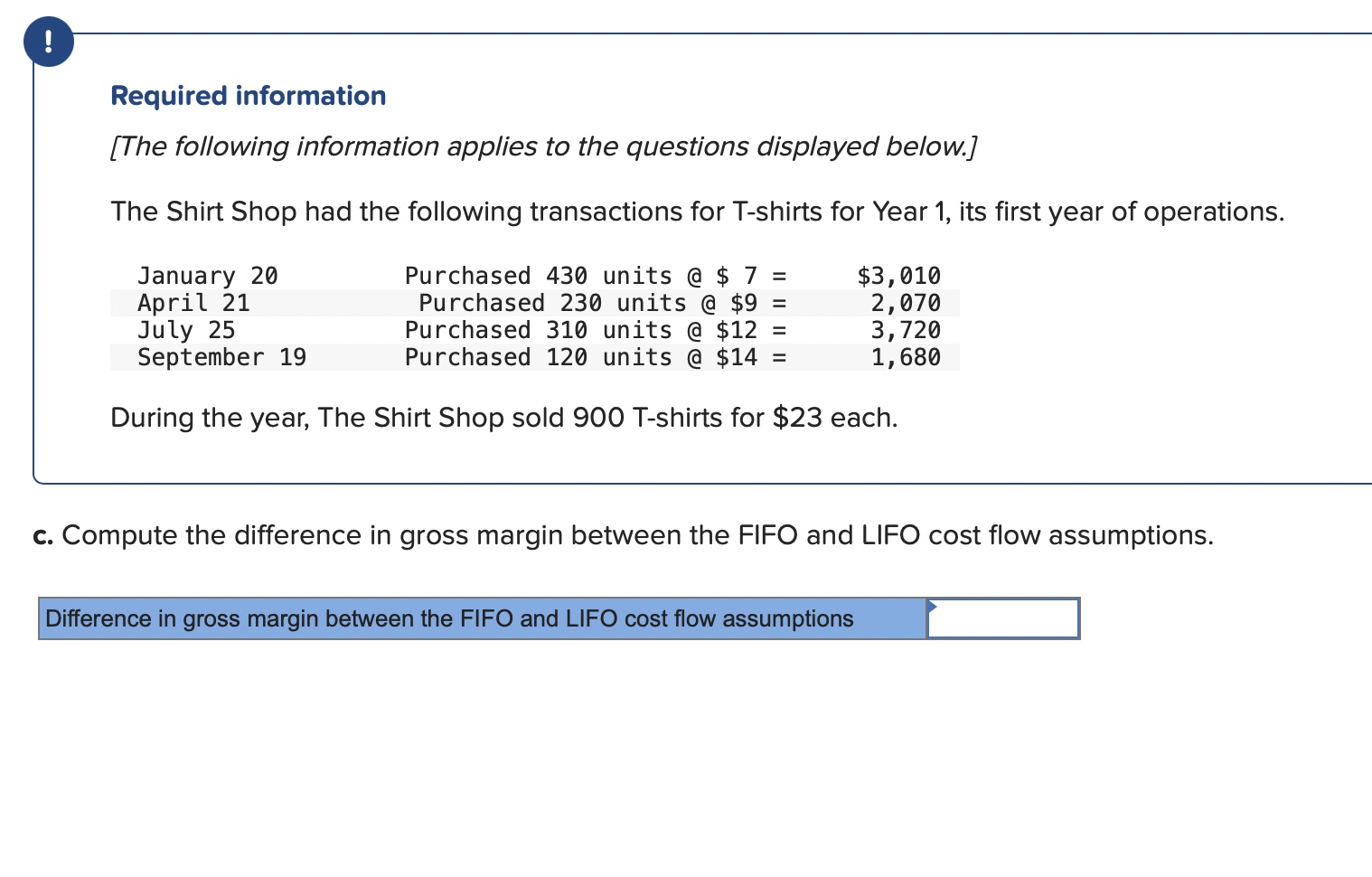
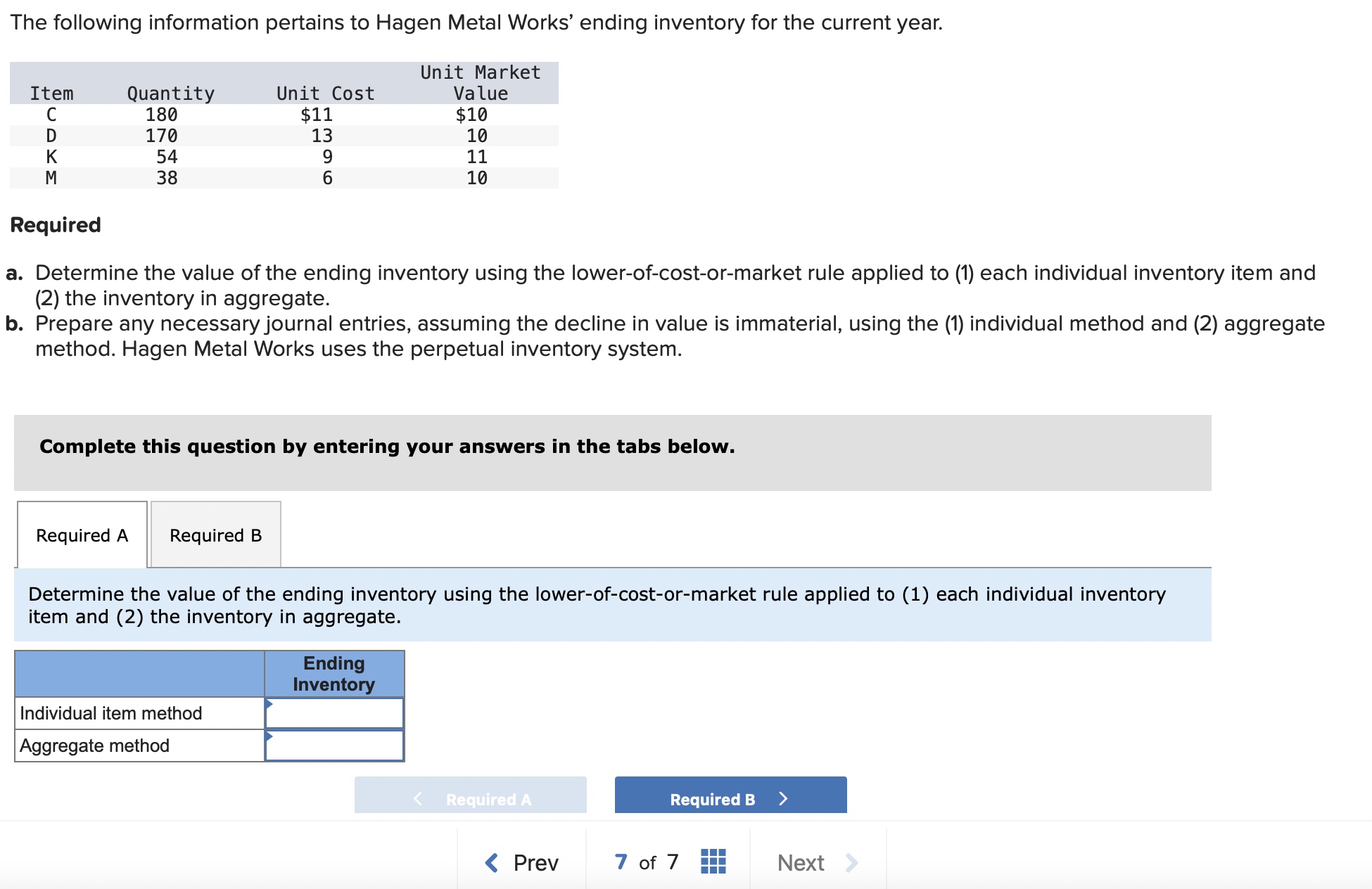
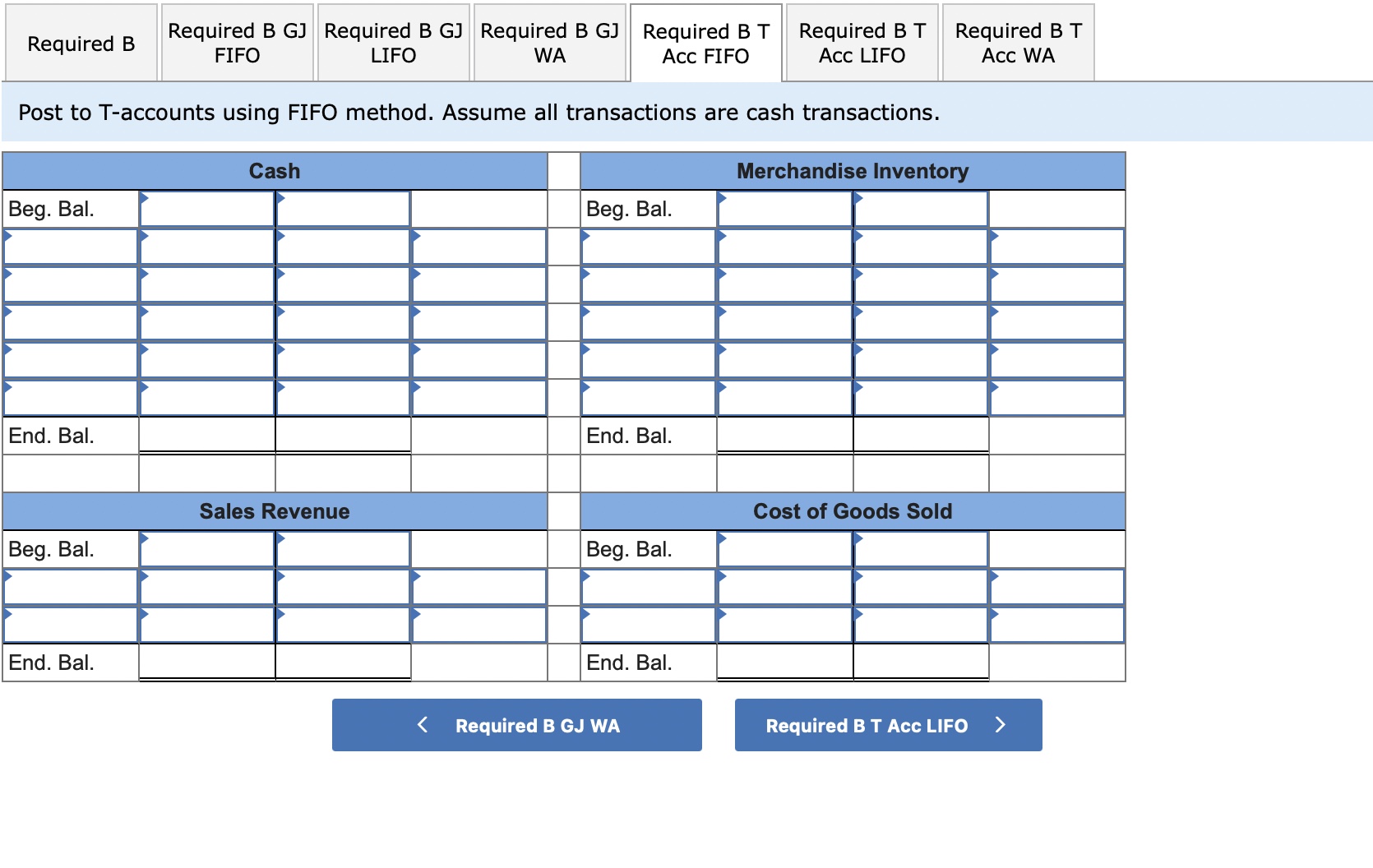
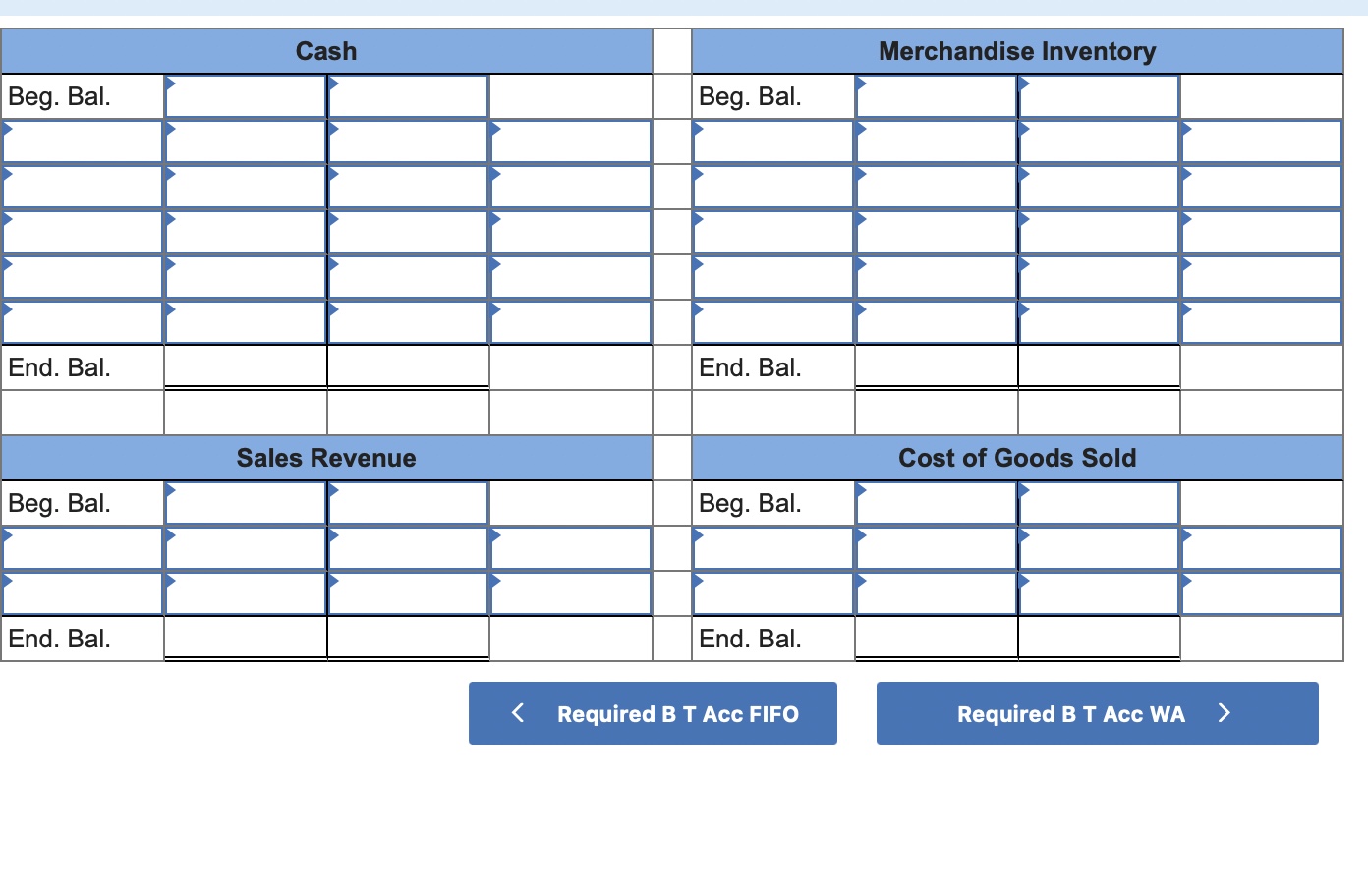
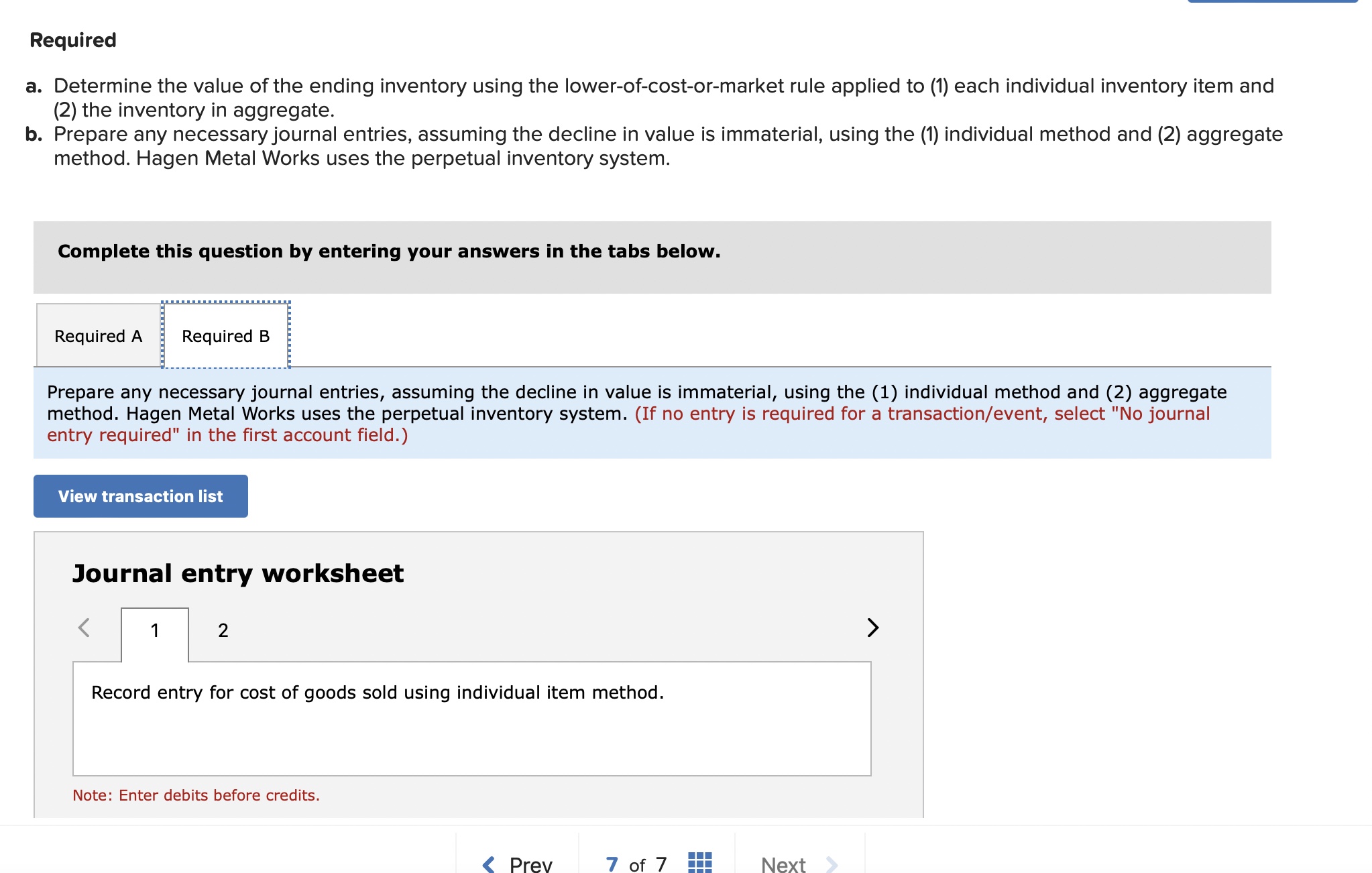
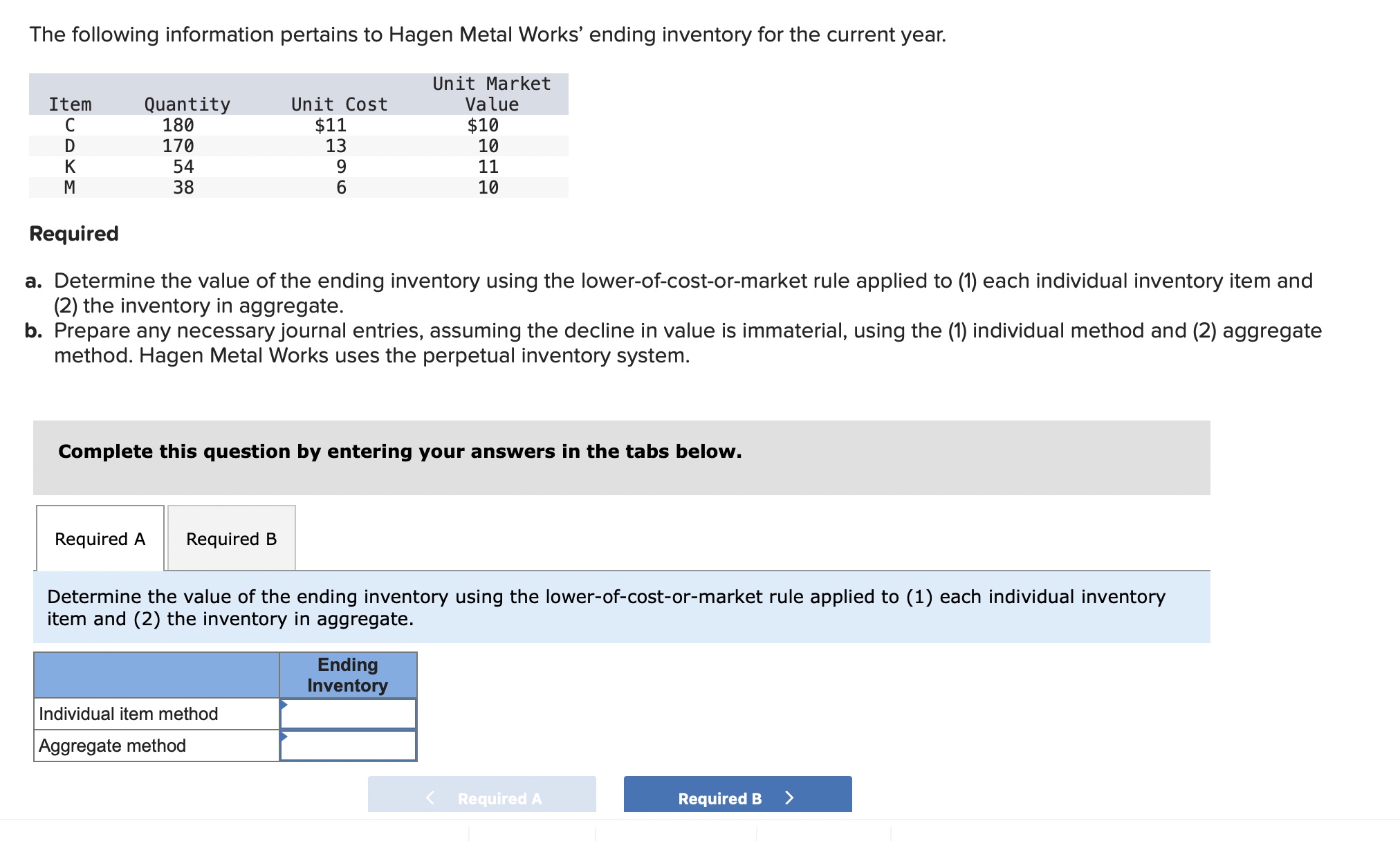
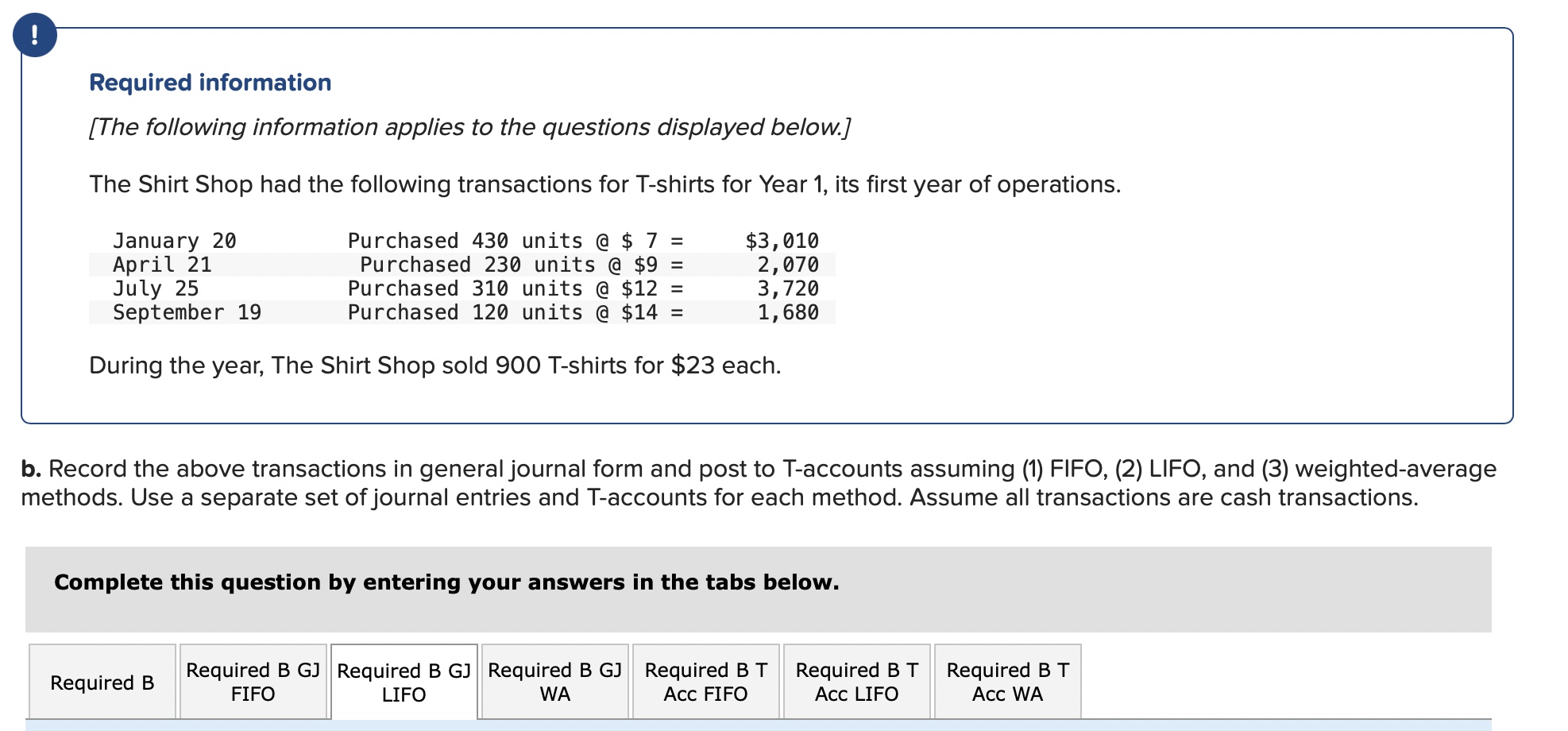
Journal entry worksheet Note: Enter debits before credits. Required information [The following information applies to the questions displayed below.] The Shirt Shop had the following transactions for T-shirts for Year 1, its first year of operations. During the year, The Shirt Shop sold 900 T-shirts for $23 each. Compute the difference in gross margin between the FIFO and LIFO cost flow assumptions. Post to T-accounts using weighted average method. Assume all transactions are cash transactions. (Ro decimal places and final answers to the nearest whole dollar amount.) Determine the value of the ending inventory using the lower-of-cost-or-market rule applied to (1) each individual inventory item and (2) the inventory in aggregate. Prepare any necessary journal entries, assuming the decline in value is immaterial, using the (1) individual method and (2) aggregate method. Hagen Metal Works uses the perpetual inventory system. Complete this question by entering your answers in the tabs below. Determine the value of the ending inventory using the lower-of-cost-or-market rule applied to (1) each individual inventory item and (2) the inventory in aggregate. The following information pertains to Hagen Metal Works' ending inventory for the current year. Required a. Determine the value of the ending inventory using the lower-of-cost-or-market rule applied to (1) each individual inventory item and (2) the inventory in aggregate. b. Prepare any necessary journal entries, assuming the decline in value is immaterial, using the (1) individual method and (2) aggregate method. Hagen Metal Works uses the perpetual inventory system. Complete this question by entering your answers in the tabs below. Determine the value of the ending inventory using the lower-of-cost-or-market rule applied to (1) each individual inventory item and (2) the inventory in aggregate. Record the above transactions in general journal form using weighted average method. Assume all transactions are cash trar no entry is required for a transaction/event, select "No journal entry required" in the first account field. Round cost per unit places and final answers to the nearest whole dollar amount.) Journal entry worksheet Note: Enter debits before credits. a. Determine the value of the ending inventory using the lower-of-cost-or-market rule applied to (1) each individual inventory item and (2) the inventory in aggregate. b. Prepare any necessary journal entries, assuming the decline in value is immaterial, using the (1) individual method and (2) aggregate method. Hagen Metal Works uses the perpetual inventory system. Complete this question by entering your answers in the tabs below. Prepare any necessary journal entries, assuming the decline in value is immaterial, using the (1) individual method and (2) aggregate method. Hagen Metal Works uses the perpetual inventory system. (If no entry is required for a transaction/event, select "No journal entry required" in the first account field.) Journal entry worksheet Record entry for cost of goods sold using individual item method. Note: Enter debits before credits. Required information [The following information applies to the questions displayed below.] The Shirt Shop had the following transactions for T-shirts for Year 1, its first year of operations. During the year, The Shirt Shop sold 900 T-shirts for $23 each. b. Record the above transactions in general journal form and post to T-accounts assuming (1) FIFO, (2) LIFO, and (3) weighted-average methods. Use a separate set of journal entries and T-accounts for each method. Assume all transactions are cash transactions. Complete this question by entering your answers in the tabs below. Post to T-accounts using FIFO method. Assume all transactions are cash transactions. View transaction list View journal entry worksheet \begin{tabular}{|c|c|c|c|c|c|} \hline & No & Date & General Journal & Debit & Credit \\ \hline \multirow[t]{2}{*}{%} & 1 & Year 1 & Cash & 20,700 & \\ \hline & & & Sales revenue & & 20,700 \\ \hline & 2 & Year 1 & Cost of goods sold & 5,080 & \\ \hline & & & Merchandise inventory & & 5,080 \\ \hline \end{tabular} Required B Required B GJ LIFO \begin{tabular}{|l|l|l|l|l|l|l|} \hline \multicolumn{3}{|c|}{ Cash } & & \multicolumn{3}{c|}{ Merchandise Inventory } \\ \hline Beg. Bal. & & & & & & \\ \hline End. Bal. & & & & & & \\ \hline \end{tabular} Required B T Acc FIFO Required B T Acc WA >
Step by Step Solution
There are 3 Steps involved in it

Get step-by-step solutions from verified subject matter experts
 Study Help