Question: just 5&6 please placed orders for materials and components to suppliers to cover requirements on a weekly basis and the company operates in a 5-day

just 5&6 please just 5&6 please placed orders for materials and
just 5&6 please placed orders for materials and
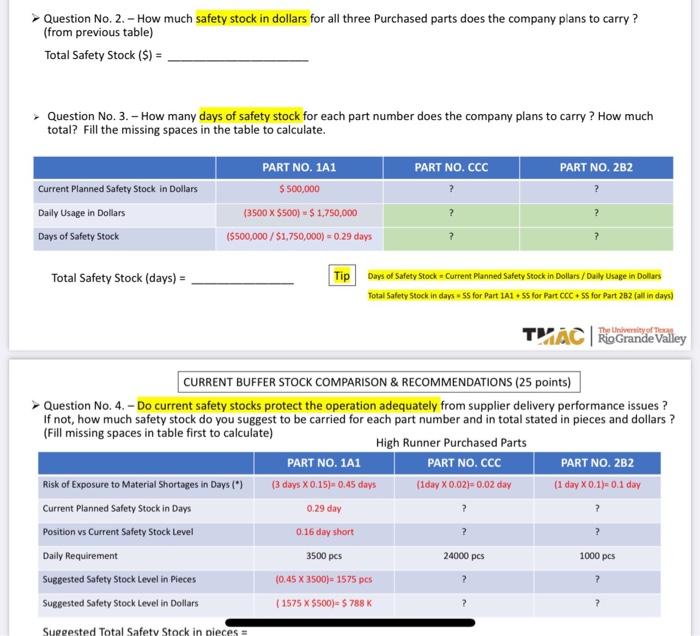
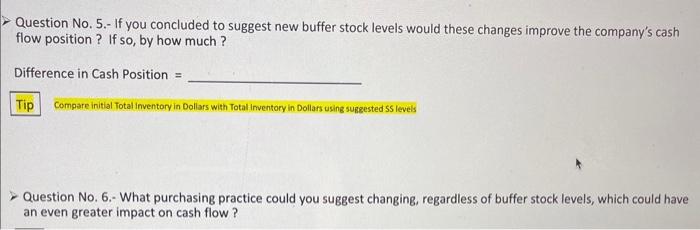
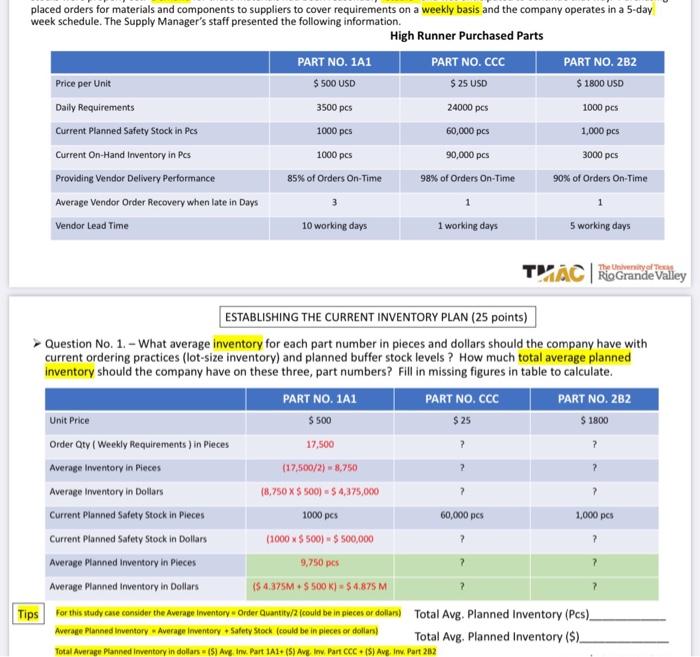
placed orders for materials and components to suppliers to cover requirements on a weekly basis and the company operates in a 5-day week schedule. The Supply Manager's staff presented the following information. High Runner Purchased Parts Question No. 1. - What average inventory for each part number in pieces and dollars should the company have with current ordering practices (lot-size inventory) and planned buffer stock levels ? How much total average planned inventory should the company have on these three, part numbers? Fill in missing figures in table to calculate. For this study case consider the Average imentory = Order Quantity/2 (could be in pieces or dollan) Total Avg. Planned Inventory (PCS), Averane Planned inventory = Average inventory + satety stock (could be in pieces or dollan) Total Avg. Planned Inventory (\$). Total Average Planned inventory in dollans = (5) Avg. inv. Part 1A1+ (5) Avg inv. Part CCC+(5) Avg inv. Part 2B2 Question No. 2. - How much safety stock in dollars for all three Purchased parts does the company plans to carry? (from previous table) Total Safety Stock ($)= Question No. 3. - How many days of safety stock for each part number does the company plans to carry ? How much total? Fill the missing spaces in the table to calculate. Total Safety Stock (days) = Days of Safety Stock = Current Planned Safety Stock in Dollars / Daly Usage in Dollars Total 5 afety Stock in days =55 for Part 1A1 + 55 for Part CcC +55 for Part 282 fall in day CURRENT BUFFER STOCK COMPARISON \& RECOMMENDATIONS (25 points) Question No. 4. - Do current safety stocks protect the operation adequately from supplier delivery performance issues ? If not, how much safety stock do you suggest to be carried for each part number and in total stated in pieces and dollars (Fill missing spaces in table first to calculate) Question No. 5.- If you concluded to suggest new buffer stock levels would these changes improve the company's cash flow position ? If so, by how much ? Difference in Cash Position = Compare initial Total inventory in Dollars with Total inventory in Dollars using susgested 55 levels Question No. 6.- What purchasing practice could you suggest changing, regardless of buffer stock levels, which could have an even greater impact on cash flow ? placed orders for materials and components to suppliers to cover requirements on a weekly basis and the company operates in a 5-day week schedule. The Supply Manager's staff presented the following information. High Runner Purchased Parts Question No. 1. - What average inventory for each part number in pieces and dollars should the company have with current ordering practices (lot-size inventory) and planned buffer stock levels ? How much total average planned inventory should the company have on these three, part numbers? Fill in missing figures in table to calculate. For this study case consider the Average imentory = Order Quantity/2 (could be in pieces or dollan) Total Avg. Planned Inventory (PCS), Averane Planned inventory = Average inventory + satety stock (could be in pieces or dollan) Total Avg. Planned Inventory (\$). Total Average Planned inventory in dollans = (5) Avg. inv. Part 1A1+ (5) Avg inv. Part CCC+(5) Avg inv. Part 2B2 Question No. 2. - How much safety stock in dollars for all three Purchased parts does the company plans to carry? (from previous table) Total Safety Stock ($)= Question No. 3. - How many days of safety stock for each part number does the company plans to carry ? How much total? Fill the missing spaces in the table to calculate. Total Safety Stock (days) = Days of Safety Stock = Current Planned Safety Stock in Dollars / Daly Usage in Dollars Total 5 afety Stock in days =55 for Part 1A1 + 55 for Part CcC +55 for Part 282 fall in day CURRENT BUFFER STOCK COMPARISON \& RECOMMENDATIONS (25 points) Question No. 4. - Do current safety stocks protect the operation adequately from supplier delivery performance issues ? If not, how much safety stock do you suggest to be carried for each part number and in total stated in pieces and dollars (Fill missing spaces in table first to calculate) Question No. 5.- If you concluded to suggest new buffer stock levels would these changes improve the company's cash flow position ? If so, by how much ? Difference in Cash Position = Compare initial Total inventory in Dollars with Total inventory in Dollars using susgested 55 levels Question No. 6.- What purchasing practice could you suggest changing, regardless of buffer stock levels, which could have an even greater impact on cash flow

Step by Step Solution

There are 3 Steps involved in it

1 Expert Approved Answer
Step: 1 Unlock blur-text-image

Question Has Been Solved by an Expert!

Get step-by-step solutions from verified subject matter experts

Step: 2 Unlock
Step: 3 Unlock

Students Have Also Explored These Related General Management Questions!