







Question: Kagle design engineers sce in the process of developing a new green product, one that wi signficantly reduce impact en the emrironment and yet stal
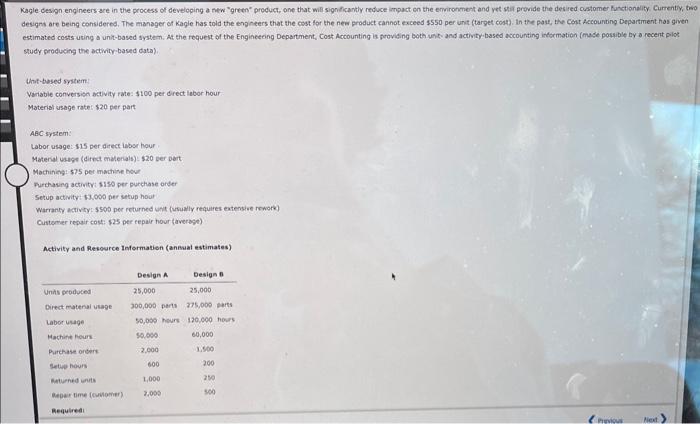
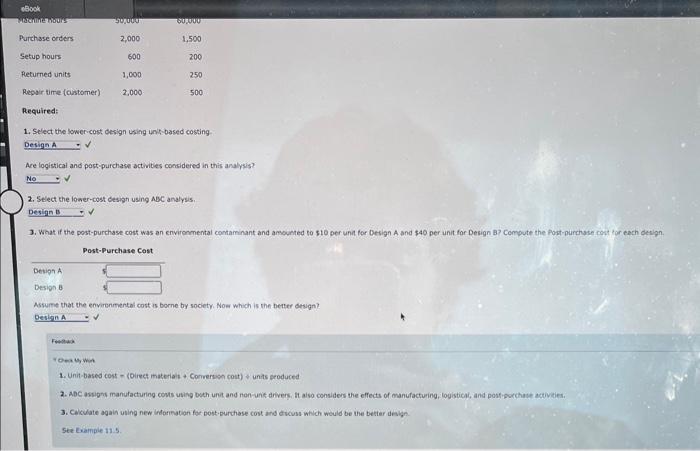
Kagle design engineers sce in the process of developing a new "green" product, one that wi signficantly reduce impact en the emrironment and yet stal provide the desired customer Functionality Currenty, two designs are being considered. The manager of Kagle has told the engheers that the cost for the new product cannot exceed as50 per unit (target cost). In the past, the Cont Aacounting Depsartment has given estimated costs uting a unit-based aystem. At the request of the Engineeeng Department, Cost Accounting is providing both yask and activty-based accounting information (mase porsible by o recent pilot study groducing the actikitribased data). that-besed system: veriable conversise stivity rate: $100 per drect lebor hour Materisi usage rate: $20 per part ABC system: Labor usage: 115 per drect Wbor hour Materal usage (direct materials): $20 ser Dert Machining: 575 per machece bout Furdasing activitivi 1150 per purchase order Setup activity: 13,000 per stitup hour Warranty activty: 3500 per returned unt (wsually requires eatensive rowork) Customer repair cost: 525 per fepair hour (average) Activity and Resource Infermation (anksal estimates) 1. Select the lowericost design using unit based costing Are logistical and post.purchase activites coesidered in this analysis? 2. Select the lower-cost desigh using ABC analysis. 3. What if the post-purchase cost was an environmental contaminant and amounted to 510 per uni for Design A and $40 per unit for Design B? Compute the fost-purchuse Assume that the envirenmental cost is borne by society Now which is the berter dewgn? * owex wis 1. Unit-based cost m (olrect inaterials + Converson cost) 4 units seoduced 2. AbC assigns manufacturing costs ubivg both unit and non-unit drivers. It aiso considers the effects of manufacturing, logisticai, and post-porchate activites. 3. Caculate again using new infornation for post-purchase cost and dwcusu which would be the betier design. ste Example 11.5. Kagle design engineers sce in the process of developing a new "green" product, one that wi signficantly reduce impact en the emrironment and yet stal provide the desired customer Functionality Currenty, two designs are being considered. The manager of Kagle has told the engheers that the cost for the new product cannot exceed as50 per unit (target cost). In the past, the Cont Aacounting Depsartment has given estimated costs uting a unit-based aystem. At the request of the Engineeeng Department, Cost Accounting is providing both yask and activty-based accounting information (mase porsible by o recent pilot study groducing the actikitribased data). that-besed system: veriable conversise stivity rate: $100 per drect lebor hour Materisi usage rate: $20 per part ABC system: Labor usage: 115 per drect Wbor hour Materal usage (direct materials): $20 ser Dert Machining: 575 per machece bout Furdasing activitivi 1150 per purchase order Setup activity: 13,000 per stitup hour Warranty activty: 3500 per returned unt (wsually requires eatensive rowork) Customer repair cost: 525 per fepair hour (average) Activity and Resource Infermation (anksal estimates) 1. Select the lowericost design using unit based costing Are logistical and post.purchase activites coesidered in this analysis? 2. Select the lower-cost desigh using ABC analysis. 3. What if the post-purchase cost was an environmental contaminant and amounted to 510 per uni for Design A and $40 per unit for Design B? Compute the fost-purchuse Assume that the envirenmental cost is borne by society Now which is the berter dewgn? * owex wis 1. Unit-based cost m (olrect inaterials + Converson cost) 4 units seoduced 2. AbC assigns manufacturing costs ubivg both unit and non-unit drivers. It aiso considers the effects of manufacturing, logisticai, and post-porchate activites. 3. Caculate again using new infornation for post-purchase cost and dwcusu which would be the betier design. ste Example 11.5
Step by Step Solution
There are 3 Steps involved in it

Get step-by-step solutions from verified subject matter experts
 Study Help