Question: L Question 20 (o) RS Which iIs a good example of a scene that didn't advance the plot? A. The protagonist and her partner talk
L Question 20 (o) RS Which iIs a good example ofL Question 20 (o) RS Which iIs a good example ofL Question 20 (o) RS Which iIs a good example ofL Question 20 (o) RS Which iIs a good example ofL Question 20 (o) RS Which iIs a good example ofL Question 20 (o) RS Which iIs a good example ofL Question 20 (o) RS Which iIs a good example ofL Question 20 (o) RS Which iIs a good example ofL Question 20 (o) RS Which iIs a good example ofL Question 20 (o) RS Which iIs a good example ofL Question 20 (o) RS Which iIs a good example ofL Question 20 (o) RS Which iIs a good example ofL Question 20 (o) RS Which iIs a good example of
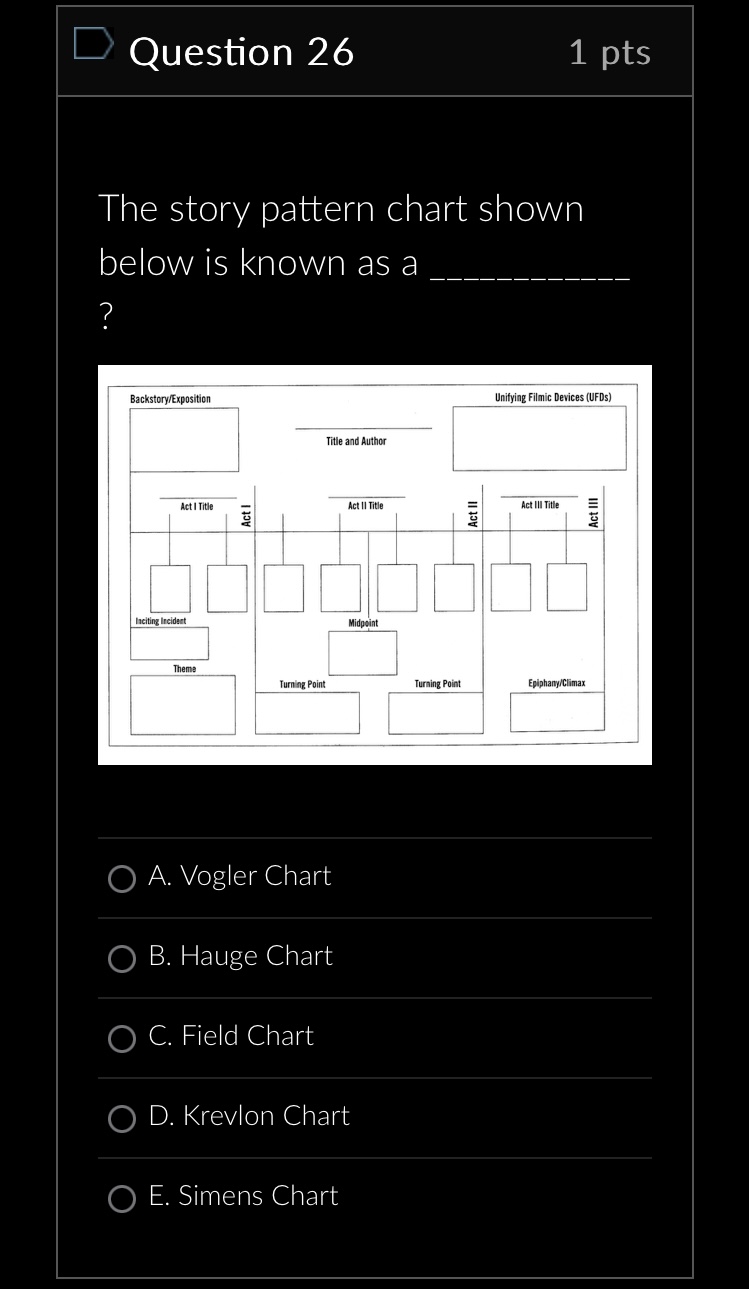
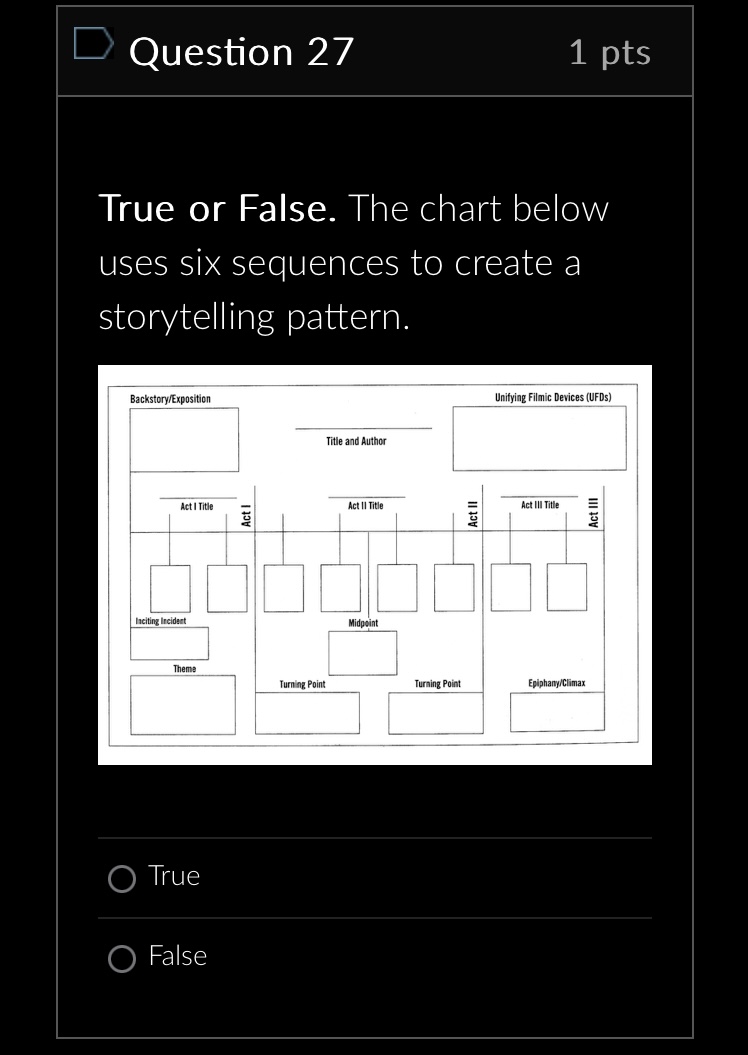
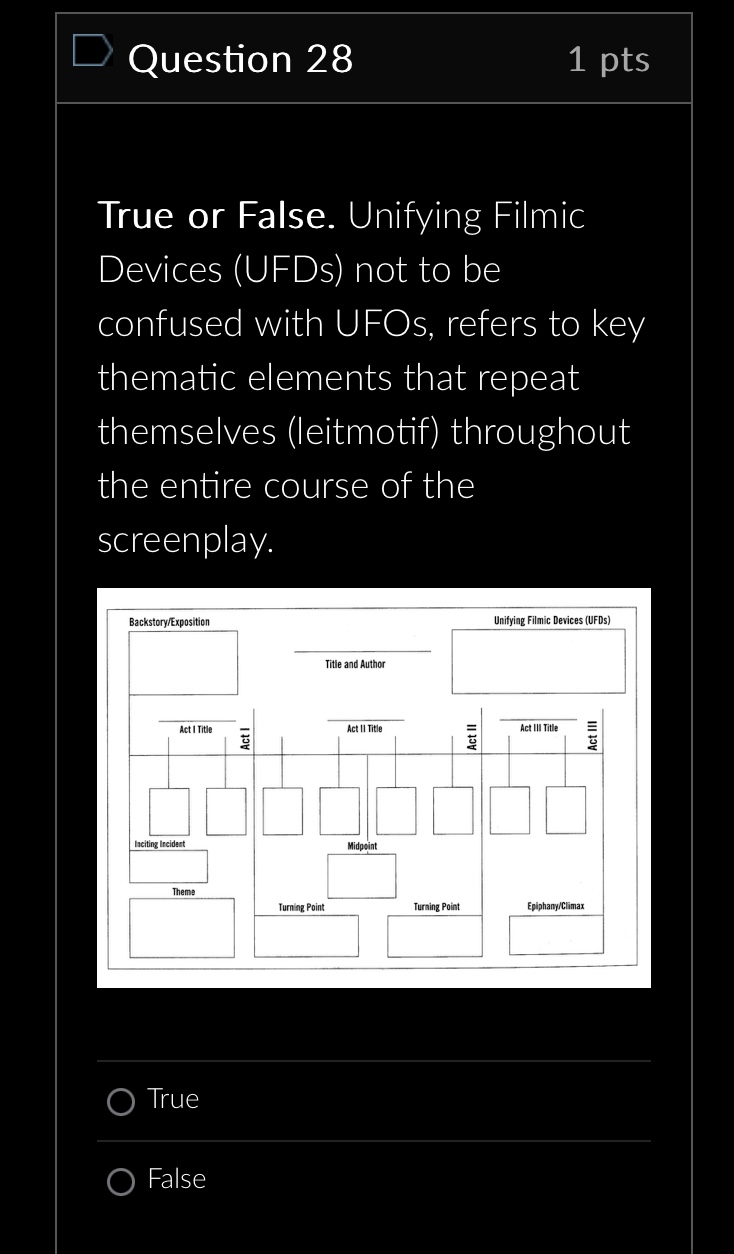
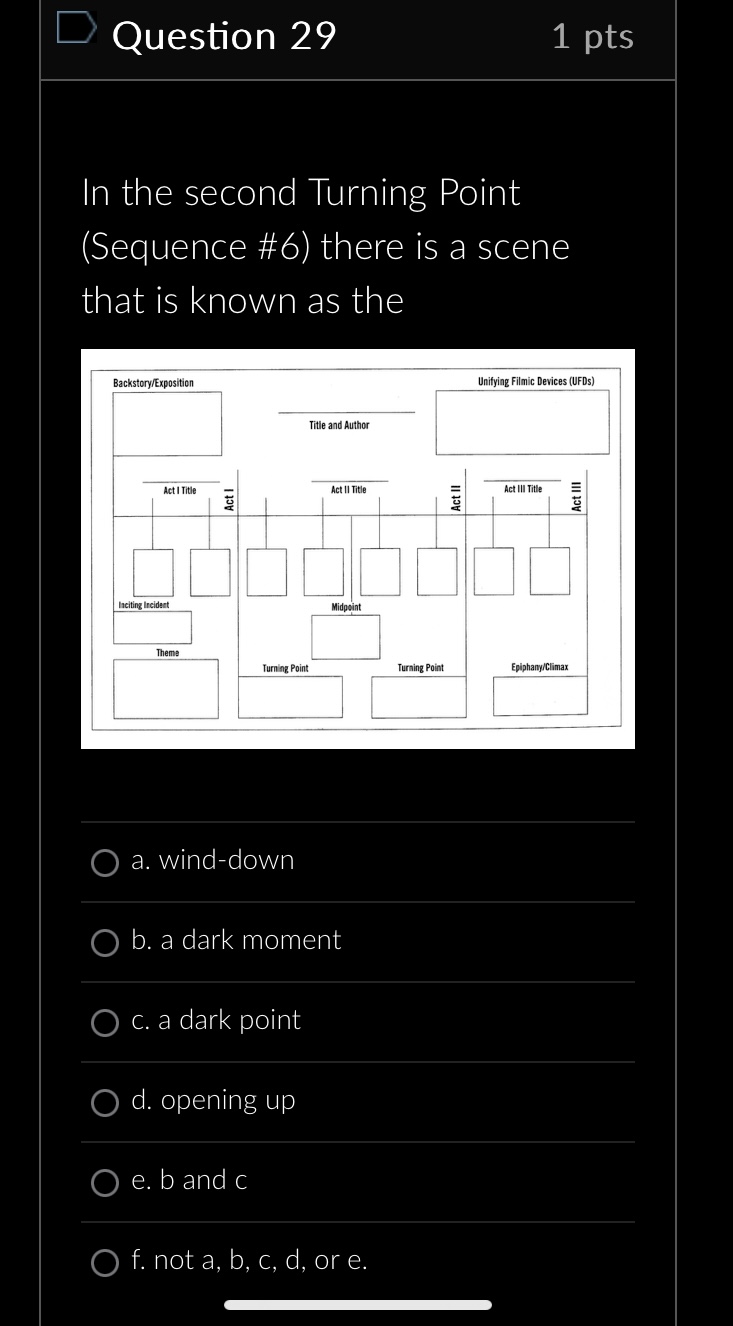
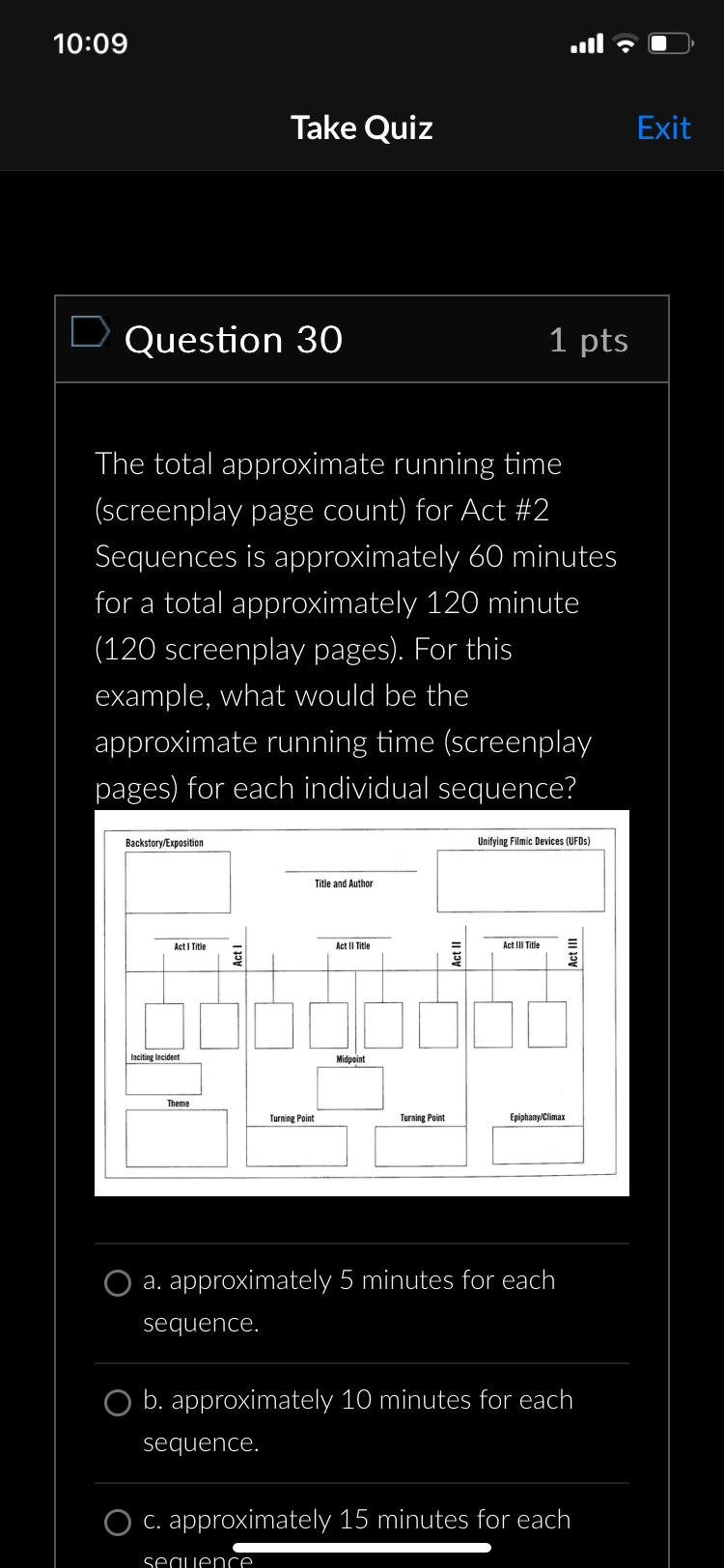
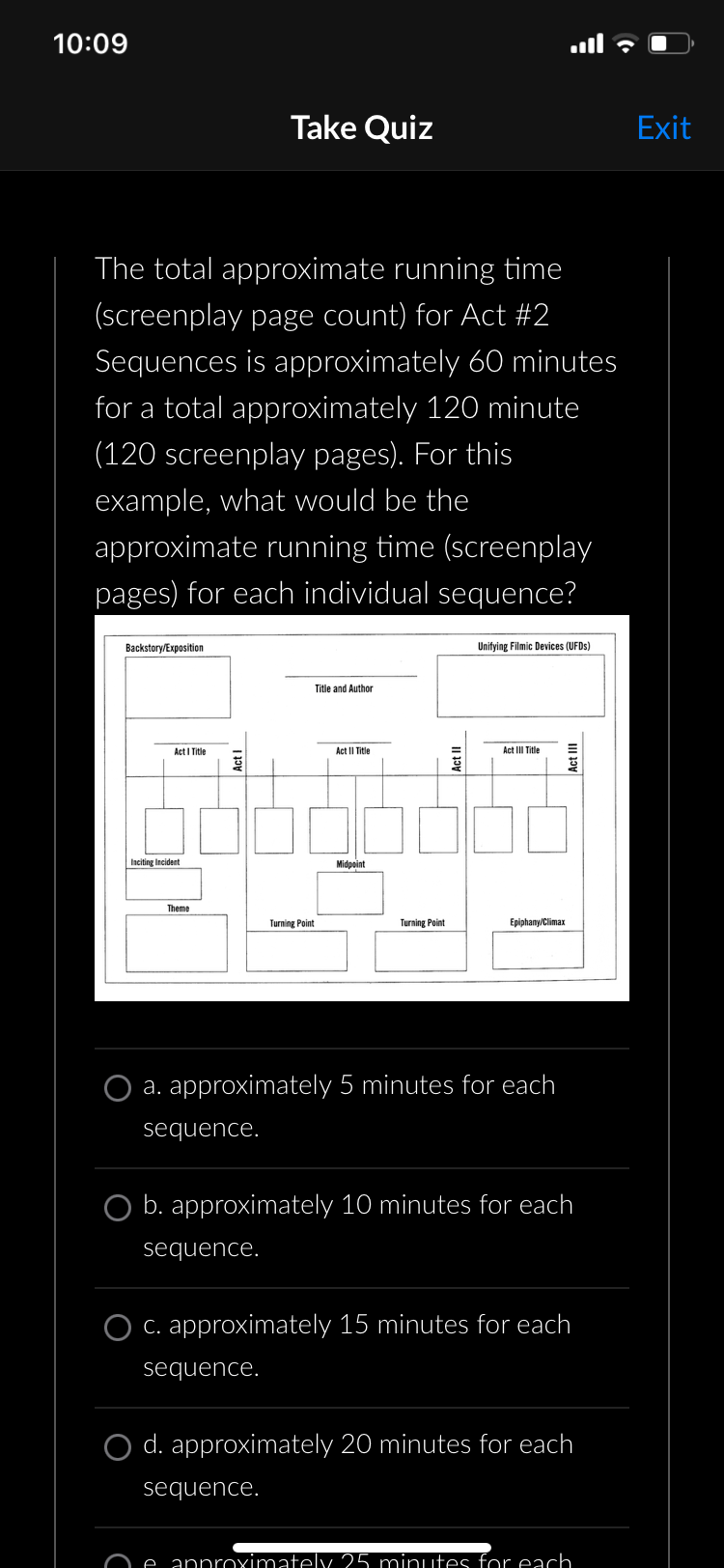
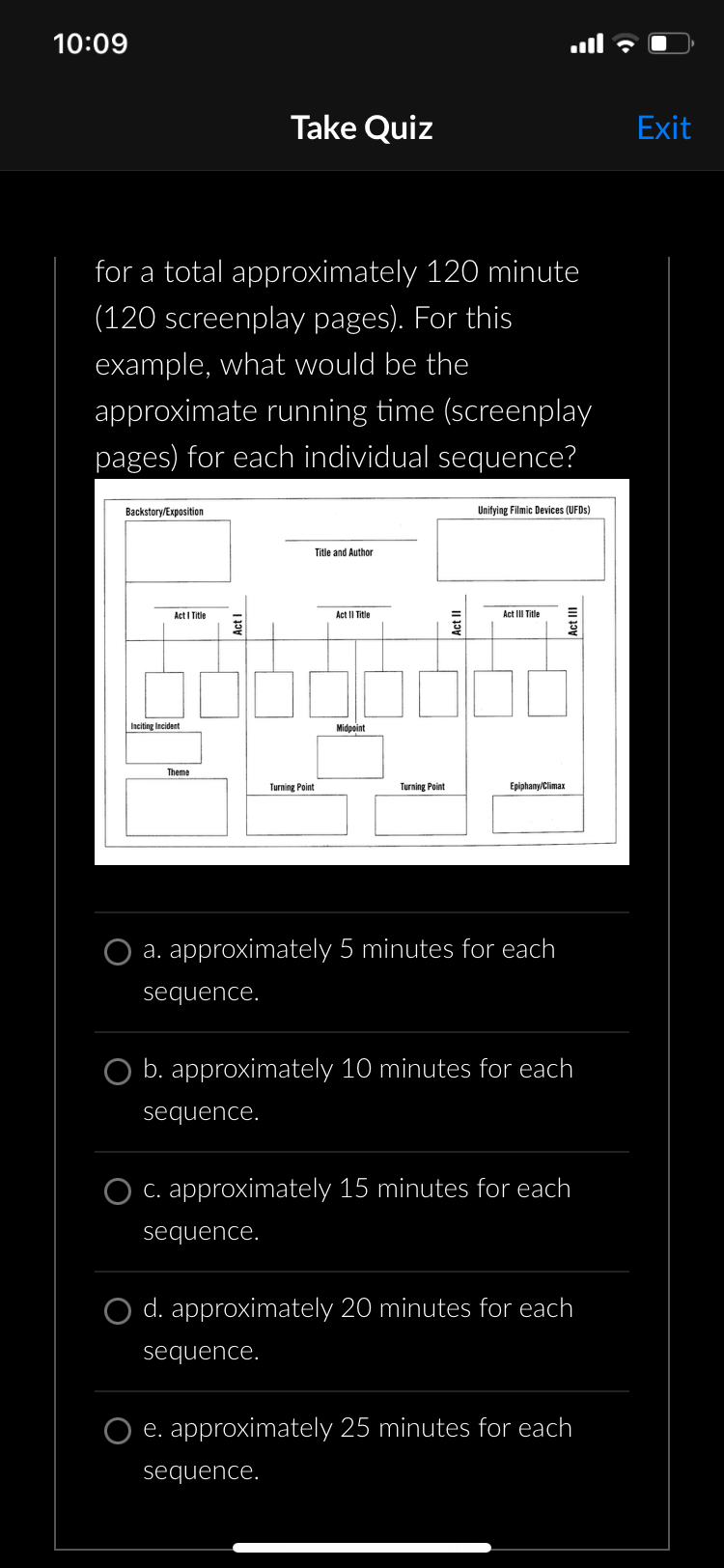
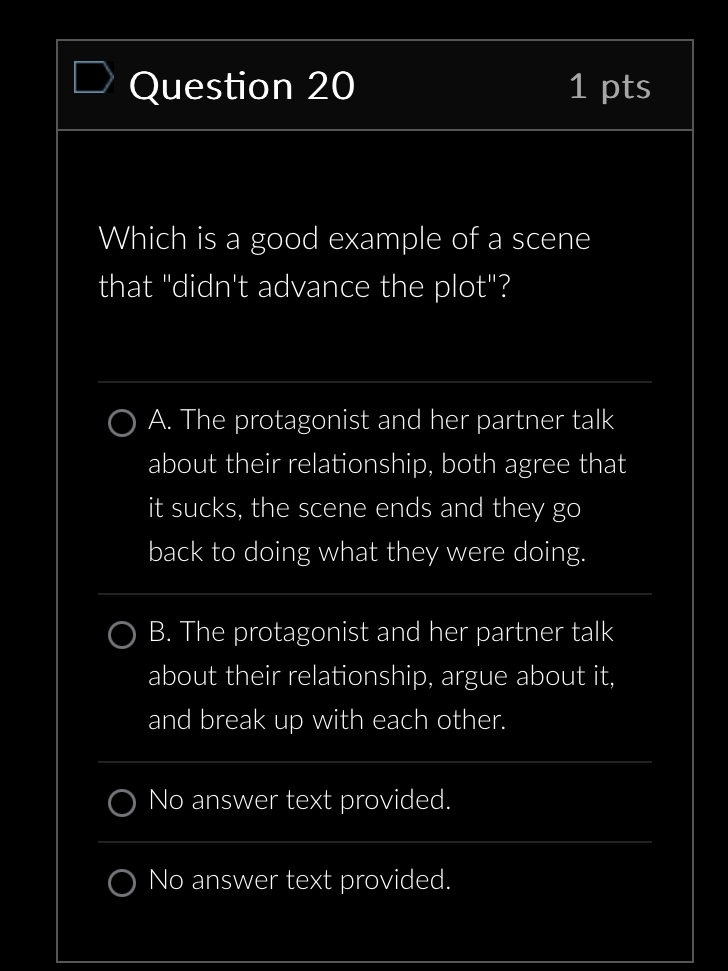
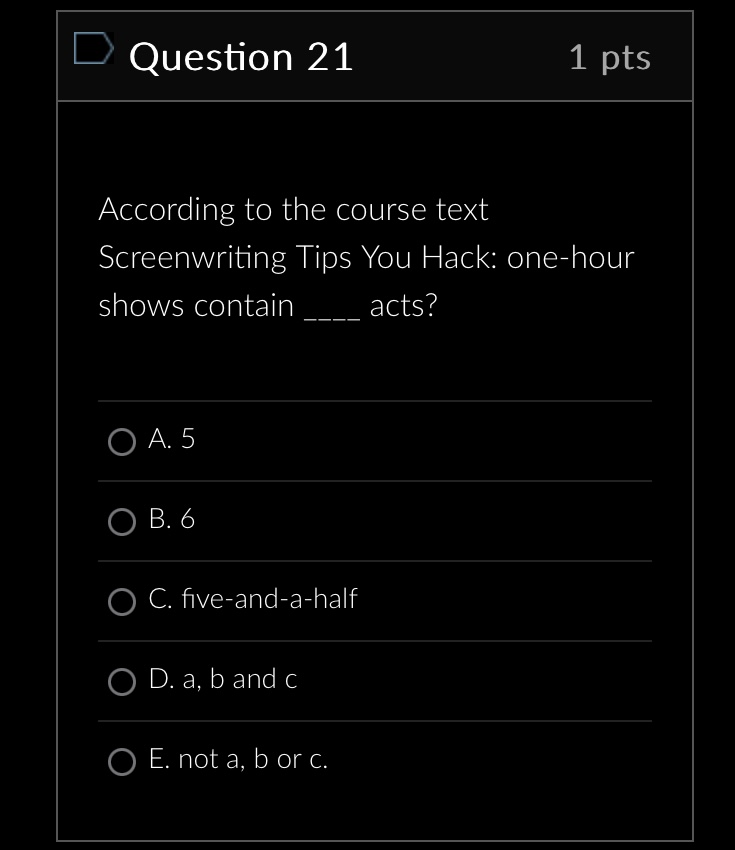
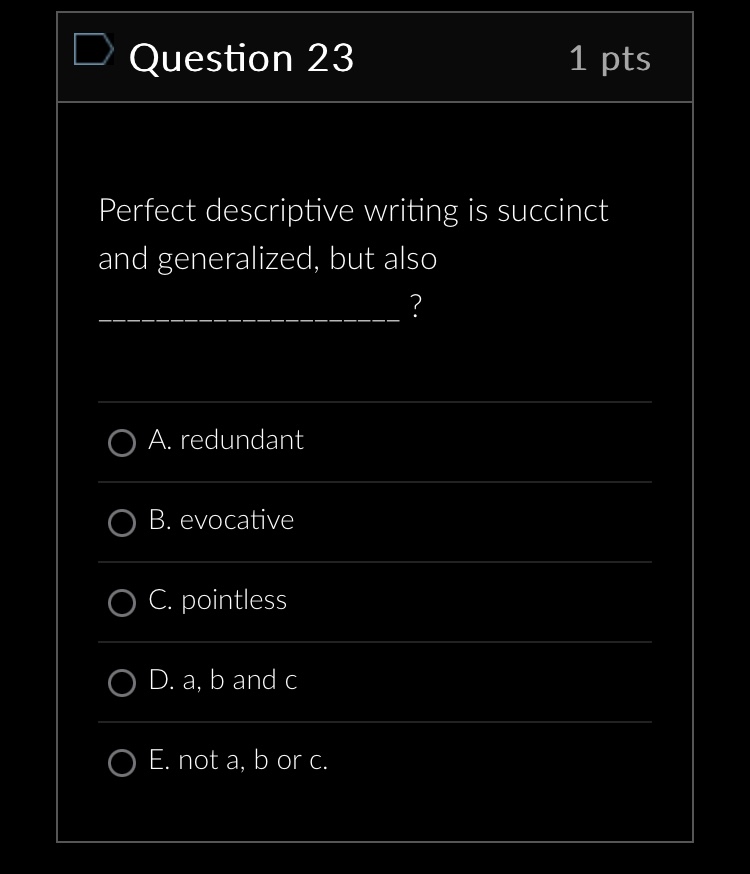
L Question 20 (o) RS Which iIs a good example of a scene that "didn't advance the plot"? A. The protagonist and her partner talk about their relationship, both agree that It sucks, the scene ends and they go back to doing what they were doing. B. The protagonist and her partner talk about their relationship, argue about I, and break up with each other. No answer text provided. No answer text provided. D Question 21 1 pts According to the course text Screenwriting Tips You Hack: one-hour shows contain acts? O A. 5 O B. 6 O C. five-and-a-half O D. a, b and c O E. not a, b or c.L Question 22 1 pts True or False. Zero emotional impact and the non sequitur are two examples of a bad "Dark Point"? True N D Question 23 1 pts Perfect descriptive writing is succinct and generalized, but also O A. redundant O B. evocative O C. pointless O D. a, b and c O E. not a, b or c.NN T L o] &3 True or False. Metaphor and analogy are like shortcuts to the reader's brain because they'll do all the work for you if you let them. IV =N D Question 25 1 pts What are the two points that scene descriptions reveal? O A. theme O B. character O C. back-story O D. a, and c O E. b and c.Question 26 1 pts The story pattern chart shown below is known as a Backstory/Exposition Unifying Filmic Devices (UFDs) Title and Author Act I Title Act II Title Act III Title Act II Act III Act I liciting Incident Midpoint Theme Turning Point Turning Point Epiphany/Climax O A. Vogler Chart O B. Hauge Chart O C. Field Chart D. Krevlon Chart O E. Simens ChartQuestion 27 1 pts True or False. The chart below uses six sequences to create a storytelling pattern. Backstory/Exposition Unifying Filmic Devices (UFDs) Title and Author Act I Title Act II Title Act III Title Act III Act II Act I Inciting Incident Midpoint Theme Turning Point Turning Point Epiphany Climax O True O FalseQuestion 28 1 pts True or False. Unifying Filmic Devices (UFDs) not to be confused with UFOs, refers to key thematic elements that repeat themselves (leitmotif) throughout the entire course of the screenplay. Backstory/Exposition Unifying Filmic Devices (UFDs) Title and Author Act I Title Act II Title Act III Title Act III Act II Act I Inciting Incident Midpoint Theme Turning Point Turning Point Epiphany Climax O True O FalseQuestion 29 1 pts In the second Turning Point (Sequence #6) there is a scene that is known as the Backstory/Exposition Unifying Filmic Devices (UFDs) Title and Author Act I Title Act II Title Act III Title Act II Act III Act I Inciting Incident Midpoint Theme Turning Point Turning Point Epiphany Climax O a. wind-down O b. a dark moment O c. a dark point O d. opening up O e. b and c O f. not a, b, c, d, or e.10:09 Take Quiz Exit Question 30 1 pts The total approximate running time (screenplay page count) for Act #2 Sequences is approximately 60 minutes for a total approximately 120 minute (120 screenplay pages). For this example, what would be the approximate running time (screenplay pages) for each individual sequence? Backstory/Exposition Unifying Filmic Devices (UFDs) Title and Author Act I Title Act II Title Act III Title Act III Act II Act Inciting Incident Midpoint Theme Turning Point Turning Point Epiphany/Climax O a. approximately 5 minutes for each sequence. O b. approximately 10 minutes for each sequence. O c. approximately 15 minutes for each sequence10:09 Take Quiz Exit The total approximate running time (screenplay page count) for Act #2 Sequences is approximately 60 minutes for a total approximately 120 minute (120 screenplay pages). For this example, what would be the approximate running time (screenplay pages) for each individual sequence? Backstory/Exposition Unifying Filmic Devices (UFDs) Title and Author Act I Title Act II Title Act III Title Act III Act I Inciting Incident Midpoint Theme Turning Point Turning Point Epiphany/Climax O a. approximately 5 minutes for each sequence. O b. approximately 10 minutes for each sequence. O c. approximately 15 minutes for each sequence. O d. approximately 20 minutes for each sequence.10:09 Take Quiz Exit for a total approximately 120 minute (120 screenplay pages). For this example, what would be the approximate running time (screenplay pages) for each individual sequence? Backstory/Exposition Unifying Filmic Devices (UFDs) Title and Author Act I Title Act II Title Act III Title Act III Act II Act aciting Incident Midpoint Theme Turning Point Turning Point Epiphany Climax O a. approximately 5 minutes for each sequence. O b. approximately 10 minutes for each sequence. O c. approximately 15 minutes for each sequence. O d. approximately 20 minutes for each sequence. O e. approximately 25 minutes for each sequence
Step by Step Solution

There are 3 Steps involved in it

1 Expert Approved Answer
Step: 1 Unlock blur-text-image

Question Has Been Solved by an Expert!

Get step-by-step solutions from verified subject matter experts

Step: 2 Unlock
Step: 3 Unlock

Students Have Also Explored These Related Business Writing Questions!