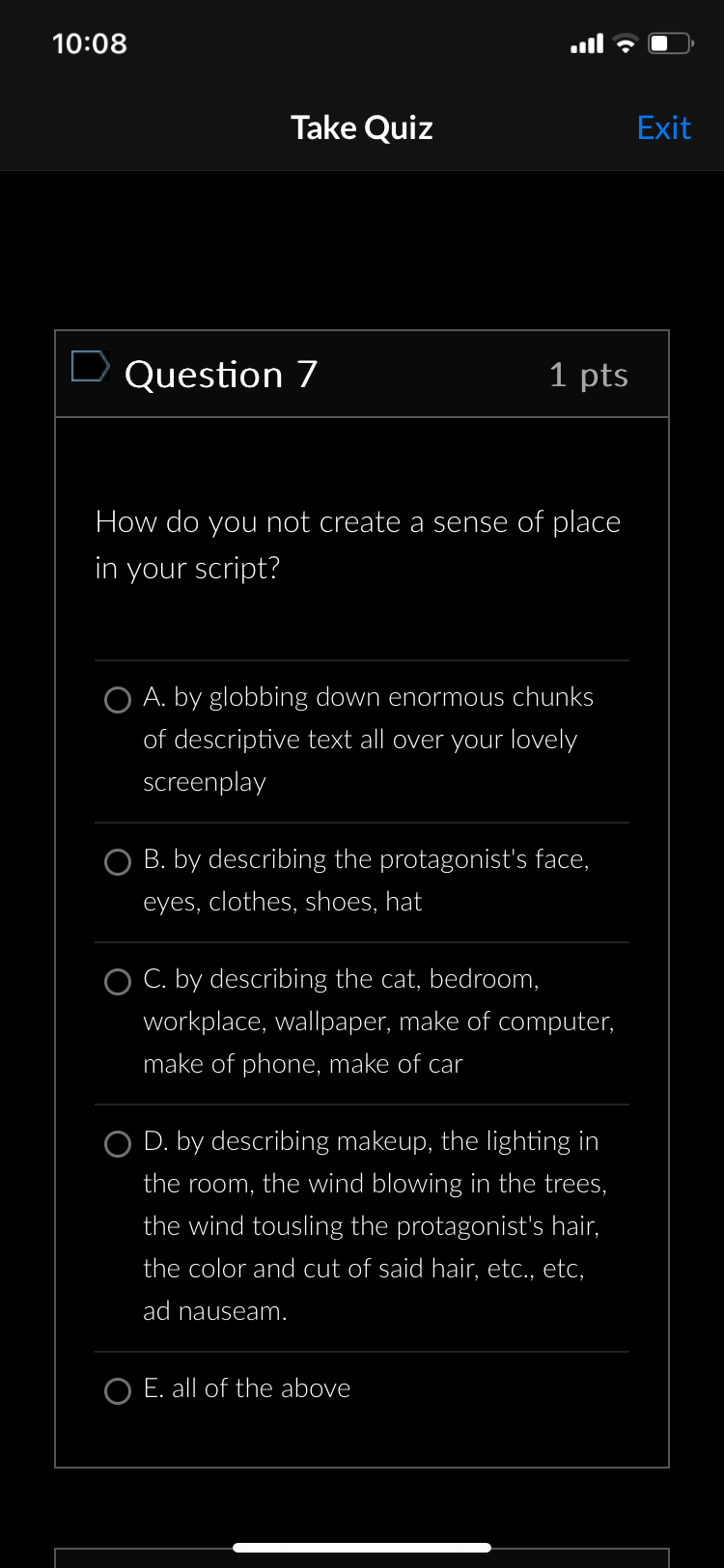
Question: Take Quiz : Question 7/ 1 pts How do you not create a sense of place in your script? A. by globbing down enormous chunks
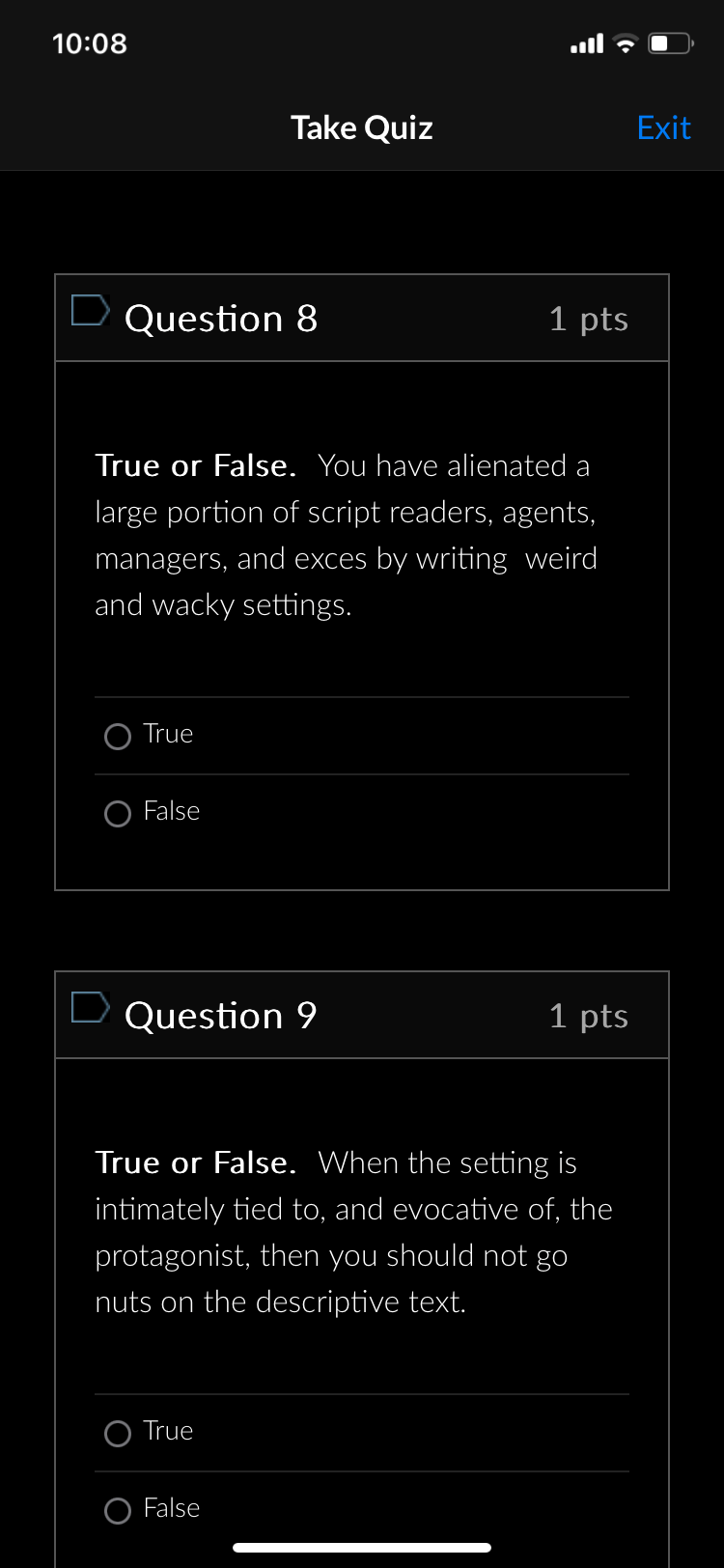
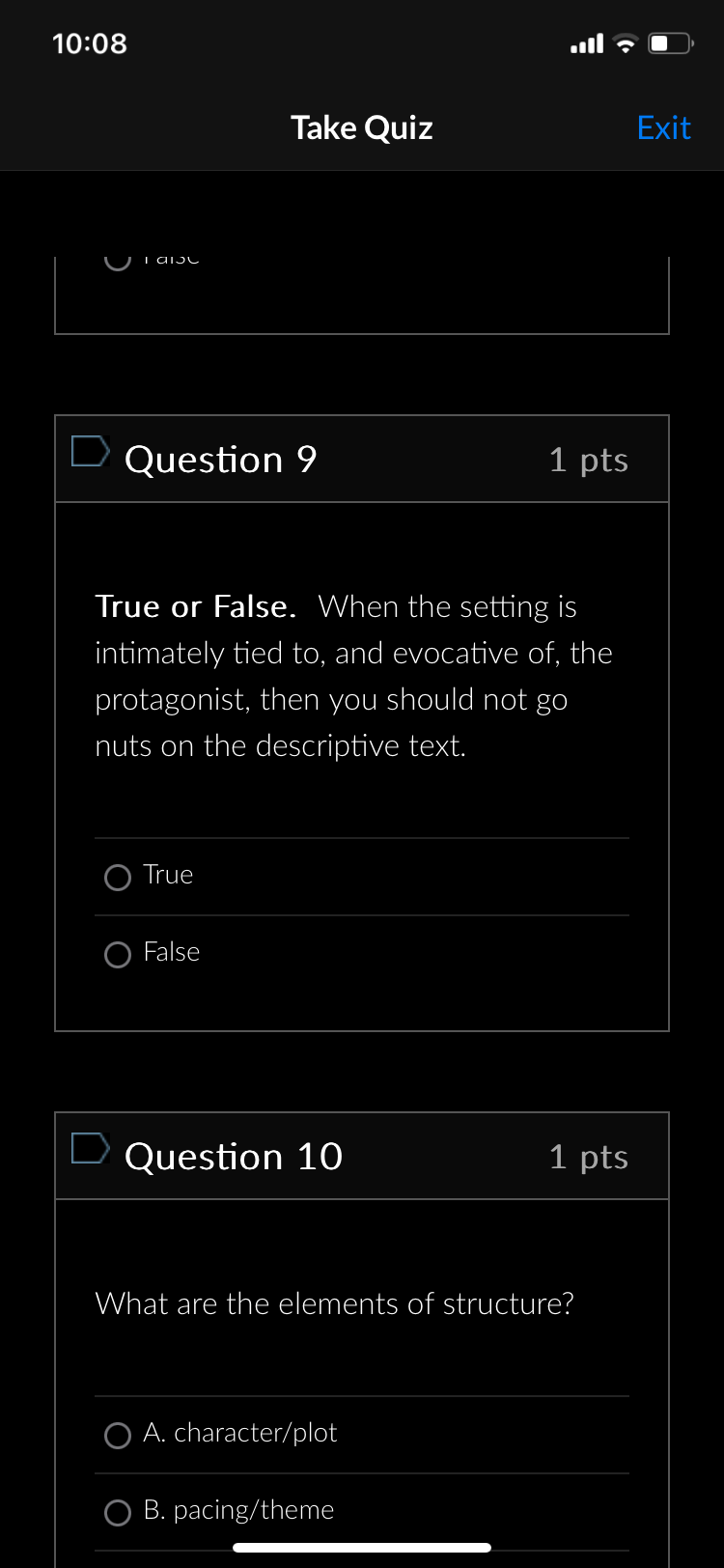
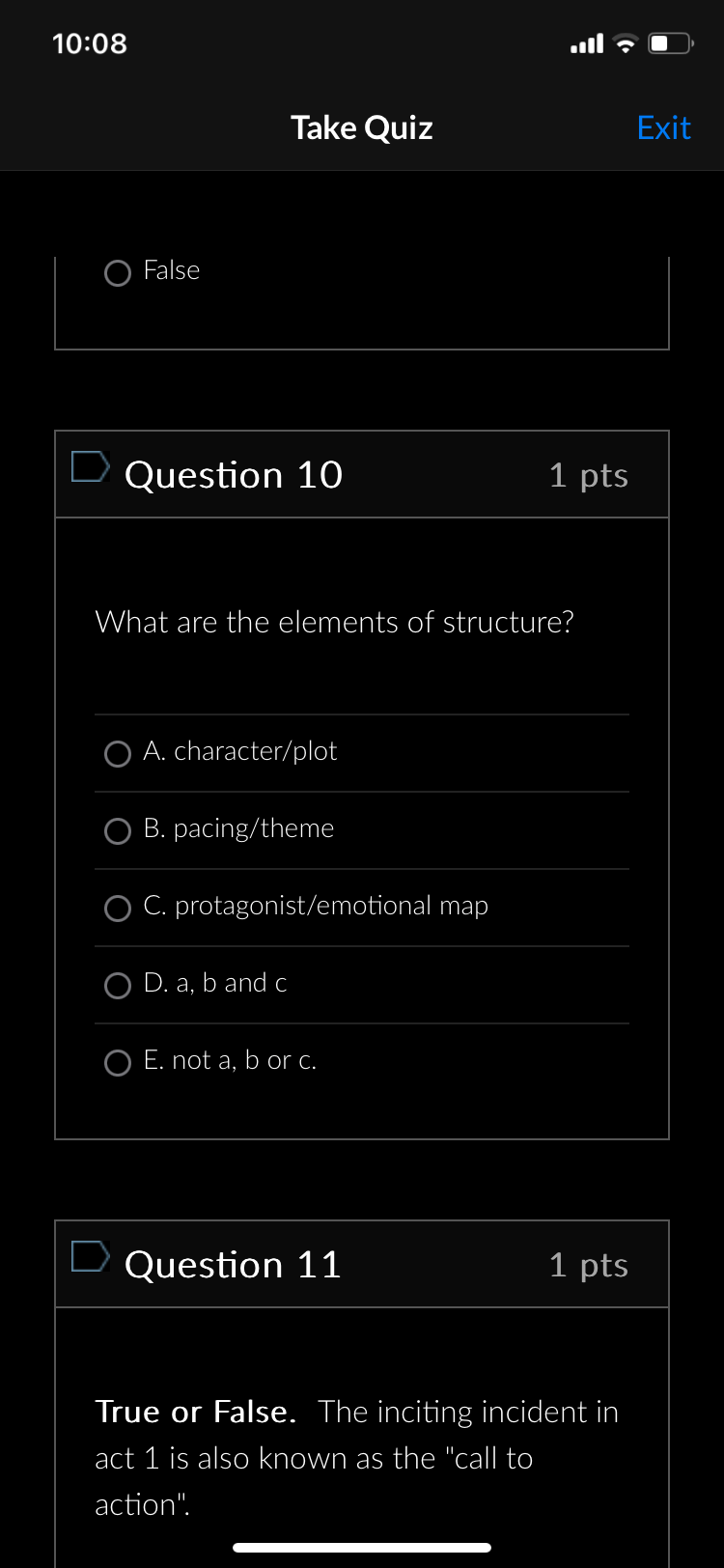
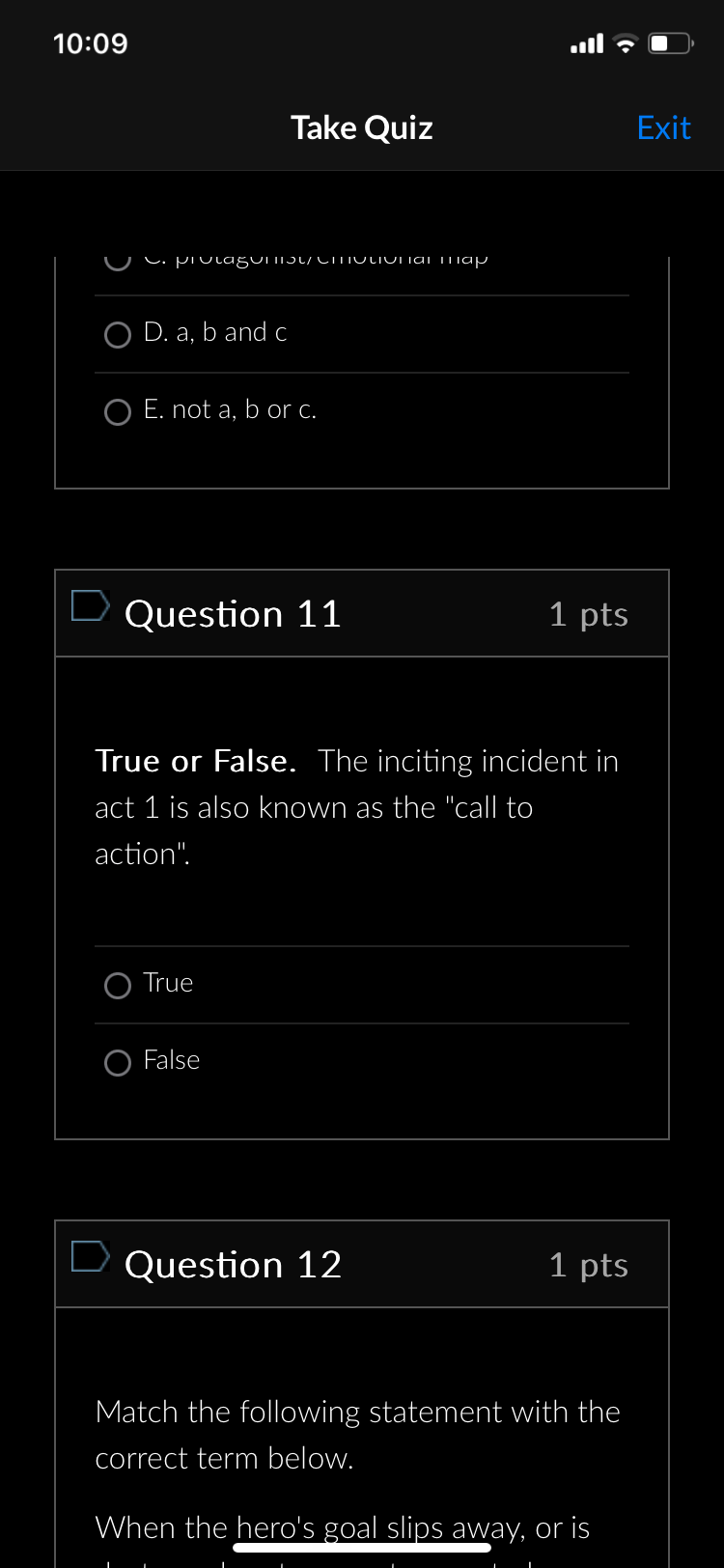
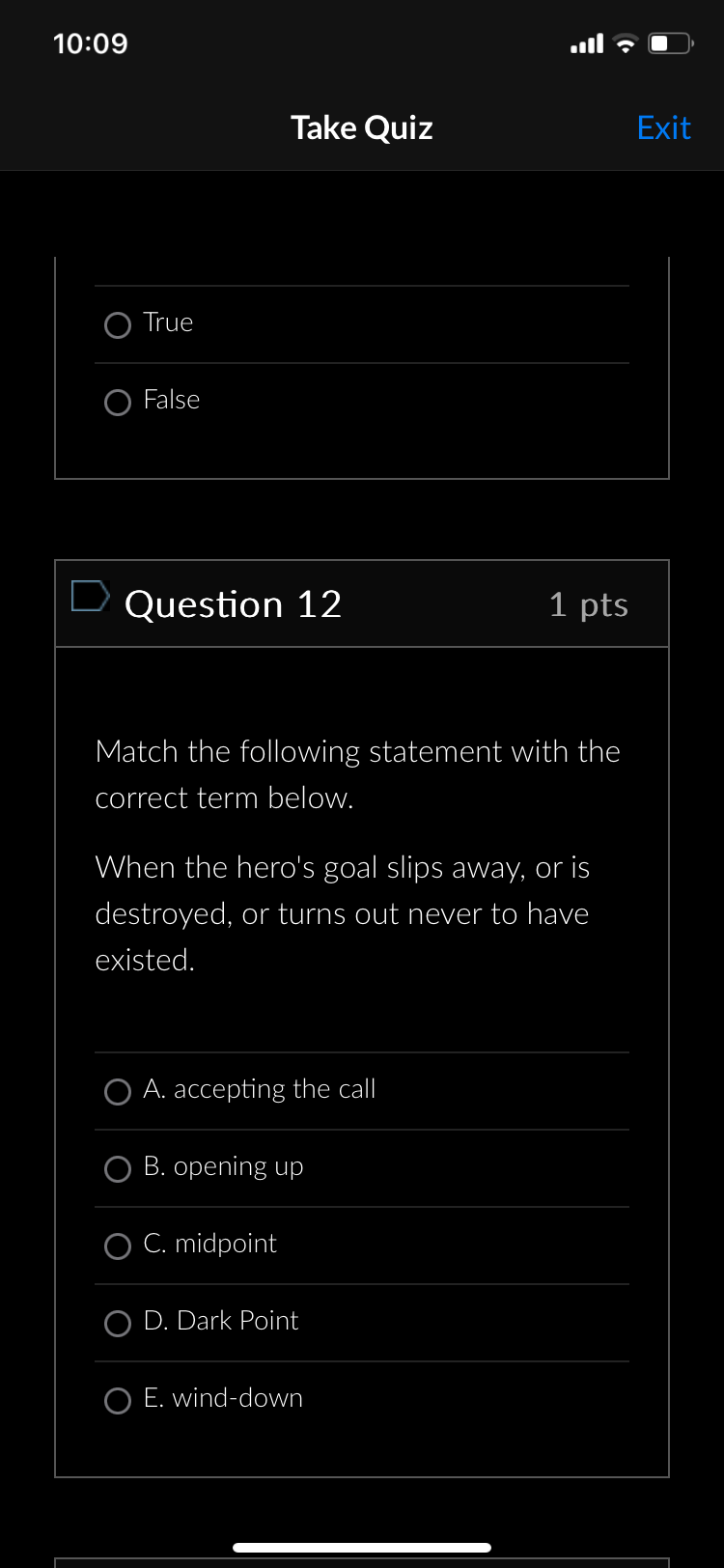
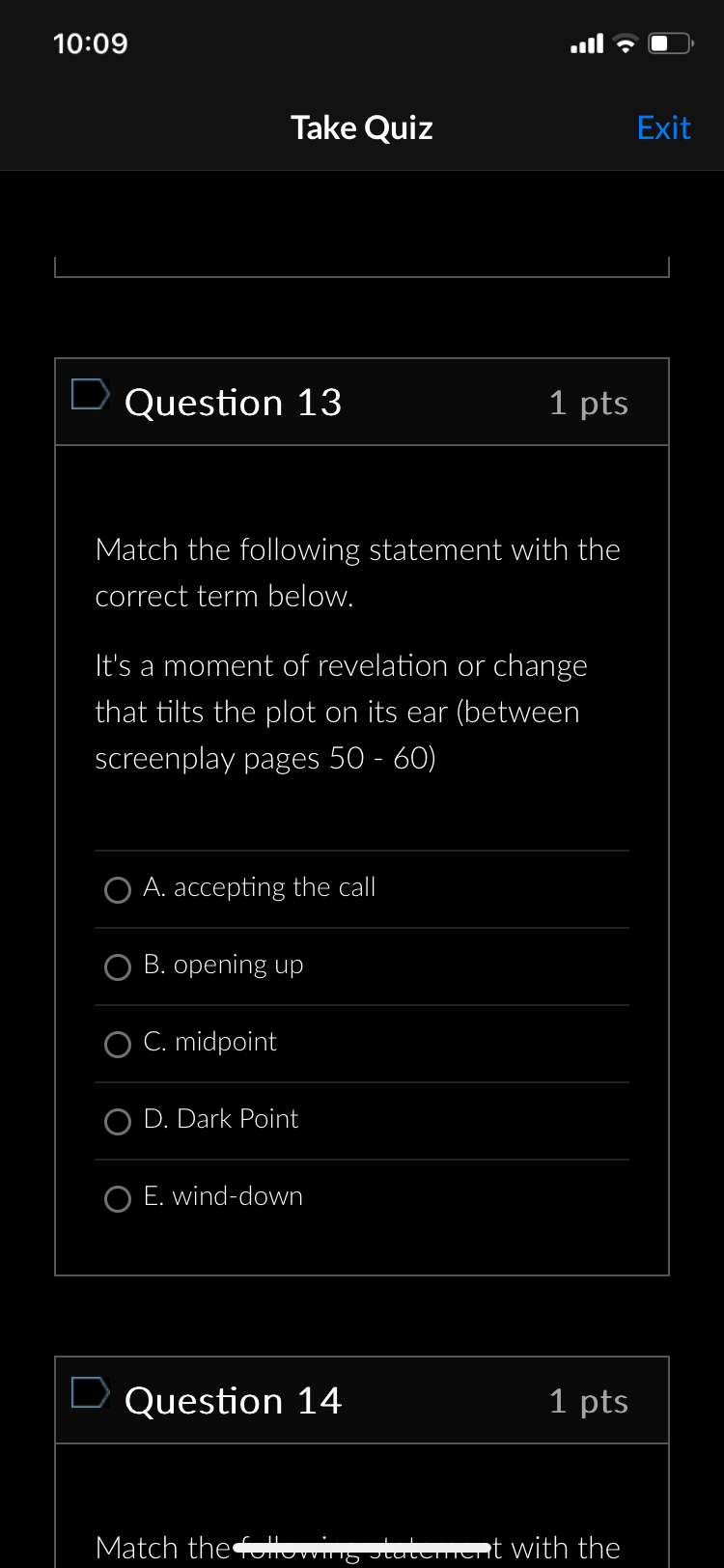
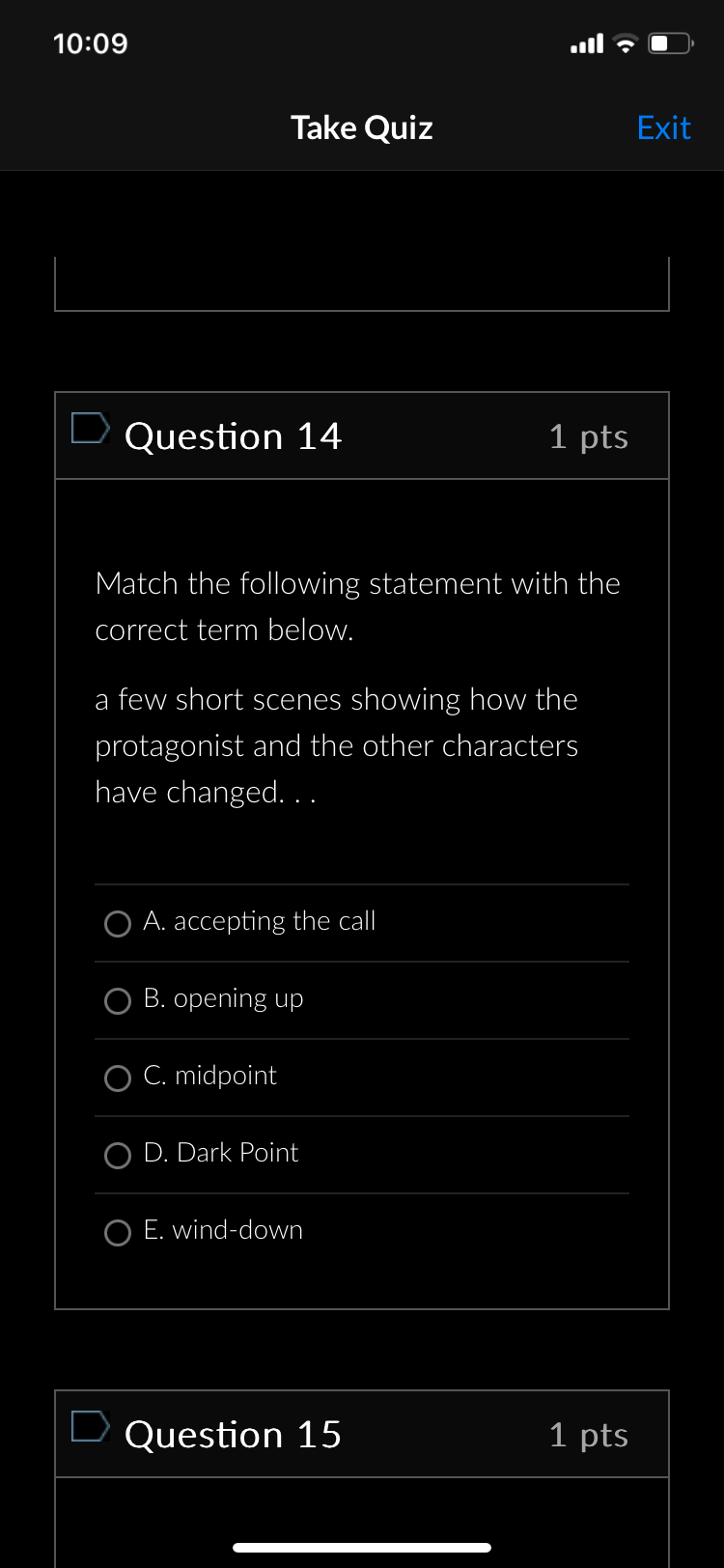
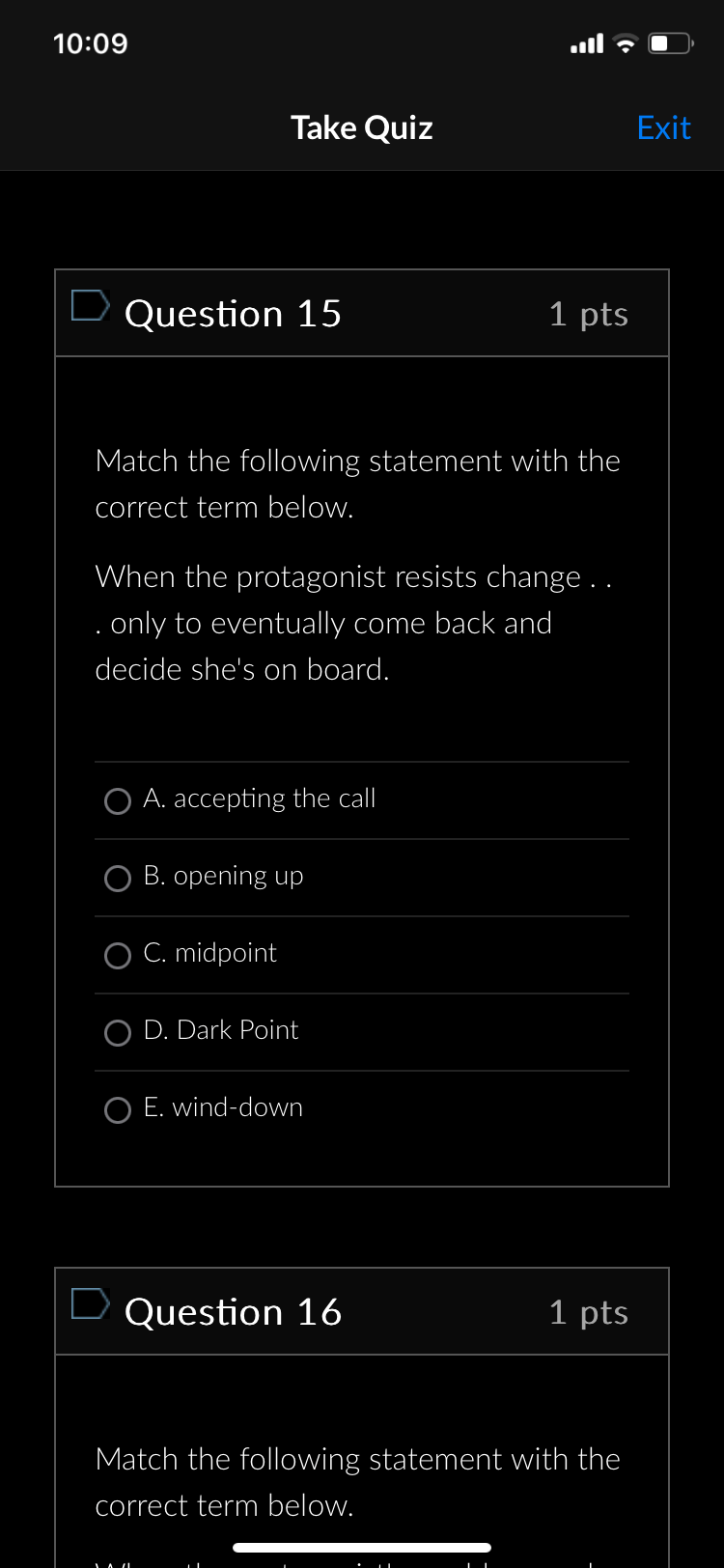
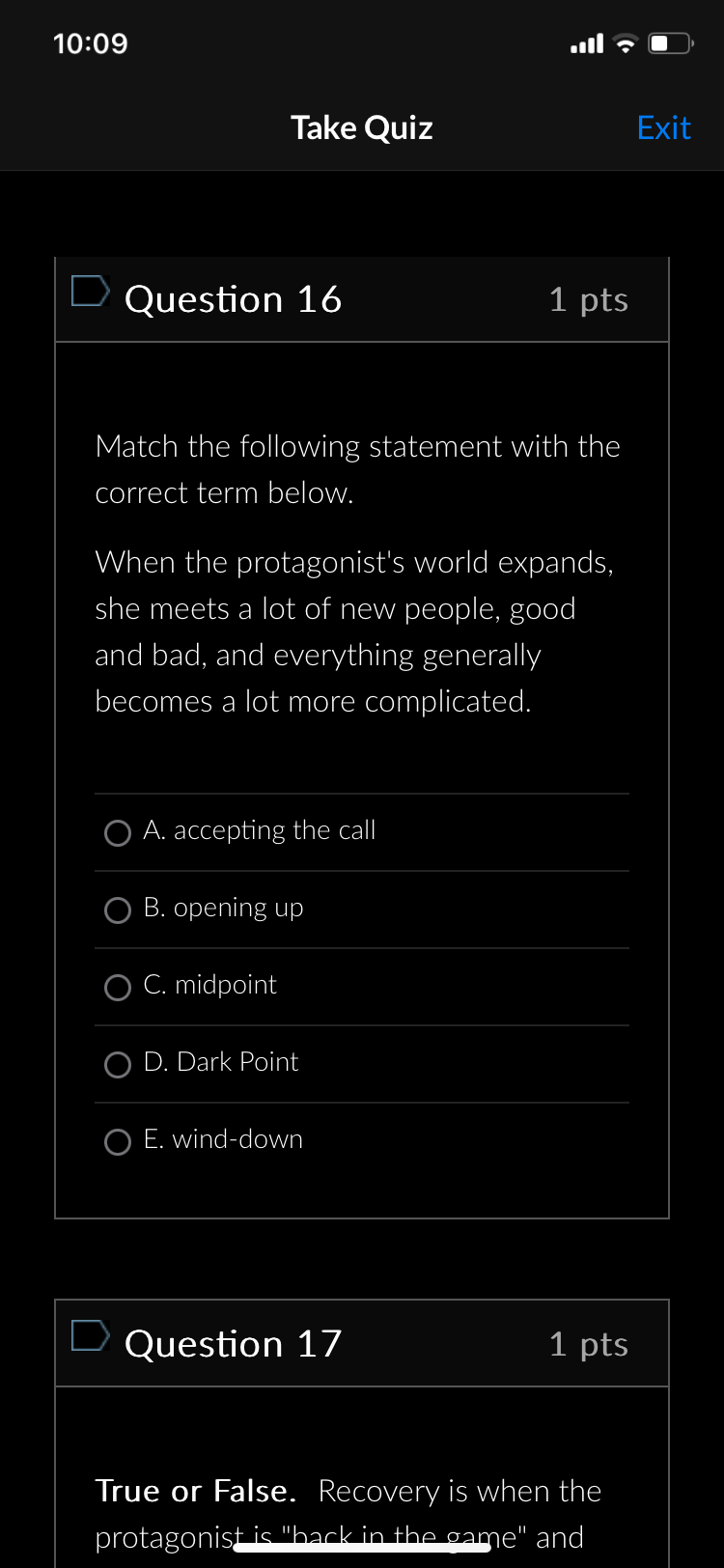
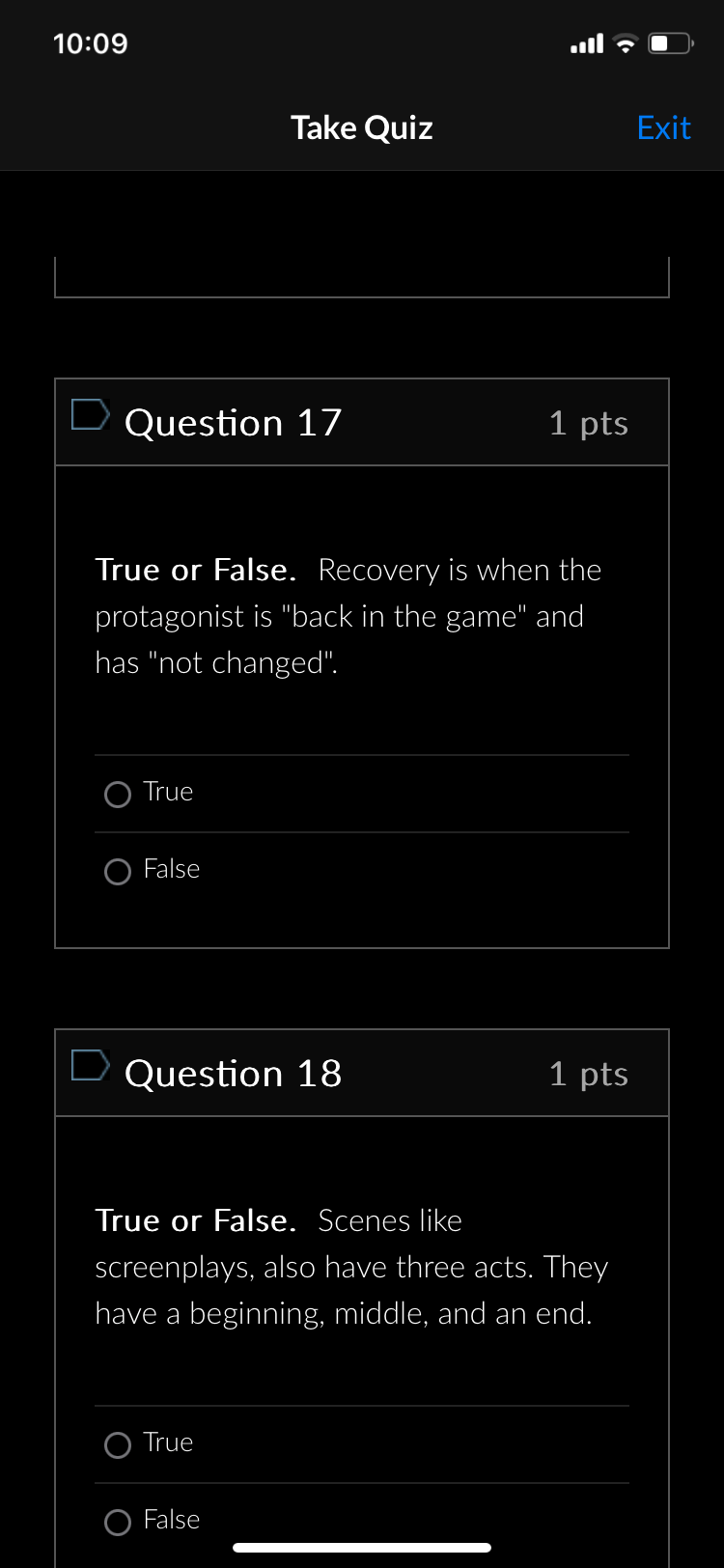
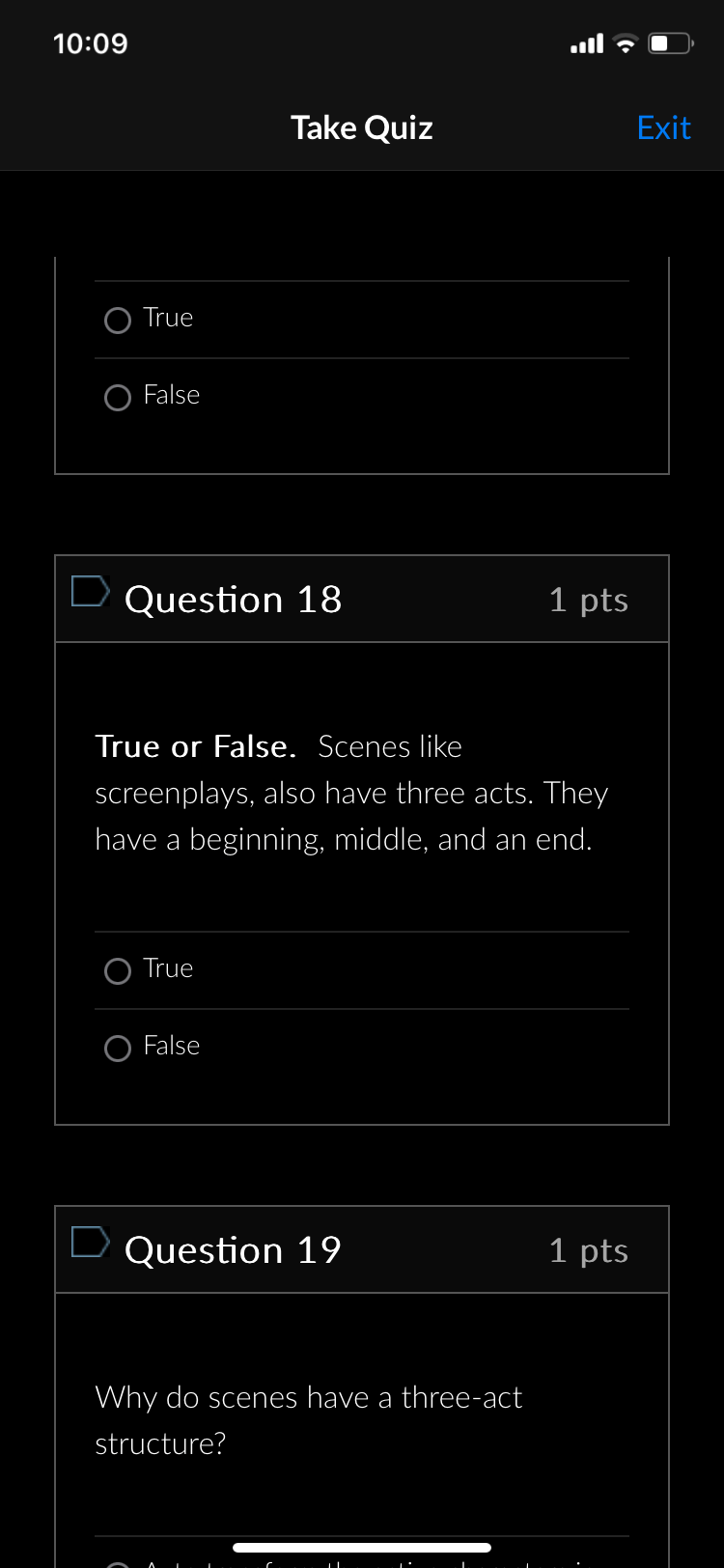
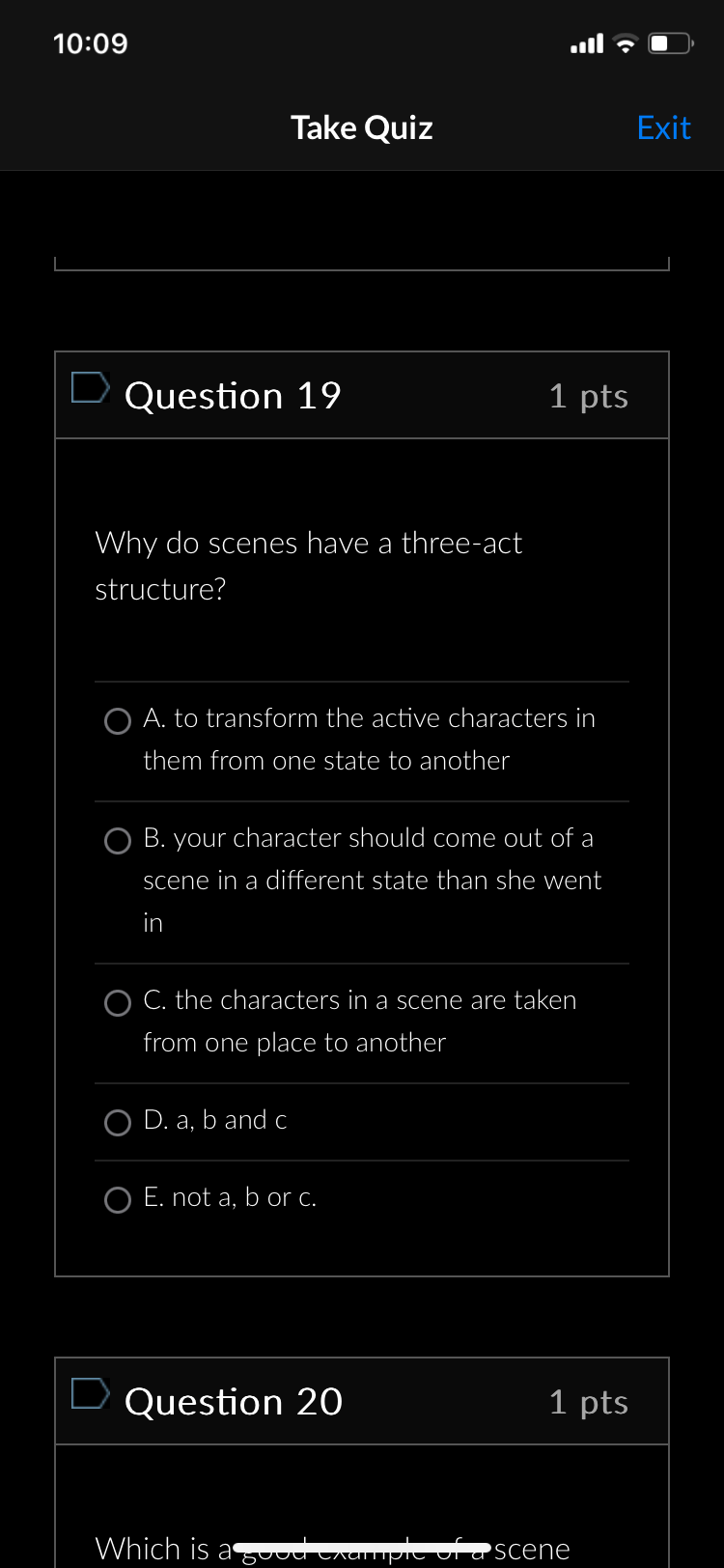
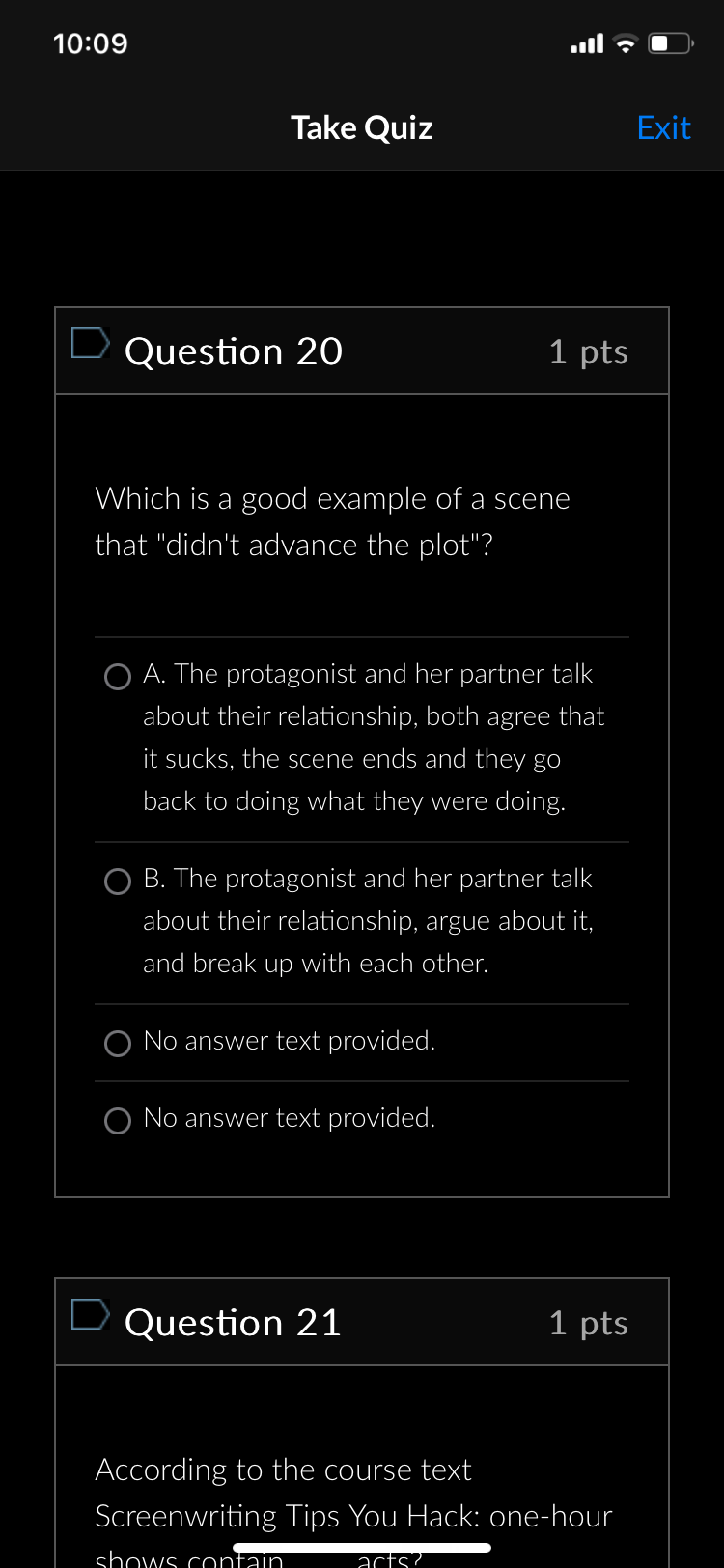
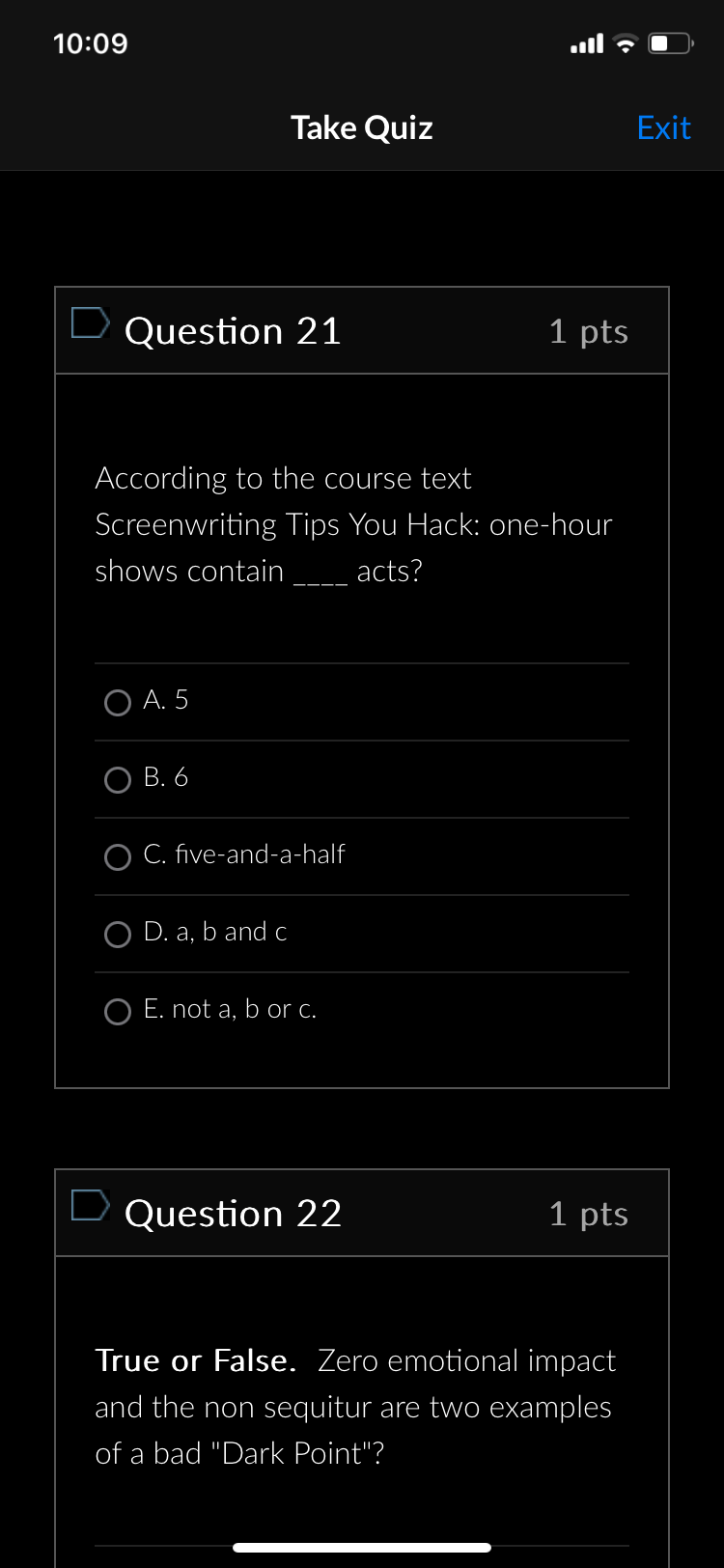
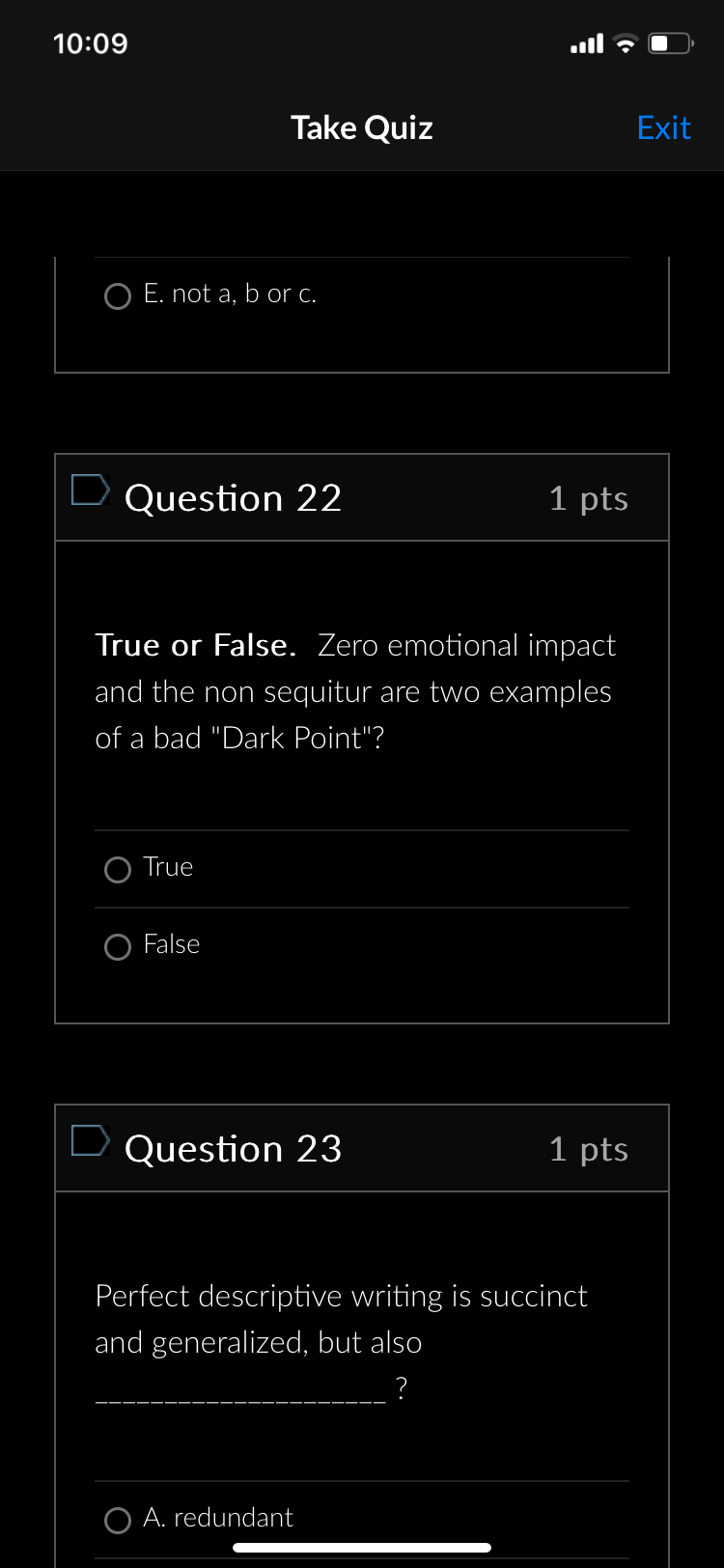
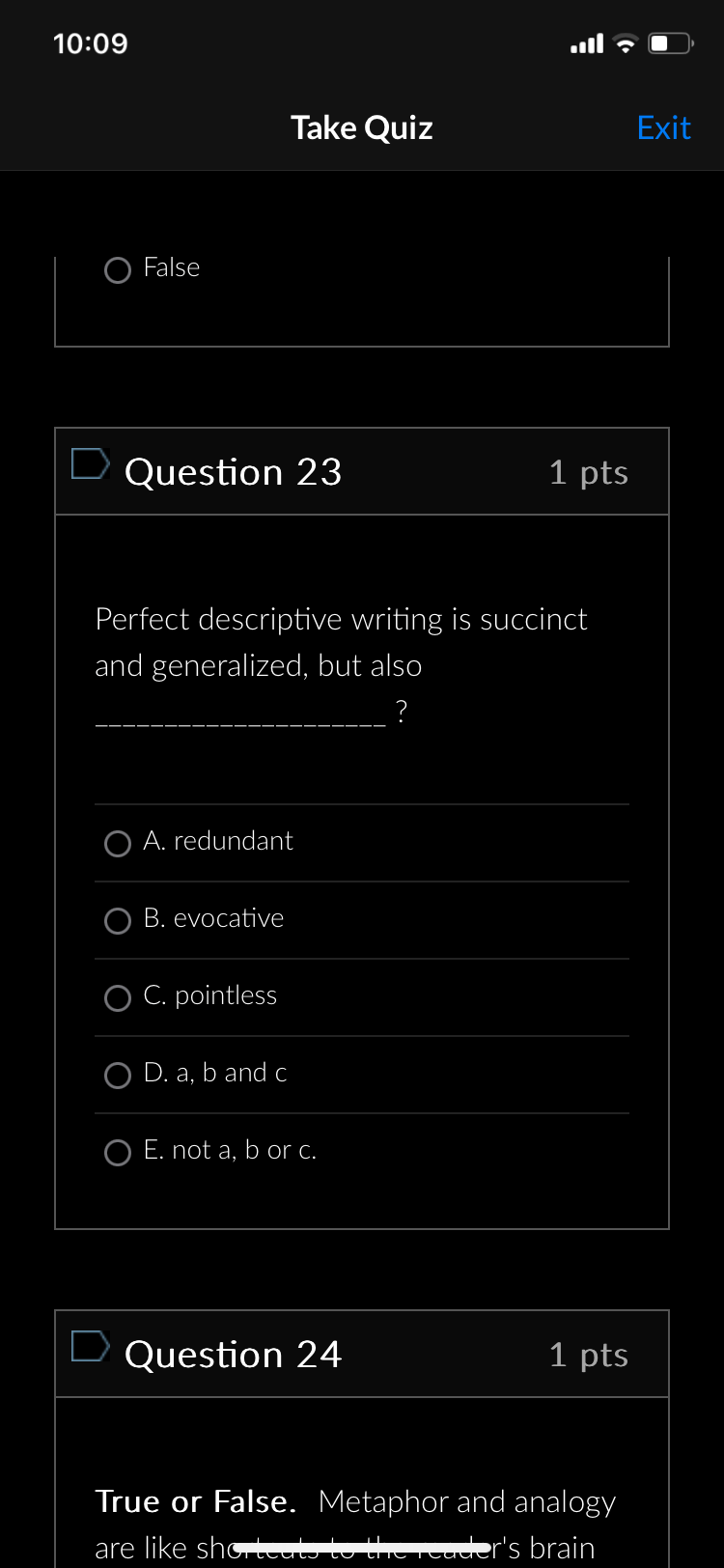
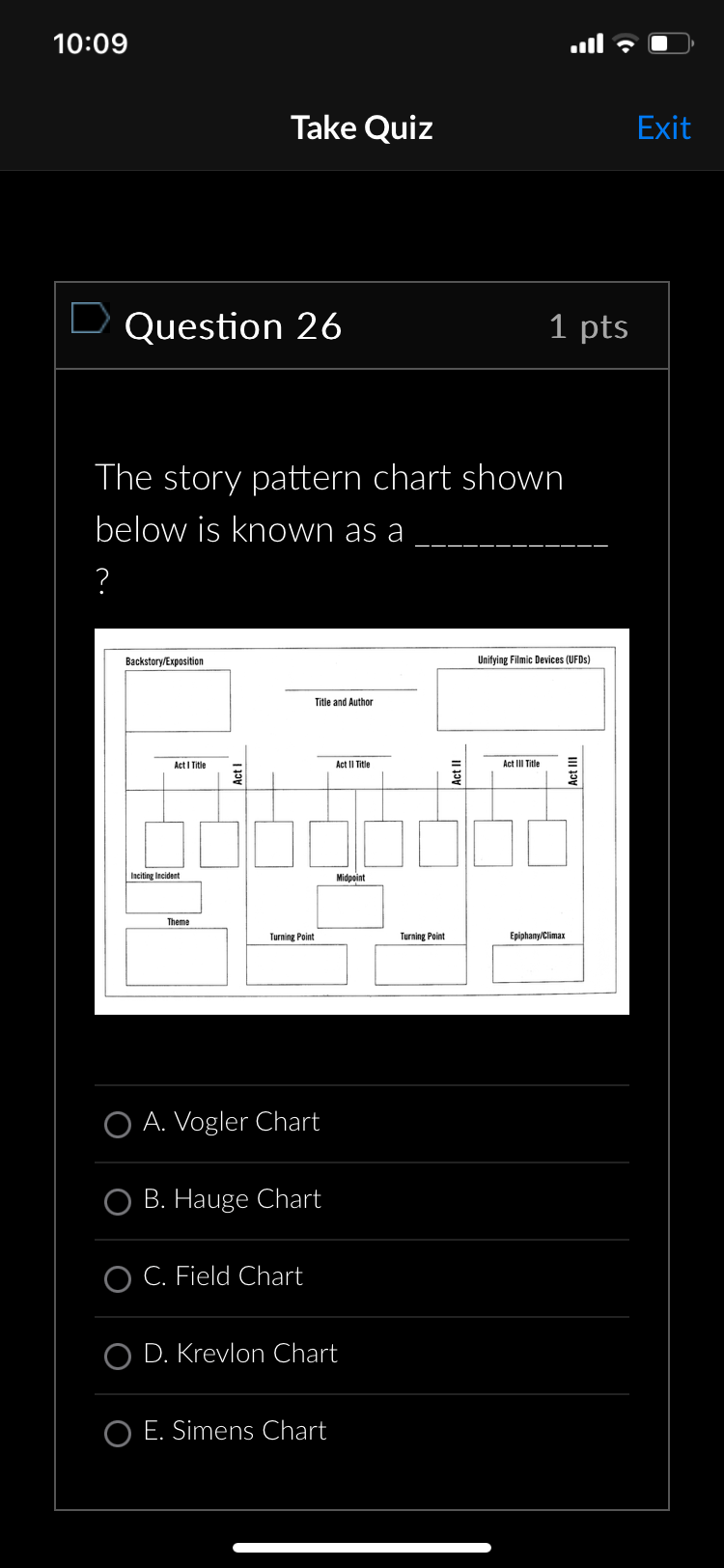
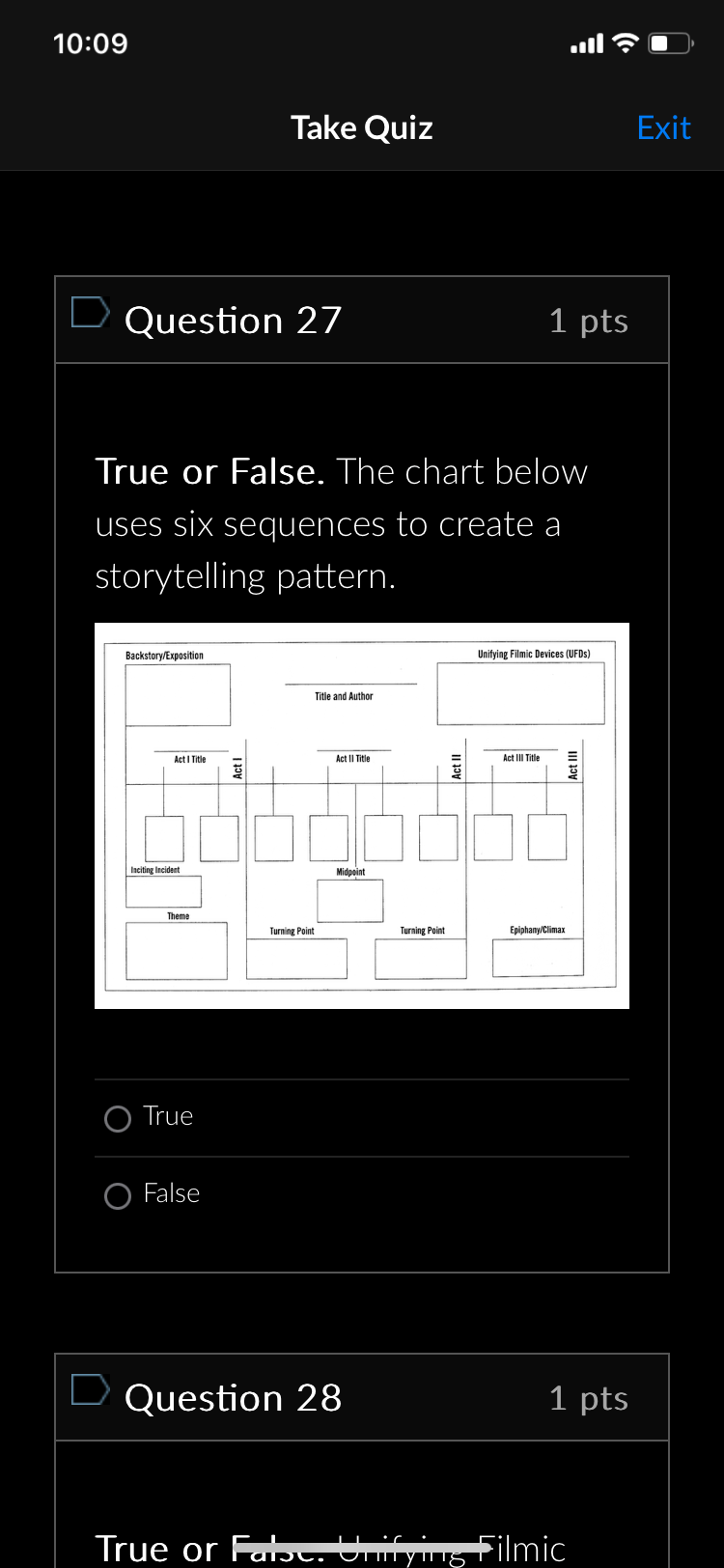
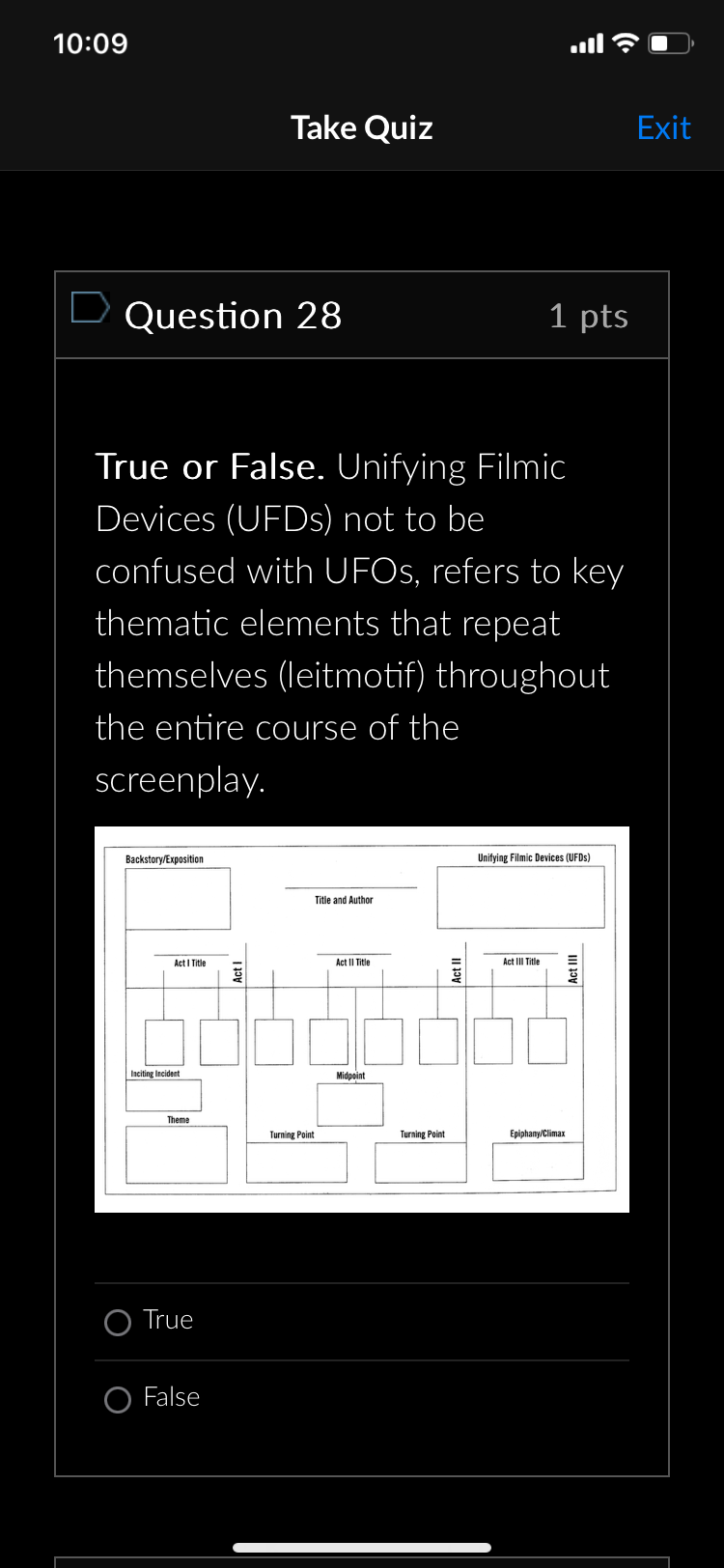
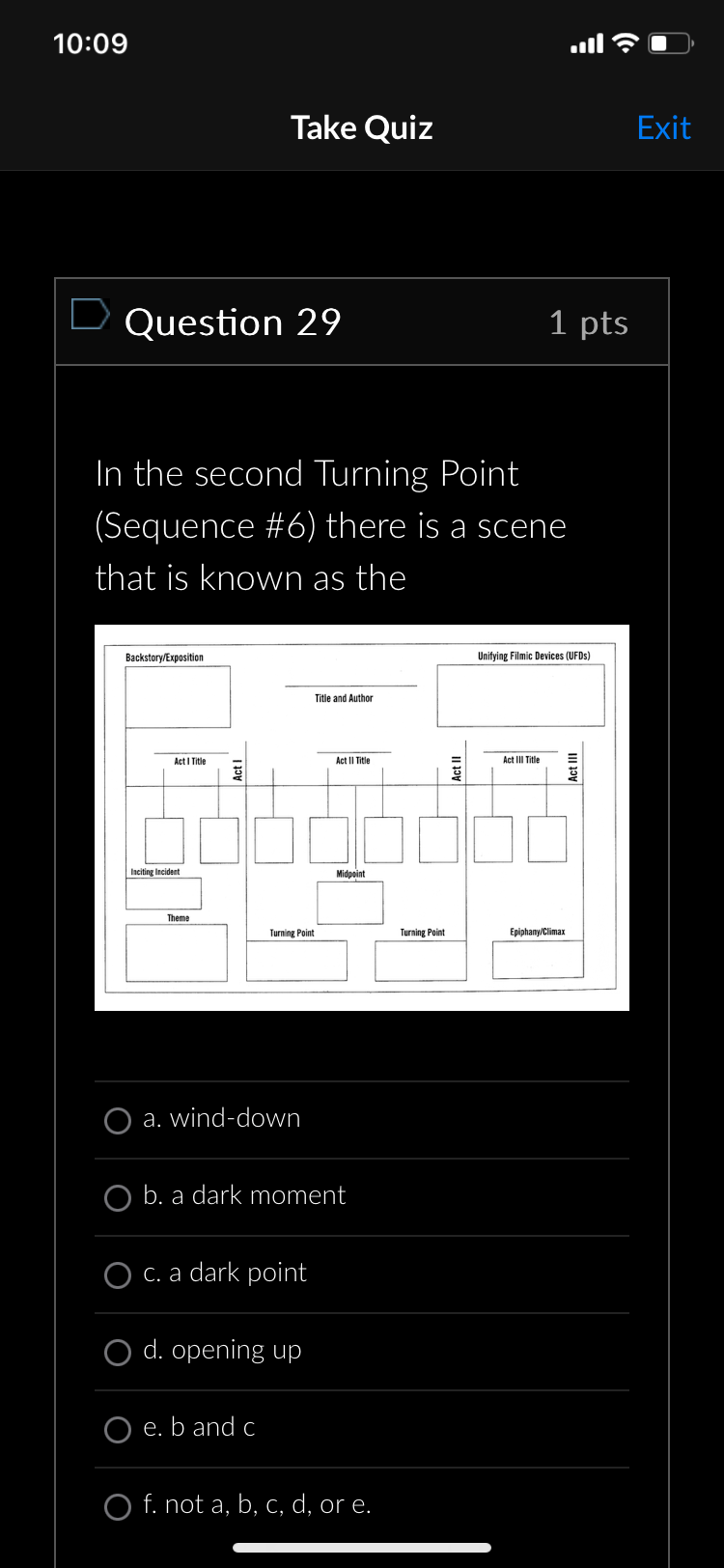
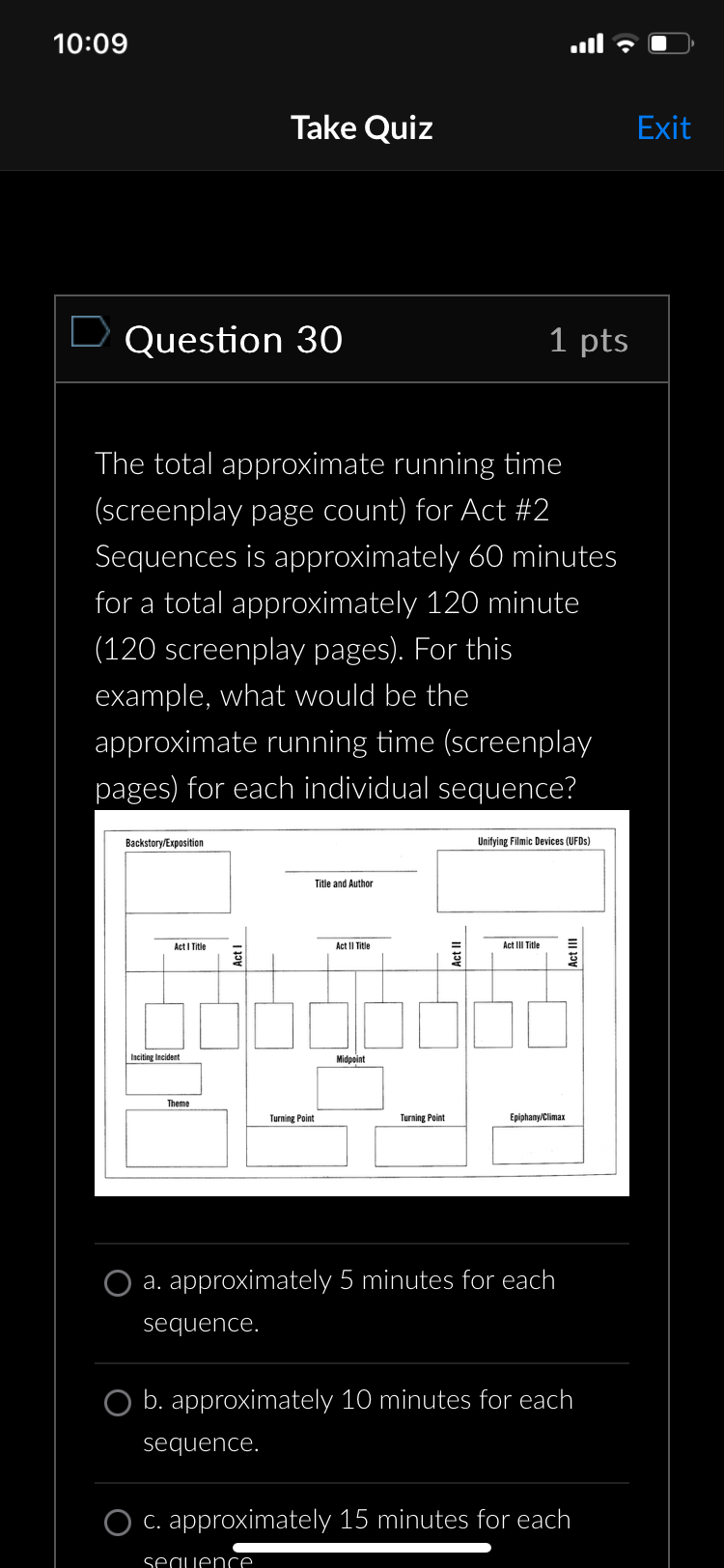
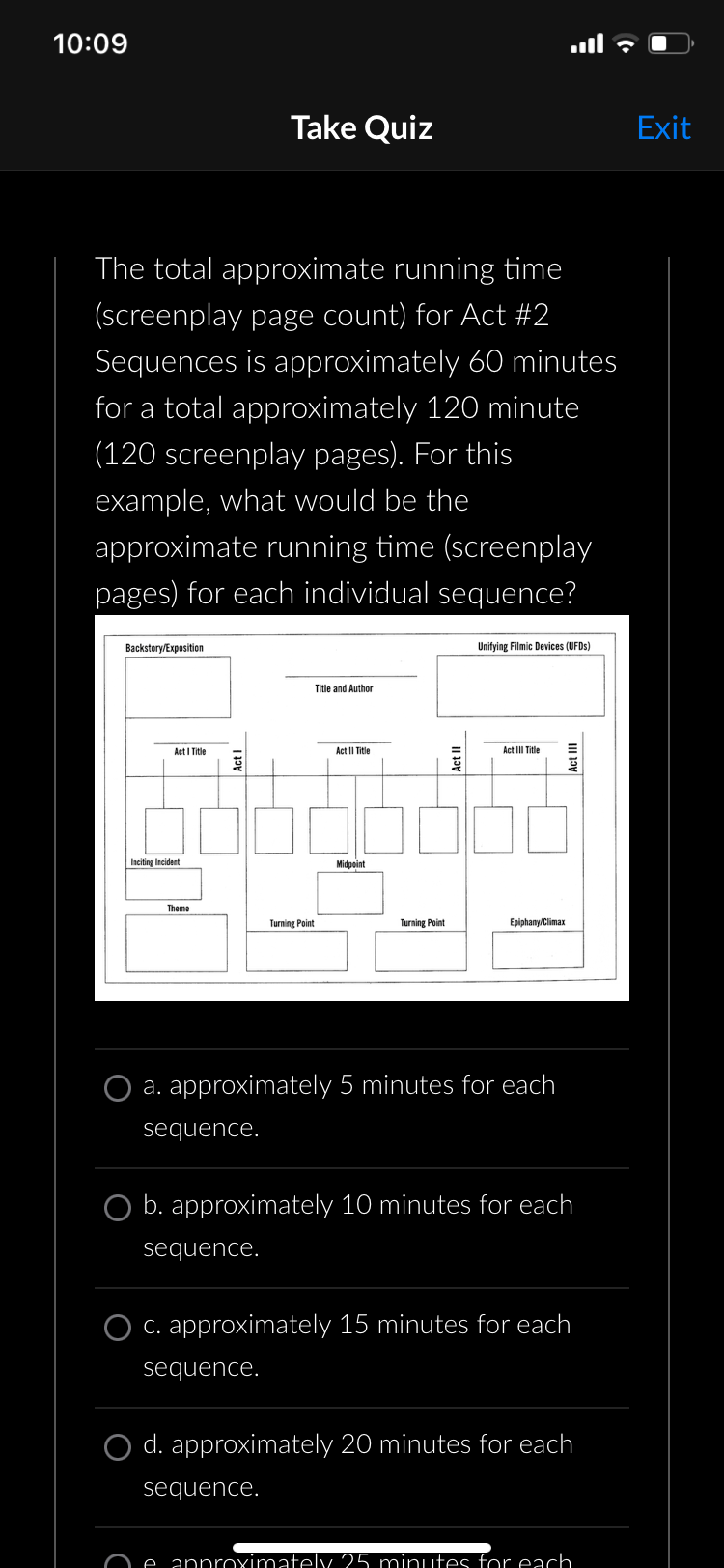
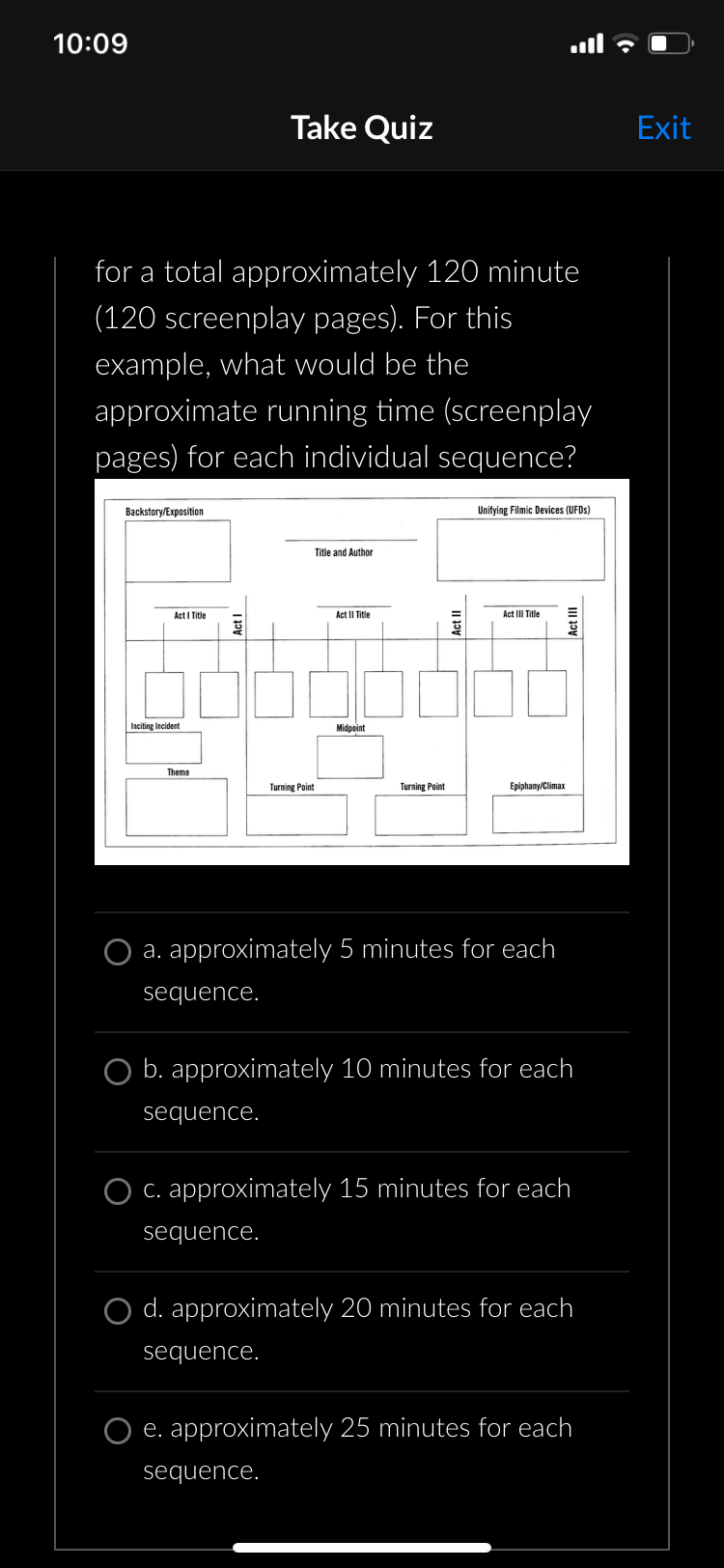
Take Quiz : Question 7/ 1 pts How do you not create a sense of place in your script? A. by globbing down enormous chunks of descriptive text all over your lovely screenplay B. by describing the protagonist's face, eyes, clothes, shoes, hat C. by describing the cat, bedroom, workplace, wallpaper, make of computer, make of phone, make of car D. by describing makeup, the lighting in the room, the wind blowing in the trees, the wind tousling the protagonist's hair, the color and cut of said hair, etc., etc, ad nauseam. E. all of the above Take Quiz : Question 8 1 pts True or False. You have alienated a large portion of script readers, agents, managers, and exces by writing weird and wacky settings. u Question 9 1 pts True or False. When the setting is intimately tied to, and evocative of, the protagonist, then you should not go nuts on the descriptive text. VS False Take Quiz H Question 9 1 pts True or False. When the setting is intimately tied to, and evocative of, the protagonist, then you should not go nuts on the descriptive text. u Question 10 1 pts What are the elements of structure? A. character/plot B. pacing/theme 10:08 Take Quiz Exit O False D Question 10 1 pts What are the elements of structure? O A. character/plot O B. pacing/theme O C. protagonist/emotional map O D. a, b and c O E. not a, b or c. Question 11 1 pts True or False. The inciting incident in act 1 is also known as the "call to action".10:09 Take Quiz Exit O D. a, b and c O E. not a, b or c. D Question 11 1 pts True or False. The inciting incident in act 1 is also known as the "call to action". O True O False Question 12 1 pts Match the following statement with the correct term below. When the hero's goal slips away, or isTake Quiz True False : Question 12 1 pts Match the following statement with the correct term below. When the hero's goal slips away, or is destroyed, or turns out never to have YRl A. accepting the call B. opening up C. midpoint D. Dark Point E. wind-down Take Quiz L Question 13 (0] Match the following statement with the correct term below. It's a moment of revelation or change that tilts the plot on its ear (between screenplay pages 50 - 60) A. accepting the call B. opening up C. midpoint D. Dark Point E. wind-down L Question 14 () Match the smt \\\\ith the Take Quiz . Question 14 1 pts Match the following statement with the correct term below. a few short scenes showing how the protagonist and the other characters have changed. . . A. accepting the call B. opening up C. midpoint D. Dark Point E. wind-down BN Take Quiz NN 1 pts Match the following statement with the correct term below. When the protagonist resists change . . . only to eventually come back and decide she's on board. A. accepting the call B. opening up C. midpoint D. Dark Point E. wind-down L Question 16 (NS Match the following statement with the correct term below. 10:09 Take Quiz Exit Question 16 1 pts Match the following statement with the correct term below. When the protagonist's world expands, she meets a lot of new people, good and bad, and everything generally becomes a lot more complicated. O A. accepting the call O B. opening up O C. midpoint O D. Dark Point O E. wind-down Question 17 1 pts True or False. Recovery is when the protagonist is "hack in the game" andTake Quiz : Question 17 1 pts True or False. Recovery is when the protagonist is "back in the game" and has "not changed". True False NN K True or False. Scenes like screenplays, also have three acts. They have a beginning, middle, and an end. True =] iNe 10:09 Take Quiz Exit O True O False Question 18 1 pts True or False. Scenes like screenplays, also have three acts. They have a beginning, middle, and an end. O True O False D Question 19 1 pts Why do scenes have a three-act structure?Take Quiz : Question 19 Why do scenes have a three-act structure? A. to transform the active characters in them from one state to another B. your character should come out of a scene in a different state than she went A C. the characters in a scene are taken from one place to another D.a,bandc E.nota, borc. o Question 20 ()RS Which s o e c Cc N o Take Quiz _ Question 20 1 pts Which is a good example of a scene that "didn't advance the plot"? A. The protagonist and her partner talk about their relationship, both agree that it sucks, the scene ends and they go back to doing what they were doing. B. The protagonist and her partner talk about their relationship, argue about it, and break up with each other. No answer text provided. No answer text provided. : Question 21 According to the course text Screenwriting Tips You Hack: one-hour 10:09 Take Quiz Exit Question 21 1 pts According to the course text Screenwriting Tips You Hack: one-hour shows contain acts? O A. 5 O B. 6 O C. five-and-a-half O D. a, b and c O E. not a, b or c. Question 22 1 pts True or False. Zero emotional impact and the non sequitur are two examples of a bad "Dark Point"?10:09 Take Quiz Exit O E. not a, b or c. Question 22 1 pts True or False. Zero emotional impact and the non sequitur are two examples of a bad "Dark Point"? O True O False Question 23 1 pts Perfect descriptive writing is succinct and generalized, but also O A. redundant10:09 Take Quiz Exit O False Question 23 1 pts Perfect descriptive writing is succinct and generalized, but also O A. redundant O B. evocative O C. pointless O D. a, b and c O E. not a, b or c. Question 24 1 pts True or False. Metaphor and analogy are like shortcuts CT T coder's brainTake Quiz NN 1o 2! (W] True or False. Metaphor and analogy are like shortcuts to the reader's brain because they'll do all the work for you if you let them. True S u Question 25 (O] RS What are the two points that scene descriptions reveal? A. theme B. charoshs 10:09 Take Quiz Exit O False Question 25 1 pts What are the two points that scene descriptions reveal? O A. theme O B. character O C. back-story O D. a, and c O E. b and c. D Question 26 1 pts The story pattern chart shown10:09 Take Quiz Exit Question 26 1 pts The story pattern chart shown below is known as a Backstory/Exposition Unifying Filmic Devices (UFDs) Title and Author Act I Title Act II Title Act III Title Act Ill Act I Act I Inciting Incident Midpoint Them Turning Point Turning Point Epiphany Climax O A. Vogler Chart O B. Hauge Chart O C. Field Chart O D. Krevlon Chart O E. Simens Chart10:09 Take Quiz Exit Question 27 1 pts True or False. The chart below uses six sequences to create a storytelling pattern. Backstory/Exposition Unifying Filmic Devices (UFDs) Title and Author Act I Title Act II Title Act III Title Act II Act III Act I Inciting Incident Midpoint Theme Turning Point Turning Point Epiphany/Climax O True O False D Question 28 1 pts True or False. onmying Filmic10:09 Take Quiz Exit Question 28 1 pts True or False. Unifying Filmic Devices (UFDs) not to be confused with UFOs, refers to key thematic elements that repeat themselves (leitmotif) throughout the entire course of the screenplay. Backstory/Exposition Unifying Filmic Devices (UFDs) Title and Author Act I Title Act II Title Act III Title Act III Act II Act Inciting Incident Midpoint Theme Turning Point Turning Point Epiphany Climax O True O False10:09 Take Quiz Exit Question 29 1 pts In the second Turning Point (Sequence #6) there is a scene that is known as the Backstory/Exposition Unifying Filmic Devices (UFDs) Title and Author Act I Title Act II Title Act III Title Act III Act Act II laciting Incident Midpoint Theme Turning Point Turning Point Epiphany/Climax O a. wind-down O b. a dark moment O c. a dark point O d. opening up O e. b and c O f. not a, b, c, d, or e.10:09 Take Quiz Exit Question 30 1 pts The total approximate running time (screenplay page count) for Act #2 Sequences is approximately 60 minutes for a total approximately 120 minute (120 screenplay pages). For this example, what would be the approximate running time (screenplay pages) for each individual sequence? Backstory/Exposition Unifying Filmic Devices (UFDs) Title and Author Act I Title Act II Title Act III Title Act III Act II Act Inciting Incident Midpoint Theme Turning Point Turning Point Epiphany/Climax O a. approximately 5 minutes for each sequence. O b. approximately 10 minutes for each sequence. O c. approximately 15 minutes for each sequence10:09 Take Quiz Exit The total approximate running time (screenplay page count) for Act #2 Sequences is approximately 60 minutes for a total approximately 120 minute (120 screenplay pages). For this example, what would be the approximate running time (screenplay pages) for each individual sequence? Backstory/Exposition Unifying Filmic Devices (UFDs) Title and Author Act I Title Act II Title Act III Title Act III Act I Inciting Incident Midpoint Theme Turning Point Turning Point Epiphany/Climax O a. approximately 5 minutes for each sequence. O b. approximately 10 minutes for each sequence. O c. approximately 15 minutes for each sequence. O d. approximately 20 minutes for each sequence.10:09 Take Quiz Exit for a total approximately 120 minute (120 screenplay pages). For this example, what would be the approximate running time (screenplay pages) for each individual sequence? Backstory/Exposition Unifying Filmic Devices (UFDs) Title and Author Act I Title Act II Title Act III Title Act III Act II Act aciting Incident Midpoint Theme Turning Point Turning Point Epiphany Climax O a. approximately 5 minutes for each sequence. O b. approximately 10 minutes for each sequence. O c. approximately 15 minutes for each sequence. O d. approximately 20 minutes for each sequence. O e. approximately 25 minutes for each sequence
Step by Step Solution
There are 3 Steps involved in it
1 Expert Approved Answer
Step: 1 Unlock
Question Has Been Solved by an Expert!
Get step-by-step solutions from verified subject matter experts
Step: 2 Unlock
Step: 3 Unlock
Students Have Also Explored These Related Business Writing Questions!









 Study Help