



Question: labour econ ation. Ec . x ca/courses/51434/quizzes/secured#lockdown M Gmail Dashboard : Google Bit @ Course Home : Google mill PA Learning Curve 12.. Q Social
labour econ
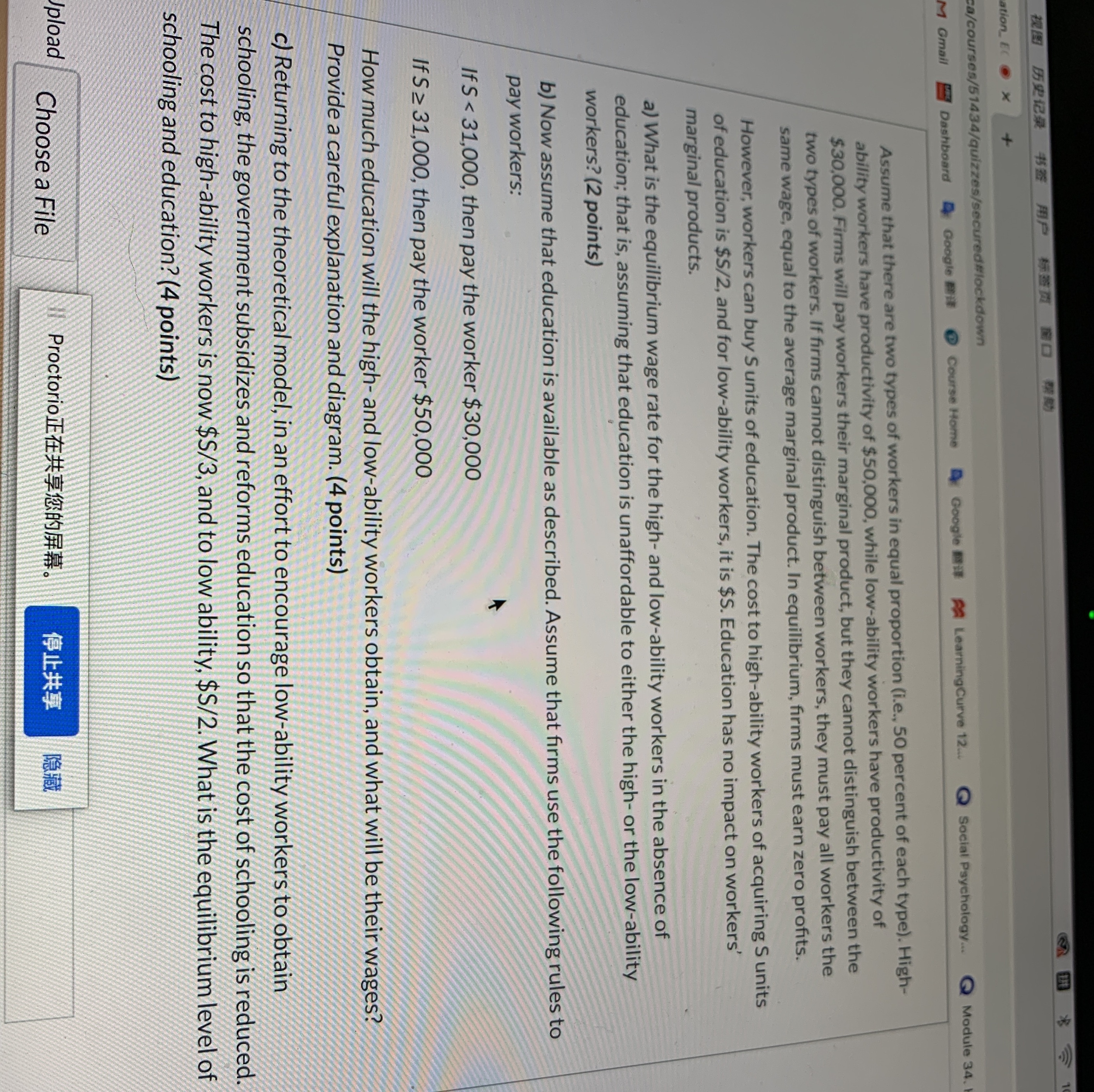
ation. Ec . x ca/courses/51434/quizzes/secured#lockdown M Gmail Dashboard : Google Bit @ Course Home : Google mill PA Learning Curve 12.. Q Social Psychology. Q Module 34. Assume that there are two types of workers in equal proportion (i.e., 50 percent of each type). High- ability workers have productivity of $50,000, while low-ability workers have productivity of $30,000. Firms will pay workers their marginal product, but they cannot distinguish between the two types of workers. If firms cannot distinguish between workers, they must pay all workers the same wage, equal to the average marginal product. In equilibrium, firms must earn zero profits. However, workers can buy S units of education. The cost to high-ability workers of acquiring S units of education is $5/2, and for low-ability workers, it is $5. Education has no impact on workers' marginal products. a) What is the equilibrium wage rate for the high- and low-ability workers in the absence of education; that is, assuming that education is unaffordable to either the high- or the low-ability workers? (2 points) b) Now assume that education is available as described. Assume that firms use the following rules to pay workers: If S
Step by Step Solution
There are 3 Steps involved in it

Get step-by-step solutions from verified subject matter experts