



Question: Learn It: Chapter 06 Revising Business Messages: In Section 6-1, we will cover techniques that achieve conciseness as part of Phase 3 of the writing
Learn It: Chapter 06 Revising Business Messages:
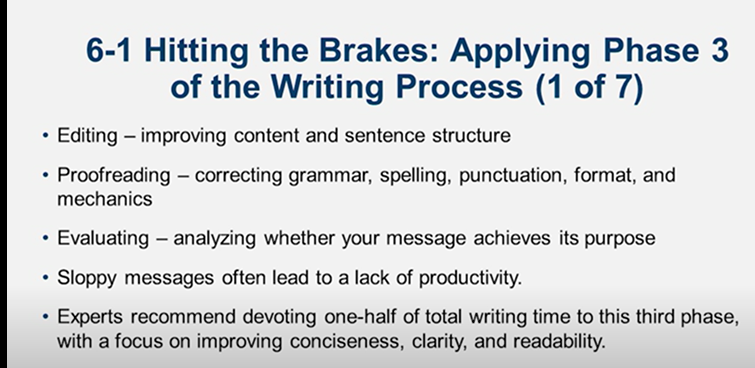
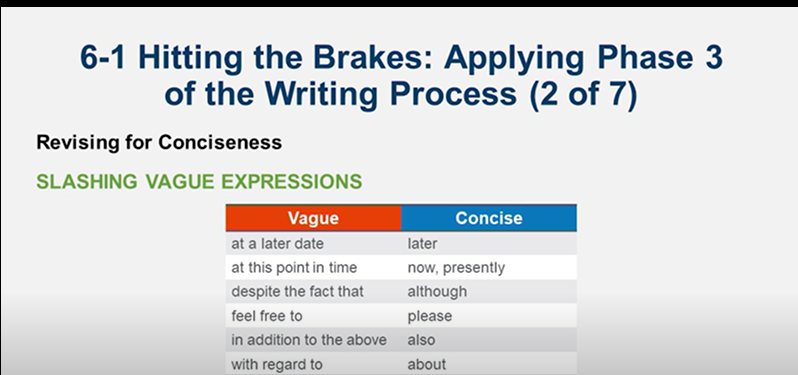
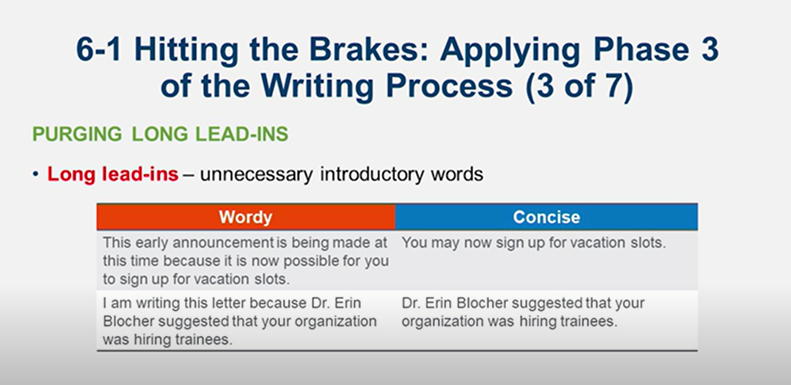
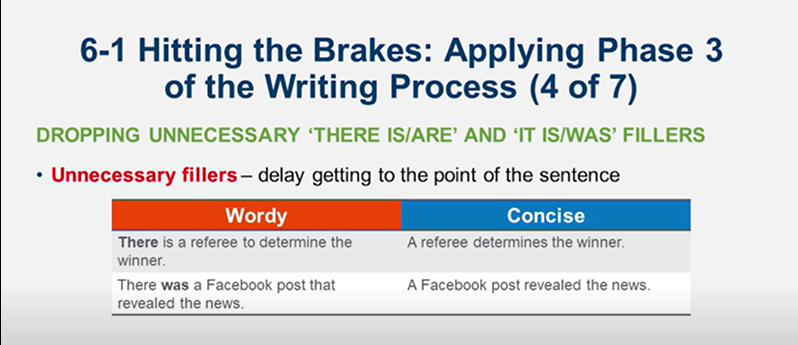
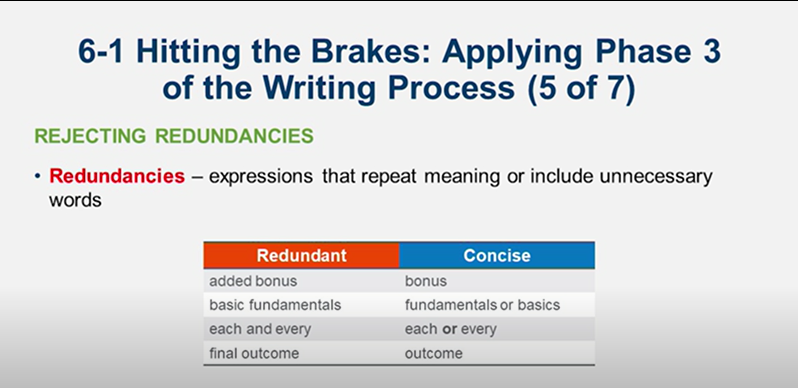
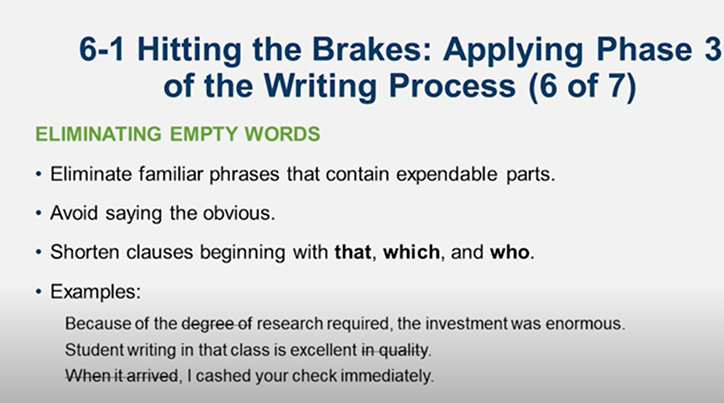
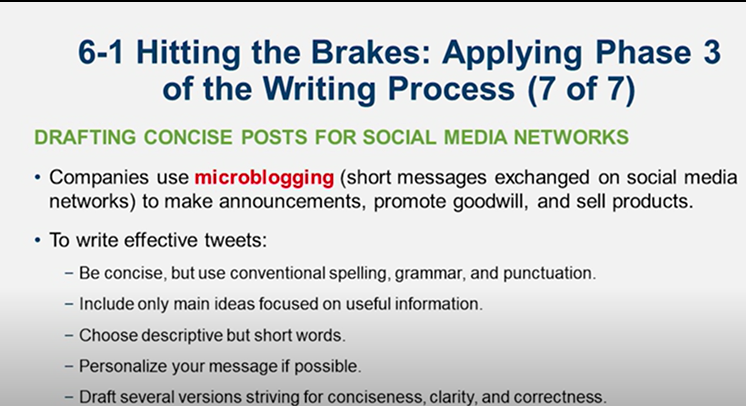
In Section 6-1, we will cover techniques that achieve conciseness as part of Phase 3 of the writing process. Sloppy business messages can lead to a lack of productivity. To avoid messages that waste time, create confusion, and reduce your credibility, take the time to slow down and revise even short messages. The final phase of the 3-x-3 writing process focuses on editing (improving content and sentence structure), proofreading (correcting grammar, spelling, punctuation, format, and mechanics), and evaluating (analyzing whether your message achieves its purpose). Experts recommend devoting one-half of total writing time to this phase, with a focus on improving conciseness, clarity, and readability. As you revise your messages, focus on eliminating imprecise, or vague, expressions and strive to clarify and shorten wordy sentences and phrases. For example, instead of using the vague expression 'at a later date,' use the concise expression 'later,' instead. Long lead-ins are unnecessary introductory words. Eliminating these leads to a more concise and direct message. Consider the wordy example: This early announcement is being made at this time because it is now possible for you to sign up for vacation slots. Now read the revised concise version: You may now sign up for vacation slots. Likewise, unnecessary fillers (such as there is, there are, it is, and it was) delay getting to the point of the sentence. Many sentences can be revised so that fillers are unnecessary. Consider the wordy example: There was a Facebook post that revealed the news. Now read the concise revision: A Facebook post revealed the news. Redundancies are expressions that repeat meaning or include unnecessary words. For example, consider the redundant expression 'added bonus,' versus the concise expression 'bonus.' Instead of adding emphasis, redundancies identify a writer as careless. Eliminate excessive adjectives, adverbs, and phrases that create redundancies and wordiness in your messages. You should also eliminate empty words, such as familiar phrases that contain expendable parts. Be alert to these empty words and phrases: case, degree, the fact that, factor, instance, nature, and quality. Avoid saying the obvious and shorten clauses beginning with that, which, and who. Companies use microblogging (short messages exchanged on social media networks) to make announcements, promote goodwill, and sell products. When drafting posts for social media networks, be concise, but use conventional spelling, grammar, and punctuation. Include only the main ideas focused on useful information, choose descriptive but short words, and personalize your message if possible. Always draft several versions striving for conciseness, clarity, and correctness.
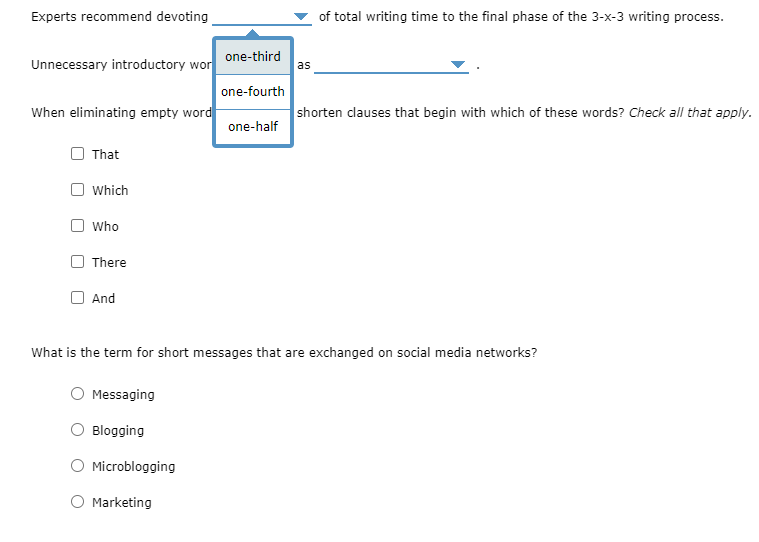
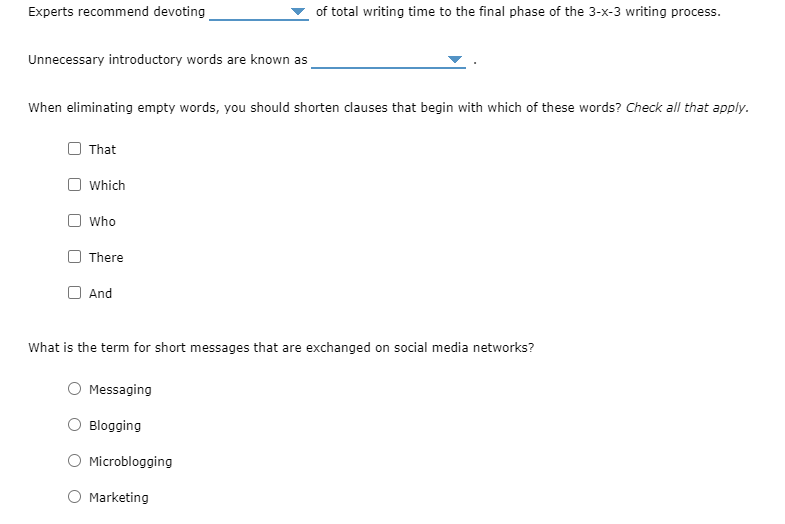
Experts recommend devoting of total writing time to the final phase of the 3-x-3 writing process.
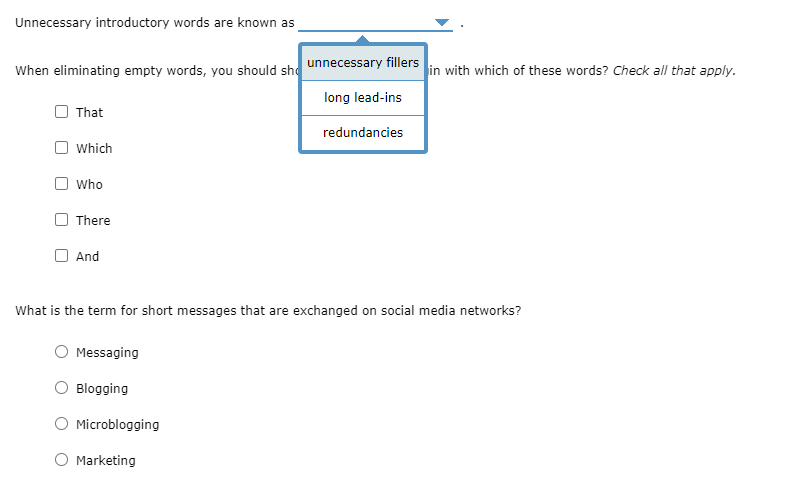
Unnecessary introductory words are known as .
When eliminating empty words, you should shorten clauses that begin with which of these words? Check all that apply.
That
Which
Who
There
And
What is the term for short messages that are exchanged on social media networks?
Messaging
Blogging
Microblogging
Marketing
Step by Step Solution
There are 3 Steps involved in it

Get step-by-step solutions from verified subject matter experts