







Question: Leopard Tools, Case Study Background Leopard Tools is a medium-size producer of manual hand tools used both by professional craftsmen and within the home or
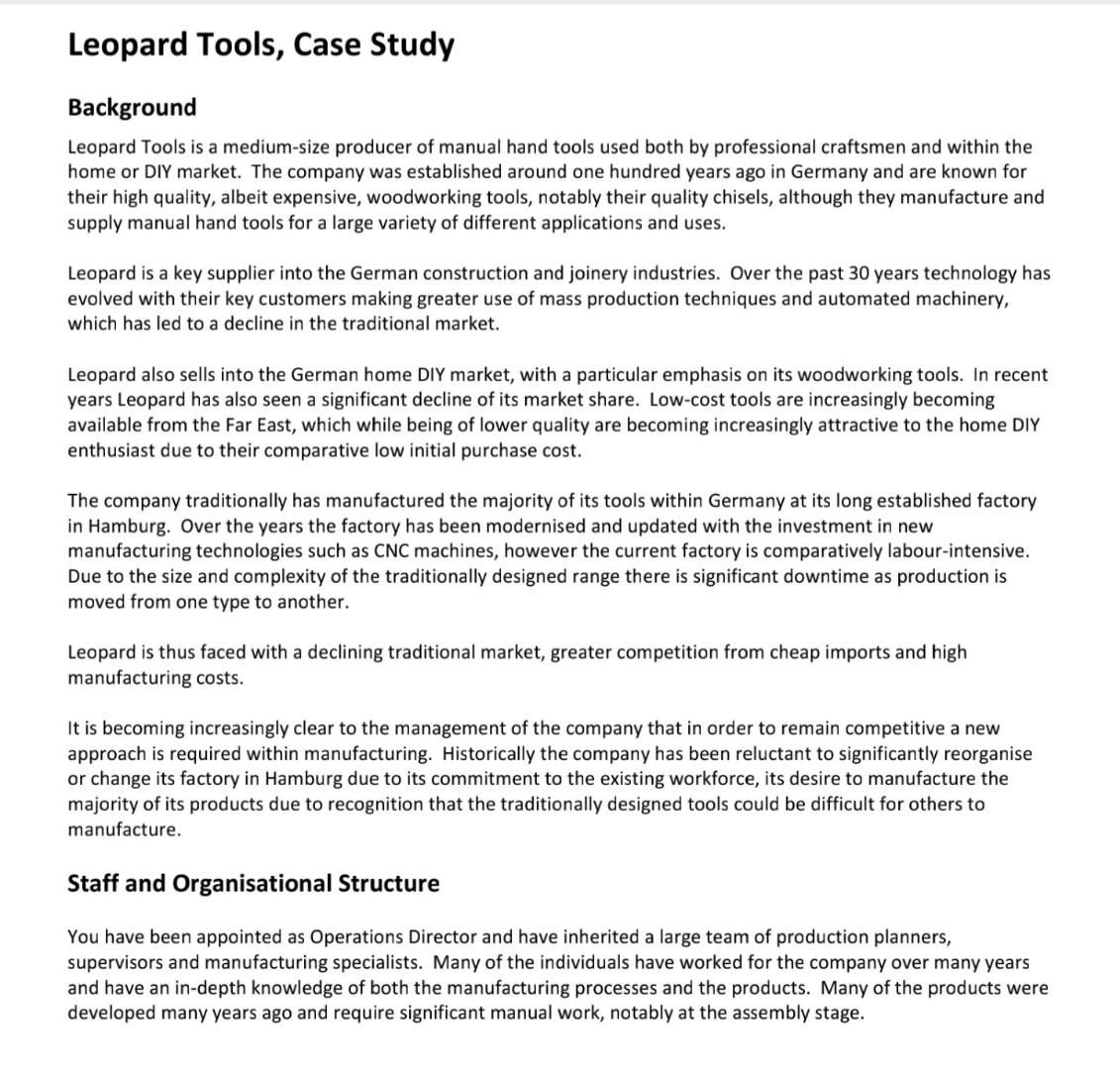
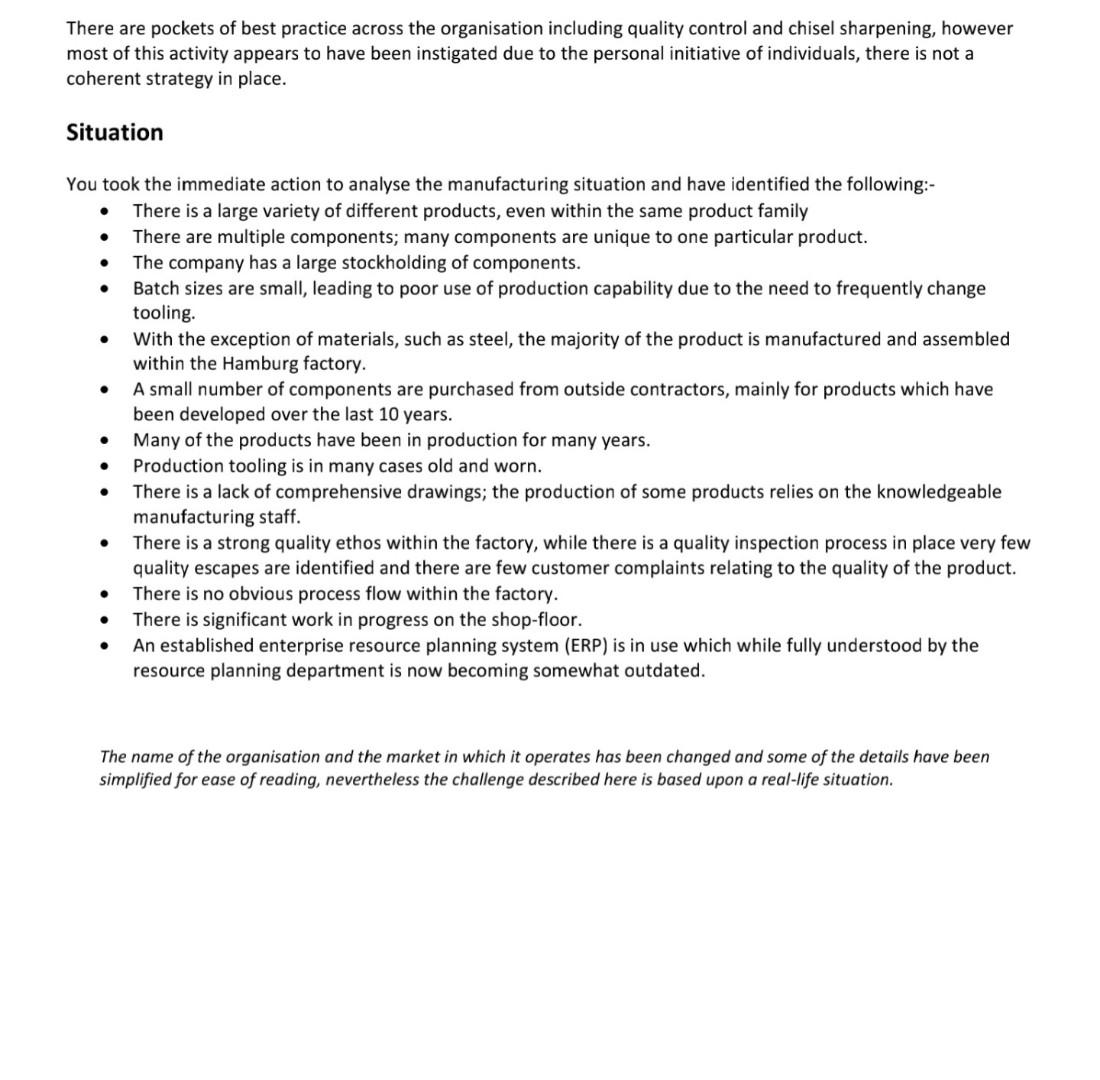

Leopard Tools, Case Study Background Leopard Tools is a medium-size producer of manual hand tools used both by professional craftsmen and within the home or DIY market. The company was established around one hundred years ago in Germany and are known for their high quality, albeit expensive, woodworking tools, notably their quality chisels, although they manufacture and supply manual hand tools for a large variety of different applications and uses. Leopard is a key supplier into the German construction and joinery industries. Over the past 30 years technology has evolved with their key customers making greater use of mass production techniques and automated machinery, which has led to a decline in the traditional market. Leopard also sells into the German home DIY market, with a particular emphasis on its woodworking tools. In recent years Leopard has also seen a significant decline of its market share. Low-cost tools are increasingly becoming available from the Far East, which while being of lower quality are becoming increasingly attractive to the home DIY enthusiast due to their comparative low initial purchase cost. The company traditionally has manufactured the majority of its tools within Germany at its long established factory in Hamburg. Over the years the factory has been modernised and updated with the investment in new manufacturing technologies such as CNC machines, however the current factory is comparatively labour-intensive. Due to the size and complexity of the traditionally designed range there is significant downtime as production is moved from one type to another. Leopard is thus faced with a declining traditional market, greater competition from cheap imports and high manufacturing costs. It is becoming increasingly clear to the management of the company that in order to remain competitive a new approach is required within manufacturing. Historically the company has been reluctant to significantly reorganise or change its factory in Hamburg due to its commitment to the existing workforce, its desire to manufacture the majority of its products due to recognition that the traditionally designed tools could be difficult for others to manufacture. Staff and Organisational Structure You have been appointed as Operations Director and have inherited a large team of production planners, supervisors and manufacturing specialists. Many of the individuals have worked for the company over many years and have an in-depth knowledge of both the manufacturing processes and the products. Many of the products were developed many years ago and require significant manual work, notably at the assembly stage. There are pockets of best practice across the organisation including quality control and chisel sharpening, however most of this activity appears to have been instigated due to the personal initiative of individuals, there is not a coherent strategy in place. Situation . You took the immediate action to analyse the manufacturing situation and have identified the following:- There is a large variety of different products, even within the same product family There are multiple components; many components are unique to one particular product. The company has a large stockholding of components. Batch sizes are small, leading to poor use of production capability due to the need to frequently change tooling. With the exception of materials, such as steel, the majority of the product is manufactured and assembled within the Hamburg factory. A small number of components are purchased from outside contractors, mainly for products which have been developed over the last 10 years. Many of the products have been in production for many years. Production tooling is in many cases old and worn. There is a lack of comprehensive drawings; the production of some products relies on the knowledgeable manufacturing staff. There is a strong quality ethos within the factory, while there is a quality inspection process in place very few quality escapes are identified and there are few customer complaints relating to the quality of the product. There is no obvious process flow within the factory. There is significant work in progress on the shop-floor. An established enterprise resource planning system (ERP) is in use which while fully understood by the resource planning department is now becoming somewhat outdated. . . The name of the organisation and the market in which it operates has been changed and some of the details have been simplified for ease of reading, nevertheless the challenge described here is based upon a real-life situation. It is your task to research the topic in depth and provide a structured, well-reasoned report and presentation. In you answer you may chose to consider the supply chain management approach, information and supporting technologies, as well as manufacturing strategy and ongoing performance improvement approaches. You may wish to consider how these aspects complement each another to achieve an improved synergy and performance levels. The assignment should be approached as if you were a group of consultants tasked on reporting on this company. Your module tutor will act as your customer in this scenario if you have any questions on what is required or about the case study. Leopard Tools, Case Study Background Leopard Tools is a medium-size producer of manual hand tools used both by professional craftsmen and within the home or DIY market. The company was established around one hundred years ago in Germany and are known for their high quality, albeit expensive, woodworking tools, notably their quality chisels, although they manufacture and supply manual hand tools for a large variety of different applications and uses. Leopard is a key supplier into the German construction and joinery industries. Over the past 30 years technology has evolved with their key customers making greater use of mass production techniques and automated machinery, which has led to a decline in the traditional market. Leopard also sells into the German home DIY market, with a particular emphasis on its woodworking tools. In recent years Leopard has also seen a significant decline of its market share. Low-cost tools are increasingly becoming available from the Far East, which while being of lower quality are becoming increasingly attractive to the home DIY enthusiast due to their comparative low initial purchase cost. The company traditionally has manufactured the majority of its tools within Germany at its long established factory in Hamburg. Over the years the factory has been modernised and updated with the investment in new manufacturing technologies such as CNC machines, however the current factory is comparatively labour-intensive. Due to the size and complexity of the traditionally designed range there is significant downtime as production is moved from one type to another. Leopard is thus faced with a declining traditional market, greater competition from cheap imports and high manufacturing costs. It is becoming increasingly clear to the management of the company that in order to remain competitive a new approach is required within manufacturing. Historically the company has been reluctant to significantly reorganise or change its factory in Hamburg due to its commitment to the existing workforce, its desire to manufacture the majority of its products due to recognition that the traditionally designed tools could be difficult for others to manufacture. Staff and Organisational Structure You have been appointed as Operations Director and have inherited a large team of production planners, supervisors and manufacturing specialists. Many of the individuals have worked for the company over many years and have an in-depth knowledge of both the manufacturing processes and the products. Many of the products were developed many years ago and require significant manual work, notably at the assembly stage. There are pockets of best practice across the organisation including quality control and chisel sharpening, however most of this activity appears to have been instigated due to the personal initiative of individuals, there is not a coherent strategy in place. Situation . You took the immediate action to analyse the manufacturing situation and have identified the following:- There is a large variety of different products, even within the same product family There are multiple components; many components are unique to one particular product. The company has a large stockholding of components. Batch sizes are small, leading to poor use of production capability due to the need to frequently change tooling. With the exception of materials, such as steel, the majority of the product is manufactured and assembled within the Hamburg factory. A small number of components are purchased from outside contractors, mainly for products which have been developed over the last 10 years. Many of the products have been in production for many years. Production tooling is in many cases old and worn. There is a lack of comprehensive drawings; the production of some products relies on the knowledgeable manufacturing staff. There is a strong quality ethos within the factory, while there is a quality inspection process in place very few quality escapes are identified and there are few customer complaints relating to the quality of the product. There is no obvious process flow within the factory. There is significant work in progress on the shop-floor. An established enterprise resource planning system (ERP) is in use which while fully understood by the resource planning department is now becoming somewhat outdated. . . The name of the organisation and the market in which it operates has been changed and some of the details have been simplified for ease of reading, nevertheless the challenge described here is based upon a real-life situation. It is your task to research the topic in depth and provide a structured, well-reasoned report and presentation. In you answer you may chose to consider the supply chain management approach, information and supporting technologies, as well as manufacturing strategy and ongoing performance improvement approaches. You may wish to consider how these aspects complement each another to achieve an improved synergy and performance levels. The assignment should be approached as if you were a group of consultants tasked on reporting on this company. Your module tutor will act as your customer in this scenario if you have any questions on what is required or about the case study
Step by Step Solution
There are 3 Steps involved in it

Get step-by-step solutions from verified subject matter experts
 Study Help