







Question: Let A(x) = f(t) dt, where f is the function whose graph is shown. Answer the following with no work needed. fit ) 0.4 0.2
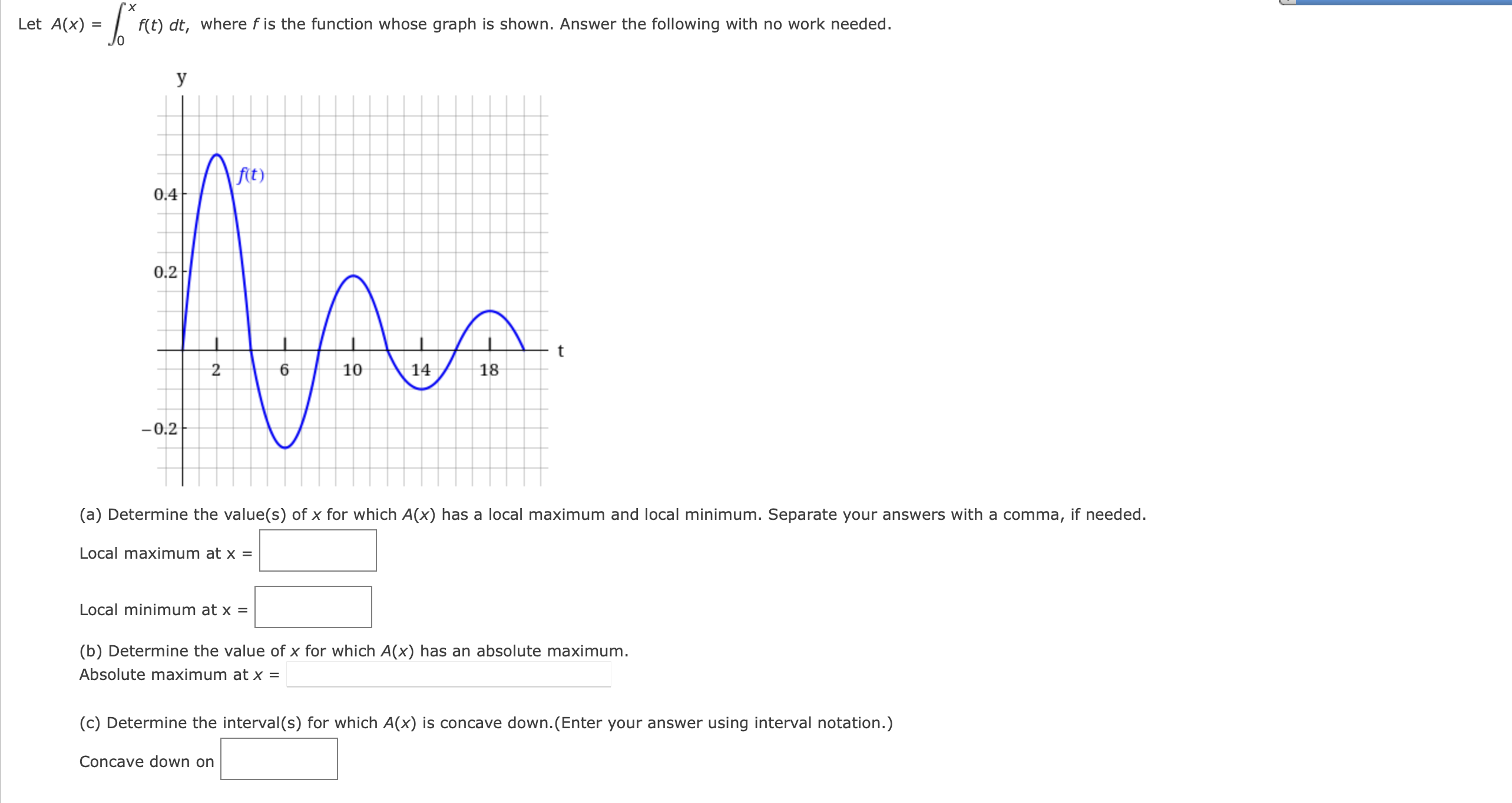
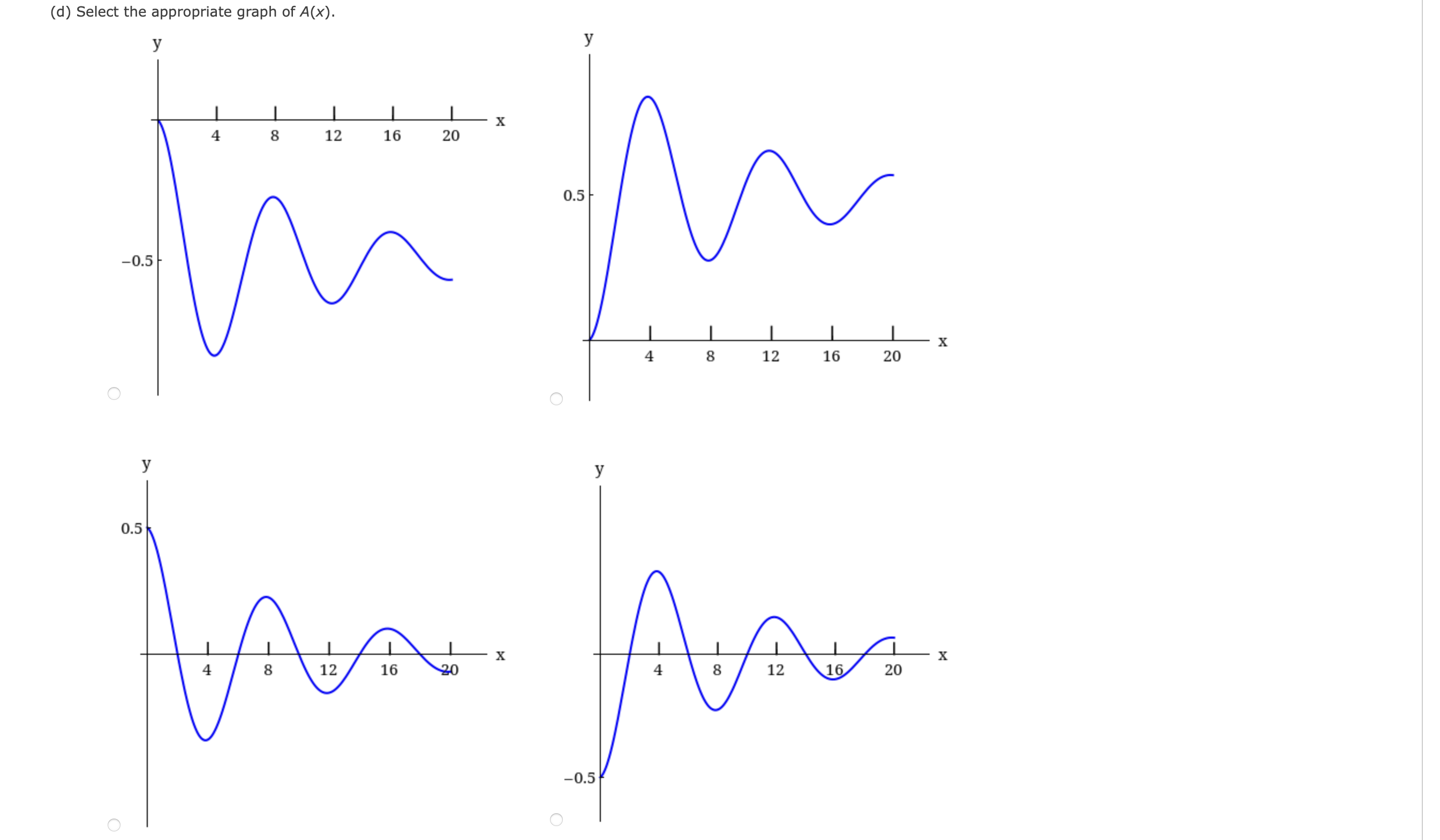
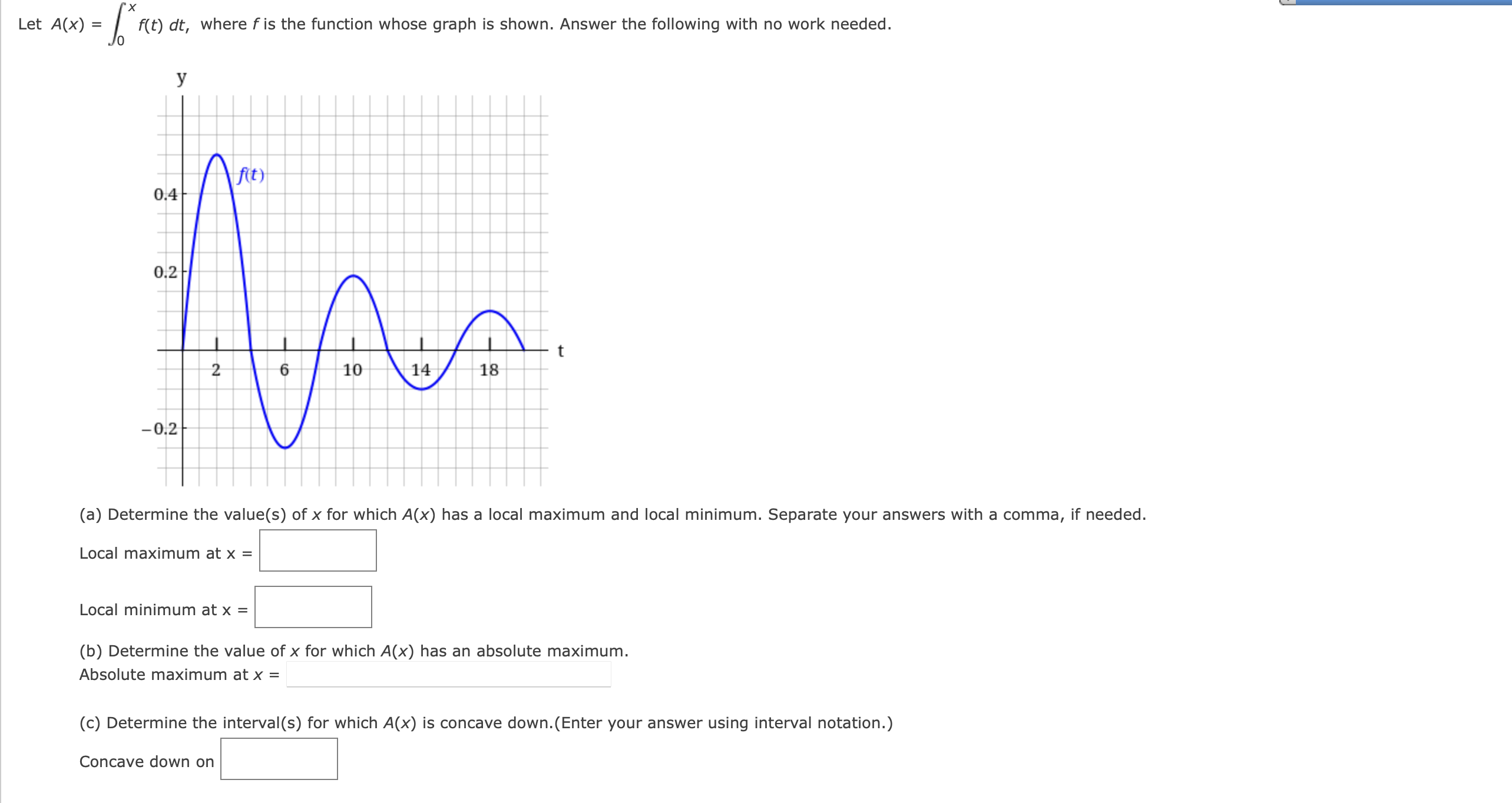
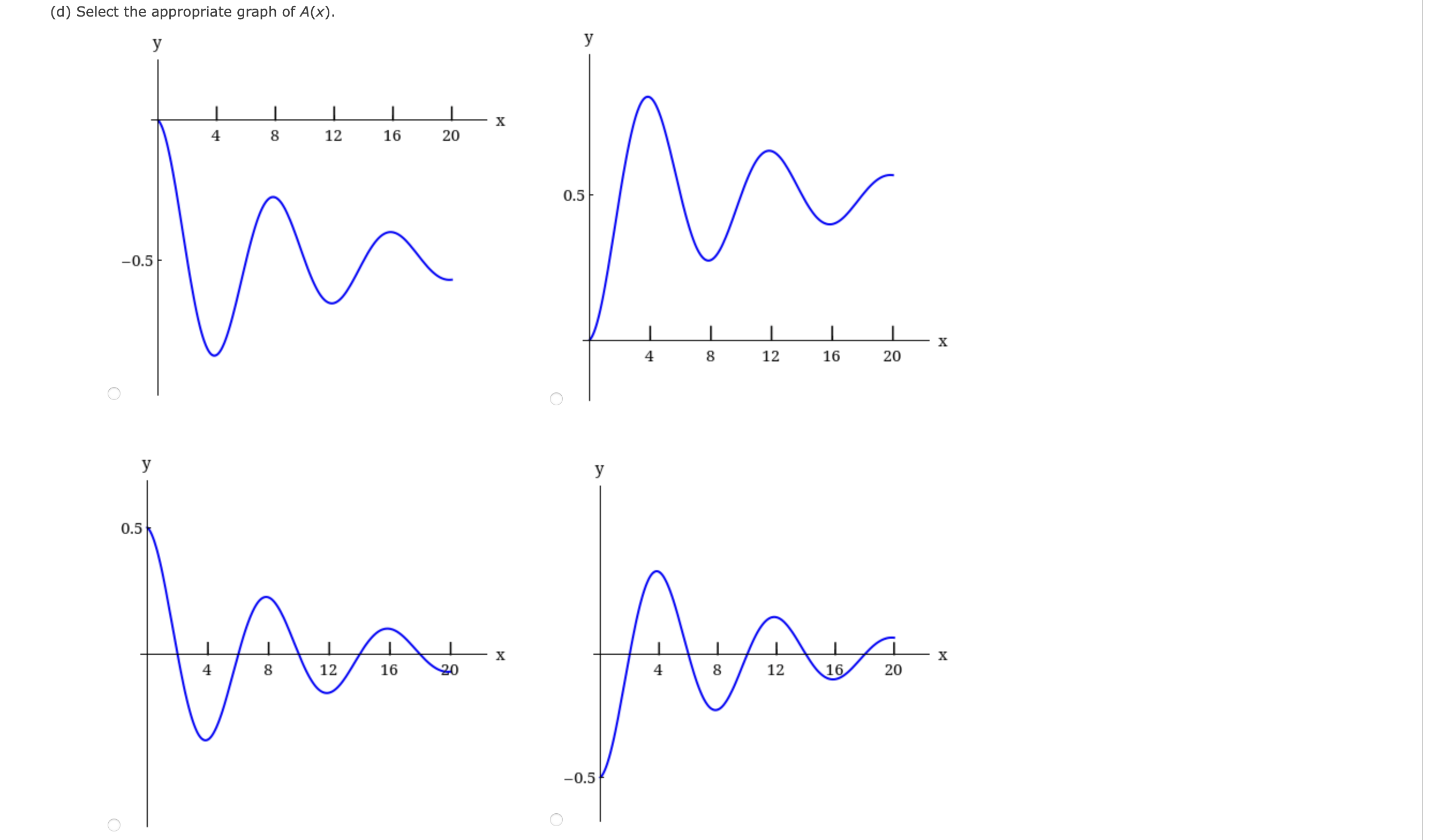
Let A(x) = f(t) dt, where f is the function whose graph is shown. Answer the following with no work needed. fit ) 0.4 0.2 2 6 10 14 18 -0.2 (a) Determine the value(s) of x for which A(x) has a local maximum and local minimum. Separate your answers with a comma, if needed. Local maximum at x = Local minimum at x = (b) Determine the value of x for which A(x) has an absolute maximum. Absolute maximum at x = (c) Determine the interval(s) for which A(x) is concave down. (Enter your answer using interval notation.) Concave down on
Step by Step Solution
There are 3 Steps involved in it
1 Expert Approved Answer
Step: 1 Unlock

Question Has Been Solved by an Expert!
Get step-by-step solutions from verified subject matter experts
Step: 2 Unlock
Step: 3 Unlock
 Study Help