







Question: Let F(x) = / f(t) dt represent the area bounded by the graph f(t) and the horizontal axis. -2 2 3 4 5 6 7
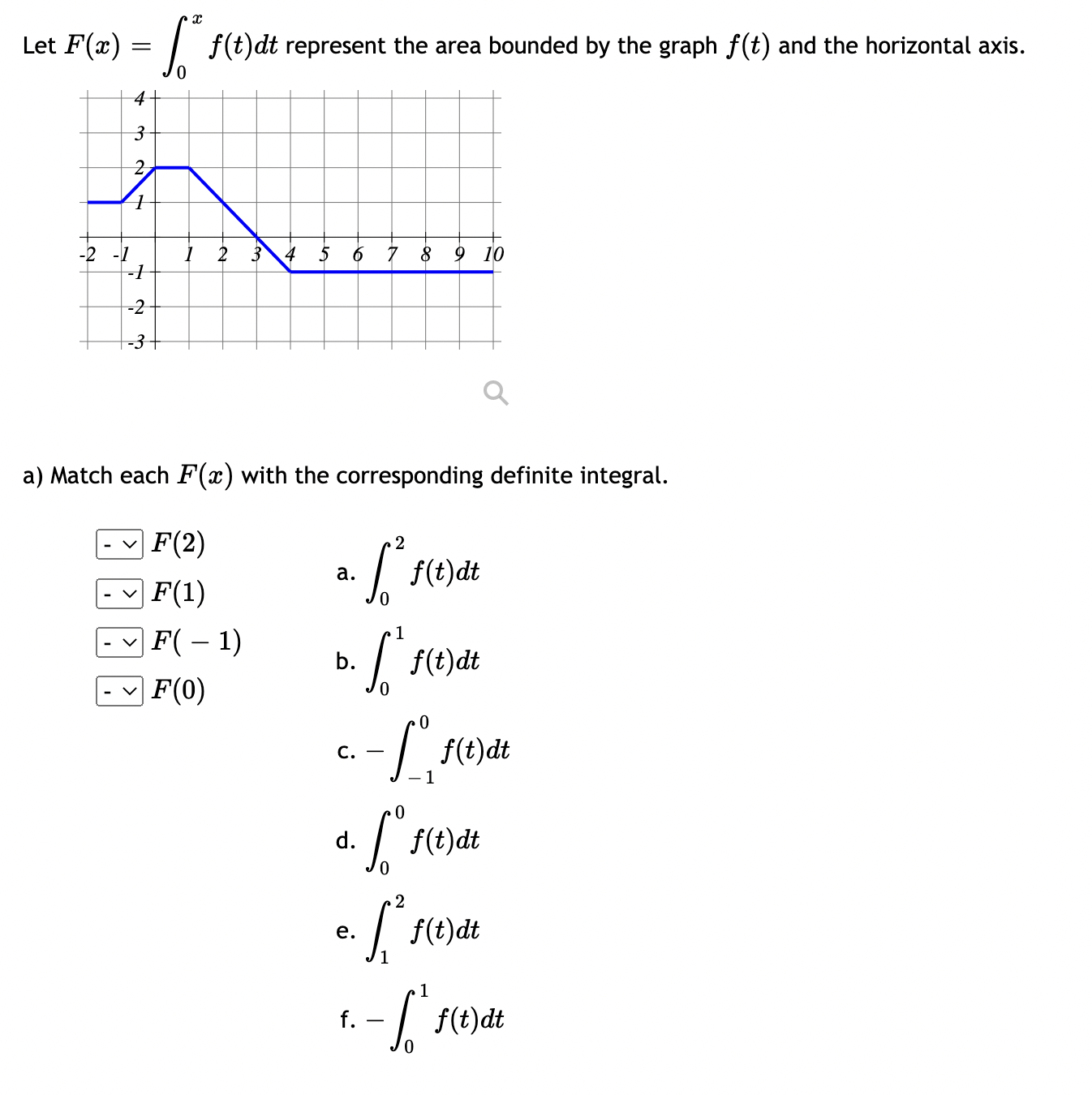
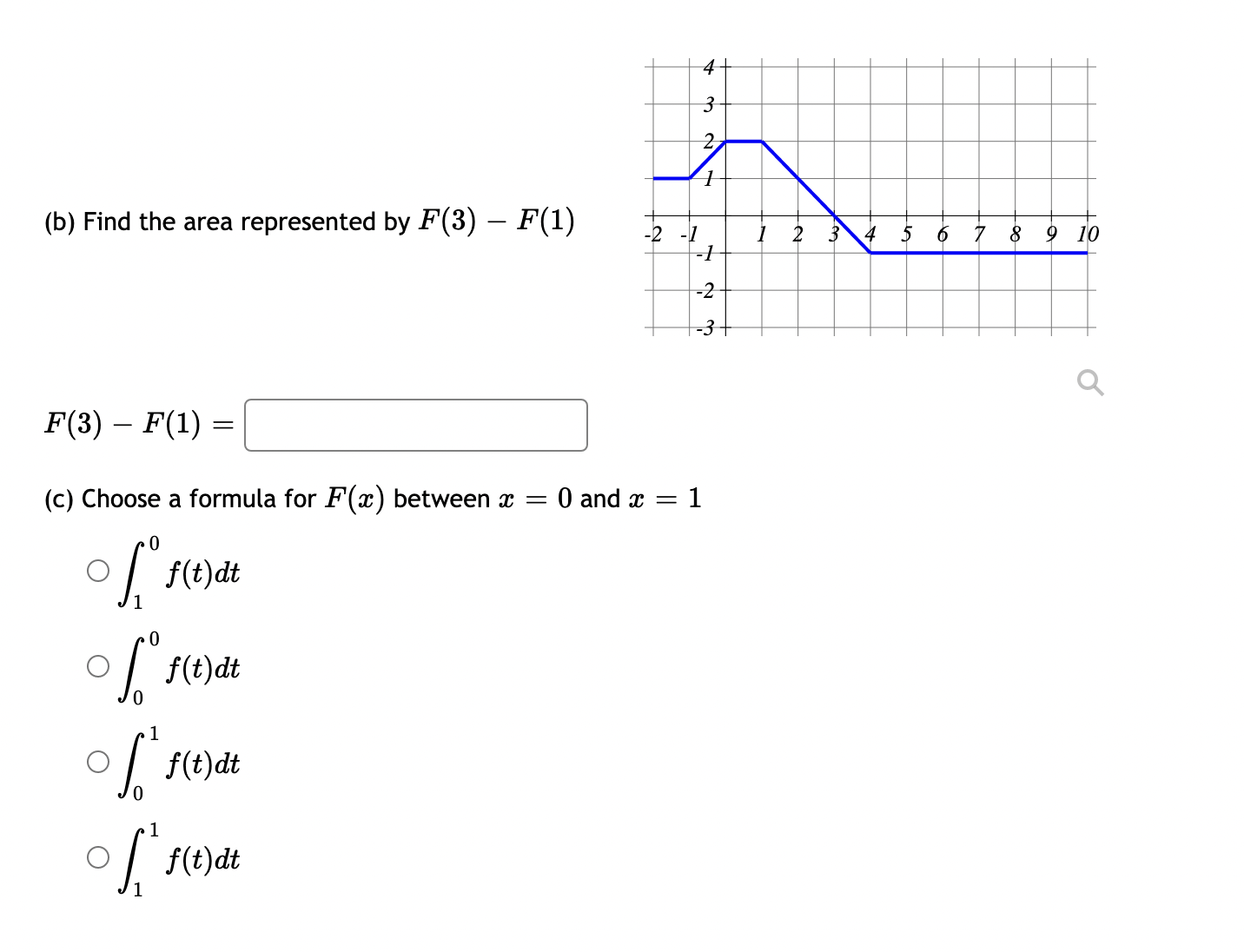
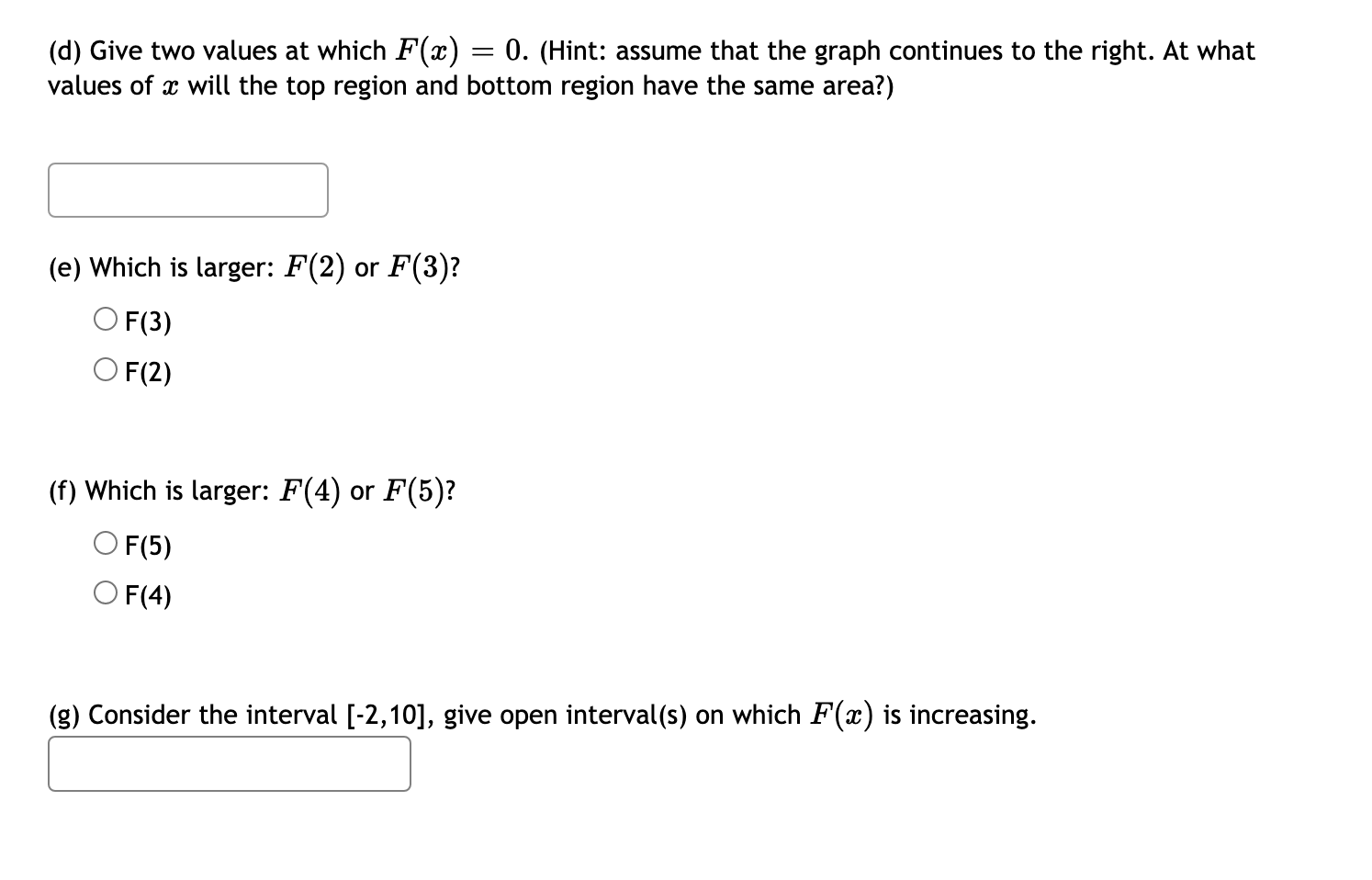
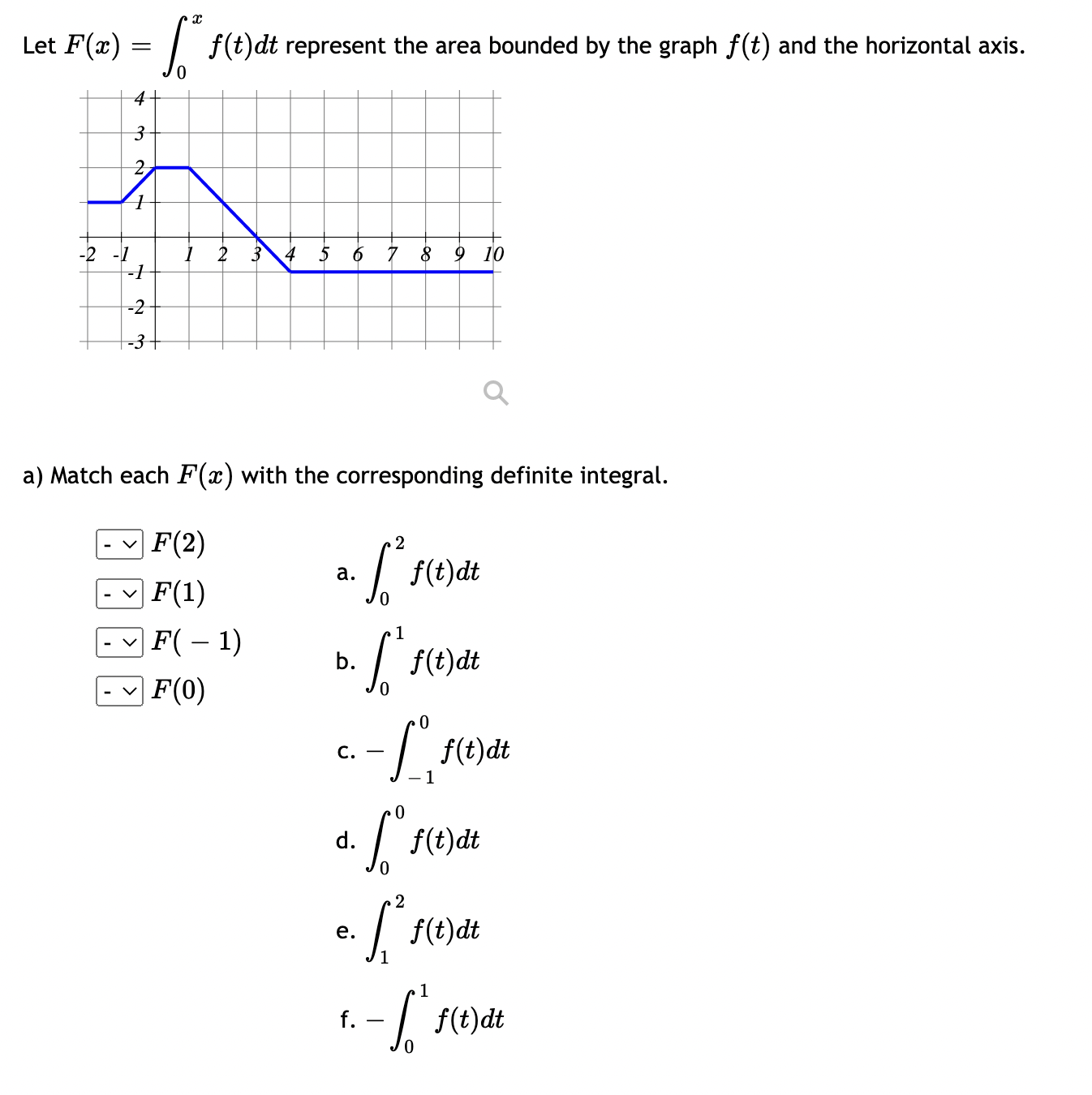
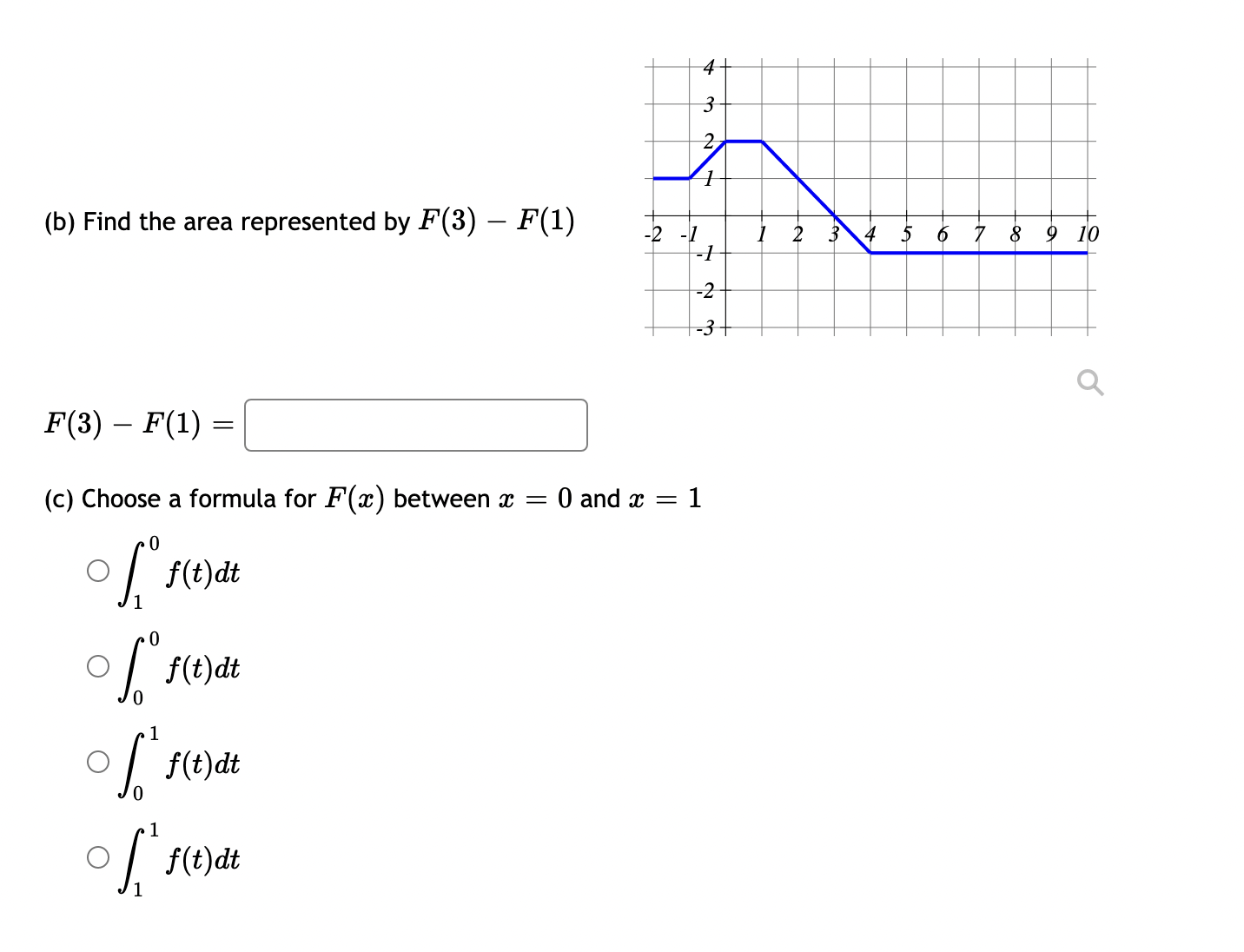
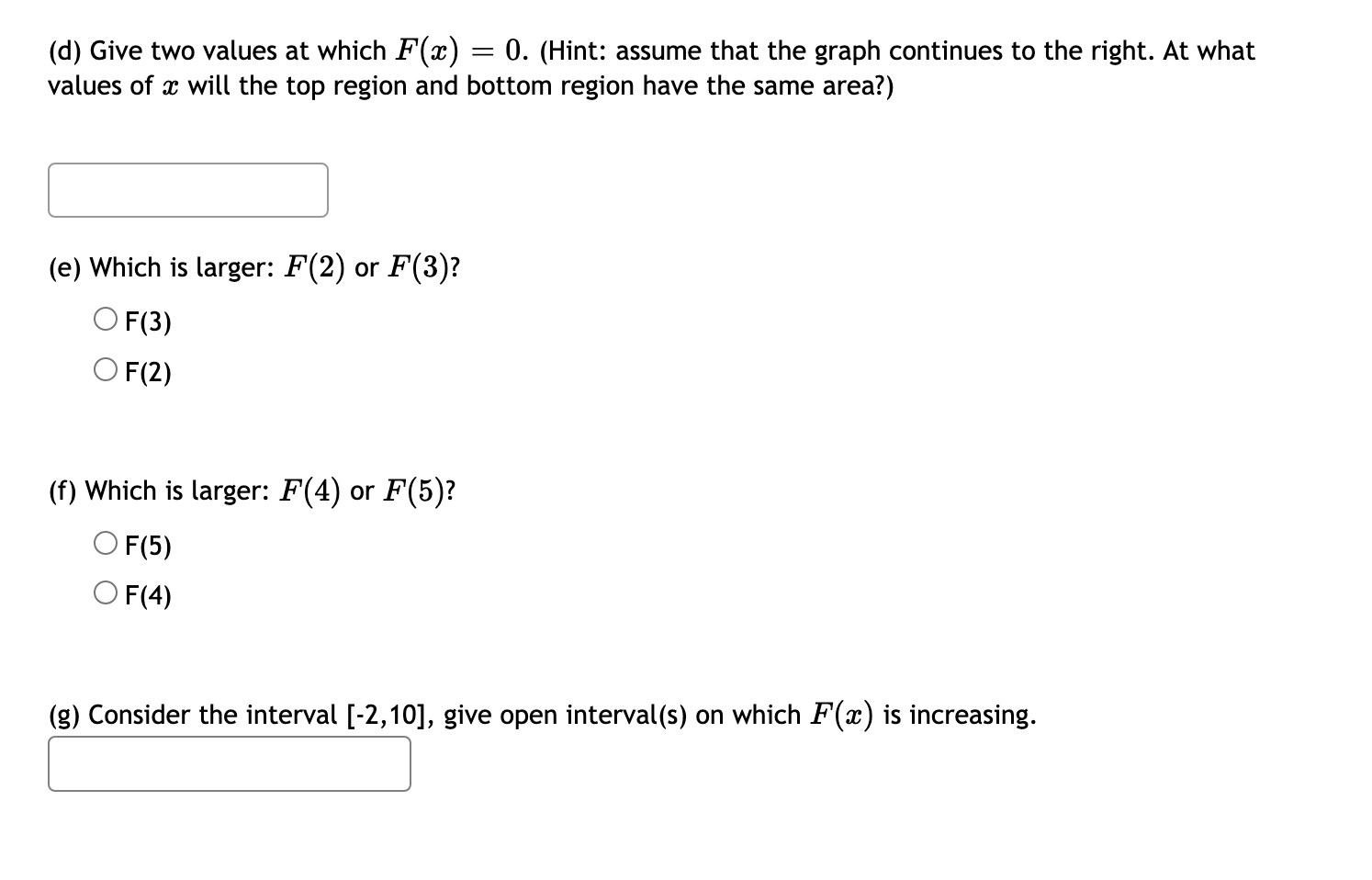
Let F(x) = / f(t) dt represent the area bounded by the graph f(t) and the horizontal axis. -2 2 3 4 5 6 7 8 9 10 Q a) Match each F(a) with the corresponding definite integral. - VF(2) - VF(1) a . ( f ( t ) at - F( -1) - F(0) c. - / f (t ) dt d . / f ( t ) at e. / f (t ) at F. - f(t) dt+ (b) Find the area represented by F(3) - F(1) -2 -1 1 2 3 4 5 6 8 9 10 -2 Q F(3) - F(1) = (c) Choose a formula for F(x) between x = 0 and x = 1 o [ f (t ) at of f ( t ) at of f(t ) at of f (t ) at(d) Give two values at which F(a:) = 0. (Hint: assume that the graph continues to the right. At what values of x will the top region and bottom region have the same area?) (e) Which is larger: F(2) or F(3)? O F(3) O F(2) (f) Which is larger: F(4) or F(5)? O F(5) O F(4) (g) Consider the interval [-2,10], give open interval(s) on which F(a:) is increasing
Step by Step Solution
There are 3 Steps involved in it

Get step-by-step solutions from verified subject matter experts
 Study Help