







Question: Let U = {1, 2, 3, 4, 5, 6, a, b, c, d, e}. If A = {1, 2, a, e} and B = {1,
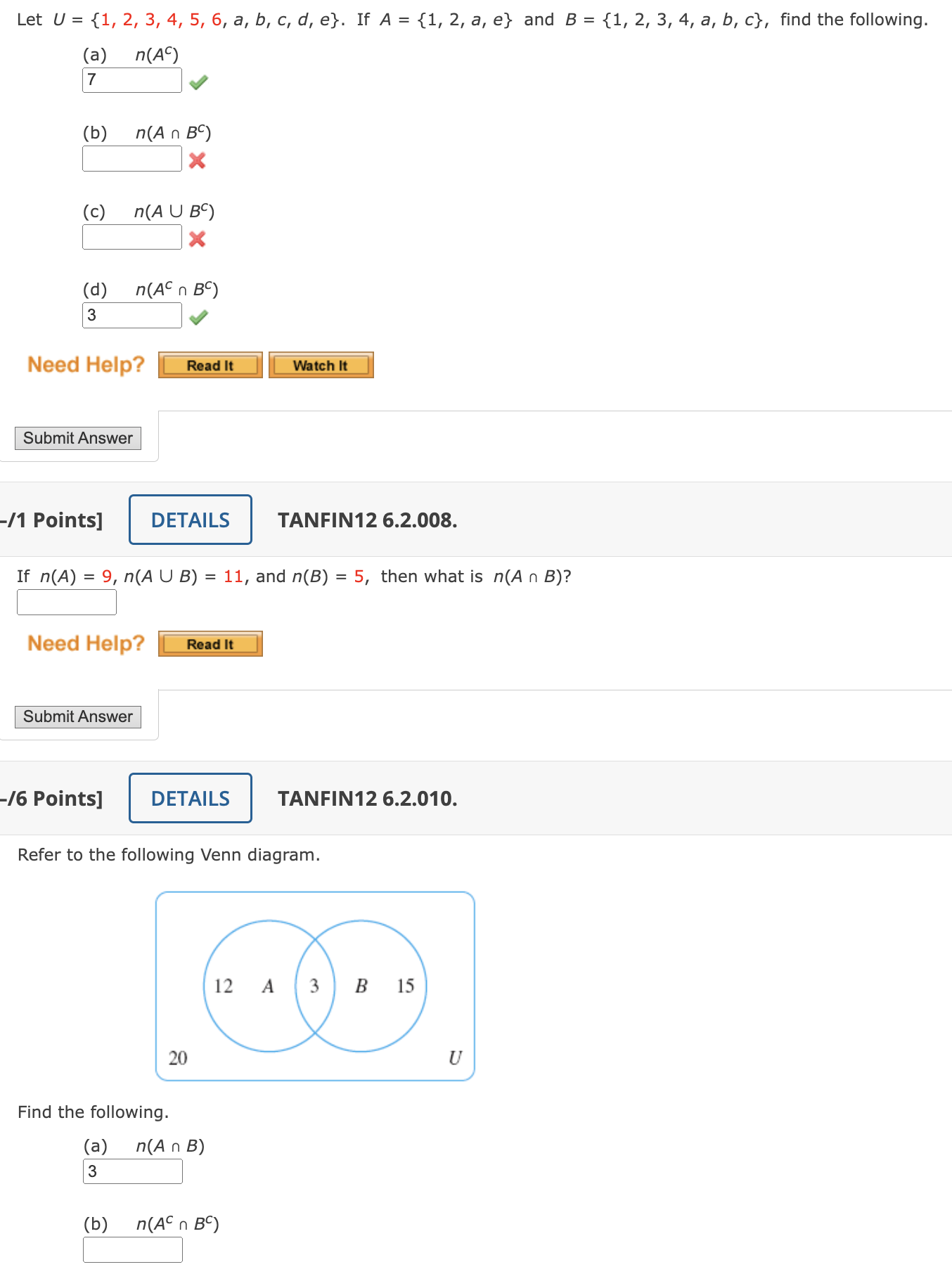
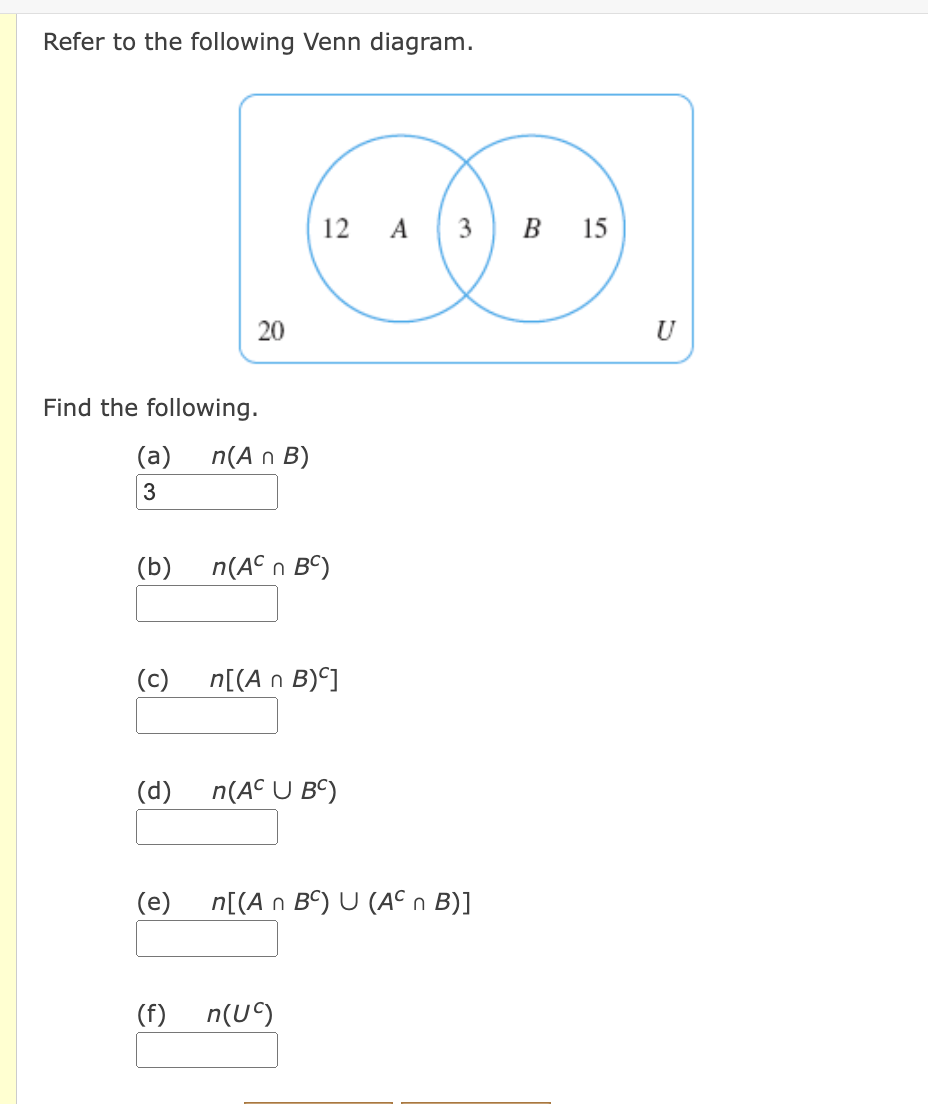
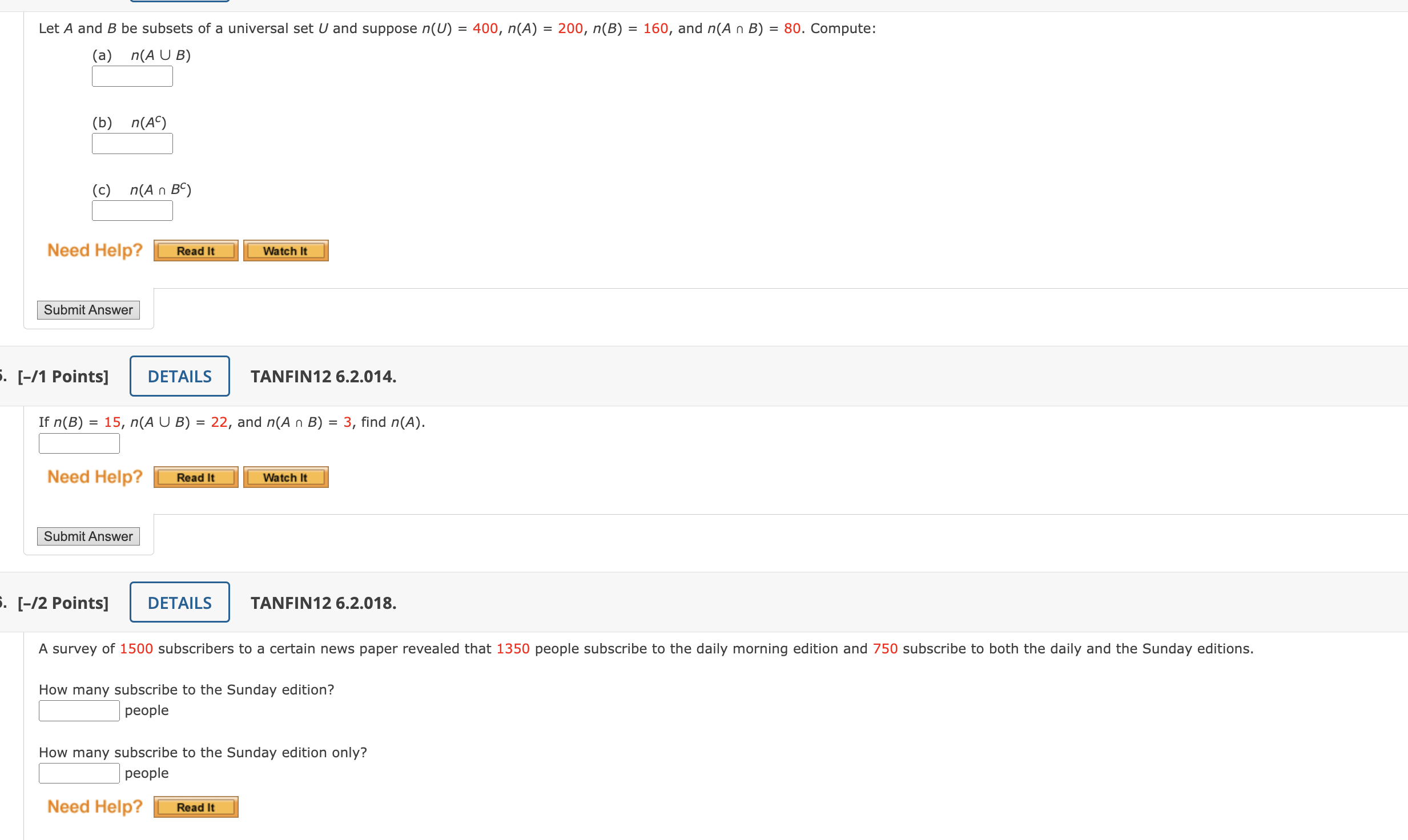
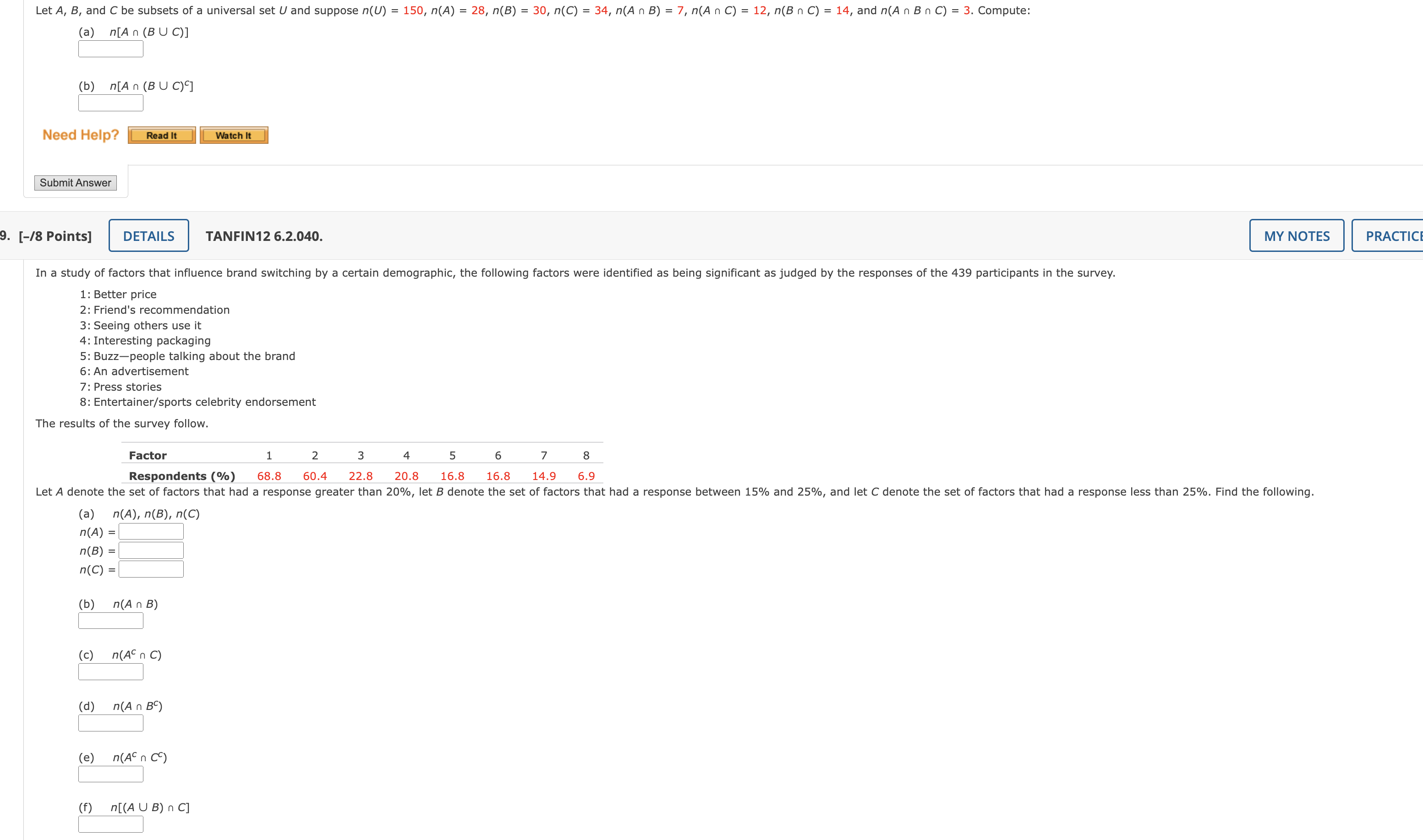
Let U = {1, 2, 3, 4, 5, 6, a, b, c, d, e}. If A = {1, 2, a, e} and B = {1, 2, 3, 4, a, b, c}, find the following. (a) n(AC ) 7 (b ) n( A n BC ) X (c) n(A U BC ) X (d ) n( A C n B C ) 3 Need Help? Read It Watch It Submit Answer /1 Points] DETAILS TANFIN12 6.2.008. If n(A) = 9, n(A U B) = 11, and n(B) = 5, then what is n(An B)? Need Help? Read It Submit Answer /6 Points] DETAILS TANFIN12 6.2.010. Refer to the following Venn diagram. 12 A 3 B 15 20 U Find the following. n(An B) 3 ) n( A C n BC )Refer to the following Venn diagram. 12 A 3 B 15 20 U Find the following. (a) n(An B) 3 (b) n(Ac n BC ) (c) n[( An B )
Step by Step Solution
There are 3 Steps involved in it
1 Expert Approved Answer
Step: 1 Unlock

Question Has Been Solved by an Expert!
Get step-by-step solutions from verified subject matter experts
Step: 2 Unlock
Step: 3 Unlock
 Study Help