Question: Linear Programming (only information given) PROBLEM #2: Grade-A Leather Shop makes custom, hand-tooled briefcases and satchels for its customers. For each briefcase Grade-A sells it
Linear Programming (only information given)
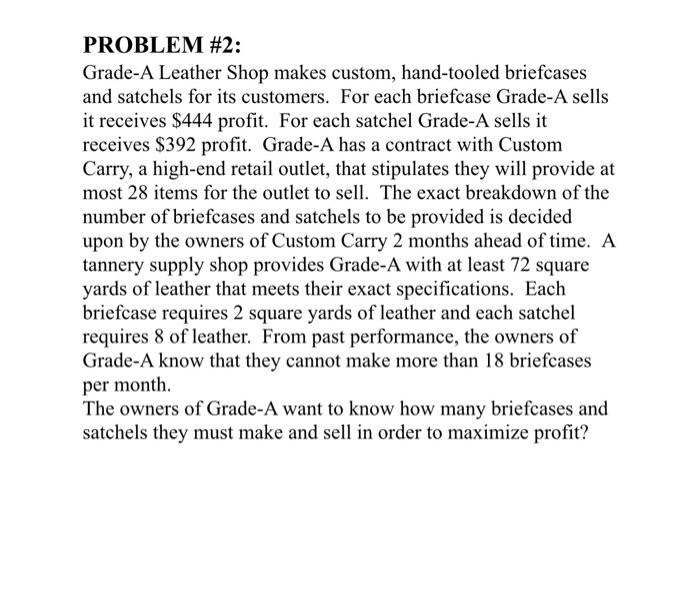
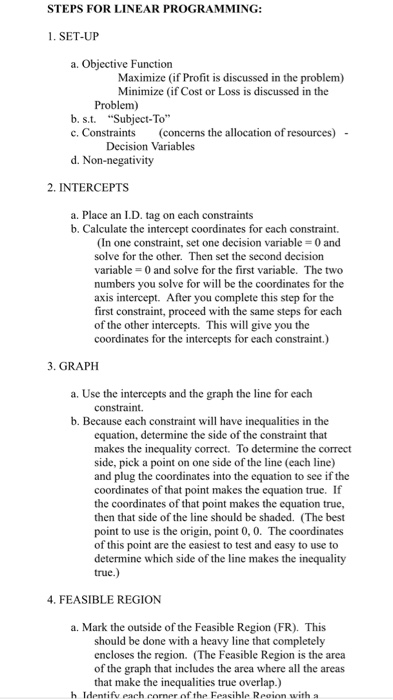
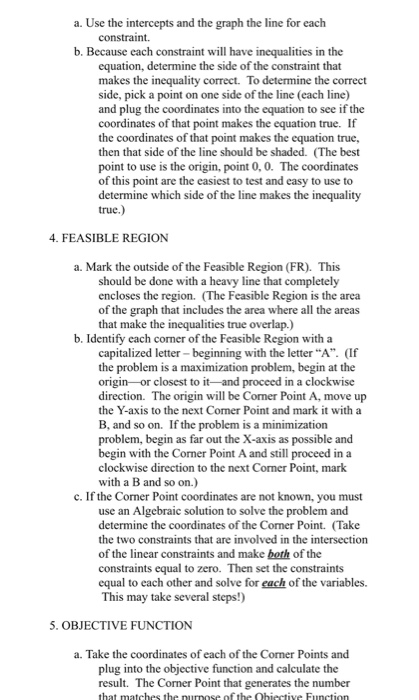
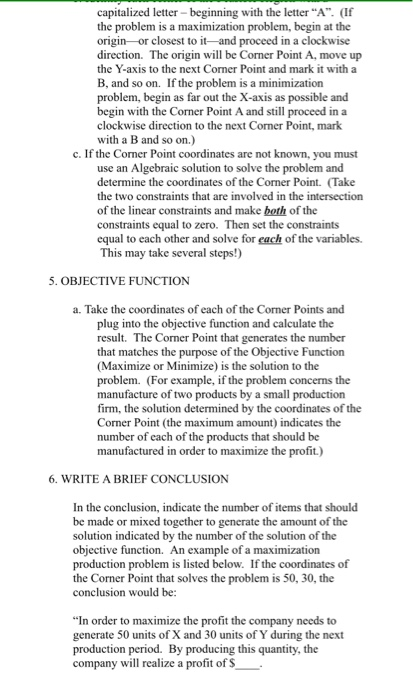
PROBLEM #2: Grade-A Leather Shop makes custom, hand-tooled briefcases and satchels for its customers. For each briefcase Grade-A sells it receives $444 profit. For each satchel Grade-A sells it receives $392 profit. Grade-A has a contract with Custom Carry, a high-end retail outlet, that stipulates they will provide at most 28 items for the outlet to sell. The exact breakdown of the number of briefcases and satchels to be provided is decided upon by the owners of Custom Carry 2 months ahead of time. A tannery supply shop provides Grade-A with at least 72 square yards of leather that meets their exact specifications. Each briefcase requires 2 square yards of leather and each satchel requires 8 of leather. From past performance, the owners of Grade-A know that they cannot make more than 18 briefcases per month The owners of Grade-A want to know how many briefcases and satchels they must make and sell in order to maximize profit? STEPS FOR LINEAR PROGRAMMING: 1. SET-UP a. Objective Function Maximize (if Profit is discussed in the problem) Minimize (if Cost or Loss is discussed in the Problem) b. st. "Subject-To" c. Constraints (concerns the allocation of resources) - Decision Variables d. Non-negativity 2. INTERCEPTS a. Place an I.D. tag on each constraints b. Calculate the intercept coordinates for each constraint. (In one constraint, set one decision variable = 0 and solve for the other. Then set the second decision variable = 0 and solve for the first variable. The two numbers you solve for will be the coordinates for the axis intercept. After you complete this step for the first constraint, proceed with the same steps for each of the other intercepts. This will give you the coordinates for the intercepts for each constraint.) 3. GRAPH a. Use the intercepts and the graph the line for each constraint. b. Because each constraint will have inequalities in the equation, determine the side of the constraint that makes the inequality correct. To determine the correct side, pick a point on one side of the line (each line) and plug the coordinates into the equation to see if the coordinates of that point makes the equation true. If the coordinates of that point makes the equation true, then that side of the line should be shaded. (The best point to use is the origin, point 0, 0. The coordinates of this point are the easiest to test and easy to use to determine which side of the line makes the inequality true.) 4. FEASIBLE REGION a. Mark the outside of the Feasible Region (FR). This should be done with a heavy line that completely encloses the region. (The Feasible Region is the area of the graph that includes the area where all the areas that make the inequalities true overlap.) h Identify each corner of the Feasible Region with a a. Use the intercepts and the graph the line for each constraint. b. Because each constraint will have inequalities in the equation, determine the side of the constraint that makes the inequality correct. To determine the correct side, pick a point on one side of the line (each line) and plug the coordinates into the equation to see if the coordinates of that point makes the equation true. If the coordinates of that point makes the equation true, then that side of the line should be shaded. (The best point to use is the origin, point 0, 0. The coordinates of this point are the easiest to test and easy to use to determine which side of the line makes the inequality true.) 4. FEASIBLE REGION Problem and Origin a. Mark the outside of the Feasible Region (FR). This should be done with a heavy line that completely encloses the region. (The Feasible Region is the area of the graph that includes the area where all the areas that make the inequalities true overlap.) b. Identify each corner of the Feasible Region with a capitalized letter - beginning with the letter "A". (If the problem is a maximization problem, begin at the origin or closest to itand proceed in a clockwise direction. The origin will be Comer Point A, move up the Y-axis to the next Comer Point and mark it with a B, and so on. If the problem is a minimization problem, begin as far out the X-axis as possible and begin with the Corner Point A and still proceed in a clockwise direction to the next Comer Point, mark with a B and so on.) c. If the Corner Point coordinates are not known, you must use an Algebraic solution to solve the problem and determine the coordinates of the Corner Point. (Take the two constraints that are involved in the intersection of the linear constraints and make both of the constraints equal to zero. Then set the constraints equal to each other and solve for each of the variables. This may take several steps!) 5. OBJECTIVE FUNCTION a. Take the coordinates of each of the Corner Points and plug into the objective function and calculate the result. The Corner Point that generates the number that matches the nurse of the Obiective Function capitalized letter - beginning with the letter "A". (If the problem is a maximization problem, begin at the origin or closest to itand proceed in a clockwise direction. The origin will be Corner Point A, move up the Y-axis to the next Corner Point and mark it with a B, and so on. If the problem is a minimization problem, begin as far out the X-axis as possible and begin with the Corner Point A and still proceed in a clockwise direction to the next Corner Point, mark with a B and so on.) c. If the Comer Point coordinates are not known, you must use an Algebraic solution to solve the problem and determine the coordinates of the Comer Point. (Take the two constraints that are involved in the intersection of the linear constraints and make both of the constraints equal to zero. Then set the constraints equal to each other and solve for each of the variables. This may take several steps!) 5. OBJECTIVE FUNCTION a. Take the coordinates of each of the Corner Points and plug into the objective function and calculate the result. The Corner Point that generates the number that matches the purpose of the Objective Function (Maximize or Minimize) is the solution to the problem. (For example, if the problem concerns the manufacture of two products by a small production firm, the solution determined by the coordinates of the Corner Point (the maximum amount) indicates the number of each of the products that should be manufactured in order to maximize the profit.) 6. WRITE A BRIEF CONCLUSION In the conclusion, indicate the number of items that should be made or mixed together to generate the amount of the solution indicated by the number of the solution of the objective function. An example of a maximization production problem is listed below. If the coordinates of the Corner Point that solves the problem is 50, 30, the conclusion would be: "In order to maximize the profit the company needs to generate 50 units of X and 30 units of Y during the next production period. By producing this quantity, the company will realize a profit of $_









 Study Help