





Question: m Up to this point this point. we have learned how to calculate bond prices occuring on coupon dates: we can conveniently input integral number
m Up to this point this point. we have learnedm Up to this point this point. we have learned
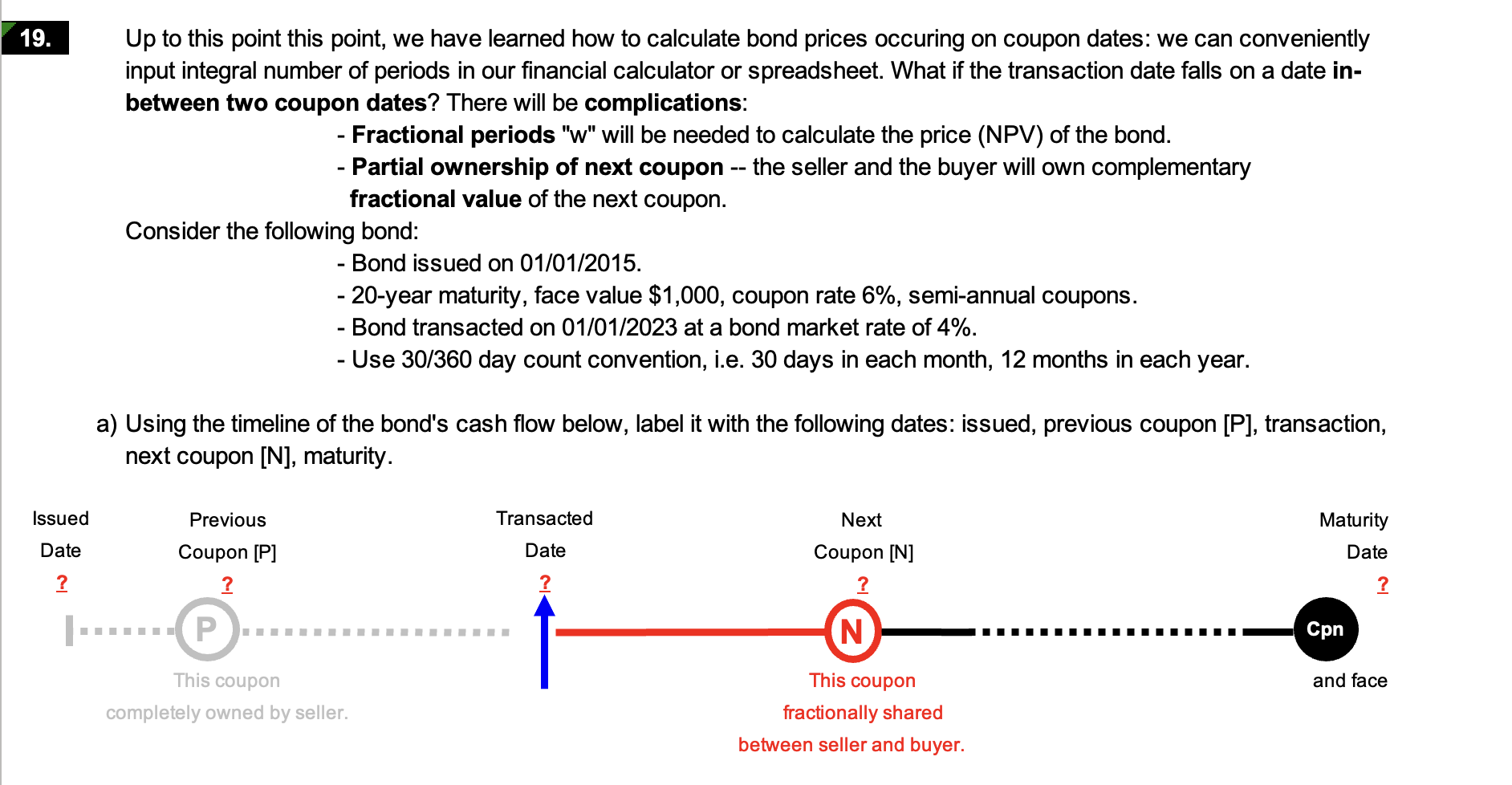
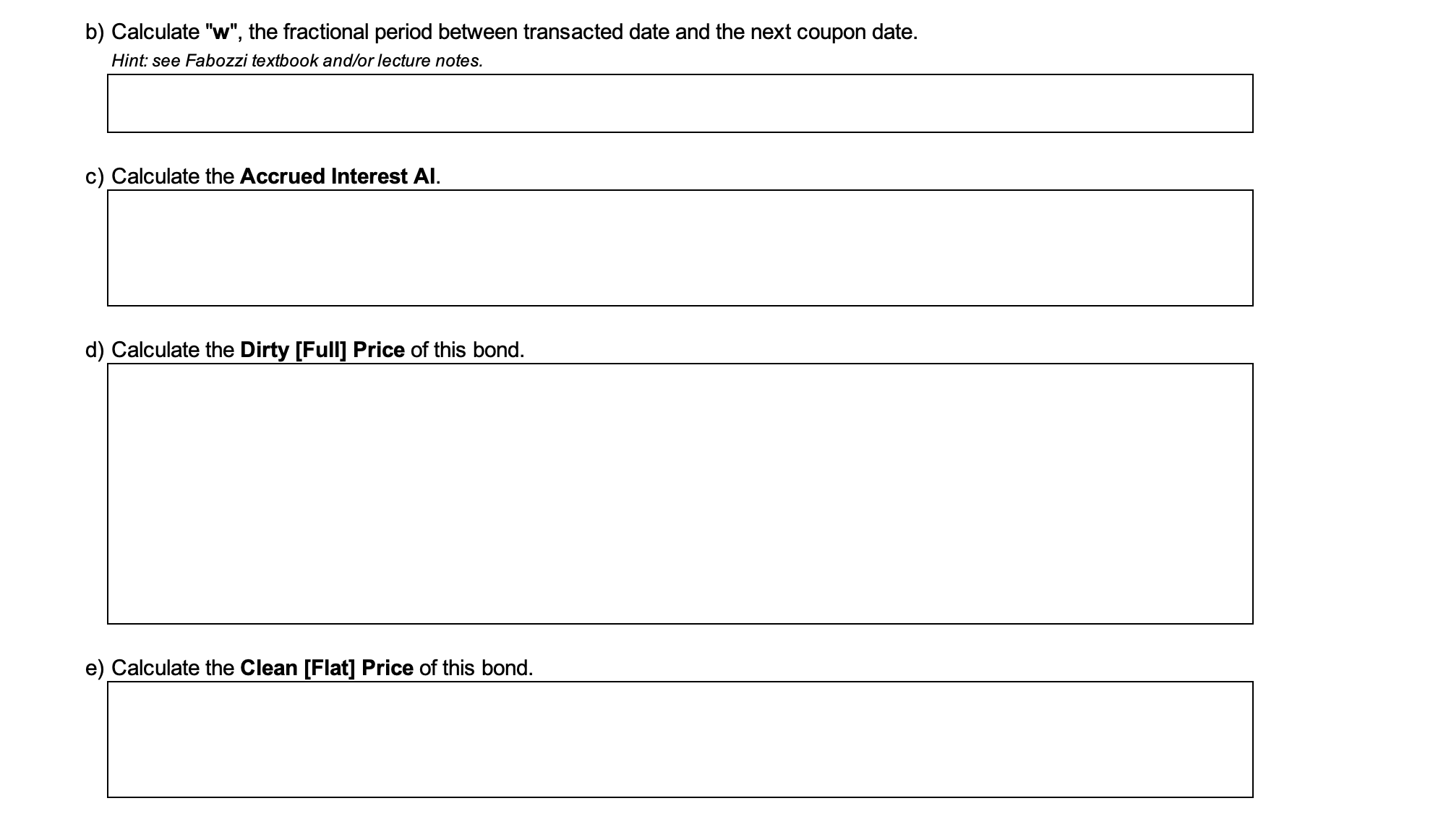
m Up to this point this point. we have learned how to calculate bond prices occuring on coupon dates: we can conveniently input integral number of periods in our nancial calculator or spreadsheet. What if the transaction date falls on a date in- between two coupon dates? There will be complications: - Fractional periods "w" will be needed to calculate the price (NPV) of the bond. - Partial ownership of next coupon -- the seller and the buyer will own complementary fractional value of the next coupon. Consider the following bond: - Bond issued on 01/01/2015. - 20-year maturity, face value $1,000, coupon rate 6%, semi-annual coupons. - Bond transacted on 01/01/2023 at a bond market rate of 4%. - Use 30/360 day count convention, Le. 30 days in each month, 12 months in each year. a) Using the timeline of the bond's cash ow below, label it with the following dates: issued, previous coupon [P], transaction, next coupon [N], maturity. Issued Previous Transacted Next Maturity Date Coupon [P] Date Coupon [N] Date 2 Z 2 3 Z ll-IIIIIIIIIIIIIII4 This coupon and face fractionally shared between seller and buyer. b) Calculate "w", the fractional period between transacted date and the next coupon date. Hint: see Fabozzi textbook and/or lecture notes. 0) Calculate the Accrued Interest AI. d) Calculate the Dirty [Full] Price of this bond. e) Calculate the Clean [Flat] Price of this bond

Step by Step Solution

There are 3 Steps involved in it

1 Expert Approved Answer
Step: 1 Unlock blur-text-image
Question Has Been Solved by an Expert!

Get step-by-step solutions from verified subject matter experts

Step: 2 Unlock
Step: 3 Unlock

Students Have Also Explored These Related Finance Questions!