







Question: M02 Assignment: Case Assessment Case Marshall v. Barlow's, Inc. 436 U.S. 307 (1978) U.S. Supreme Court On the morning of September 11, 1975, an OSHA
M02 Assignment: Case Assessment
Case
Marshall v. Barlow's, Inc. 436 U.S. 307 (1978) U.S. Supreme Court
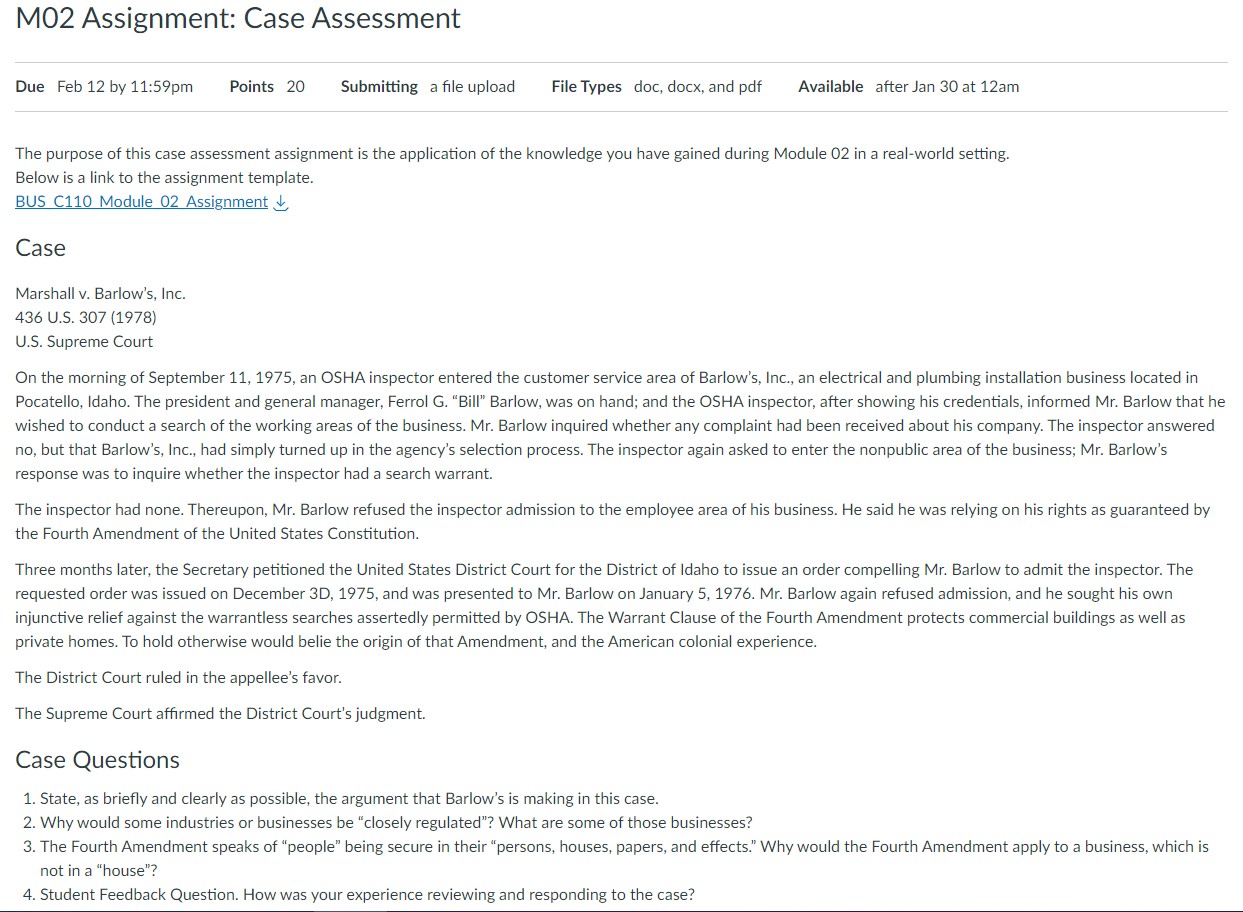
On the morning of September 11, 1975, an OSHA inspector entered the customer service area of Barlow's, Inc., an electrical and plumbing installation business located in Pocatello, Idaho. The president and general manager, Ferrol G. "Bill" Barlow, was on hand; and the OSHA inspector, after showing his credentials, informed Mr. Barlow that he wished to conduct a search of the working areas of the business. Mr. Barlow inquired whether any complaint had been received about his company. The inspector answered no, but that Barlow's, Inc., had simply turned up in the agency's selection process. The inspector again asked to enter the nonpublic area of the business; Mr. Barlow's response was to inquire whether the inspector had a search warrant.
The inspector had none. Thereupon, Mr. Barlow refused the inspector admission to the employee area of his business. He said he was relying on his rights as guaranteed by the Fourth Amendment of the United States Constitution.
Three months later, the Secretary petitioned the United States District Court for the District of Idaho to issue an order compelling Mr. Barlow to admit the inspector. The requested order was issued on December 3D, 1975, and was presented to Mr. Barlow on January 5, 1976. Mr. Barlow again refused admission, and he sought his own injunctive relief against the warrantless searches assertedly permitted by OSHA. The Warrant Clause of the Fourth Amendment protects commercial buildings as well as private homes. To hold otherwise would belie the origin of that Amendment, and the American colonial experience.
The District Court ruled in the appellee's favor.
The Supreme Court affirmed the District Court's judgment.
Case Questions
- State, as briefly and clearly as possible, the argument that Barlow's is making in this case.
- Why would some industries or businesses be "closely regulated"? What are some of those businesses?
- The Fourth Amendment speaks of "people" being secure in their "persons, houses, papers, and effects." Why would the Fourth Amendment apply to a business, which is not in a "house"?
- Student Feedback Question. How was your experience reviewing and responding to the case?
M02 Assignment: Case Assessment Due Feb 12 by 11:59pm Points 20 Submitting a le upload File Types doc. docx. and pdf Available afterJan 30 at 12am The purpose of this case assessment assignment is the application of the knowledge you have gained during Module 02 in a real-world setting. Below is a link to the assignment template. BUS C110 Module 02 Assignment'i Case Marshall v. Barlow's. Inc. 436 US. 307 [1978) US. Supreme Court On the morning of September 11, 1975, an OSHA inspector entered the customer service area of Barlow's. Inc.. an electrical and plumbing installation business located in Pocatello. ldaho. The president and general manager, Ferrol G. "Bill" Barlow. was on hand; and the OSHAinspector, after showing his credentials. intormed Mr. Barlow that he wished to conduct a search of the working areas of the business. Mr. Barlow inquired whether any complaint had been received about his company. The inspector answered no, but that Barlow's. Inc.. had simply turned up in the agency's selection process. The inspector again asked to enter the nonpublic area of the business; Mr. Barlow's response was to inquire whether the inspector had a search warrant. The inspector had none. Thereupon, Mr. Barlow refused the inspector admission to the employee area of his business. He said he was relying on his rights as guaranteed by the Fourth Amendment of the United States Constitution. Three months later. the Secretary petitioned the United States District Court for the District of Idaho to issue an order compelling Mr. Barlow to admit the inspector. The requested order was issued on December 3D, 1975, and was presented to Mr. Barlow on January 5. 1976. Mr. Barlow again refused admission. and he sought his own injunctive relief against the warrantiess searches assertedly permitted by OSHA. The Warrant Clause of the Fourth Amendment protects commercial buildings as well as private homes. To hold otherwise would belie the origin ofthat Amendment. and the American colonial experience. The District Court ruled in the appellee's favor. The Supreme Court afrmed the District Court's judgment. Case Questions 1. State, as briey and clearly as possible. the argument that Barlow's is making in this case. 2. Why would some industries or businesses be I'closely regulated"? What are some of those businesses? 3. The Fourth Amendment speaks of "people" being secure in their "persons. houses. papers, and effects." Why would the Fourth Amendment apply to a business, which is not in a "house"? 4. Student Feedback Question. How was your experience reviewing and responding to the case
Step by Step Solution
There are 3 Steps involved in it

Get step-by-step solutions from verified subject matter experts
 Study Help