Question: Make notes to capture the author's thesis and main supporting points. Think of your notes as being a 30-second elevator conversation with someone who has
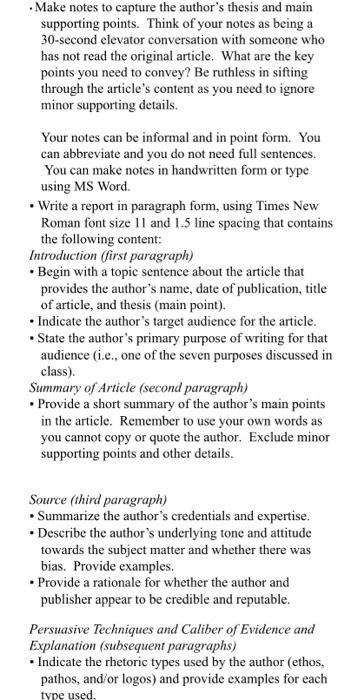
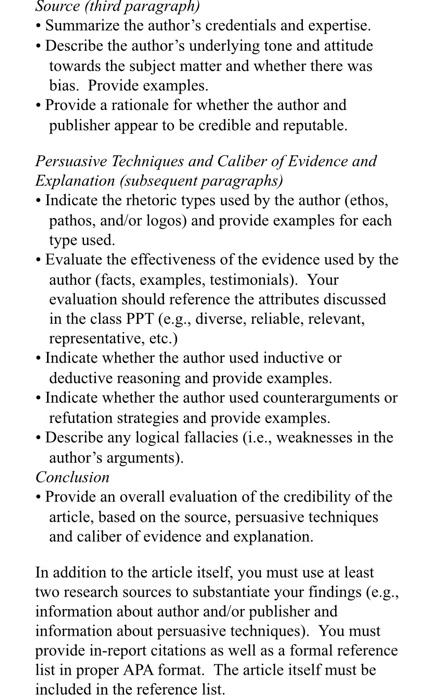
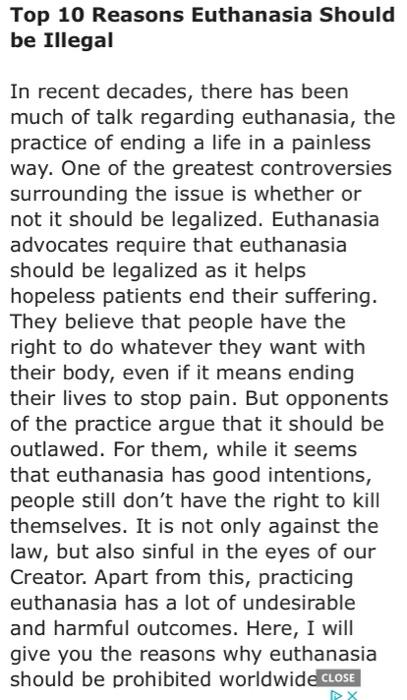
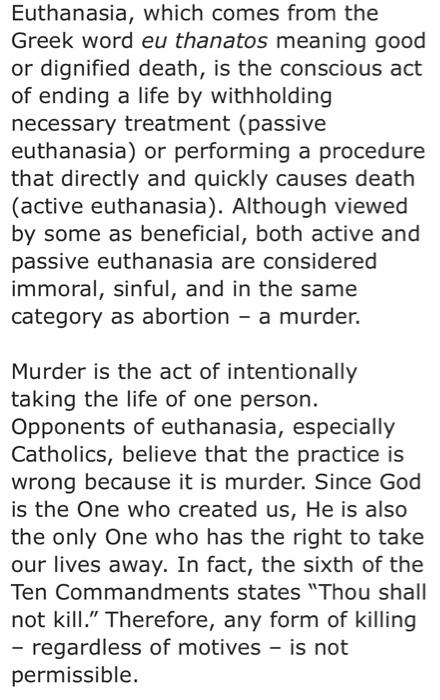
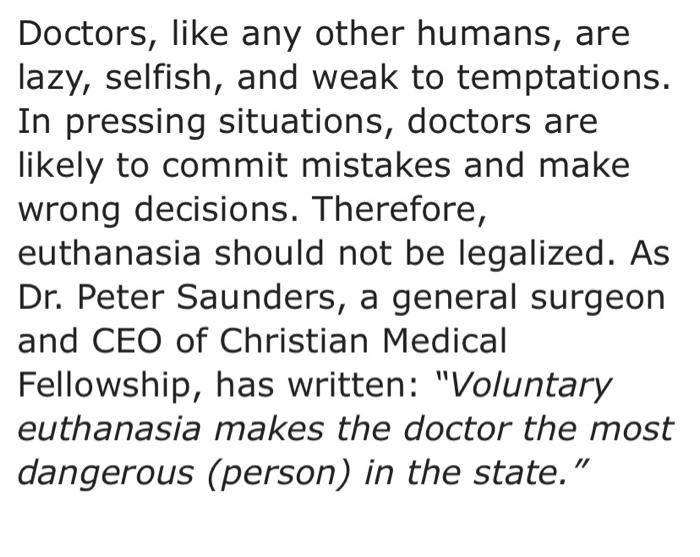
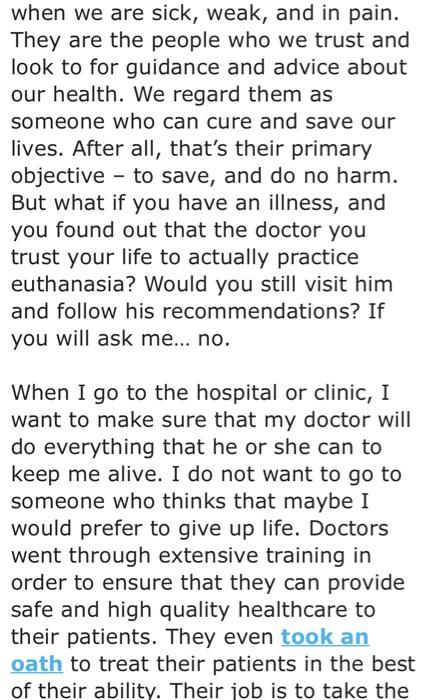
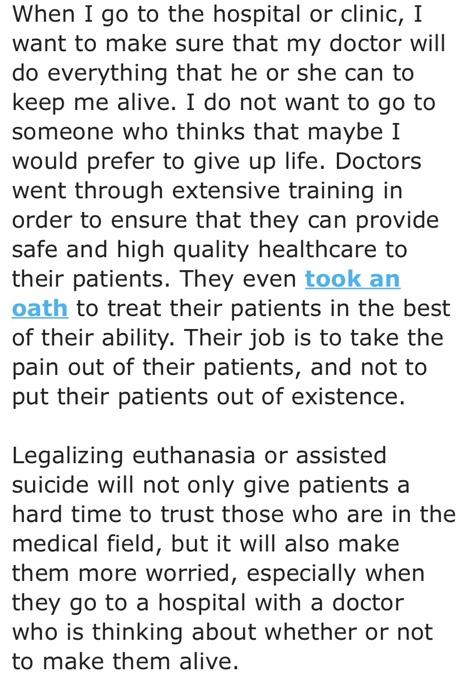
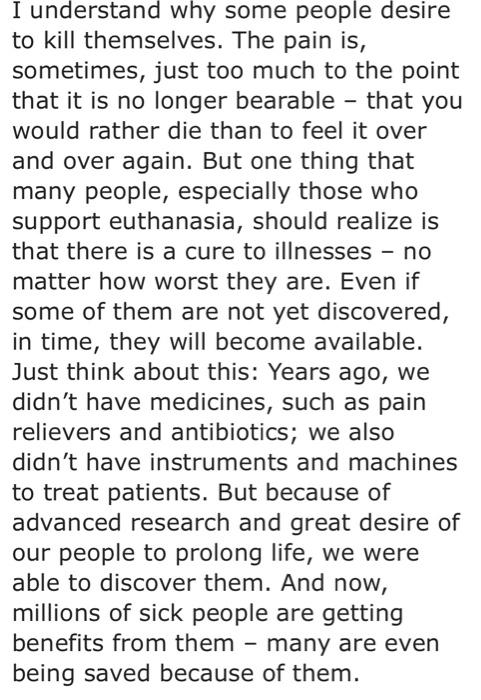
Make notes to capture the author's thesis and main supporting points. Think of your notes as being a 30-second elevator conversation with someone who has not read the original article. What are the key points you need to convey? Be ruthless in sifting through the article's content as you need to ignore minor supporting details. Your notes can be informal and in point form. You can abbreviate and you do not need full sentences. You can make notes in handwritten form or type using MS Word. Write a report in paragraph form, using Times New Roman font size 11 and 1.5 line spacing that contains the following content: Introduction (first paragraph) Begin with a topic sentence about the article that provides the author's name, date of publication, title of article, and thesis (main point). Indicate the author's target audience for the article. State the author's primary purpose of writing for that audience (i.e., one of the seven purposes discussed in class). Summary of Article (second paragraph) Provide a short summary of the author's main points in the article. Remember to use your own words as you cannot copy or quote the author. Exclude minor supporting points and other details. Source (third paragraph) Summarize the author's credentials and expertise. Describe the author's underlying tone and attitude towards the subject matter and whether there was bias. Provide examples. Provide a rationale for whether the author and publisher appear to be credible and reputable. Persuasive Techniques and Caliber of Evidence and Explanation (subsequent paragraphs) Indicate the rhetoric types used by the author (ethos, pathos, and/or logos) and provide examples for each type used Source (third paragraph) Summarize the author's credentials and expertise. Describe the author's underlying tone and attitude towards the subject matter and whether there was bias. Provide examples. Provide a rationale for whether the author and publisher appear to be credible and reputable. Persuasive Techniques and Caliber of Evidence and Explanation (subsequent paragraphs) Indicate the rhetoric types used by the author (ethos, pathos, and/or logos) and provide examples for each type used. Evaluate the effectiveness of the evidence used by the author (facts, examples, testimonials). Your evaluation should reference the attributes discussed in the class PPT (e.g., diverse, reliable, relevant, representative, etc.) Indicate whether the author used inductive or deductive reasoning and provide examples. Indicate whether the author used counterarguments or refutation strategies and provide examples. Describe any logical fallacies (i.e., weaknesses in the author's arguments). Conclusion Provide an overall evaluation of the credibility of the article, based on the source, persuasive techniques and caliber of evidence and explanation. In addition to the article itself, you must use at least two research sources to substantiate your findings (e.g., information about author and/or publisher and information about persuasive techniques). You must provide in-report citations as well as a formal reference list in proper APA format. The article itself must be included in the reference list. Top 10 Reasons Euthanasia Should be Illegal In recent decades, there has been much of talk regarding euthanasia, the practice of ending a life in a painless way. One of the greatest controversies surrounding the issue is whether or not it should be legalized. Euthanasia advocates require that euthanasia should be legalized as it helps hopeless patients end their suffering. They believe that people have the right to do whatever they want with their body, even if it means ending their lives to stop pain. But opponents of the practice argue that it should be outlawed. For them, while it seems that euthanasia has good intentions, people still don't have the right to kill themselves. It is not only against the law, but also sinful in the eyes of our Creator. Apart from this, practicing euthanasia has a lot of undesirable and harmful outcomes. Here, I will give you the reasons why euthanasia should be prohibited worldwide CLOSE Euthanasia, which comes from the Greek word eu thanatos meaning good or dignified death, is the conscious act of ending a life by withholding necessary treatment (passive euthanasia) or performing a procedure that directly and quickly causes death (active euthanasia). Although viewed by some as beneficial, both active and passive euthanasia are considered immoral, sinful, and in the same category as abortion - a murder. Murder is the act of intentionally taking the life of one person. Opponents of euthanasia, especially Catholics, believe that the practice is wrong because it is murder. Since God is the one who created us, He is also the only one who has the right to take our lives away. In fact, the sixth of the Ten Commandments states "Thou shall not kill." Therefore, any form of killing - regardless of motives - is not permissible. The so-called mercy killing or assisted killing is condemned by the Church. Just recently, a Vatican official criticized the death of Brittany Maynard, a cancer sufferer who took her life in November 2014 by assisted suicide. Maynard suffered from a brain tumor and decided to die when her pain became unbearable. Monsignor Ignacio Carrasco de Paula, head of the Pontifical Academy for Life, said in an interview that "This woman took her own life thinking she would die with dignity, but this is the error... Suicide is not a good thing, it is a bad thing because it is saying no to life and to everything it means with respect to our mission in the world and towards those around us." Doctors are empowered by euthanasia. It gives them the opportunity to play God and most doctors, since many now more regard their profession as an occupation and not a passion, will seize this opportunity. This is especially true for those unscrupulous individuals. Many of us are unaware that a lot of doctors today are taking self- interested shortcuts in order to earn more or make things happen their way. For instance, in case of delivering babies; some doctors coerce their patients in unnecessary caesarian sections on weekdays in order to guarantee an interrupted weekend for themselves. In other medical case, some doctors pressure their patients to undergo a surgery right away in order to finally get rid of the patients. Some do even push their patients to go towards vaccination or take a certain medication, even if it's unnecessary, just to make more money. Why, then, would they never be tempted to kill someone in the quickest way if it will benefit themselves in the end - like avoiding the troublesome case or eliminating the hassle of dealing with importunate family members? A perfect example of this would be Dr. Jack Kevorkian, a controversial pathologist, who took advantage of his patients' agony and murdered them. According to reports, his goals were to popularize assisted suicide, to harvest organs for transplantation, and the most appalling of all, to experiment the sick and injured patients. Kevorkian claimed that he had helped 130 ailing people end their lives. Imagine? But what's worse about it was that he created a machine for suicide, which was called a "suicide machine," that allowed sick people dispense a lethal dose of medication to themselves by pressing a button. Later, the lunatic was convicted for second-degree murder, but unfortunately, he was not the only one who practiced this. In Netherlands, where euthanasia is allowed, thousands of people are killed each year "without request or consent." Doctors, like any other humans, are lazy, selfish, and weak to temptations. In pressing situations, doctors are likely to commit mistakes and make wrong decisions. Therefore, euthanasia should not be legalized. As Dr. Peter Saunders, a general surgeon and CEO of Christian Medical Fellowship, has written: "Voluntary euthanasia makes the doctor the most dangerous (person) in the state. when we are sick, weak, and in pain. They are the people who we trust and look to for guidance and advice about our health. We regard them as someone who can cure and save our lives. After all, that's their primary objective - to save, and do no harm. But what if you have an illness, and you found out that the doctor you trust your life to actually practice euthanasia? Would you still visit him and follow his recommendations? If you will ask me... no. When I go to the hospital or clinic, I want to make sure that my doctor will do everything that he or she can to keep me alive. I do not want to go to someone who thinks that maybe I would prefer to give up life. Doctors went through extensive training in order to ensure that they can provide safe and high quality healthcare to their patients. They even took an oath to treat their patients in the best of their ability. Their job is to take the When I go to the hospital or clinic, I want to make sure that my doctor will do everything that he or she can to keep me alive. I do not want to go to someone who thinks that maybe I would prefer to give up life. Doctors went through extensive training in order to ensure that they can provide safe and high quality healthcare to their patients. They even took an oath to treat their patients in the best of their ability. Their job is to take the pain out of their patients, and not to put their patients out of existence. Legalizing euthanasia or assisted suicide will not only give patients a hard time to trust those who are in the medical field, but it will also make them more worried, especially when they go to a hospital with a doctor who is thinking about whether or not to make them alive. I understand why some people desire to kill themselves. The pain is, sometimes, just too much to the point that it is no longer bearable - that you would rather die than to feel it over and over again. But one thing that many people, especially those who support euthanasia, should realize is that there is a cure to illnesses - no matter how worst they are. Even if some of them are not yet discovered, in time, they will become available. Just think about this: Years ago, we didn't have medicines, such as pain relievers and antibiotics; we also didn't have instruments and machines to treat patients. But because of advanced research and great desire of our people to prolong life, we were able to discover them. And now, millions of sick people are getting benefits from them many are even being saved because of them









 Study Help