Question: Make Powerpoint slides for Question 1 & 2 below using information in the attachments. Customer Segmentation Q1. Choose a market tactic and determine (1) product
Make Powerpoint slides for Question 1 & 2 below using information in the attachments.
Customer Segmentation
Q1. Choose a market tactic and determine (1) product (2) price (3) Place (distribution) (4) promotion
a. Quality-oriented segment
b. Durability-oriented segment
c. Cost-oriented segment
d. Style-oriented segment
Q2. Compare advertising revenue of the following companies:
a. Google
b. Twitter
c. Snap chat
d. Facebook
i. Dollar amount
ii. Advertising types - digital or mobile
iii. Size of companies that placed ads (small, medium, and large)
iv. What is the trend - is the ad dollar going up, same or lower in the past 2 years?
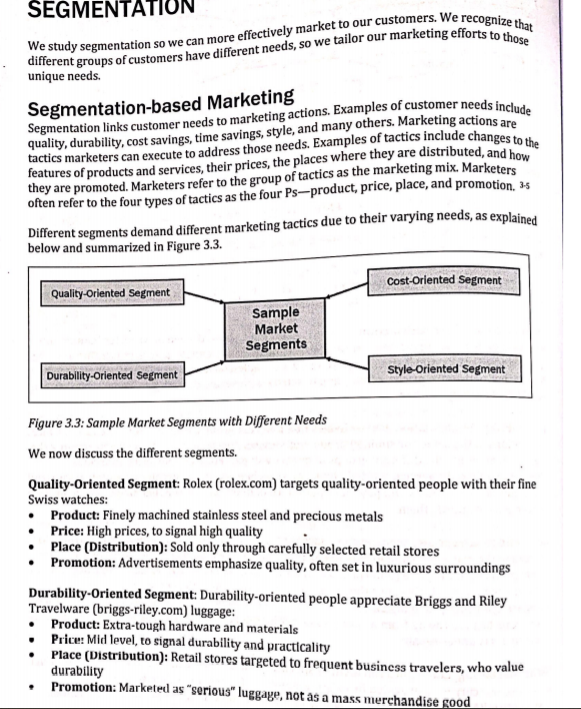
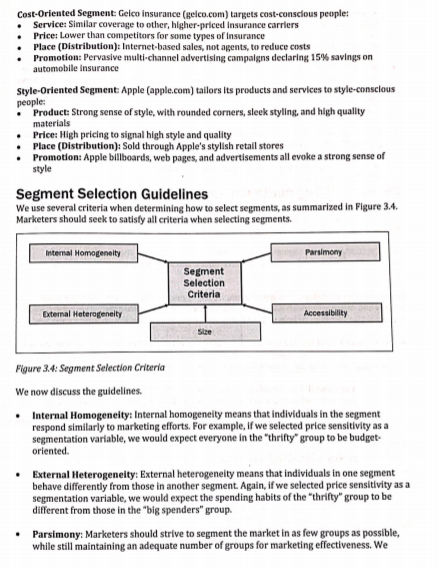
SEGMENTATION We study segmentation so we can more effectively market to our customers. We recognize the different groups of customers have different needs, so we tailor our marketing efforts to those unique needs. Segmentation-based Marketing segmentation links customer needs to marketing actions. Examples of customer needs include quality, durability, cost savings, time savings, style, and many others. Marketing actions are tictics marketers can execute to address those needs. Examples of tactics include changes to the features of products and services, their prices, the places where they are distributed, and how they are promoted. Marketers refer to the group of tactics as the marketing mix. Marketers often refer to the four types of tactics as the four Ps-product, price, place, and promotion. 3-s Different segments demand different marketing tactics due to their varying needs, as explained below and summarized in Figure 3.3. Quality-Oriented Segment Cost-Oriented Segment Sample Market Segments Durability-Oriented Segment Style-Oriented Segment Figure 3.3: Sample Market Segments with Different Needs We now discuss the different segments. Swiss watches: Quality-Oriented Segment: Rolex (rolex.com) targets quality-oriented people with their fine Product: Finely machined stainless steel and precious metals Price: High prices, to signal high quality Place (Distribution): Sold only through carefully selected retail stores Promotion: Advertisements emphasize quality, often set in luxurious surroundings Durability-Oriented Segment: Durability-oriented people appreciate Briggs and Riley . Travelware (briggs-riley.com) luggage: Product: Extra-tough hardware and materials Price: Mid level, to signal durability and practicality Place (Distribution): Retail stores targeted to frequent business travelers, who value durability Promotion: Marketed as "serious" luggage, not as a mass merchandise goodCost-Oriented Segment Geico insurance (gelco.com) targets cost-conscious people: Service: Similar coverage to other, higher-priced Insurance carriers Price: Lower than competitors for some types of Insurance Place (Distribution]: Internet-based sales, not agents, to reduce costs Promotion: Pervasive multi-channel advertising campaigns declaring 15% savings on automobile insurance Style-Oriented Segment Apple (apple.com] tailors its products and services to style-conscious people: Product: Strong sense of style, with rounded corners, sleek styling, and high quality materials Price: High pricing to signal high style and quality Place (Distribution): Sold through Apple's stylish retail stores Promotion: Apple billboards, web pages, and advertisements all evoke a strong sense of style Segment Selection Guidelines We use several criteria when determining how to select segments, as summarized in Figure 3.4. Marketers should seek to satisfy all criteria when selecting segments. Internal Homogeneity Parsimony Segment Selection Criteria External Heterogenelty Accessibility Figure 3.4: Segment Selection Criteria We now discuss the guidelines. Internal Homogeneity: Internal homogeneity means that individuals in the segment respond similarly to marketing efforts. For example, if we selected price sensitivity as a segmentation variable, we would expect everyone in the "thrifty" group to be budget- oriented. External Heterogencity: External heterogeneity means that individuals in one segment behave differently from those in another segment. Again, if we selected price sensitivity as a segmentation variable, we would expect the spending habits of the "thrifty" group to be different from those in the "big spenders" group. Parsimony: Marketers should strive to segment the market in as few groups as possible, while still maintaining an adequate number of groups for marketing effectiveness. We









 Study Help