Question: MAKE SURE YOU TAKE NOTE OF BELOW WHILE ANSWERING THE QUESTION. IF FOUND NOT COMPLYING ANY OF THE BELOW, ANSWER WILL BE IMMEDIATELY DOWNVOTED AND
MAKE SURE YOU TAKE NOTE OF BELOW WHILE ANSWERING THE QUESTION. IF FOUND NOT COMPLYING ANY OF THE BELOW, ANSWER WILL BE IMMEDIATELY DOWNVOTED AND REPORTED TO CHEGG FOR FURTHER ACTION.
1. WRITE IN CONTEXT OF UNITED STATES (NOT INDIA OR ANY OTHER COUNTRY)
2. WRITE IN YOUR OWN WORDS. STRICTLY NO PLAGIARISM.
MAKE UP STORIES OF VIOLATIONS OF CALIF. UNFAIR COMPETITION LAW:
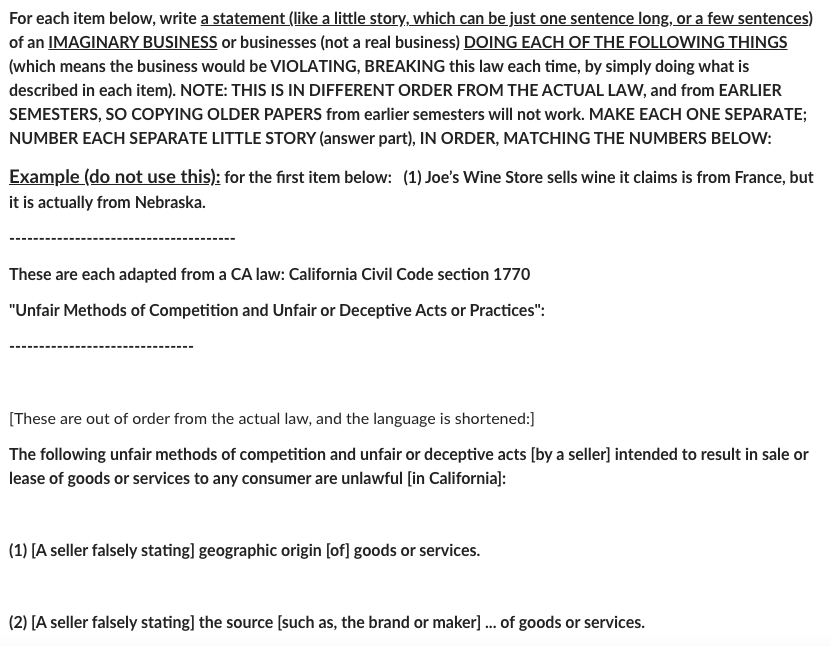
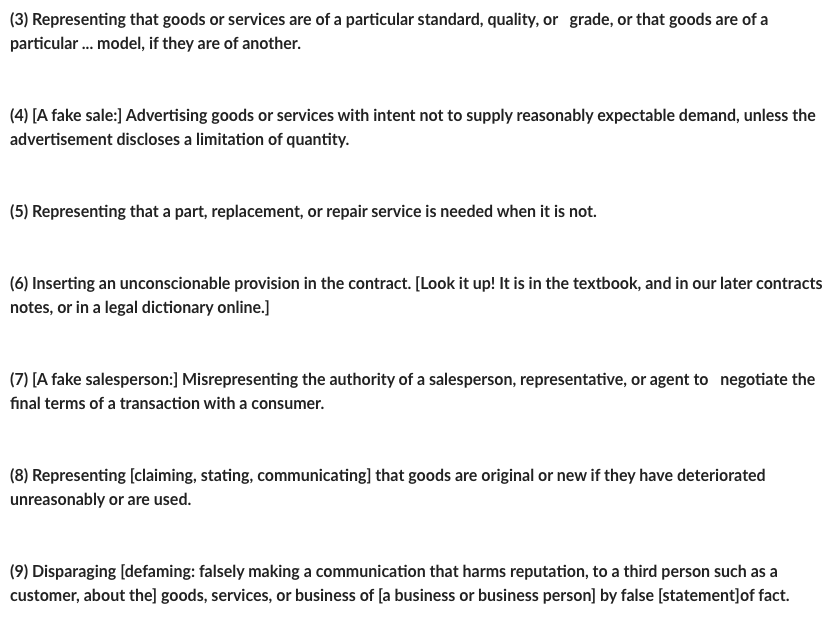

For each item below, write a statement (like a little story, which can be just one sentence long, or a few sentences) of an IMAGINARY BUSINESS or businesses (not a real business) DOING EACH OF THE FOLLOWING THINGS (which means the business would be VIOLATING, BREAKING this law each time, by simply doing what is described in each item). NOTE: THIS IS IN DIFFERENT ORDER FROM THE ACTUAL LAW, and from EARLIER SEMESTERS, SO COPYING OLDER PAPERS from earlier semesters will not work. MAKE EACH ONE SEPARATE; NUMBER EACH SEPARATE LITTLE STORY (answer part), IN ORDER, MATCHING THE NUMBERS BELOW: Example (do not use this): for the first item below: (1) Joe's Wine Store sells wine it claims is from France, but it is actually from Nebraska. These are each adapted from a CA law: California Civil Code section 1770 "Unfair Methods of Competition and Unfair or Deceptive Acts or Practices": [These are out of order from the actual law, and the language is shortened:) The following unfair methods of competition and unfair or deceptive acts [by a seller) intended to result in sale or lease of goods or services to any consumer are unlawful (in California): (1) [A seller falsely stating] geographic origin [of] goods or services. (2) [A seller falsely stating] the source (such as, the brand or maker) ...of goods or services. (3) Representing that goods or services are of a particular standard, quality, or grade, or that goods are of a particular ... model, if they are of another. (4) [A fake sale:) Advertising goods or services with intent not to supply reasonably expectable demand, unless the advertisement discloses a limitation of quantity. (5) Representing that a part, replacement, or repair service is needed when it is not. (6) Inserting an unconscionable provision in the contract. [Look it up! It is in the textbook, and in our later contracts notes, or in a legal dictionary online.] (7) [A fake salesperson:) Misrepresenting the authority of a salesperson, representative, or agent to negotiate the final terms of a transaction with a consumer. (8) Representing (claiming, stating, communicating] that goods are original or new if they have deteriorated unreasonably or are used. (9) Disparaging (defaming: falsely making a communication that harms reputation, to a third person such as a customer, about the goods, services, or business of [a business or business person] by false (statement]of fact. (10) [Making a false statement of certification (this business supposedly has, from a government agency or other organization). (11) (Falsely stating] that goods or services have ... characteristics, ingredients, uses, benefits, or quantities they do not have









 Study Help