



Question: Manufacturing microchips for modern day high-tech devices is an extremely precise process. Dimensions are measured in nanometers (one billionth of a meter} and even the
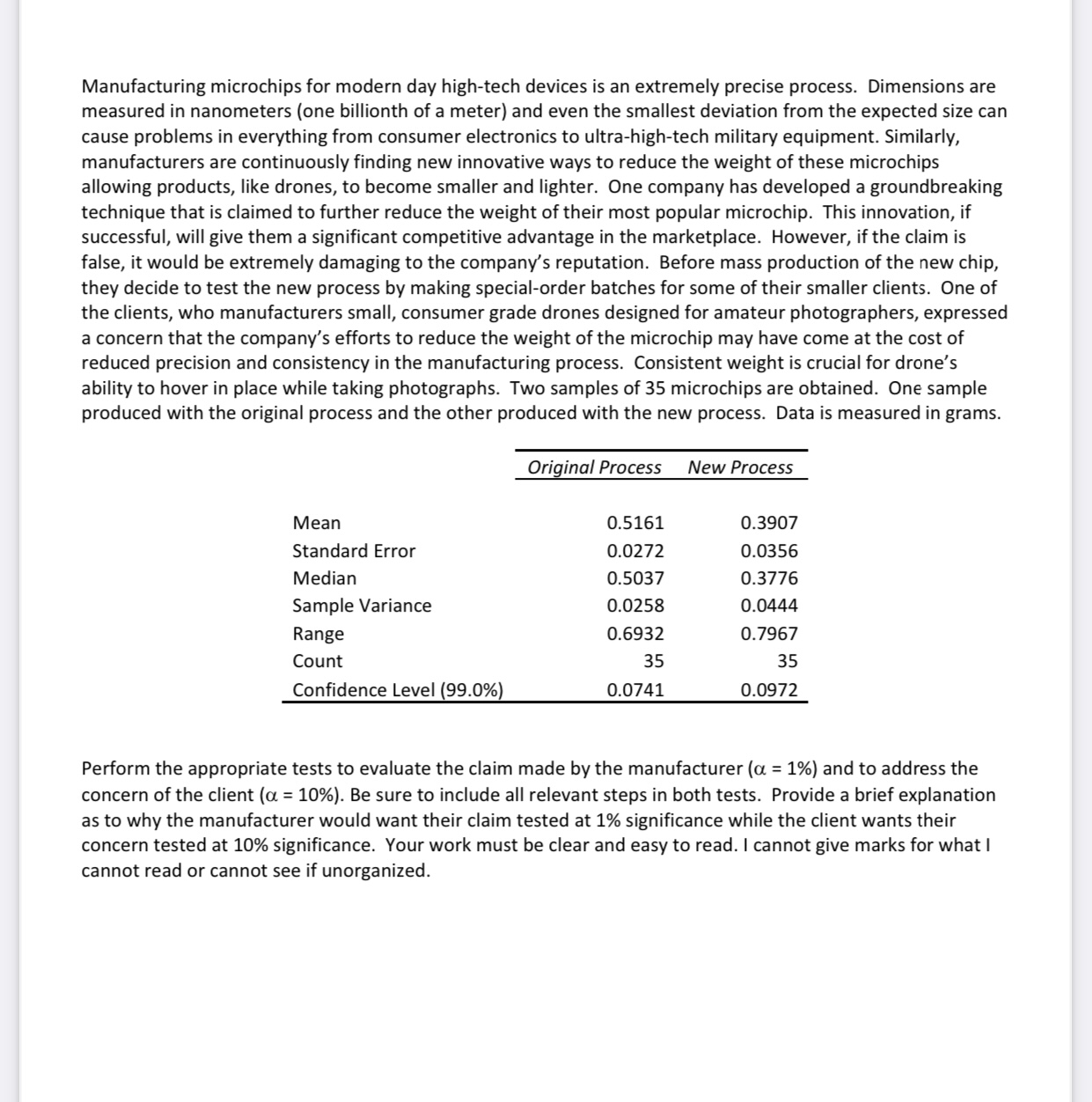
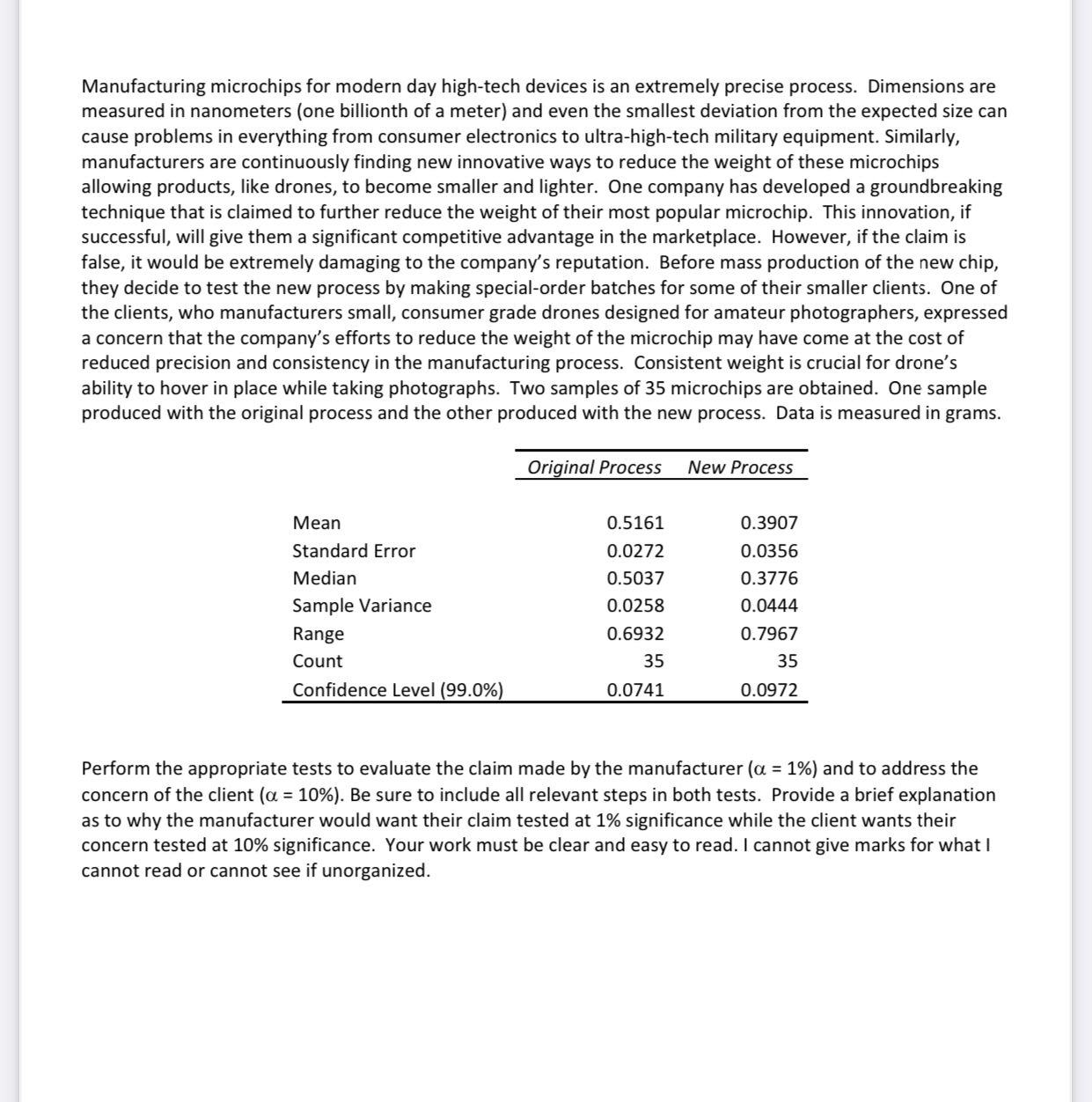
Manufacturing microchips for modern day high-tech devices is an extremely precise process. Dimensions are measured in nanometers (one billionth of a meter} and even the smallest deviation from the expected size can cause problems in everything from consumer electronics to ultra-high-tech military equipment. Similarly, manufacturers are continuously finding new innovative ways to reduce the weight of these microchips allowing products, like drones, to become smaller and lighter. One company has developed a groundbreaking technique that is claimed to further reduce the weight oftheir most popular microchip. This innovation, if successful, will give them a signicant competitive advantage in the marketplace. However, if the claim is false, it would be extremely damaging to the company's reputation. Before mass production of the new chip, they decide to test the new process by making special-order batches for some of their smaller clients. One of the clients, who manufacturers small, consumer grade drones designed for amateur photographers, expressed a concern that the compa ny's efforts to reduce the weight of the microchip may have come at the cost of reduced precision and consistency in the manufacturing process. Consistent weight is crucial for drone's ability to hover in place while taking photographs. Two samples of 35 microchips are obtained. One sample produced with the original process and the other produced with the new process. Data is measured in grams. Original Process New Process Mean 0.5161 0.3907 Standard Error 0.0272 0.0356 Median 0.5037 0.3776 Sample Variance 0.0253 0.0444 Range 0.6932 0.7967 Count 35 35 Condence Level (99.0%} 0.0741 0.0972 Perform the appropriate tests to evaluate the claim made by the manufacturer {0. = 1%} and to address the concern of the client (a. = 10%). Be sure to include all relevant steps in both tests. Provide a brief explanation as to why the manufacturer would want their claim tested at 1% signicance while the client wants their concern tested at 10% signicance. Your work must be clear and easy to read. I cannot give marks for what I cannot read or cannot see if unorganized
Step by Step Solution
There are 3 Steps involved in it

Get step-by-step solutions from verified subject matter experts