







Question: Many schemes for price discriminating involve some cost. For example, discount coupons take up the time and resources of both the buyer and the seller.
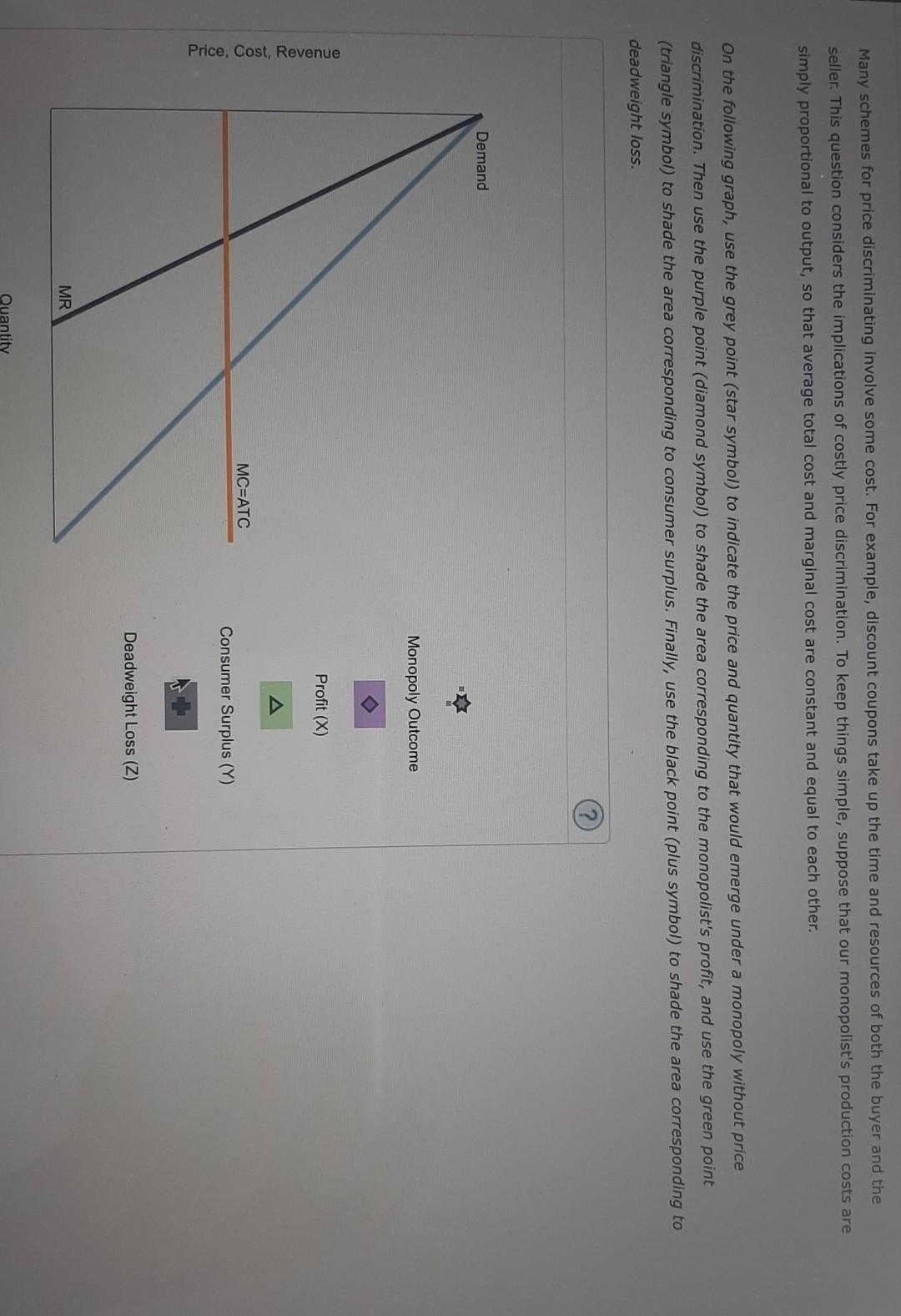
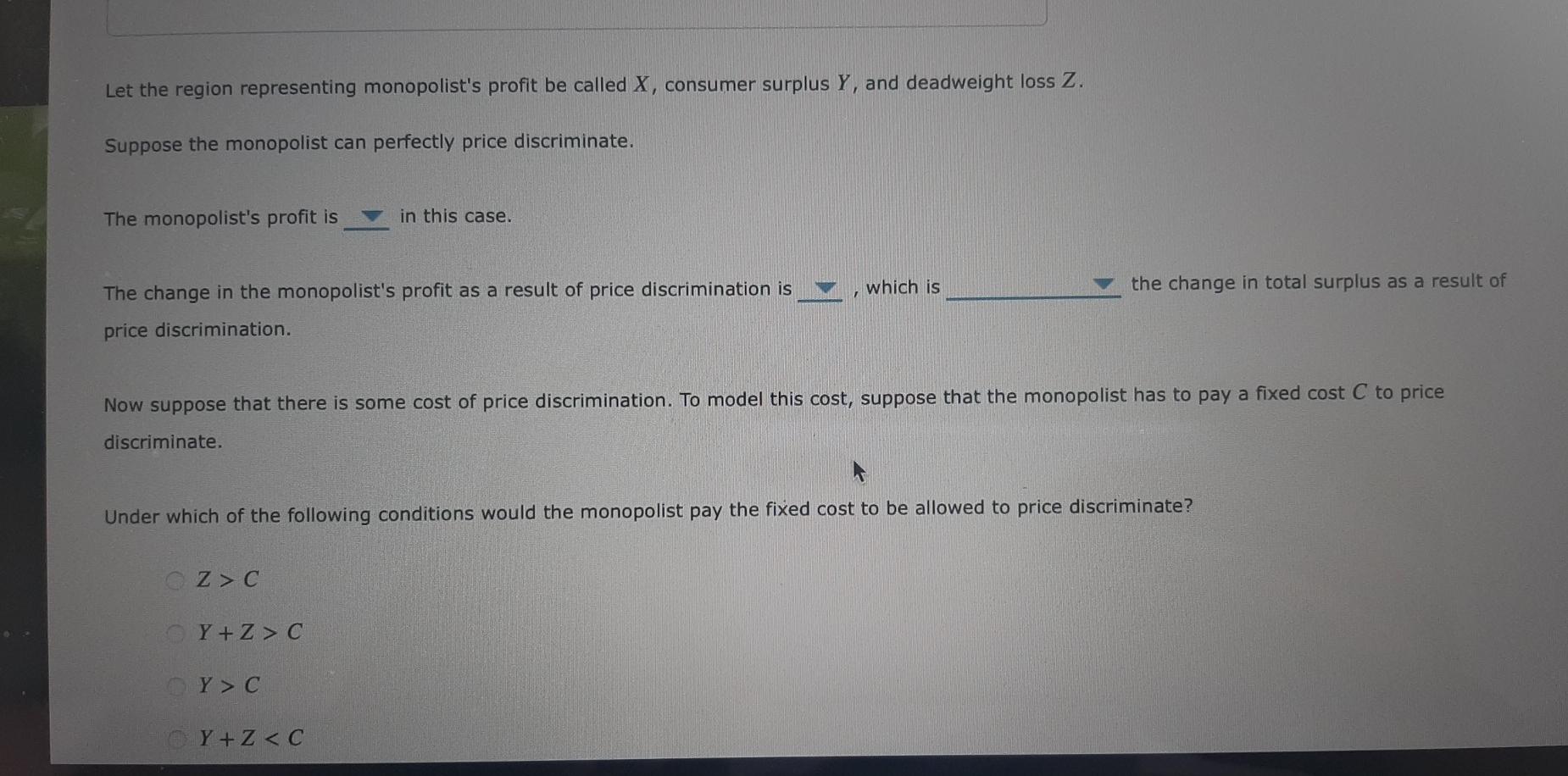
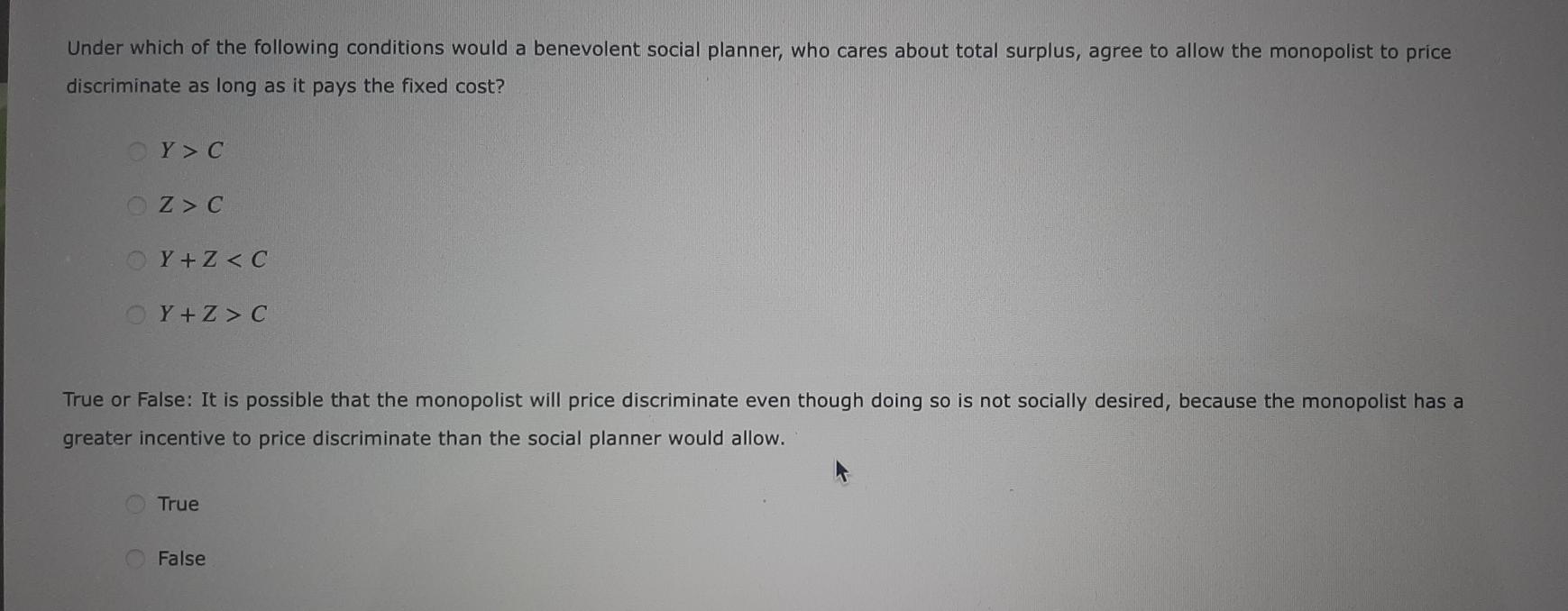
Many schemes for price discriminating involve some cost. For example, discount coupons take up the time and resources of both the buyer and the seller. This question considers the implications of costly price discrimination. To keep things simple, suppose that our monopolist's production costs are simply proportional to output, so that average total cost and marginal cost are constant and equal to each other. On the fol wing graph, use the grey point (star symbol) to indicate the price and quantity that would emerge under a monopoly without price discrimination. Then use the purple point (diamond symbol) to shade the area corresponding to the monopolist's profit, and use the green point (triangle symbol) to shade the area corresponding to consumer surplus. Finally, use the black point (plus symbol) to shade the area corresponding to deadweight loss. (? Demand Monopoly Outcome Profit (X) Price, Cost, Revenue MC=ATC Consumer Surplus (Y) Deadweight Loss (Z) MR Quantity Let the region representing monopolist's profit be called X, consumer surplus Y, and deadweight loss Z. Suppose the monopolist can perfectly price discriminate. The monopolist's profit is in this case. which is the change in total surplus as a result of The change in the monopolist's profit as a result of price discrimination is price discrimination. Now suppose that there is some cost of price discrimination. To model this cost, suppose that the monopolist has to pay a fixed cost C to price discriminate. Under which of the following conditions would the monopolist pay the fixed cost to be allowed to price discriminate? O Z> c Y +Z>C Y > C Y + Z
Step by Step Solution
There are 3 Steps involved in it

Get step-by-step solutions from verified subject matter experts
 Study Help