Question: May someone please proof this, and/or fix where I made errors, Thank you very much! Star Bakery needs to decide how many units of its
May someone please proof this, and/or fix where I made errors, Thank you very much!
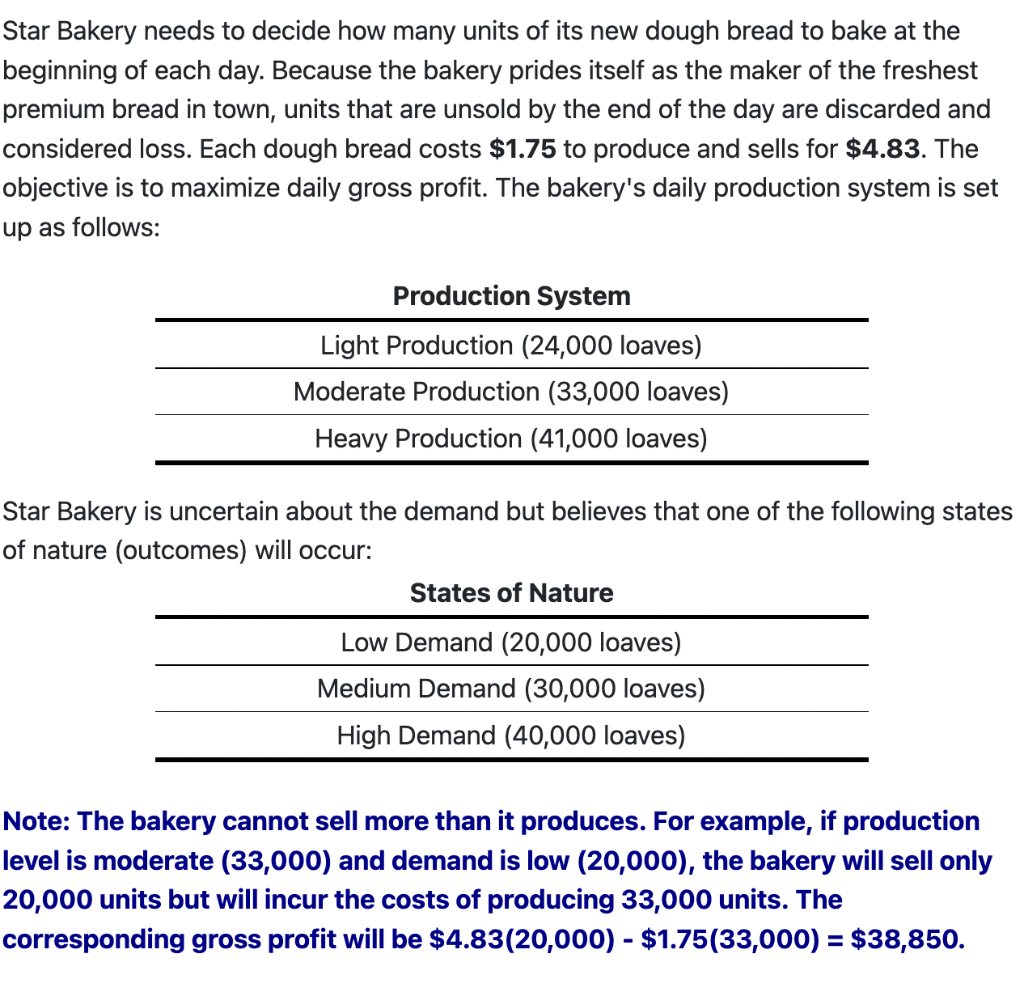
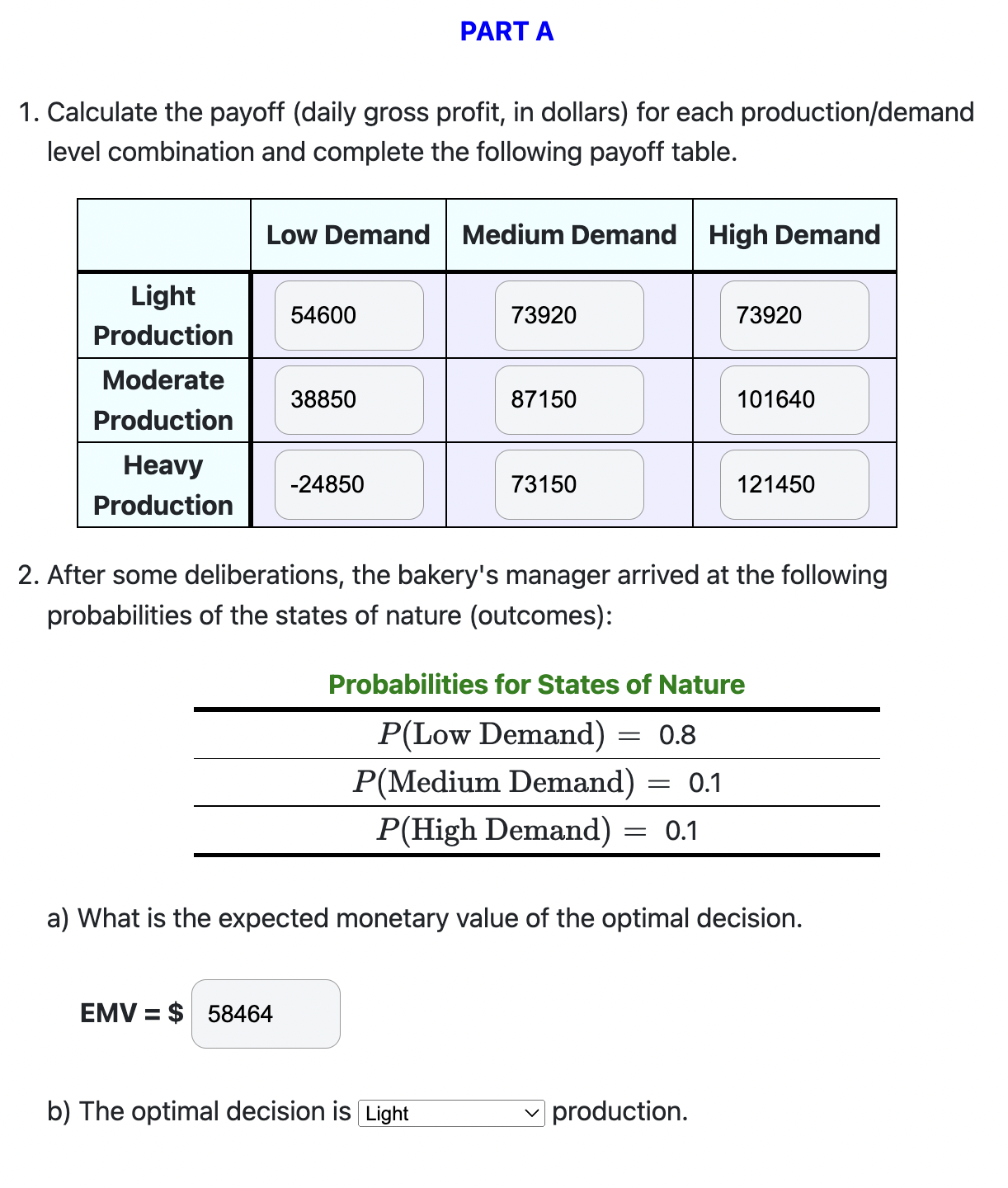
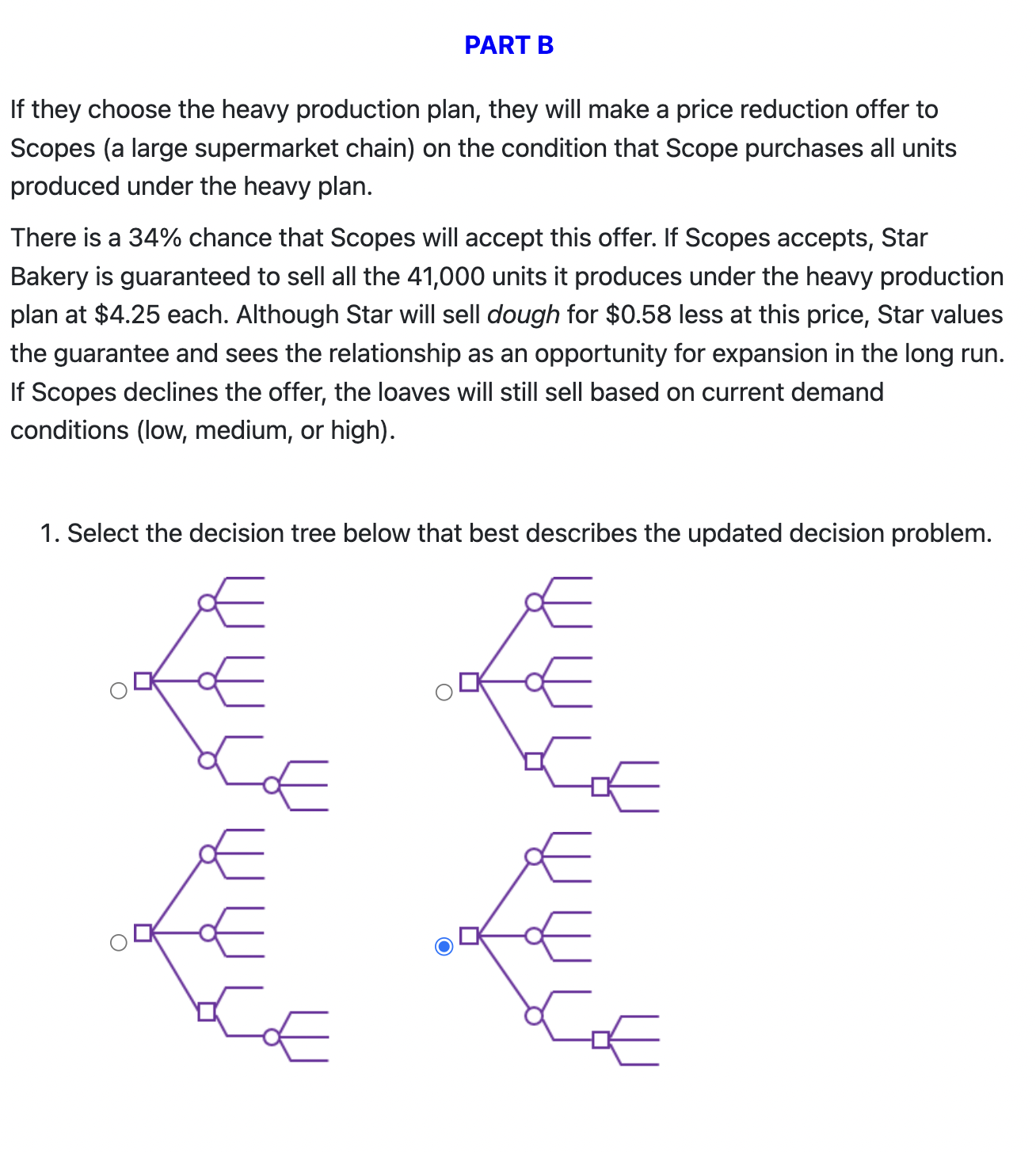
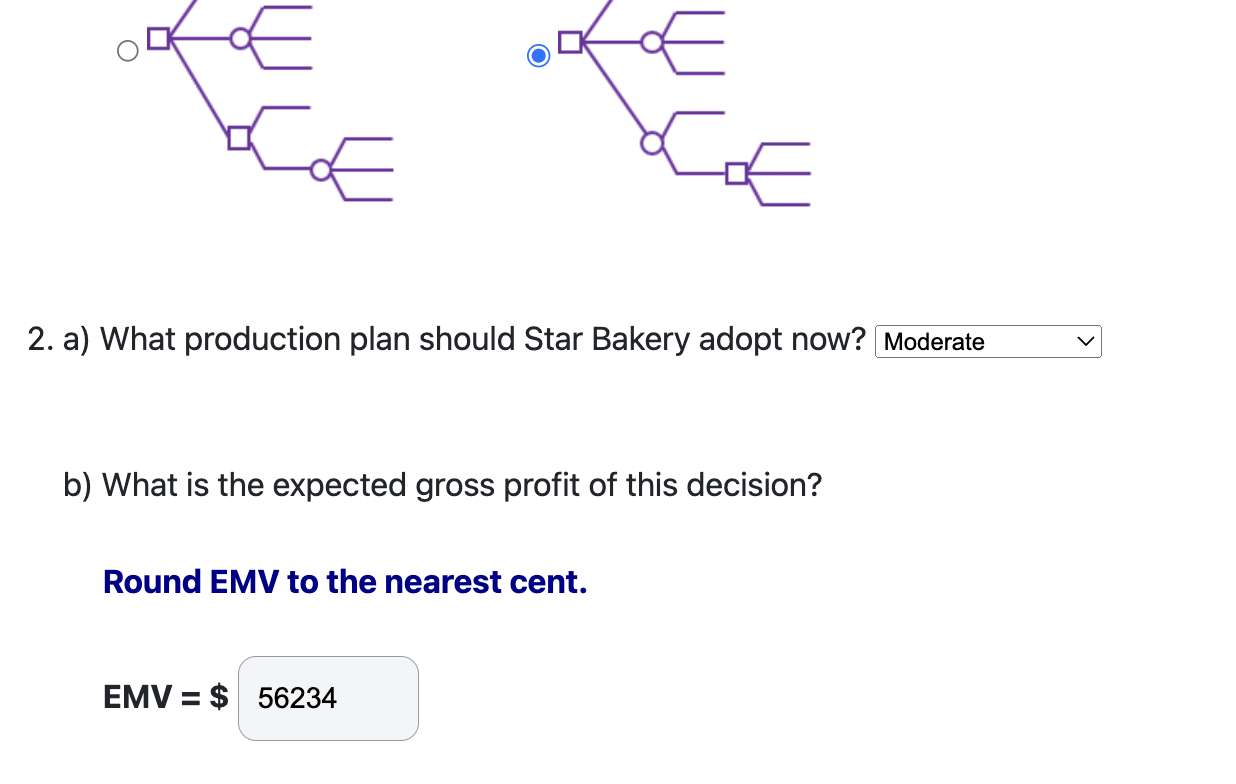
Star Bakery needs to decide how many units of its new dough bread to bake at the beginning of each day. Because the bakery prides itself as the maker of the freshest premium bread in town, units that are unsold by the end of the day are discarded and considered loss. Each dough bread costs $1.75 to produce and sells for $4.83. The objective is to maximize daily gross profit. The bakery's daily production system is set up as follows: Star Bakery is uncertain about the demand but believes that one of the following states of nature (outcomes) will occur: Note: The bakery cannot sell more than it produces. For example, if production level is moderate (33,000) and demand is low (20,000), the bakery will sell only 20,000 units but will incur the costs of producing 33,000 units. The corresponding gross profit will be $4.83(20,000) - $1.75(33,000)=$38,850. PART A 1. Calculate the payoff (daily gross profit, in dollars) for each production/demand level combination and complete the following payoff table. 2. After some deliberations, the bakery's manager arrived at the following probabilities of the states of nature (outcomes): a) What is the expected monetary value of the optimal decision. EMV=$ b) The optimal decision is production. PART B If they choose the heavy production plan, they will make a price reduction offer to Scopes (a large supermarket chain) on the condition that Scope purchases all units produced under the heavy plan. There is a 34% chance that Scopes will accept this offer. If Scopes accepts, Star Bakery is guaranteed to sell all the 41,000 units it produces under the heavy production plan at $4.25 each. Although Star will sell dough for $0.58 less at this price, Star values the guarantee and sees the relationship as an opportunity for expansion in the long run. If Scopes declines the offer, the loaves will still sell based on current demand conditions (low, medium, or high). 1. Select the decision tree below that best describes the updated decision problem. 2. a) What production plan should Star Bakery adopt now? b) What is the expected gross profit of this decision? Round EMV to the nearest cent









 Study Help