







Question: MB 515: Economic Theory and Application Problem Set 3 3.1 A firm produces in the short run with a single variable input, labor. The panel
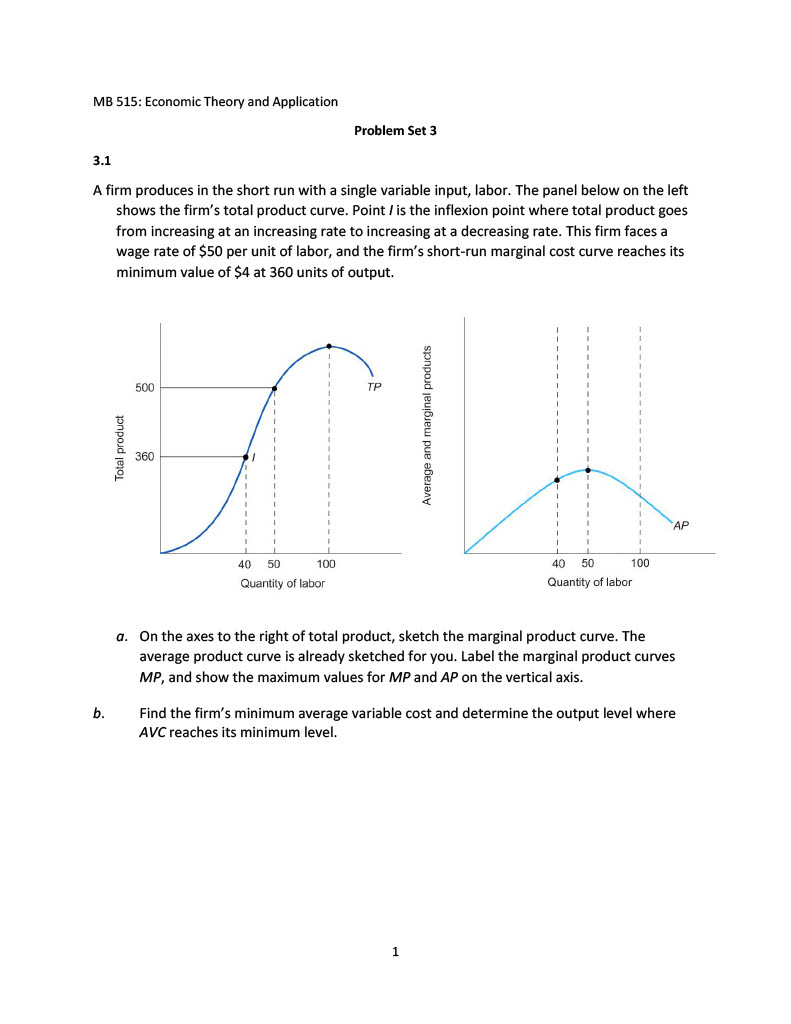
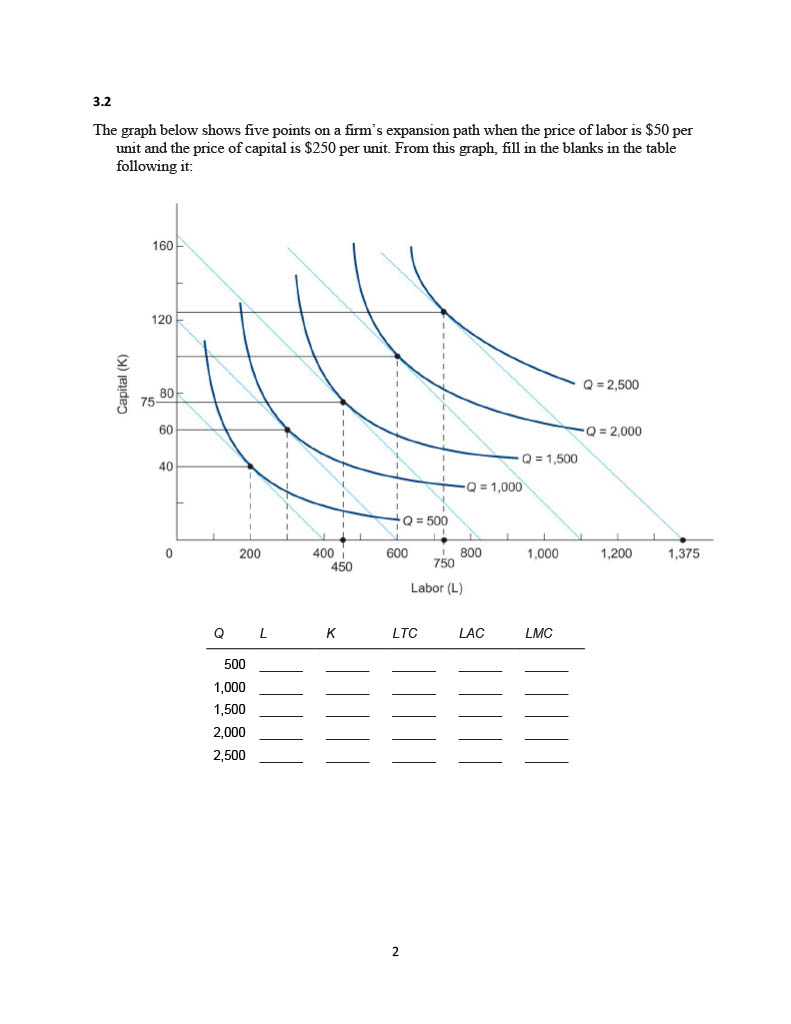
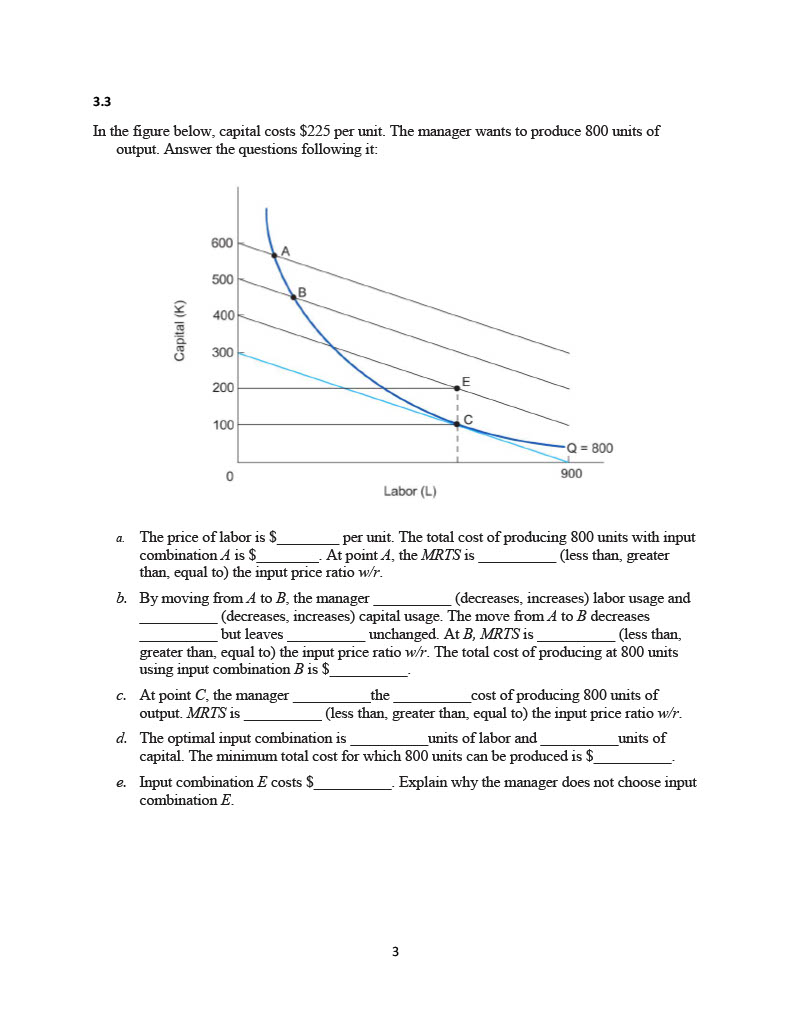
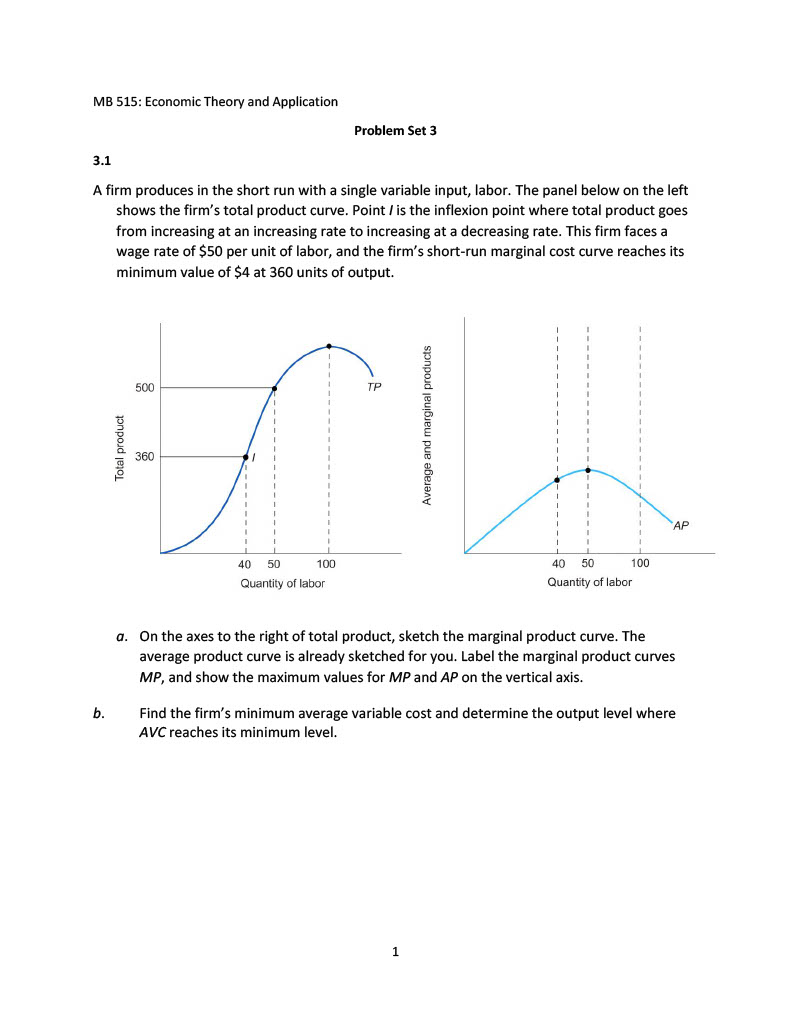
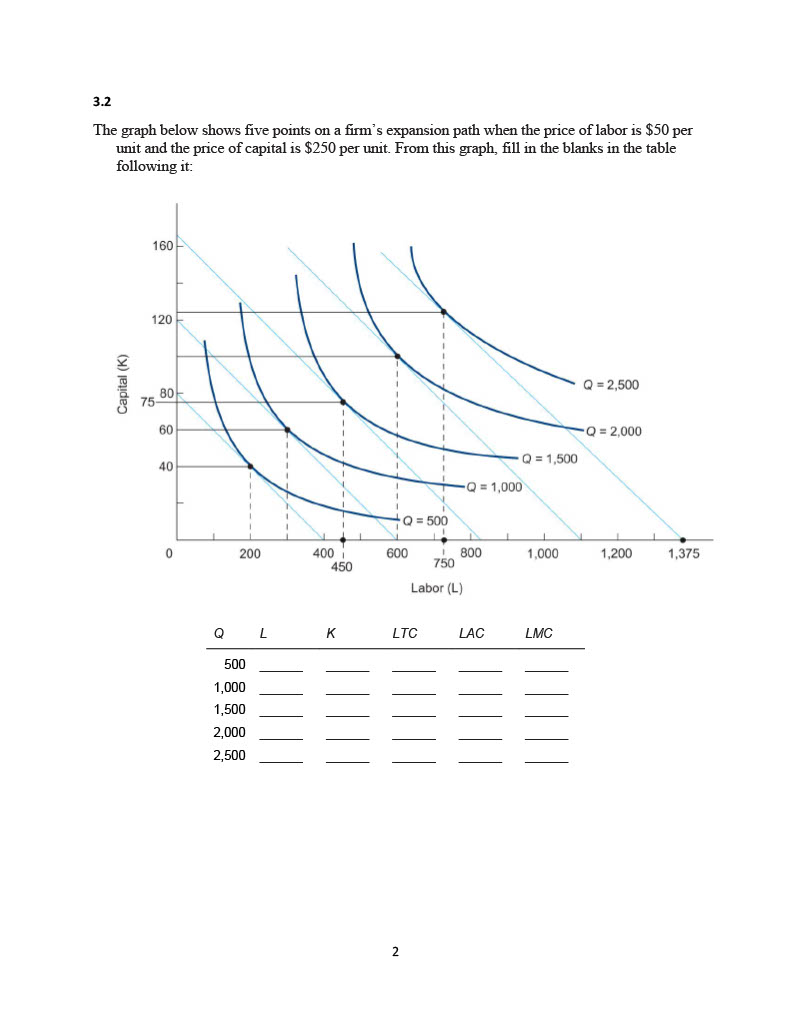
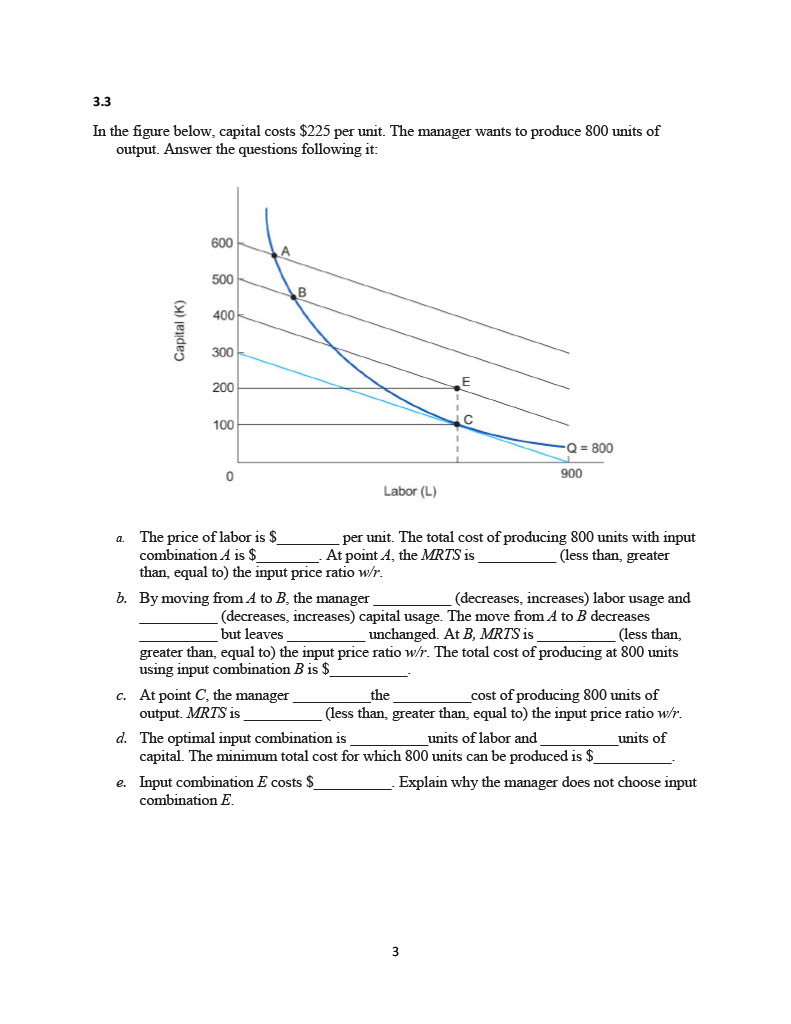
MB 515: Economic Theory and Application Problem Set 3 3.1 A firm produces in the short run with a single variable input, labor. The panel below on the left shows the firm''s total product curve. Point I is the inflexion point where total product goes from increasing at an increasing rate to increasing at a decreasing rate. This firm faces a wage rate of $50 per unit of labor, and the firm's short-run marginal cost curve reaches its minimum value of $4 at 360 units of output. 500 TP 360 Total product Average and marginal products 40 50 100 40 S50 100 Quantity of labor Quantity of labor a. On the axes to the right of total product, sketch the marginal product curve. The average product curve is already sketched for you. Label the marginal product curves MP, and show the maximum values for MP and AP on the vertical axis. b. Find the firm's minimum average variable cost and determine the output level where AVC reaches its minimum level. 3.2 The graph below shows five points on a firm's expansion path when the price of labor 1s $50 per unit and the price of capital 1s $250 per unit. From this graph, fill in the blanks in the table following 1t: Capital (K) 200 750 800 Labor (L) K LTC LAC Q =2,500 Q=2,000 1,000 1,200 1,375 LMC 500 1,000 1,500 2,000 2,500 3.3 In the figure below, capital costs $225 per unit. The manager wants to produce 800 units of output. Answer the questions following it: 600 500 B 400 Capital (K) 300 200 /m 100 C -Q = 800 0 900 Labor (L) a . The price of labor is $ per unit. The total cost of producing 800 units with input combination A is $ At point A, the MRTS is (less than, greater than, equal to) the input price ratio w/r. b. By moving from A to B, the manager (decreases, increases) labor usage and (decreases, increases) capital usage. The move from A to B decreases but leaves unchanged. At B, MRTS is less than, greater than, equal to) the input price ratio w/. The total cost of producing at 800 units using input combination B is $ c. At point C, the manager the cost of producing 800 units of output. MRTS is (less than, greater than, equal to) the input price ratio w/r. d. The optimal input combination is units of labor and units of capital. The minimum total cost for which 800 units can be produced is $_ e. Input combination E costs $_ Explain why the manager does not choose input combination E. W
Step by Step Solution
There are 3 Steps involved in it

Get step-by-step solutions from verified subject matter experts
 Study Help