







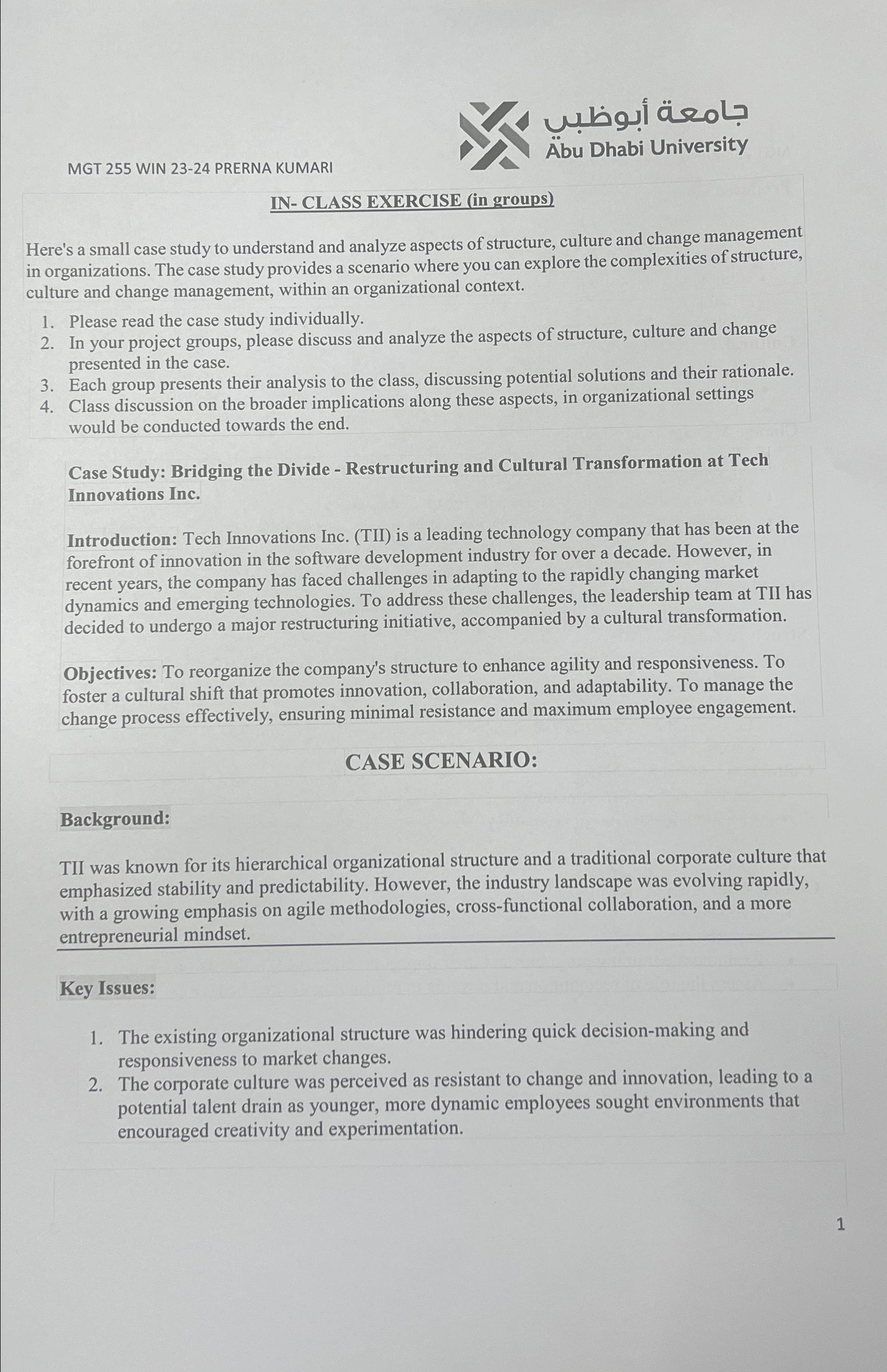
Question: MGT 2 5 5 WIN 2 3 - 2 4 PRERNA KUMARI IN - CLASS EXERCISE ( in groups ) Here's a small case study
MGT WIN PRERNA KUMARI
IN CLASS EXERCISE in groups
Here's a small case study to understand and analyze aspects of structure, culture and change management in organizations. The case study provides a scenario where you can explore the complexities of structure, culture and change management, within an organizational context.
Please read the case study individually.
In your project groups, please discuss and analyze the aspects of structure, culture and change presented in the case.
Each group presents their analysis to the class, discussing potential solutions and their rationale.
Class discussion on the broader implications along these aspects, in organizational settings would be conducted towards the end.
Case Study: Bridging the Divide Restructuring and Cultural Transformation at Tech Innovations Inc.
Introduction: Tech Innovations Inc. TII is a leading technology company that has been at the forefront of innovation in the software development industry for over a decade. However, in recent years, the company has faced challenges in adapting to the rapidly changing market dynamics and emerging technologies. To address these challenges, the leadership team at TII has decided to undergo a major restructuring initiative, accompanied by a cultural transformation.
Objectives: To reorganize the company's structure to enhance agility and responsiveness. To foster a cultural shift that promotes innovation, collaboration, and adaptability. To manage the change process effectively, ensuring minimal resistance and maximum employee engagement.
CASE SCENARIO:
Background:
TII was known for its hierarchical organizational structure and a traditional corporate culture that emphasized stability and predictability. However, the industry landscape was evolving rapidly, with a growing emphasis on agile methodologies, crossfunctional collaboration, and a more entrepreneurial mindset.
Key Issues:
The existing organizational structure was hindering quick decisionmaking and responsiveness to market changes.
The corporate culture was perceived as resistant to change and innovation, leading to a potential talent drain as younger, more dynamic employees sought environments that encouraged creativity and experimentation.
Step by Step Solution
There are 3 Steps involved in it
1 Expert Approved Answer
Step: 1 Unlock

Question Has Been Solved by an Expert!
Get step-by-step solutions from verified subject matter experts
Step: 2 Unlock
Step: 3 Unlock
 Study Help