







Question: MIn import numpy as np import sklearn.datasets iris_observations sklearn.datasets.load iris() data iris_observations.data In print( Shape:, data.shape) In : sepal_length, sepal_width, pedal_length, pedal_width - 0, 1.
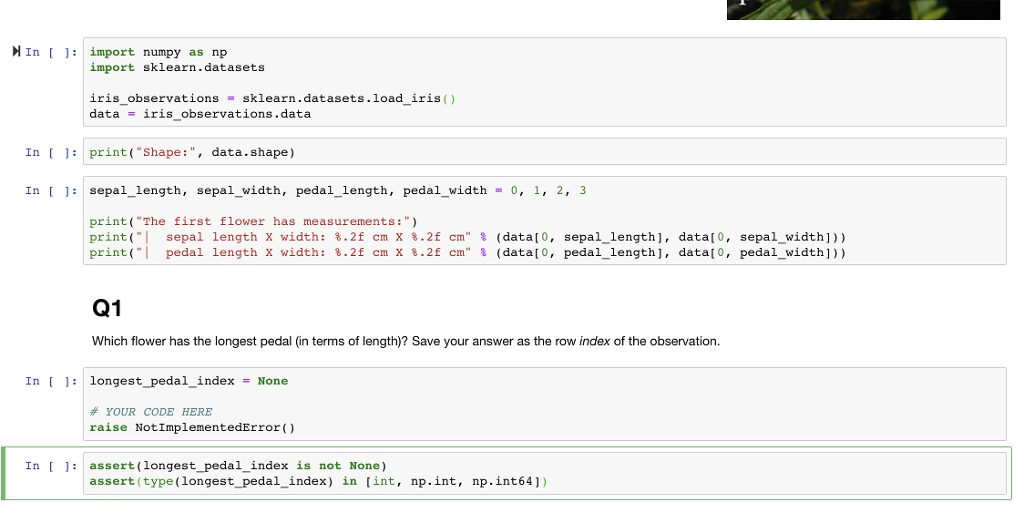
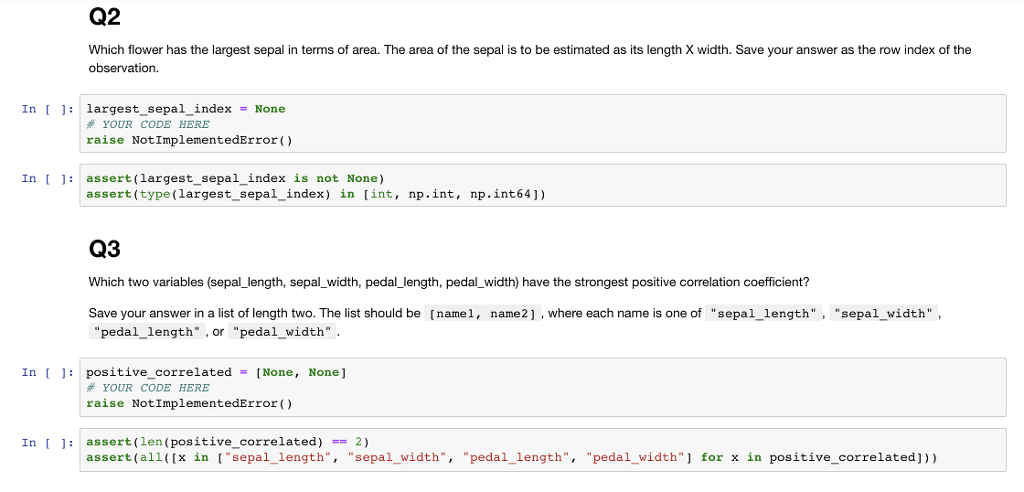
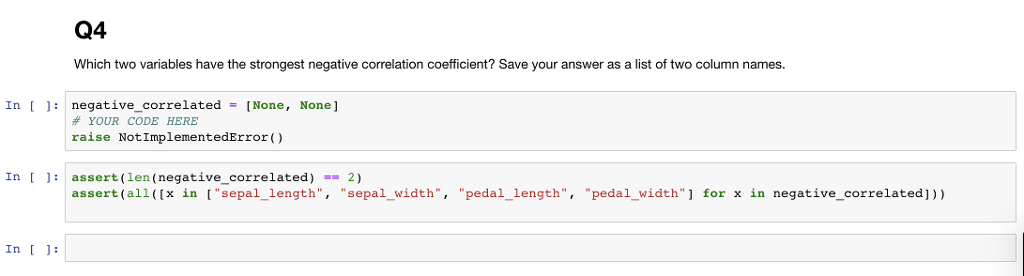
MIn import numpy as np import sklearn.datasets iris_observations sklearn.datasets.load iris() data iris_observations.data In print( Shape:", data.shape) In : sepal_length, sepal_width, pedal_length, pedal_width - 0, 1. 2,3 print( "The first flower has measurements:") print ( "I sepal length X width: %.2f cm X %.2f cm" % (data[O, sepal-length], data[O, sepal-width))) print( "I pedal length X width: %.2f cm X 8.2f cm" % (datato, pedal length, datato, pedal width)) Q1 Which flower has the longest pedal (in terms of length)? Save your answer as the row index of the observation In longest_pedal_index -None # YOUR CODE HERE raise NotImplementedError) In assert (longest_pedal_index is not None) assert(type (longest_pedal_index) in [int, np.int, np.int64])
Step by Step Solution
There are 3 Steps involved in it

Get step-by-step solutions from verified subject matter experts
 Study Help