







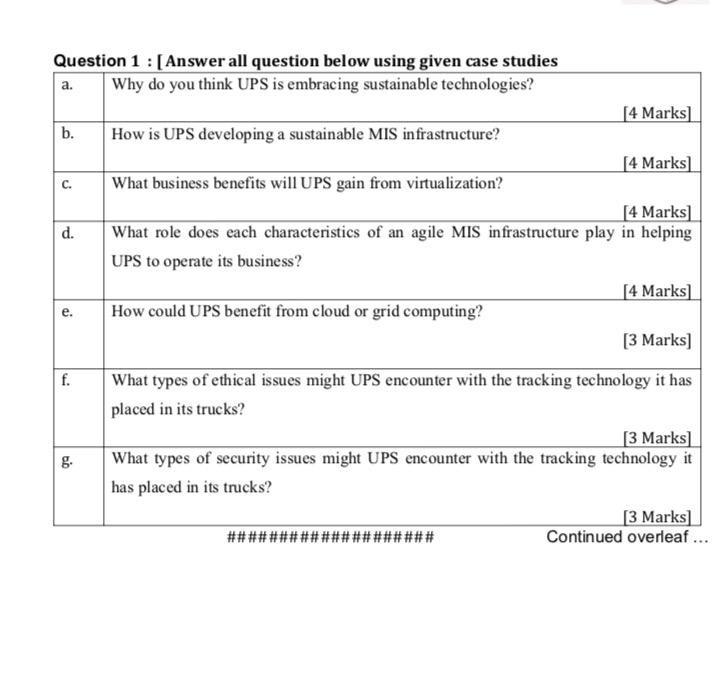
Question: Mind solving these?? Question 1 : [ Answer all question below using given case studies a Why do you think UPS is embracing sustainable technologies?
![sustainable technologies? [4 Marks] b. How is UPS developing a sustainable MIS](https://s3.amazonaws.com/si.experts.images/answers/2024/06/666a8dae2ae42_118666a8dae0625f.jpg)
![infrastructure? [4 Marks] C. What business benefits will UPS gain from virtualization?](https://s3.amazonaws.com/si.experts.images/answers/2024/06/666a8dae9ce42_118666a8dae75189.jpg)
Mind solving these??
![[4 Marks] d. What role does each characteristics of an agile MIS](https://s3.amazonaws.com/si.experts.images/answers/2024/06/666a8daeeeb04_118666a8daedd7a5.jpg)
![infrastructure play in helping UPS to operate its business? [4 Marks] e.](https://s3.amazonaws.com/si.experts.images/answers/2024/06/666a8daf5f543_119666a8daf2eab3.jpg)
![How could UPS benefit from cloud or grid computing? [3 Marks] f.](https://s3.amazonaws.com/si.experts.images/answers/2024/06/666a8dafb79dd_119666a8daf8b0dd.jpg)
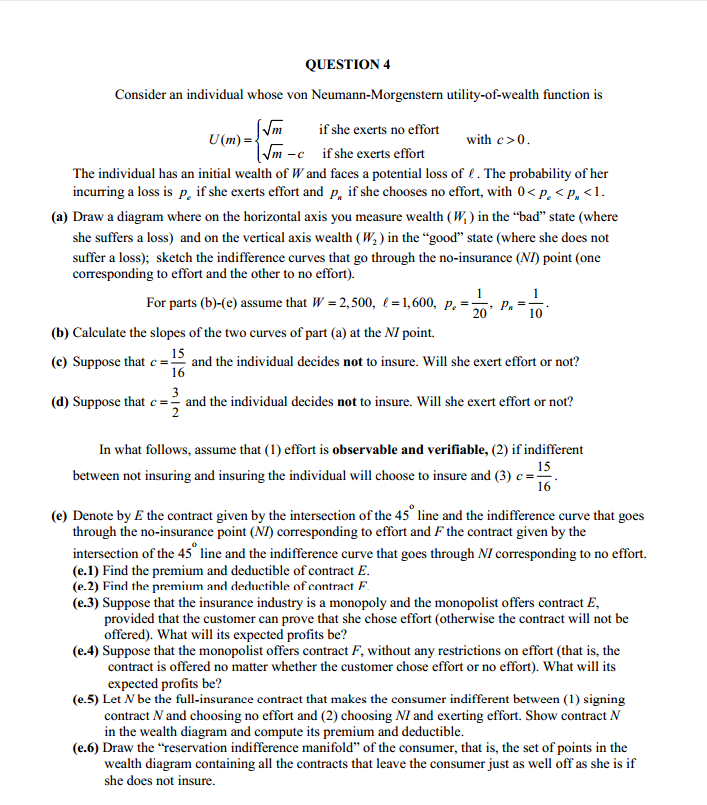
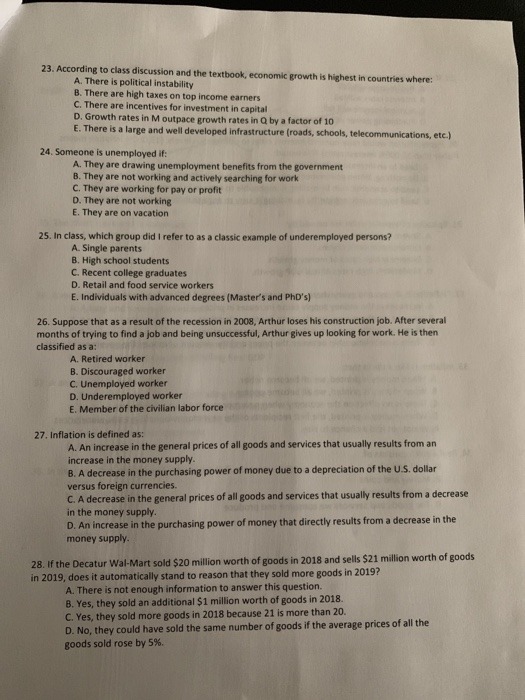
Question 1 : [ Answer all question below using given case studies a Why do you think UPS is embracing sustainable technologies? [4 Marks] b. How is UPS developing a sustainable MIS infrastructure? [4 Marks] C. What business benefits will UPS gain from virtualization? [4 Marks] d. What role does each characteristics of an agile MIS infrastructure play in helping UPS to operate its business? [4 Marks] e. How could UPS benefit from cloud or grid computing? [3 Marks] f. What types of ethical issues might UPS encounter with the tracking technology it has placed in its trucks? [3 Marks] What types of security issues might UPS encounter with the tracking technology it has placed in its trucks? [3 Marks] Continued overleaf ...23. According to class discussion and the textbook, economic growth is highest in countries where: A. There is political instability B. There are high taxes on top income earners C. There are incentives for investment in capital D. Growth rates in M outpace growth rates in Q by a factor of 10 E. There is a large and well developed infrastructure (roads, schools, telecommunications, etc.) 24. Someone is unemployed if: A. They are drawing unemployment benefits from the government B. They are not working and actively searching for work C. They are working for pay or profit D. They are not working E. They are on vacation 25. In class, which group did I refer to as a classic example of underemployed persons? A Single parents B. High school students C. Recent college graduates D. Retail and food service workers E. Individuals with advanced degrees (Master's and PhD's] 26. Suppose that as a result of the recession in 2008, Arthur loses his construction job. After several months of trying to find a job and being unsuccessful, Arthur gives up looking for work. He is then classified as a: A. Retired worker B. Discouraged worker C. Unemployed worker D. Underemployed worker E. Member of the civilian labor force 27. Inflation is defined as: A. An increase in the general prices of all goods and services that usually results from an increase in the money supply- B. A decrease in the purchasing power of money due to a depreciation of the U.5. dollar versus foreign currencies. C. A decrease in the general prices of all goods and services that usually results from a decrease in the money supply. D. An increase in the purchasing power of money that directly results from a decrease in the money supply- 28. If the Decatur Wal-Mart sold $20 million worth of goods in 2018 and sells $21 million worth of goods in 2019, does it automatically stand to reason that they sold more goods in 2019? A. There is not enough information to answer this question. B. Yes, they sold an additional $1 million worth of goods in 2018. C. Yes, they sold more goods in 2018 because 21 is more than 20. D. No, they could have sold the same number of goods if the average prices of all the goods sold rose by 5%.In this question, we extend the model with search friction discussed in class by adding non-pecuniary preferences over jobs. There are two periods and workers search for a job every period. Workers have linear utility and no saving. If unemployed, workers draw a job offer from a job offer distribution. Each job offer has two components - a wage to and a disutility 1). Assume that w and 'v are independently distributed. The distribution of wages is gm and the distribution of disutilities is g\". If the agent accepts the job offer, her utility at that period is given by: u(w,v)=w'u If the worker accepts a job at period 1, she remains employed for the next period on the same job. If the worker rejects the job offer from period 1, she receives unemployment insurance b at that period and searches for a new job in the next period. The worker has to accept the job offer received in the second period. Utility in the second period is discounted by rate ,8. 1. Suppose the worker receive job offer (110,11) on the rst period. Write down the value of accepting this job offer in period 1, V\"\"\"Pt(w, 'v). . Calculate the expected utility of being unemployed on the next period as function of E(w) and 13(1)). Hint: Use that the utility is linear, u('w, v) = 'w 'v, and that w and v are independently distributed. . Calculate the disutility of rejecting job offer (10,0) on the rst period, Vrew, c). . Calculate the utility of receiving job offer (11:, v) on the rst period, V(w, '0), using your answer to questions 1 to 3. . Cenditional on a disutility of working or, plot the utility of rejecting a job and the utility of accepting a job on a graph with wages on the xaxis and the utility value on the yaxis. Mark the reservation wage 213(1)) on this gure. . Calculate the reservation wage as a function of the disutility, 25(1)). Is the worker willing to accept a lower wage if she nds the job more meaningful? Conditional on a wage w, plot the utility of rejecting a job and the utility of accepting a job on a graph with disutility on the x-axis and the utility value on the y-axis. Mark the reservation disutility 6(a)) on this gure. QUESTION 4 Consider an individual whose von Neumann-Morgenstern utility-of-wealth function is U(m) = I'm if she exerts no effort with c>0. Vm -c if she exerts effort The individual has an initial wealth of W and faces a potential loss of /. The probability of her incurring a loss is p, if she exerts effort and p,, if she chooses no effort, with 0
Step by Step Solution
There are 3 Steps involved in it

Get step-by-step solutions from verified subject matter experts
 Study Help