







Question: Mini Case 1: Housing Harry has worked at a medium-size interior design firm for five years and earns a salary of $4,080 per month. He
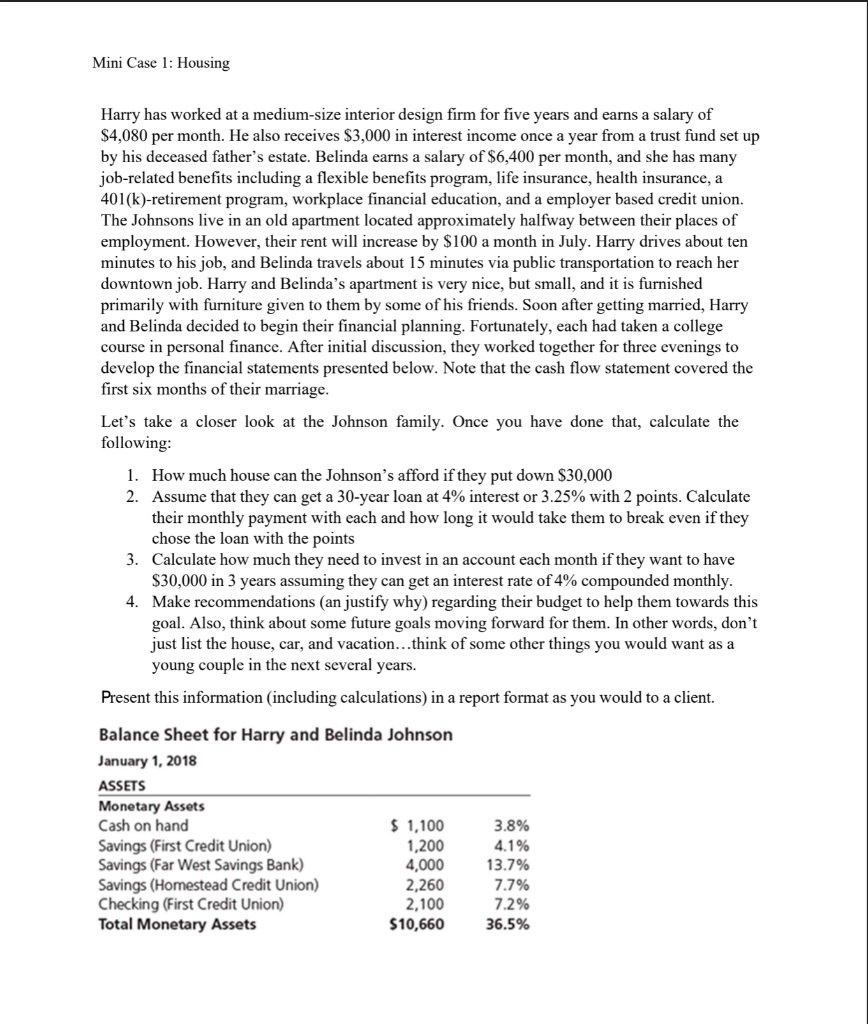
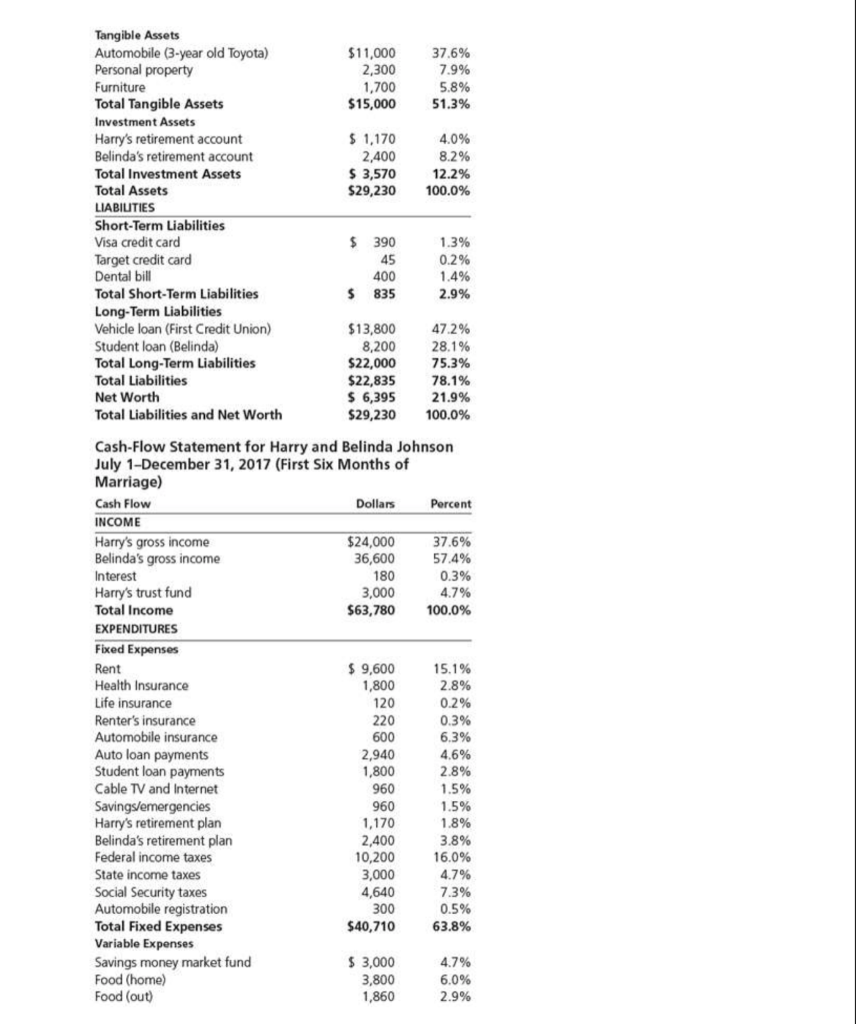
Mini Case 1: Housing Harry has worked at a medium-size interior design firm for five years and earns a salary of $4,080 per month. He also receives $3,000 in interest income once a year from a trust fund set up by his deceased father's estate. Belinda earns a salary of $6,400 per month, and she has many job-related benefits including a flexible benefits program, life insurance, health insurance, a 401(k)-retirement program, workplace financial education, and a employer based credit union. The Johnsons live in an old apartment located approximately halfway between their places of employment. However, their rent will increase by $100 a month in July. Harry drives about ten minutes to his job, and Belinda travels about 15 minutes via public transportation to reach her downtown job. Harry and Belinda's apartment is very nice, but small, and it is furnished primarily with furniture given to them by some of his friends. Soon after getting married, Harry and Belinda decided to begin their financial planning. Fortunately, each had taken a college course in personal finance. After initial discussion, they worked together for three evenings to develop the financial statements presented below. Note that the cash flow statement covered the first six months of their marriage. Let's take a closer look at the Johnson family. Once you have done that, calculate the following: 1. How much house can the Johnson's afford if they put down $30,000 2. Assume that they can get a 30-year loan at 4% interest or 3.25% with 2 points. Calculate their monthly payment with each and how long it would take them to break even if they chose the loan with the points 3. Calculate how much they need to invest in an account each month if they want to have $30,000 in 3 years assuming they can get an interest rate of 4% compounded monthly. 4. Make recommendations (an justify why) regarding their budget to help them towards this goal. Also, think about some future goals moving forward for them. In other words, don't just list the house, car, and vacation...think of some other things you would want as a young couple in the next several years. Present this information (including calculations) in a report format as you would to a client. Balance Sheet for Harry and Belinda Johnson January 1, 2018 ASSETS Monetary Assets Cash on hand $ 1,100 3.8% Savings (First Credit Union) 1,200 4.1% Savings (Far West Savings Bank) 4,000 13.7% Savings (Homestead Credit Union) 2,260 7.7% Checking (First Credit Union) 2,100 7.2% Total Monetary Assets $10,660 36.5% $11,000 2,300 1,700 $15,000 37.6% 7.9% 5.8% 51.3% $ 1,170 2,400 $ 3,570 $29,230 4.0% 8.2% 12.2% 100.0% Tangible Assets Automobile (3-year old Toyota) Personal property Furniture Total Tangible Assets Investment Assets Harry's retirement account Belinda's retirement account Total Investment Assets Total Assets LIABILITIES Short-Term Liabilities Visa credit card Target credit card Dental bill Total Short-Term Liabilities Long-Term Liabilities Vehicle loan (First Credit Union) Student loan (Belinda) Total Long-Term Liabilities Total Liabilities Net Worth Total Liabilities and Net Worth $ 390 45 400 835 1.3% 0.2% 1.4% 2.9% $ $13,800 8,200 $22,000 $22,835 $ 6,395 $29,230 47.2% 28.1% 75.3% 78.1% 21.9% 100.0% 1,800 Cash-Flow Statement for Harry and Belinda Johnson July 1-December 31, 2017 (First Six Months of Marriage) Cash Flow Dollars Percent INCOME Harry's gross income $24,000 37.6% Belinda's gross income 36,600 57.4% Interest 180 0.3% Harry's trust fund 3,000 4.7% Total Income $63,780 100.0% EXPENDITURES Fixed Expenses Rent $ 9,600 15.1% Health Insurance 2.8% Life insurance 120 0.2% Renter's insurance 220 0.3% Automobile insurance 600 6.3% Auto loan payments 2,940 4.6% Student loan payments 1,800 2.8% Cable TV and Internet 960 1.5% Savings/emergencies 960 1.5% Harry's retirement plan 1,170 1.8% Belinda's retirement plan 2,400 3.8% Federal income taxes 10,200 16.0% State income taxes 3,000 .7% Social Security taxes 4,640 7.3% Automobile registration 300 0.5% Total Fixed Expenses $40,710 63.8% Variable Expenses Savings money market fund $ 3,000 4.7% Food (home) 3,800 6.0% Food (out) 1,860 2.9% Mini Case 1: Housing Harry has worked at a medium-size interior design firm for five years and earns a salary of $4,080 per month. He also receives $3,000 in interest income once a year from a trust fund set up by his deceased father's estate. Belinda earns a salary of $6,400 per month, and she has many job-related benefits including a flexible benefits program, life insurance, health insurance, a 401(k)-retirement program, workplace financial education, and a employer based credit union. The Johnsons live in an old apartment located approximately halfway between their places of employment. However, their rent will increase by $100 a month in July. Harry drives about ten minutes to his job, and Belinda travels about 15 minutes via public transportation to reach her downtown job. Harry and Belinda's apartment is very nice, but small, and it is furnished primarily with furniture given to them by some of his friends. Soon after getting married, Harry and Belinda decided to begin their financial planning. Fortunately, each had taken a college course in personal finance. After initial discussion, they worked together for three evenings to develop the financial statements presented below. Note that the cash flow statement covered the first six months of their marriage. Let's take a closer look at the Johnson family. Once you have done that, calculate the following: 1. How much house can the Johnson's afford if they put down $30,000 2. Assume that they can get a 30-year loan at 4% interest or 3.25% with 2 points. Calculate their monthly payment with each and how long it would take them to break even if they chose the loan with the points 3. Calculate how much they need to invest in an account each month if they want to have $30,000 in 3 years assuming they can get an interest rate of 4% compounded monthly. 4. Make recommendations (an justify why) regarding their budget to help them towards this goal. Also, think about some future goals moving forward for them. In other words, don't just list the house, car, and vacation...think of some other things you would want as a young couple in the next several years. Present this information (including calculations) in a report format as you would to a client. Balance Sheet for Harry and Belinda Johnson January 1, 2018 ASSETS Monetary Assets Cash on hand $ 1,100 3.8% Savings (First Credit Union) 1,200 4.1% Savings (Far West Savings Bank) 4,000 13.7% Savings (Homestead Credit Union) 2,260 7.7% Checking (First Credit Union) 2,100 7.2% Total Monetary Assets $10,660 36.5% $11,000 2,300 1,700 $15,000 37.6% 7.9% 5.8% 51.3% $ 1,170 2,400 $ 3,570 $29,230 4.0% 8.2% 12.2% 100.0% Tangible Assets Automobile (3-year old Toyota) Personal property Furniture Total Tangible Assets Investment Assets Harry's retirement account Belinda's retirement account Total Investment Assets Total Assets LIABILITIES Short-Term Liabilities Visa credit card Target credit card Dental bill Total Short-Term Liabilities Long-Term Liabilities Vehicle loan (First Credit Union) Student loan (Belinda) Total Long-Term Liabilities Total Liabilities Net Worth Total Liabilities and Net Worth $ 390 45 400 835 1.3% 0.2% 1.4% 2.9% $ $13,800 8,200 $22,000 $22,835 $ 6,395 $29,230 47.2% 28.1% 75.3% 78.1% 21.9% 100.0% 1,800 Cash-Flow Statement for Harry and Belinda Johnson July 1-December 31, 2017 (First Six Months of Marriage) Cash Flow Dollars Percent INCOME Harry's gross income $24,000 37.6% Belinda's gross income 36,600 57.4% Interest 180 0.3% Harry's trust fund 3,000 4.7% Total Income $63,780 100.0% EXPENDITURES Fixed Expenses Rent $ 9,600 15.1% Health Insurance 2.8% Life insurance 120 0.2% Renter's insurance 220 0.3% Automobile insurance 600 6.3% Auto loan payments 2,940 4.6% Student loan payments 1,800 2.8% Cable TV and Internet 960 1.5% Savings/emergencies 960 1.5% Harry's retirement plan 1,170 1.8% Belinda's retirement plan 2,400 3.8% Federal income taxes 10,200 16.0% State income taxes 3,000 .7% Social Security taxes 4,640 7.3% Automobile registration 300 0.5% Total Fixed Expenses $40,710 63.8% Variable Expenses Savings money market fund $ 3,000 4.7% Food (home) 3,800 6.0% Food (out) 1,860 2.9%
Step by Step Solution
There are 3 Steps involved in it

Get step-by-step solutions from verified subject matter experts
 Study Help